Industrial Roofing & Coatings
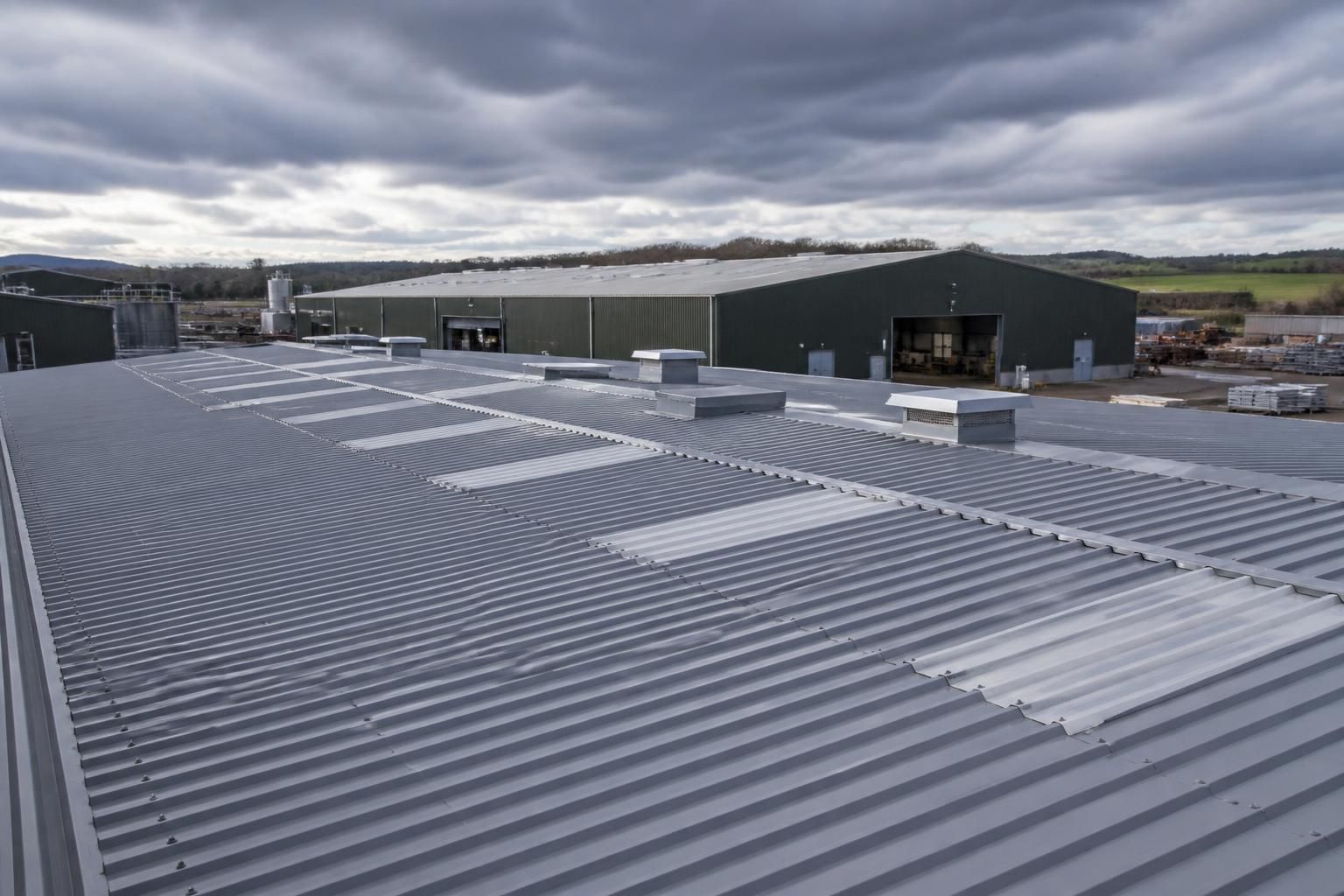
Commercial and industrial roofing uses profiled steel sheeting, protective coatings and detailing to weatherproof large agricultural, industrial and equestrian buildings. A specification-led assessment matches substrate, exposure and intended service life, helping identify suitable options before requesting a bespoke quotation.
Industrial Roofing Specification Options
Key specification information includes sheet gauge, panel geometry, coating chemistry, colour, edge treatment, penetrations, trims and the division between supplied components and site work. Recording these items allows drawings, fabrication and installation requirements to align.
Roof Build-Up and Substrate
Define the supporting arrangement before selecting sheets or coatings. The assessment should identify the roof substrate, purlin layout, insulation requirement and internal lining, then consider how the proposed build-up manages weather exposure, condensation and the building’s intended use.
Sheet Gauge and Profile
Sheet thickness, profile geometry, span capability, roof pitch and sheet lengths all affect the specification. These dimensions should be coordinated with structural loading, support spacing, drainage requirements and the required appearance rather than selected independently.
Protective Coating Chemistry
Coating selection should reflect the base metal, site exposure and expected service conditions. Record the coating system, protective layer, corrosion environment and any restrictions created by agricultural moisture, industrial pollutants, condensation or contact with stored materials.
Colour and Surface Finish
Industrial roofing can be assessed by both performance and appearance. Specify the colour, gloss or surface finish, underside treatment and compatibility with adjacent cladding, trims and flashings. Consistent finish information helps prevent visible variation between connected roof elements.
Joints, Trims and Penetrations
The specification should cover side and end laps, fastener types, ridge and verge details, gutters, outlets, abutments and service penetrations. Carefully coordinated trims and sealing details are essential where roof sheets meet walls, rooflights, equipment or other building services.
Drawings, Compliance and Supply
A complete package can distinguish planning elevation drawings from isometric fabrication blueprints and identify which components are supplied as a building kit or included within erection work. Design information should also record applicable compliance requirements, fabrication details, finish schedules and installation responsibilities.
Industrial Roofing and Coatings: Common Questions
When is an industrial roof coating preferable to full roof replacement?
Roof coatings require a clean, dry, sound substrate; corrosion, loose material and failed sealants must be removed or repaired first, otherwise adhesion and watertight performance may be compromised during service.
What affects the service life of industrial roof coatings?
Service life depends on ultraviolet exposure, temperature cycling, standing water, atmospheric pollutants, coating chemistry, application thickness and detailing around penetrations. Regular inspections identify deterioration before remedial work becomes unnecessarily extensive.
What does industrial roof replacement involve?
Industrial roof replacement involves surveying the existing structure, planning safe removal, checking supporting steel, installing new sheeting and flashings, then completing weatherproofing details around rooflights, edges, penetrations and junctions.
How should industrial roof sheeting be selected for site exposure?
Selection should consider wind loading, rainfall intensity, condensation risk, salt or chemical exposure, roof pitch and drainage, then match sheet profile, steel thickness and coating system accordingly to its location.
Which coating systems are suitable for industrial steel roofing?
Suitable systems include acrylic, polyurethane, elastomeric and liquid-rubber coatings, selected for the existing substrate, movement, exposure and required finish. Compatibility testing and manufacturer data should confirm the specification before application.
Industrial Roofing Options for Different Project Requirements
Industrial roofing and coatings can be specified for new buildings, refurbishment projects and roof renewal, with choices shaped by structure, substrate, exposure, access constraints and operational needs. The following applications indicate where different approaches may suit.
New steel-framed buildings
For new industrial, agricultural and equestrian buildings, roofing can be coordinated with the frame, building dimensions and intended use from the outset. This allows sheet profiles, protective coatings, junctions and roof details to be considered as part of the wider design package.
Agricultural buildings
Agricultural roofs need to suit exposed sites, large spans and activities such as machinery storage, livestock housing or crop storage. Coating selection and detailing should reflect the building’s environmental conditions, ventilation requirements and the level of protection expected over its service life.
Industrial premises
Industrial roofing specifications are shaped by the building’s use, internal conditions, access arrangements and the consequences of disruption during works. Profiled steel sheeting and protective coatings can be assessed alongside roof falls, penetrations, edges and other areas where careful detailing is required.
Equestrian buildings
Equestrian roofs require weather protection while accommodating the layout and use of arenas, stables, stores or covered walkways. The roof build-up, coating and junction details should be considered in relation to ventilation, exposure and the practical requirements of the building.
Existing roof refurbishment
Refurbishment begins with assessing the existing substrate, roof condition, structural arrangement and areas of water ingress or coating deterioration. The findings help determine whether local repairs, renewed coatings or more extensive replacement work is appropriate.
Roof renewal and replacement
Where an existing roof no longer provides the required performance, renewal can be planned around the building’s current use, access constraints and future service-life expectations. A specification should cover sheet materials, protective finishes, fixings, flashings and interfaces with adjoining parts of the building.
Bespoke roof detailing
Large or unusually configured buildings often require individually developed details at eaves, verges, ridges, openings and changes in roof direction. Coordinated drawings and fabrication information help translate the roofing specification into components suited to the building’s geometry and structural steelwork.
Specification, Manufacturing and Project Support
What to Check in an Industrial Roofing Quotation
A quotation for industrial roofing and coatings should explain who is responsible for the survey, design, specification and compliance checks. Ask how the proposed roof sheeting or coating suits the existing substrate, loading, drainage, access arrangements and building use, and which drawings, calculations or product information are included.
It should also separate manufacture, delivery, installation and preparation from optional items, while identifying exclusions such as repairs, access equipment, removal of existing materials or making good. Confirm the planned sequence, required site conditions, handover information and the arrangements for addressing defects, maintenance queries or other after-sales matters.
Design Responsibility
The quotation should identify which party is responsible for the survey, design development and final technical checks. This is particularly important where the roof is being renewed over an existing structure or connected to other building elements.
Confirm the design basis
Ask for the assumptions behind the proposal, including dimensions, structural capacity, falls, drainage routes, penetrations and the intended building use. Confirm whether the quotation includes design calculations, planning or building regulation information, elevation drawings, fabrication drawings and revisions arising from design coordination. It should also state who checks that the completed proposal is suitable for the structure and site conditions.
Roofing System and Coating
Roof sheets and protective coatings should be selected against the substrate, exposure and expected service conditions rather than treated as interchangeable products. The quotation should make the proposed build-up and its limitations clear.
Check compatibility and performance
Request the profile, material specification and coating description, together with the assumptions used for corrosion exposure, condensation, chemical contact and internal humidity. For refurbishment work, ask how the existing sheets, fixings and supporting members will be assessed, and whether preparation or local repairs are required before coating or overcladding. Any stated service-life expectation, maintenance requirement or product documentation should be provided in writing rather than left as a verbal assurance.
Manufacture and Documentation
A complete quotation should show how approved information becomes manufactured components and what records will accompany them. Clear document control helps prevent fabrication from proceeding against superseded drawings.
Request manufacturing evidence
Ask how drawing revisions, material specifications and fabrication changes are recorded before manufacture. The quotation or subsequent order information should identify the technical documents supplied, including relevant declarations, product data, installation guidance and inspection records. Confirm how components are marked, protected and checked before dispatch, and how discrepancies between the manufactured items and the approved information will be handled.
Installation and Programme
The installation allowance should explain the sequence of work and the conditions needed for safe, uninterrupted progress. A programme is only meaningful when its assumptions about access, preparation and site readiness are stated.
Test the proposed installation plan
Ask whether the sequence covers surveys, preparation, delivery, lifting, roof installation, flashings, drainage details and final inspection. Confirm who provides access equipment, lifting arrangements, temporary protection, site welfare and permits, and whether the building must be cleared or operations restricted during particular activities. The quotation should identify dependencies such as structural repairs, weather-sensitive work, agreed delivery areas and information required from the client before installation starts.
Price, Handover and Aftercare
A comparable quotation separates the core roofing or coating work from items that depend on the site or the client’s chosen specification. It should also explain what information is supplied at completion and how post-installation issues are recorded and dealt with.
Clarify inclusions and exclusions
Check whether the price includes surveys, preparation, fixings, trims, flashings, penetrations, gutters, downpipes, insulation interfaces, waste removal, testing and making good. Ask for a separate list of exclusions, provisional items and client-supplied requirements, including repairs to concealed or defective structure. At handover, request the as-built information, product and maintenance guidance, inspection records and a named process for reporting defects, resolving queries and arranging future maintenance discussions.
Once the questions have been answered, ask for the agreed scope to be incorporated into a revised written quotation. Check that the roof layout, interfaces with walls, gutters, rooflights and services, and any assumptions about the existing building are reflected in the accompanying drawings and specification.
Before instructing the work, retain the final quotation, product information and approved drawings together as the reference set for the project. This gives all parties a clear basis for checking the completed industrial roof and dealing with any points that require clarification during or after the works.