When is a Dutch barn shed preferable to a conventional agricultural barn?
A Dutch barn shed is preferable when you need a practical, adaptable structure with open-sided access, natural ventilation and straightforward storage for machinery, hay, straw or livestock-related equipment. A conventional agricultural barn is usually the better choice where enclosed, weather-protected space, greater security or environmental control is the priority.
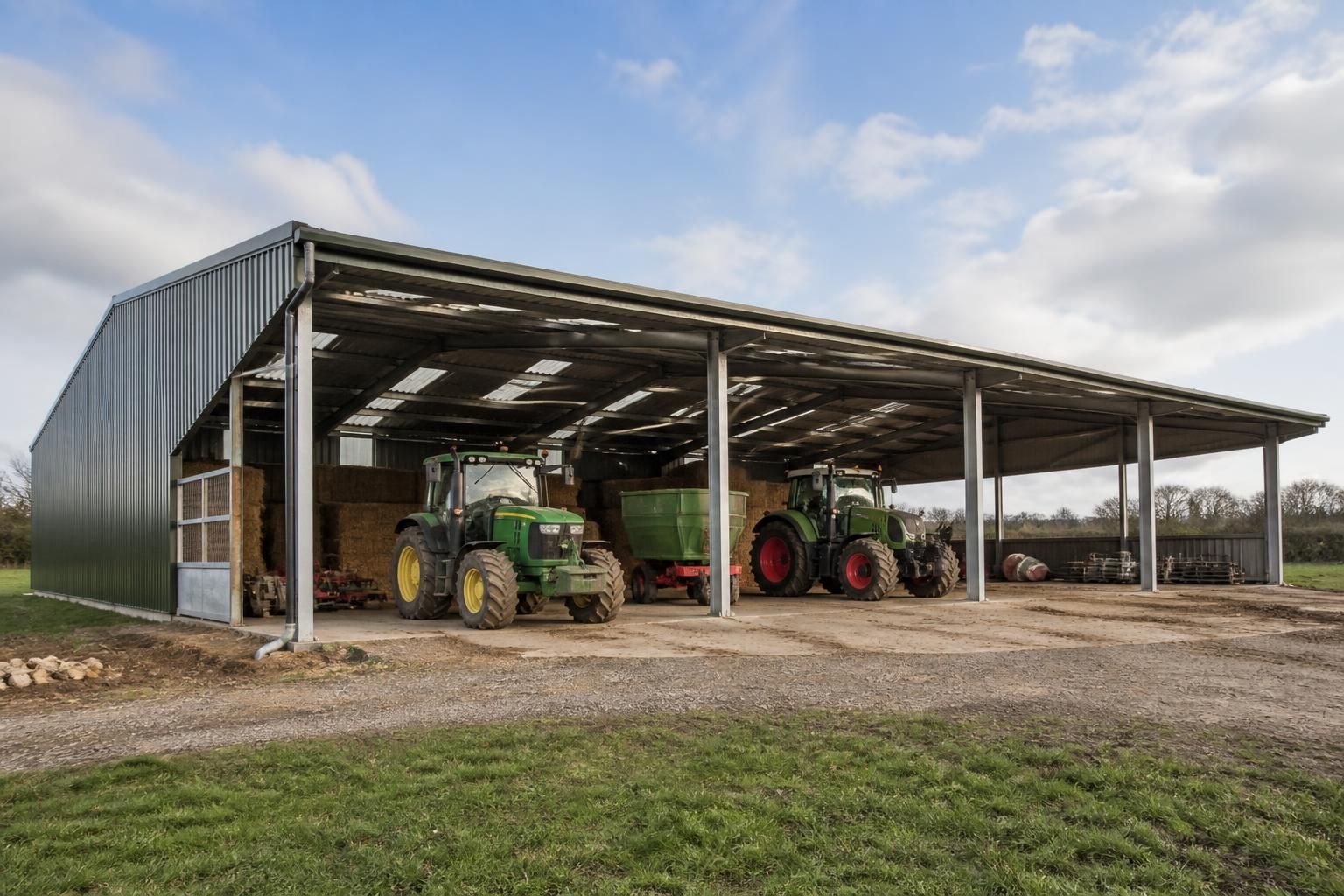
A Dutch barn shed is preferable to a conventional agricultural barn when the main requirement is covered, easily accessible space rather than a fully enclosed building. It is particularly suitable for seasonal machinery storage, hay and straw, trailers, implements and other farm equipment that can be safely stored with natural airflow and direct access from the yard.
Choose a Dutch barn shed where access is central to the building’s purpose. Open elevations allow machinery to be driven in and out without repeatedly operating large doors. This can be useful for tractors, combines, trailers and attachments, especially where equipment is moved frequently during busy periods. The simpler interior also makes it easier to position machinery according to changing needs rather than designing fixed bays or permanent work areas.
A Dutch barn can also suit farms that need adaptable storage. Hay, straw, timber, fencing materials and seldom-used implements can be kept under cover without dedicating the whole structure to one activity. If the use changes later, the same building may continue to serve as general farm storage, subject to its design, loading arrangements and planning requirements. This flexibility is valuable where the intended contents are likely to change as the holding develops.
Natural ventilation is another reason to favour this form. Air movement helps prevent condensation and allows damp air to disperse from materials such as hay, straw and machinery. It does not remove the need for sound storage practice: crops must be adequately cured before storage, materials should be protected from ground moisture, and the building should be positioned and managed to limit exposure to driving rain. Where humidity, dust or temperature must be controlled closely, an enclosed agricultural building may be more appropriate.
A conventional barn is normally preferable when protection and control outweigh open access. Enclosure provides a stronger barrier against wind-driven rain, snow and airborne debris, while lockable doors and walls can offer greater security for valuable machinery, tools and materials. An enclosed building is also more suitable where the proposed use involves a workshop, secure store, feed room, office, controlled livestock environment or other area requiring separation from external conditions.
The distinction is not simply between a cheap building and an expensive one. The appropriate comparison depends on what the building must do throughout its service life. A Dutch barn may avoid the need for extensive doors, internal partitions or environmental systems, but the contents may require additional protection elsewhere. Conversely, a conventional barn may involve a more substantial specification, yet provide usable enclosed space that would otherwise need to be created in a separate structure.
When assessing the options, compare the following requirements:
- Frequency of access: regular machinery movements favour open access, while occasional access to high-value contents may favour a secure enclosed building.
- Weather sensitivity: robust equipment and dry, well-managed materials may suit a Dutch barn; moisture-sensitive stock, electrical equipment and finished products generally need greater enclosure.
- Security: consider the value of the contents, site surveillance and the need for lockable storage rather than relying on the building form alone.
- Internal layout: open storage is compatible with changing arrangements, whereas workshops, livestock areas and segregated stores usually need defined spaces.
- Future use: identify whether the building is likely to remain a machinery shelter or may need to accommodate a different agricultural activity later.
- Planning and design constraints: the proposed use, position, dimensions, access and appearance can affect the permissions and technical design required for either option.
A hybrid approach can sometimes provide a more balanced solution. For example, a Dutch barn may be designed with one enclosed section for secure tools or weather-sensitive materials while retaining open-sided areas for machinery and general storage. This should be considered at the design stage because the frame, cladding, access openings, foundations and drainage need to work together.
For an informed comparison, prepare a schedule of the items to be stored, their dimensions, access requirements, security needs and sensitivity to weather. Buildings UK Ltd can develop bespoke design information for a steel-framed agricultural building, including planning elevation drawings and fabrication blueprints. The decision should then be based on the building’s intended use, site conditions and likely future requirements rather than on the roof form alone.
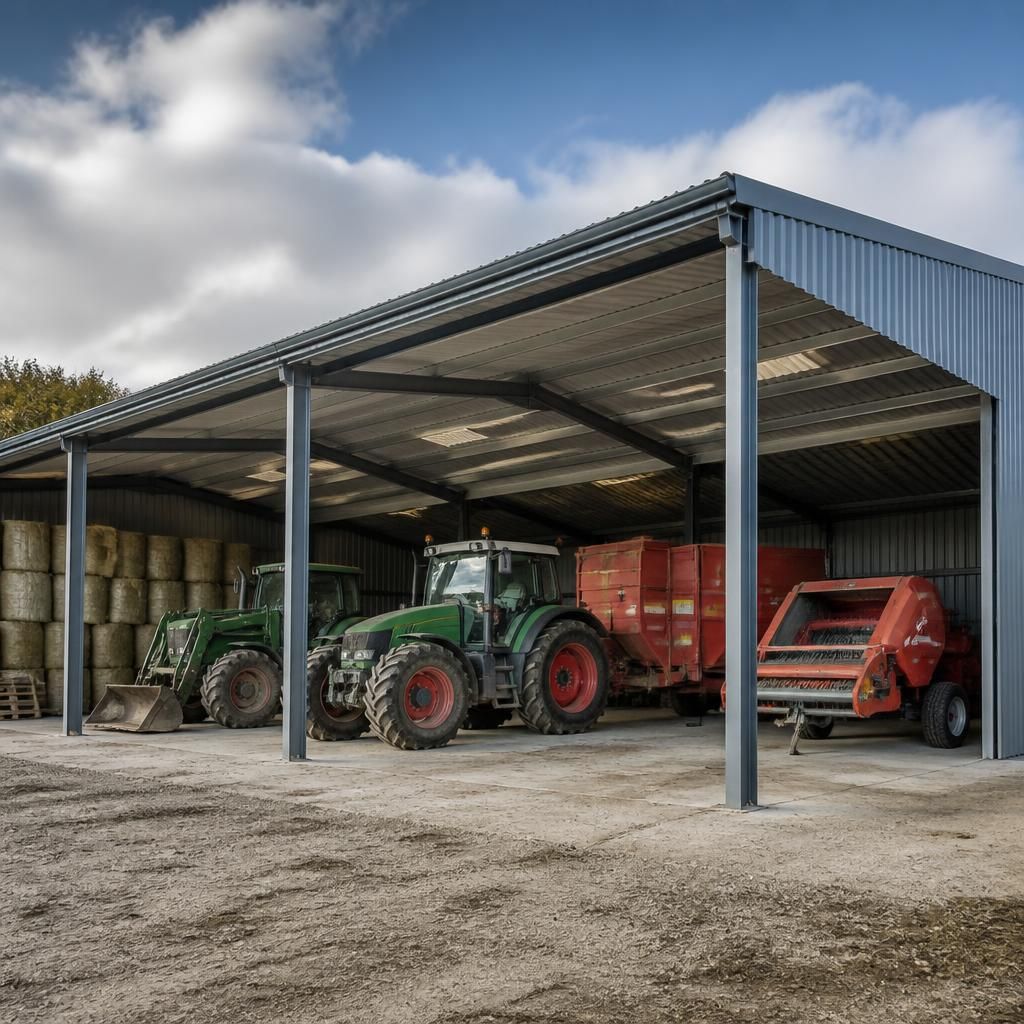
A Dutch barn shed is often preferable where the structural brief is uncomplicated: a roofed frame for equipment, materials or seasonal storage, without suspended loads, extensive internal fit-out or controlled environmental conditions. This allows the design to focus on the loads imposed by the roof, cladding, stored contents and local site conditions rather than incorporating features needed for a fully enclosed working building.
That distinction matters if the building may be altered later. Adding cladding, doors, partitions, lighting or lifting equipment can affect the frame, foundations and overall design, so future changes should be considered before construction. A Dutch barn is therefore most appropriate when its open, straightforward form is likely to remain suitable throughout its intended service life; a conventional agricultural barn is the safer comparison where substantial enclosure or internal alteration is already foreseeable.