How is corrosion protection specified for a Dutch barn?
Corrosion protection for a Dutch barn is specified according to the site environment, intended use and required service life, then detailed as a suitable steel finish or coating system. The specification should identify preparation, coating type, application requirements and protection for vulnerable areas such as cut edges, connections and exposed fixings.
A Dutch barn corrosion protection specification should define the exposure conditions, steel finish, preparation standard, coating thickness, treatment of details and future inspection requirements. The correct choice depends less on the barn’s name than on whether the frame is open to weather, enclosed, exposed to livestock or fertiliser, located near the coast, or subject to persistent condensation.
Start with the exposure assessment
The specification should describe the conditions at the actual site rather than simply stating “painted steel”. Important factors include:
- Whether the Dutch barn is open-sided, partially enclosed or fully clad.
- Rain, wind-driven spray, sunlight and the likelihood of water remaining on steelwork.
- Coastal salt exposure or other airborne contaminants.
- Livestock housing, manure storage and ammonia-rich atmospheres.
- Storage of fertiliser, chemicals, feed or materials that may release corrosive vapours or dust.
- Internal humidity, condensation and the effectiveness of ventilation.
- Contact with damp masonry, concrete, soil, standing water or contaminated splash.
An open-sided agricultural building usually has greater direct weather exposure, while an enclosed barn may have a more demanding internal environment if moisture and contaminants are trapped. Different areas of the same building can therefore need separate consideration, particularly around eaves, gutters, wall bases, livestock areas and enclosed storage bays.
Choose the protection system
The principal options are a factory-applied paint system, hot-dip galvanizing, or a duplex system combining galvanizing with paint. The choice should be made against the expected exposure and maintenance arrangements.
- Paint systems: These normally comprise prepared steel followed by one or more protective coats. The specification should identify the coating family, number of coats, nominal dry film thickness and any permitted repair materials. A paint system can be appropriate where the exposure is moderate and future inspection and recoating are practical.
- Hot-dip galvanizing: The completed steel components are immersed in molten zinc, producing a metallurgically bonded zinc coating over accessible steel surfaces. This can provide robust protection for exposed agricultural steelwork, but the design must allow the galvanizing process to work properly.
- Duplex protection: A compatible paint or powder coating over galvanized steel can provide additional barrier protection and a specified appearance. Surface preparation for galvanized steel is different from preparation for untreated steel, so the coating manufacturer’s system requirements must be followed.
Galvanizing should be specified to the relevant hot-dip galvanizing standard, commonly BS EN ISO 1461 for fabricated iron and steel articles. For paint systems, BS EN ISO 12944 provides a framework for classifying corrosivity, selecting systems and defining durability expectations. These standards help make the specification measurable, but they do not replace an assessment of the particular Dutch barn environment.
Specify preparation and application
For painted steel, the document should state how mill scale, rust, oil, welding residues and other contaminants are removed. It should also define the required preparation grade, surface cleanliness, surface profile where abrasive blasting is used, and the conditions permitted during application. Temperature, humidity and steel temperature matter because condensation or poor curing can compromise adhesion.
Each coat should have a stated purpose and application requirement. The specification should record the nominal dry film thickness, maximum and minimum limits where applicable, recoat intervals, curing requirements and the method for repairing damaged areas. Coatings should not be applied over wet, contaminated or inadequately prepared steel merely to meet a visual finish.
For galvanized components, the design should avoid sealed hollow sections unless they are engineered with suitable vent and drain holes. These openings are required for safe immersion and drainage during galvanizing. The specification should also explain how drilled areas, site cuts, welds and handling damage are to be repaired, using a compatible zinc-rich repair system or another approved method.
Give attention to detailing
Corrosion commonly begins where water, dirt or chemical residues collect. The frame design and protection specification should therefore address:
- Sharp edges, which can receive less paint than broad flat surfaces.
- Welds, spatter and surface irregularities that can interrupt coating continuity.
- Bolted connections, overlapping plates and crevices where moisture may be retained.
- Base plates and holding-down assemblies close to concrete or damp ground.
- Open-ended sections, drainage paths and locations where condensation can collect.
- Interfaces between galvanized steel, painted steel, concrete, timber, cladding and dissimilar metals.
- Areas likely to be struck by machinery or exposed to abrasive feed, bedding or stored materials.
Where steel meets concrete, the detail should prevent water being held against the steel and should allow the base connection to be inspected. Cladding, gutters and flashings should likewise be arranged so that leaks do not repeatedly wet the frame. Protection is more reliable when the building detail removes sources of persistent dampness rather than relying on coating thickness alone.
Account for agricultural conditions
Livestock buildings can combine high humidity with ammonia and other contaminants. Manure, slurry and fertiliser can also create localised conditions that are more corrosive than the general atmosphere. Steel near livestock, storage bays and floor-level splash zones may therefore require a more suitable system than steel in a clean, dry part of the barn.
Where the building stores fertiliser or chemicals, the supplier’s safety and compatibility information should be considered when selecting the coating. The specification should not assume that a system suitable for ordinary rural weather will resist every stored substance. Spill control, wash-down procedures and separation from vulnerable steelwork are part of the practical corrosion strategy.
Define maintenance and acceptance
A complete specification should state how the finished protection will be checked before the frame is enclosed. Inspection may include visual examination, verification of surface preparation, dry film thickness checks for paint, and confirmation that repairs have been completed. Records should identify the products used, batch details where relevant, application conditions and areas repaired.
Maintenance provisions should cover routine cleaning, removal of accumulated dust or manure, inspection of bases and connections, and prompt repair of impact or installation damage. Galvanized surfaces may develop a protective patina, but cut edges, weld repairs and mechanically damaged areas still need attention. Painted systems require particular care because a small coating failure can allow corrosion beneath surrounding paint.
For a Dutch barn, the final corrosion protection schedule should appear alongside the steelwork drawings and building specification. It should identify the exposure classification or design basis, selected finish, preparation standard, coating build-up, treatment of details, repair method, inspection records and maintenance obligations. This gives the contractor and inspector a clear, auditable requirement rather than leaving the durability of the frame to an undefined “weatherproof” finish.
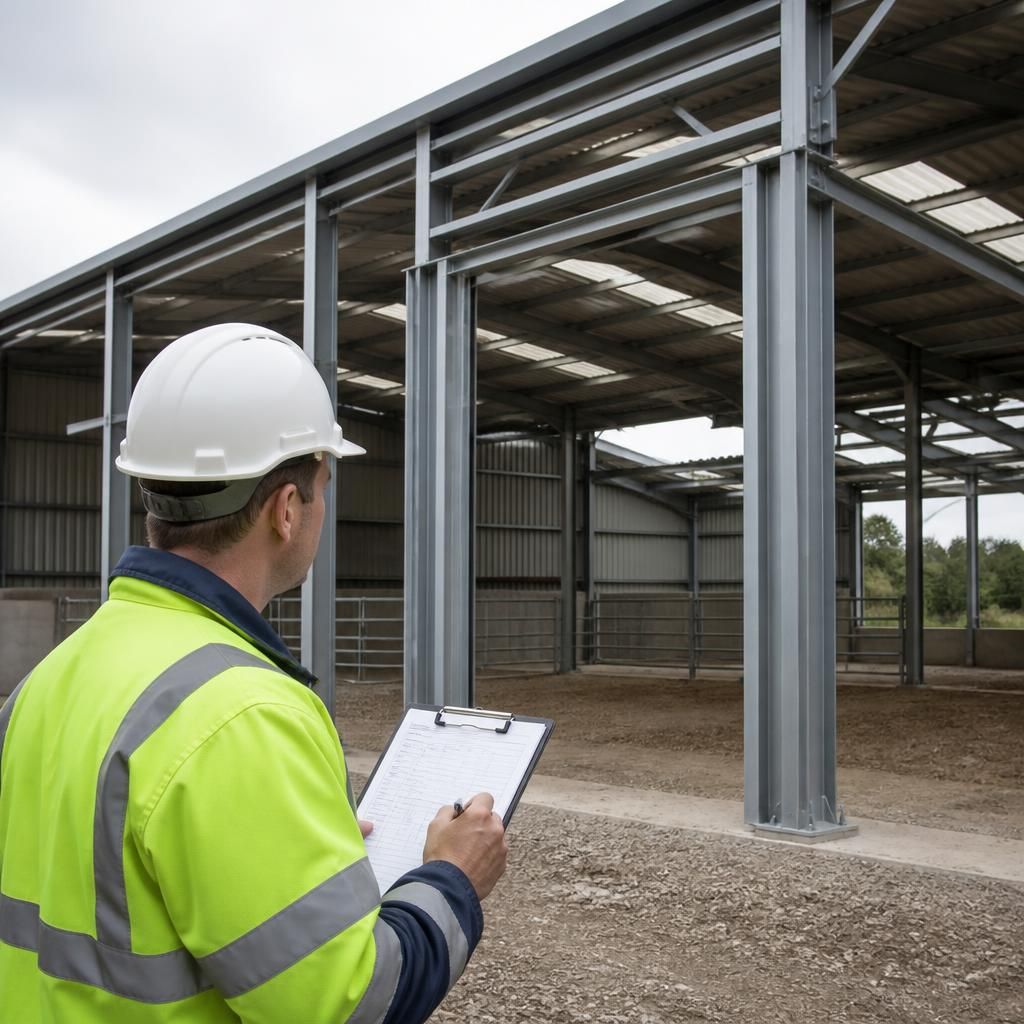
Corrosion protection should be specified for each steel element rather than for the Dutch barn as one uniform item. The primary frame, secondary steelwork, connection components, fixings and accessories may have different exposure levels and may require compatible but separate finishes.
The schedule should also state who is responsible for protecting areas altered during manufacture or erection. Any drilling, cutting, welding, abrasion or handling damage should be recorded and treated using the approved repair method before the steel is enclosed. This prevents an otherwise suitable factory finish from being weakened by unplanned site work.
Discuss Your Dutch Barn Corrosion Protection Specification
Discuss your Dutch barn corrosion protection specification with Buildings UK to align the steelwork package with the building’s intended use and design requirements. The agreed approach can then be incorporated into clear fabrication and protection requirements.