
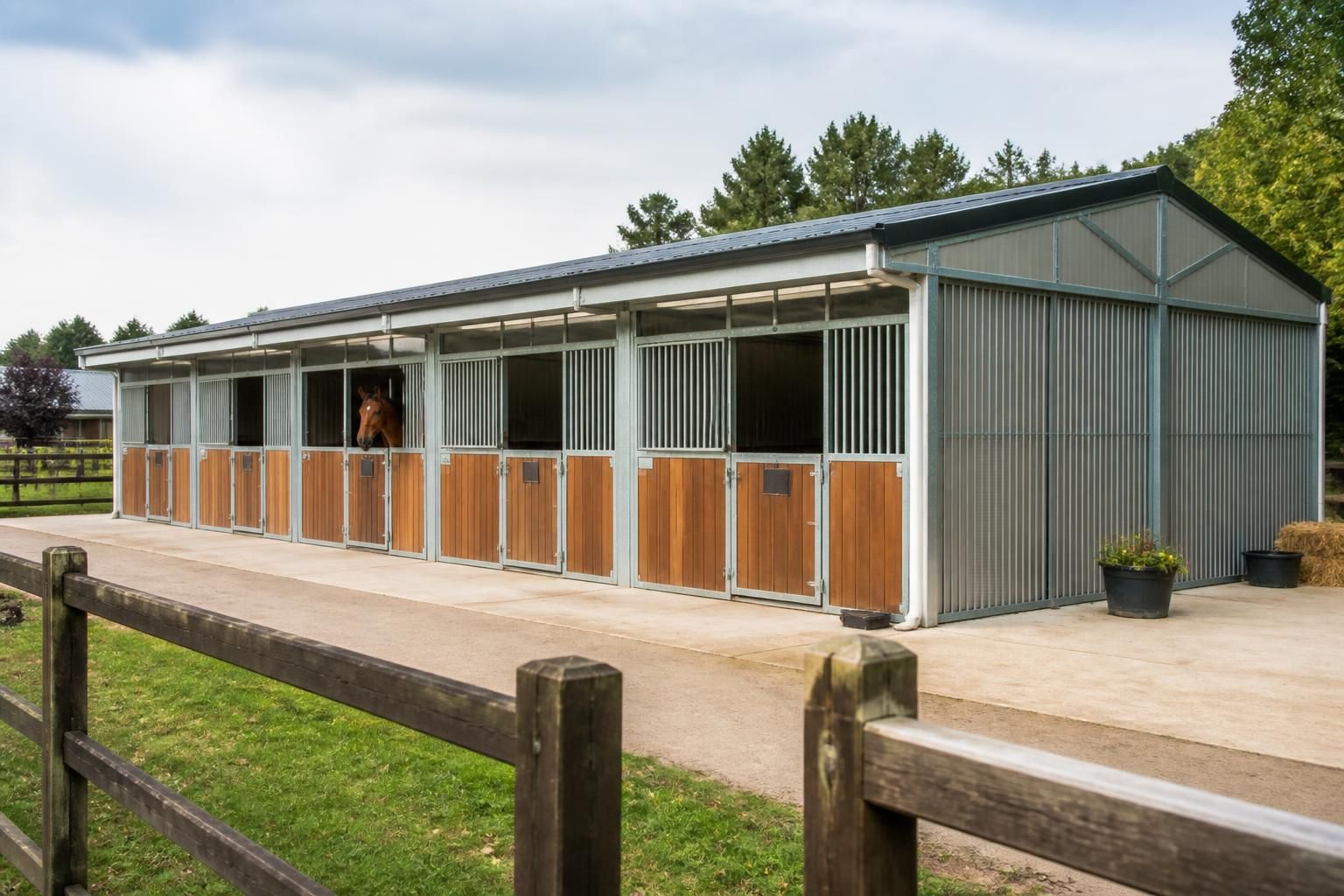
When are temporary stable buildings a suitable alternative to permanent stables?
Temporary stable buildings are a suitable alternative to permanent stables when accommodation is needed for a limited period, during refurbishment, or while future requirements and site arrangements remain subject to change. They can also suit owners seeking adaptable equestrian space without committing immediately to a permanent structure, provided the design meets horses’ welfare needs and relevant planning requirements.
Temporary stable buildings are most suitable where the need for horse accommodation is genuine but the site, number of horses or long-term use is not yet fixed. They provide a practical option for interim accommodation, phased equestrian developments and situations where a demountable structure is more appropriate than a fixed building. Their suitability depends on the intended period of use, ground conditions, access, services, planning position and the standard of horse care that must be maintained.
One appropriate use is during a change in the way an equestrian property is managed. For example, a yard may need additional boxes while existing facilities are reorganised, an outdoor school or associated building is being developed, or a business is assessing its longer-term horse capacity. A temporary building can provide working accommodation during that transition without determining the final layout of the site.
They can also be considered where demand varies. A riding establishment, training yard or agricultural holding may require extra boxes at particular stages of its operation rather than needing the same capacity permanently. In this situation, a structure that can be removed, reconfigured or relocated may be more practical than constructing permanent accommodation that could later become underused.
Temporary stables are particularly useful on sites where future decisions remain unresolved. This may include land awaiting a wider masterplan, a property being adapted for equestrian use, or a holding where access routes, vehicle circulation and service positions have not been finalised. The building should still be designed around a workable day-to-day layout, but its temporary nature can allow the wider site strategy to develop before permanent construction is considered.
A temporary structure may be suitable where the ground and access arrangements can support safe installation without excessive permanent infrastructure. Before proceeding, the site should be assessed for level ground, drainage, surface stability, delivery access, fire safety and the movement of horses, staff and vehicles. Water, lighting, ventilation and waste-management arrangements must be planned as part of the building rather than treated as later additions.
The distinction between temporary and permanent does not reduce the importance of welfare. Each stable needs sufficient space for the horse, safe internal surfaces, effective ventilation, natural light where appropriate, secure doors and suitable management access. The arrangement should support regular mucking out, feeding, inspection and emergency movement. Temporary accommodation that is awkward to clean, poorly ventilated or exposed to unsafe conditions is not suitable simply because it is intended for short-term use.
Temporary stables may be a better fit than permanent buildings when:
- the required number of boxes may change as the business or yard develops;
- the building is needed while a site layout or wider construction project is being resolved;
- the accommodation may need to move to another part of the holding;
- the site owner wants to test an operational arrangement before committing to a fixed yard;
- permanent foundations, services or landscaping would be disproportionate to the immediate requirement; or
- the structure must be removed or altered as part of the planned use of the land.
Permanent stables are generally more appropriate where the yard’s location, capacity and layout are settled and the building is intended to serve a long-established operation. A permanent solution may also be preferable where substantial tack rooms, staff facilities, offices, wash bays, feed stores, internal circulation areas or integrated services are required. The decision should consider the complete working yard rather than the stable shell alone.
Planning and land-use matters must be checked before a temporary stable building is commissioned. A structure described as temporary may still require permission or be subject to conditions relating to its siting, duration, appearance, access and use. The relevant planning position depends on the site and proposal, so the intended period of use should not be used as a substitute for obtaining project-specific advice.
A sound assessment should compare the proposed temporary arrangement with the likely permanent requirement. Consider the number and type of horses, handling routines, storage needs, staff access, service connections, drainage, security, weather exposure and the practical process of dismantling or relocating the building. Design drawings showing elevations and the internal arrangement can help identify conflicts before manufacture and clarify how the building will operate in relation to the rest of the yard.
In summary, temporary stable buildings are a suitable alternative when flexibility, reversibility and phased development are more important than creating a fixed long-term yard immediately. They are not a shortcut around welfare, safety or planning obligations. When the building is properly designed for the horses and the site, and its removal or future alteration has been considered from the outset, it can provide effective accommodation while longer-term equestrian plans take shape.
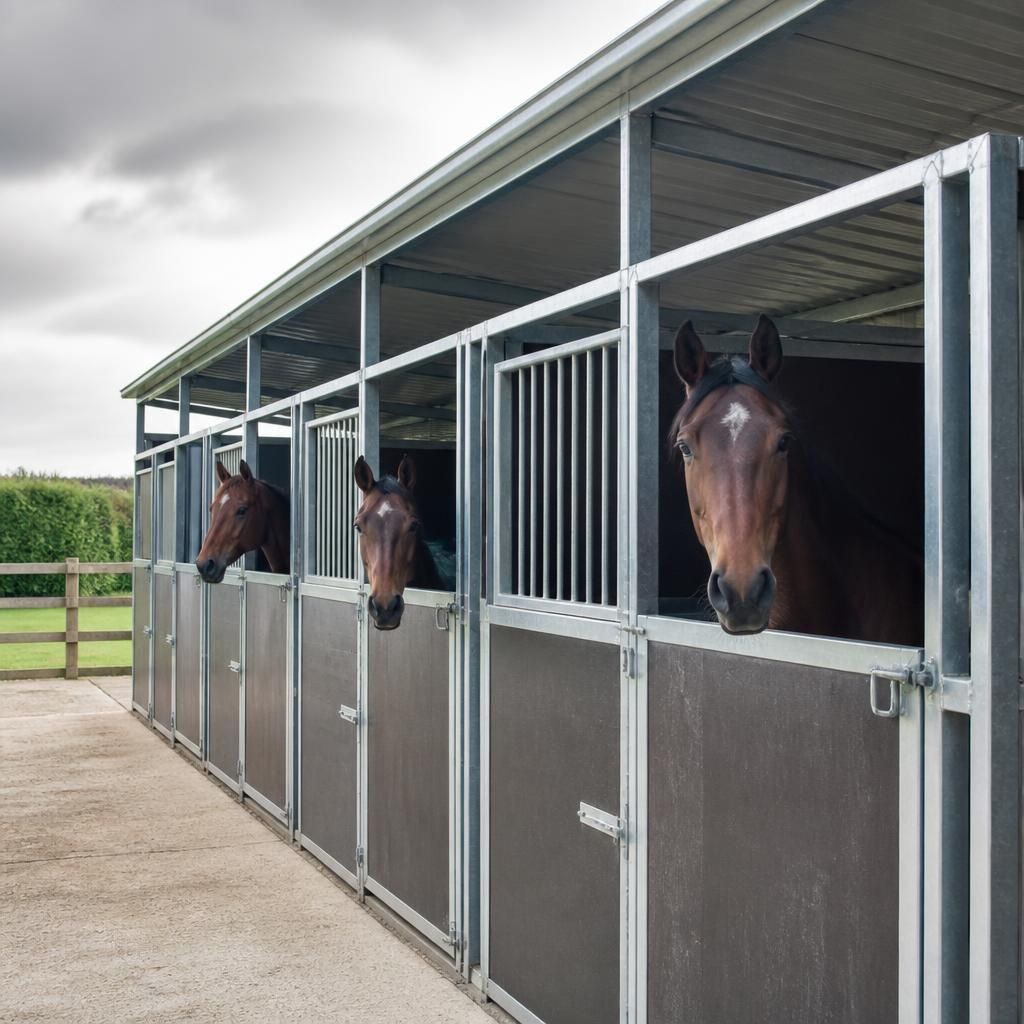
Temporary stable buildings can be suitable where the available land is held for a limited period or where future control of the site is uncertain. A demountable structure may provide horse accommodation without tying the owner to a permanent building on land that could later be returned, redeveloped or used differently.
This option should be assessed against the terms of any lease, licence or land-use agreement. Check whether equestrian buildings are permitted, who is responsible for foundations and services, and whether the site must be reinstated when the arrangement ends. Planning requirements still apply, and the proposed building must remain suitable for daily horse care throughout the period of occupation.
Discuss whether temporary stable buildings are suitable for your needs
Discuss your proposed temporary stable building with Buildings UK Ltd to assess its suitability for the site and intended use. The team can help you consider an appropriate design package before you decide between temporary and permanent accommodation.