
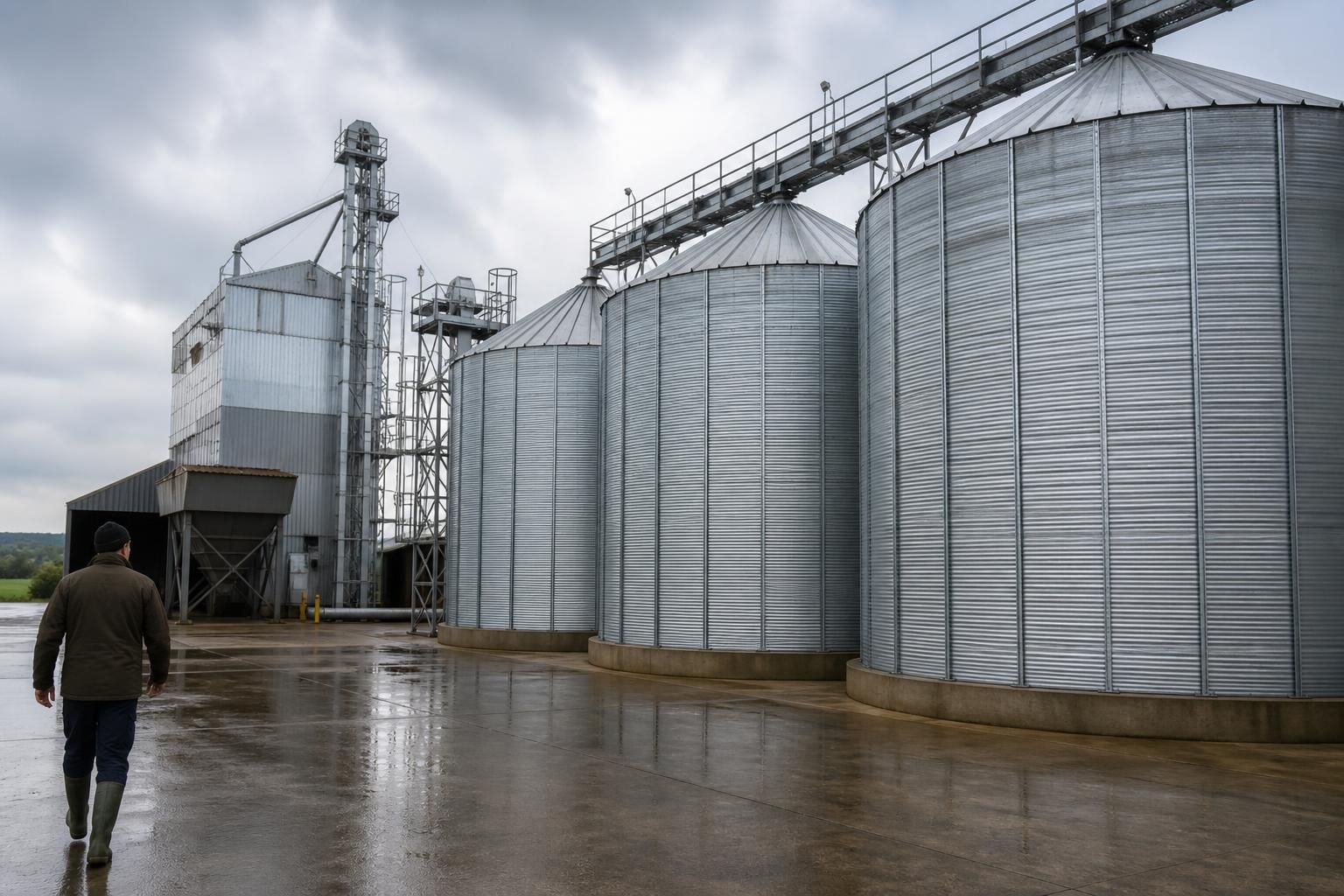
What Grain Silo Capacity Does Your Operation Require?
The right grain silo capacity is based on the volume and type of crop you need to store, the timing of harvest and sales, and the capacity of your handling equipment. Allow for practical operating space and likely changes in production, rather than sizing the silo only for an average harvest.
The correct grain silo capacity is the amount of usable storage needed for the maximum stock you expect to hold, converted into volume using the characteristics of the crop. The calculation should distinguish between gross silo volume and practical working capacity, then test the result against intake, drying, handling and outloading arrangements.
Start with the quantity to be stored. Review crop records, field areas, expected yields and the proportion that will be retained on the farm rather than sold or moved elsewhere. Use the largest realistic stock position as the starting point, not simply an average year. If grain arrives before it can be dried, cleaned or marketed, include the quantity that may temporarily accumulate during that period.
Capacity should be assessed separately for each crop and grade. Wheat, barley, oilseed rape and other grains do not have identical bulk densities, so the same silo volume will not hold the same mass of every product. Moisture content, screenings, cleanliness and the condition of the grain can also affect the weight held in a given volume. A calculation based only on tonnes without checking the relevant bulk density can therefore produce an unsuitable silo size.
Convert tonnes into usable volume. The basic calculation is:
Required volume = required grain mass ÷ applicable bulk density
Use design information appropriate to the crop and its expected condition. The result should then be checked against the manufacturer’s stated capacity and the level at which the silo is intended to operate. A quoted capacity may describe the total geometric volume, whereas the usable quantity can be lower because of the roof space, hopper or cone, outlet arrangement, access requirements and maximum safe fill level.
Allow for how the silo will be used. A silo that is technically large enough may still be impractical if it has to be emptied completely before another crop or grade can be received. Consider:
- whether different crops, varieties or quality grades must remain separate;
- whether grain needs to be held at different moisture levels;
- how much material may be waiting for drying or cleaning;
- whether loads are likely to arrive in concentrated periods; and
- whether part-loads can be directed into the available cells without excessive mixing.
These points often make several silos more suitable than one large store. Multiple cells provide segregation and allow one bin to be emptied while others remain in use. They can also support different marketing decisions, although they introduce additional requirements for conveyors, augers, pipework, controls and access.
Separate storage from temporary holding. Grain awaiting drying or cleaning may need a different type of capacity from grain intended for longer-term storage. A holding or buffer silo can prevent wet or unprocessed grain from obstructing the main storage system, but its size should be related to the rate at which the dryer and cleaning equipment can process material. A large store does not compensate for insufficient drying or intake capacity, and a high-throughput intake does not help if there is nowhere suitable for the grain to go.
Check the movement of grain through the complete installation. The chosen capacity should work with the intake pit, elevators, conveyors, cleaners, dryers, fans and discharge equipment. Pay attention to the time required to fill and empty each cell, the route between buildings and the ability to divert grain to the correct destination. The silo arrangement may need more than one outlet or conveying route if different products are handled at the same time.
Use operating scenarios rather than a single estimate. Prepare a capacity schedule for normal production, a strong harvest and any foreseeable change in cropping or storage policy. Include grain already in store when new harvest material arrives. It is also useful to identify the point at which the site would need to sell, move or temporarily store grain elsewhere. This shows whether the proposed installation provides a workable margin or depends on ideal harvest conditions.
Do not add capacity indiscriminately. A silo that is substantially larger than the quantity normally held may increase the demands on foundations, aeration, conveying equipment and site layout. Conversely, a marginally sized installation can force premature sales, mixing of grades or reliance on temporary storage. The objective is a balanced system in which the silo volume, number of cells and supporting equipment match the way the operation handles grain.
Before finalising the specification, record the required mass for each crop, the applicable bulk density, the gross and usable volume of each proposed silo, the expected maximum stock position and the intended fill and discharge routes. A structural steel building specialist can use this information to develop a coordinated layout, with the silo positions, access, handling routes and surrounding structures considered together rather than treating capacity as an isolated figure.
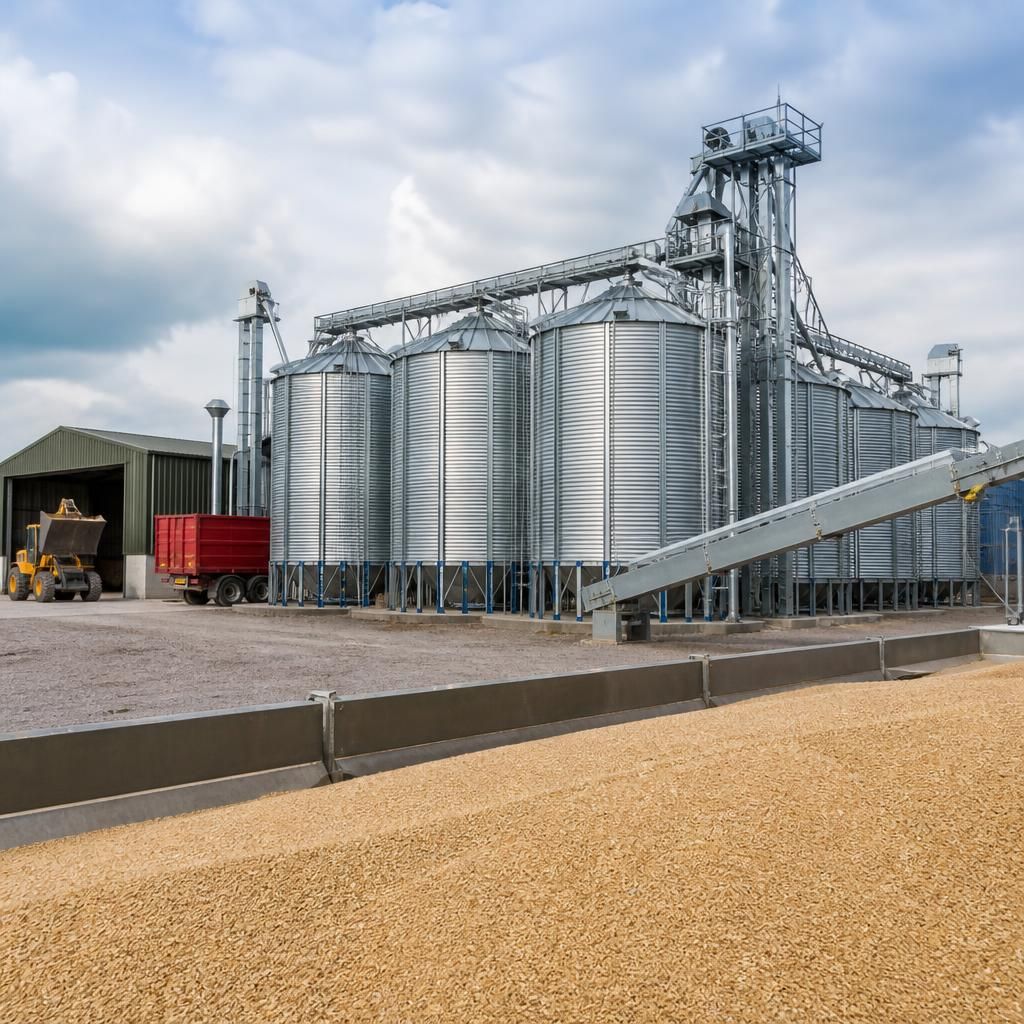
Compare grain silo capacities on a consistent basis before selecting an arrangement. A figure in cubic metres cannot be assessed against a figure in tonnes unless the assumed bulk density is known, and quoted capacities may be based on different fill levels or measurement points.
Ask for each proposal to state the storage medium, assumed grain condition, usable capacity and maximum operating level. Record these details alongside the intended crop and grade so that alternatives are compared fairly. This prevents a silo appearing larger on paper simply because its capacity has been calculated using a different assumption.