
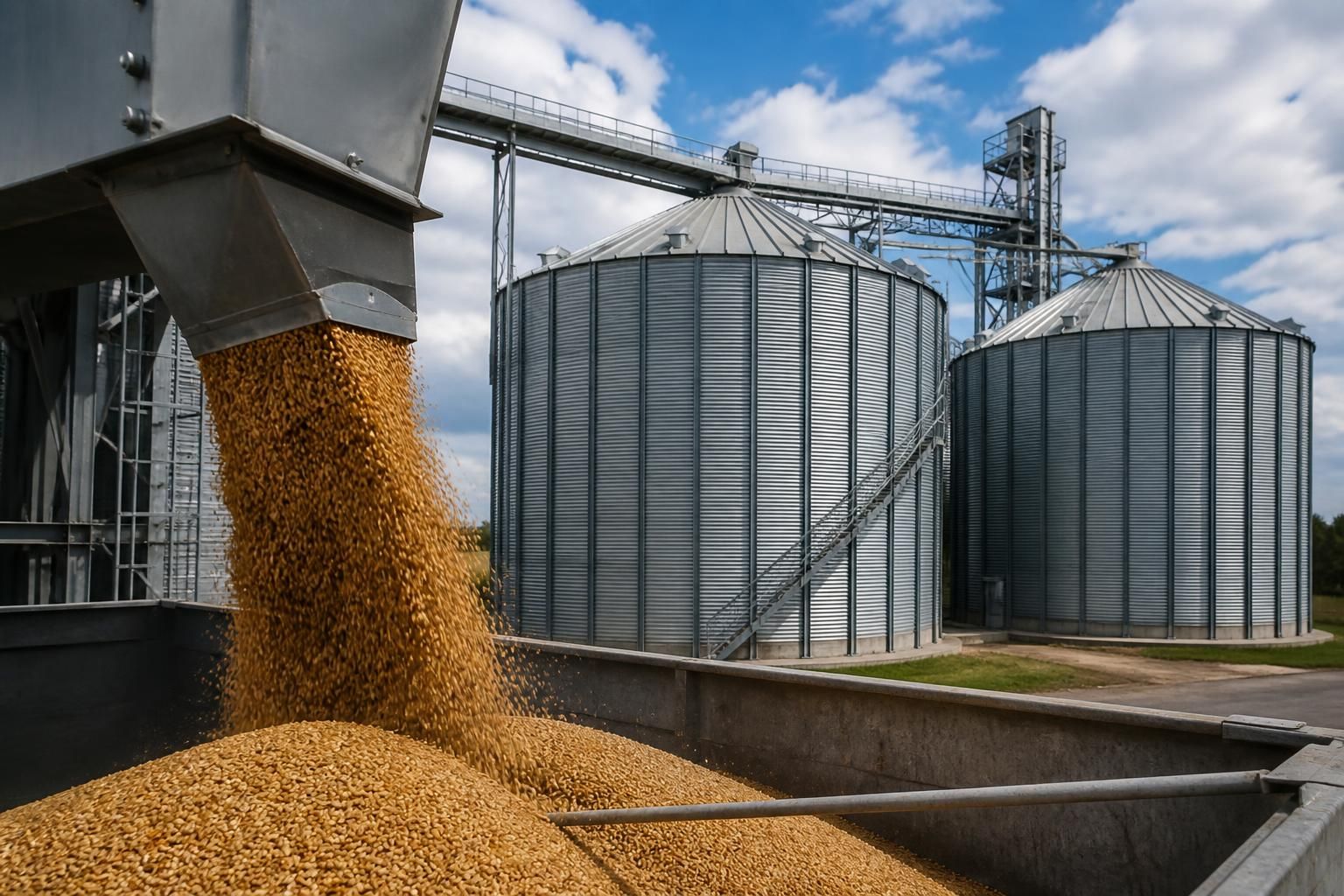
What Grain Types Are Suitable for Storage in Grain Silos?
Grain silos are suitable for storing free-flowing, dry crops such as wheat, barley, oats, maize, oilseeds and pulses. Each crop requires appropriate moisture control, aeration, temperature monitoring and cleaning procedures to preserve quality and prevent spoilage during storage.
Suitability for grain silo storage depends on more than the crop name. The material should be mature, clean, sufficiently dry for its intended storage period and capable of moving through the silo without bridging or compacting. The correct silo arrangement also depends on whether the crop is intended for milling, malting, feed, seed, oil production or human consumption.
In addition to the commonly stored cereal crops, silos may be suitable for:
- Rye and triticale: these cereal grains can be handled in a similar way to wheat, provided the crop is clean and its condition is monitored during storage.
- Sorghum and millet: small grains can be stored successfully, although the handling system must be designed to limit losses through poorly sealed joints, unsuitable screens or excessive carry-over in conveying equipment.
- Rice: paddy rice and processed rice have different handling and quality requirements. The presence of husk, different bulk densities and the need to protect the grain from moisture ingress should be considered when specifying the installation.
- Oilseed crops: rapeseed, sunflower, soya and linseed may be stored in silos, but their relatively high oil content makes temperature control and stock rotation particularly important. Oilseeds can deteriorate more quickly if they are stored warm, contaminated or at an unsuitable moisture level.
- Pulses: peas, beans, lentils and similar crops are often suitable where the silo and conveying equipment can handle their size, shape and fragility. Excessive drops or aggressive conveying may split the seed and reduce its value.
Crop condition is often more important than crop type. Grain containing green material, weed seeds, chaff or excessive screenings can restrict airflow and create localised areas of deterioration. Loads with a high proportion of fines may also settle unevenly, making parts of the stored bulk more difficult to monitor and remove. Cleaning before storage therefore helps maintain consistent flow and allows the storage system to perform as intended.
End use also affects whether a particular crop is suitable for a silo and how it should be managed. Milling grain may need tight control of contamination and segregation. Malting barley must retain the characteristics required for germination, while seed grain needs careful handling to protect viability. Feed grain may have different acceptance criteria, but mould, insect activity and contamination remain important concerns. A silo used for several crops should be assessed for residual material, cleaning access and the risk of one crop affecting the next.
Different crops present different physical handling challenges:
- Small or light seeds can escape through gaps that would not affect larger cereals, so seals, transitions and extraction points need close attention.
- Rounded or irregular seeds may flow differently from conventional cereal grain and can form unstable bridges if the outlet and hopper geometry are unsuitable.
- Fragile pulses can suffer cracking or splitting when dropped from height or moved at excessive speed.
- Sticky, damp or partially dried material may adhere to walls and obstruct outlets rather than discharge cleanly.
- High-oil crops can leave residues that become difficult to remove, making crop changeovers and internal cleaning especially important.
Some materials should not be treated as ordinary bulk grain simply because they originate from a crop. Wet grain, harvested material with substantial green content, screenings and by-products may need separate conditioning or specialist storage. Forage intended to ferment is also a different application from storing dry grain: it requires an ensiling process and equipment designed for that purpose rather than a standard grain storage arrangement.
Before selecting a silo, assess the crop’s bulk density, particle size, moisture condition, tendency to bridge, susceptibility to damage and required storage duration. Confirm the target quality standard with the intended buyer or end user, then match the silo dimensions, outlet arrangement, conveying method and monitoring provisions to those requirements. Where several crop types will share the installation, the design should accommodate the most demanding material rather than the easiest one to handle.
In practice, grain silos are most versatile when used for clean, consistent lots that can be loaded, monitored and discharged without excessive damage or restriction. Crops that vary substantially in size, condition or end use may still be stored in silos, but they generally require more careful segregation, preparation and operating procedures.
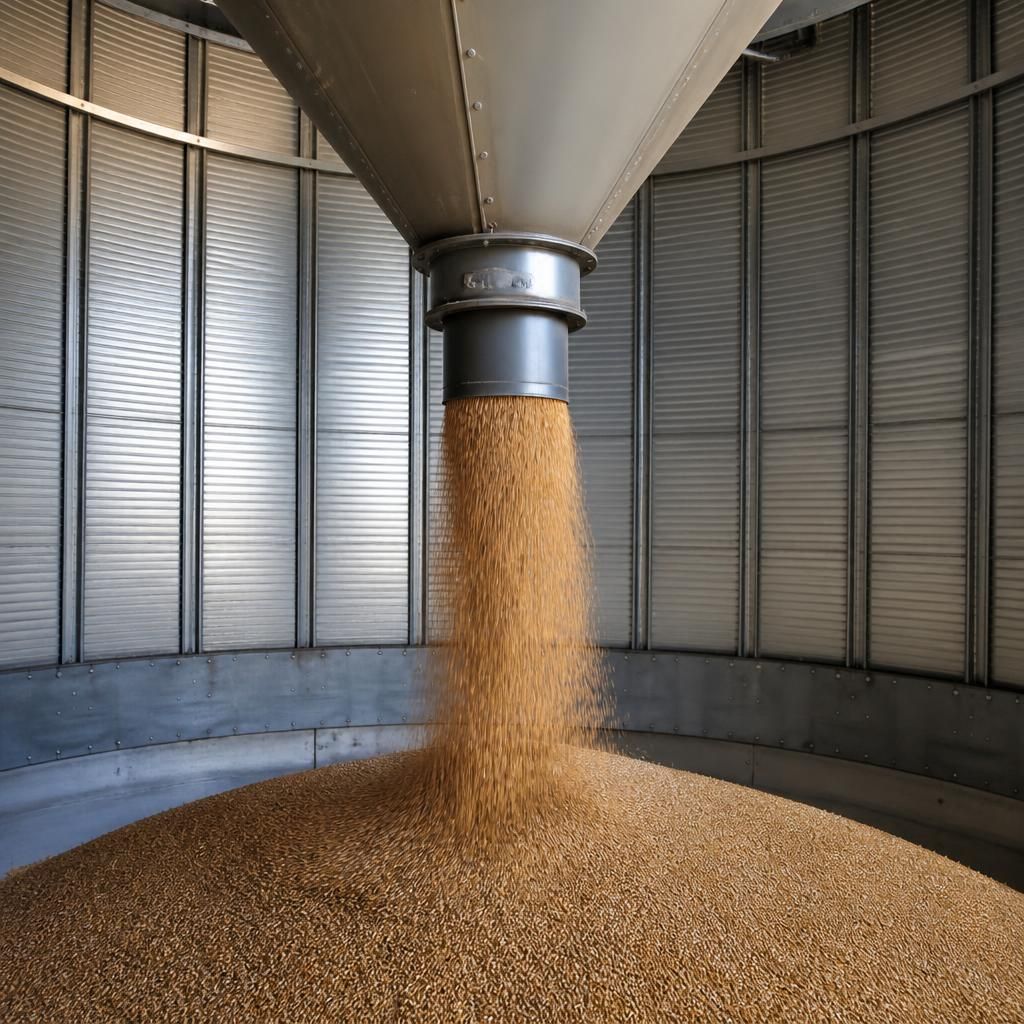
Grain type also affects the safety measures required for silo storage. Wheat, barley, maize, oilseeds and pulses can all produce combustible dust during loading, conveying and discharge, although the amount and behaviour of dust vary between crops. A suitable installation should therefore include effective dust control, safe access for cleaning and inspection, and equipment selected for the conditions created by the stored material.
Crop changes require particular care because dust and residues from one product can remain in intake pits, conveyors, filters and transfer points. Before storing a different grain, the system should be emptied and cleaned in accordance with its risk assessment, with attention to hidden ledges and enclosed equipment. This helps prevent contamination while reducing the accumulation of combustible material within the handling system.