
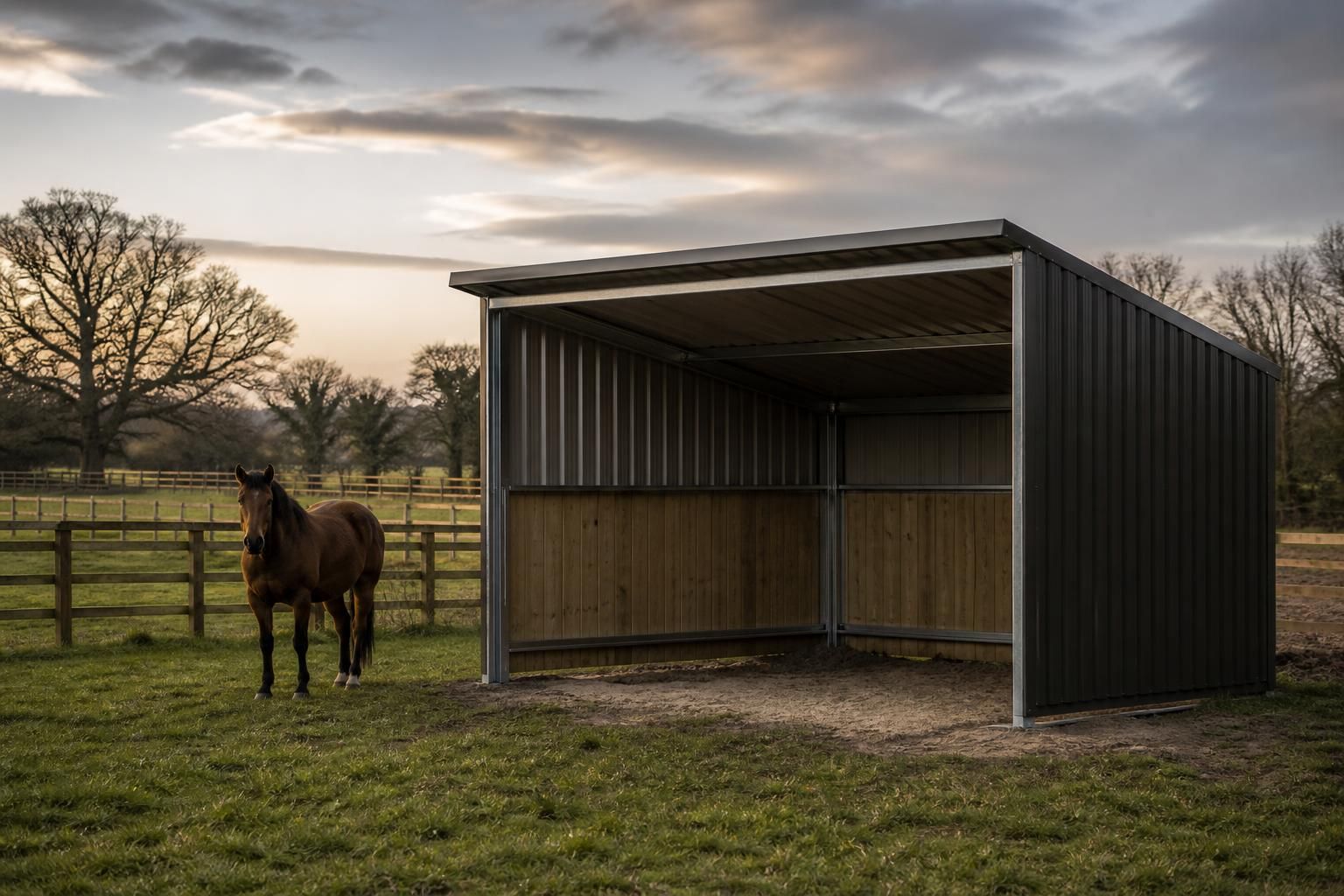
Do field shelters for horses need planning permission?
Field shelters for horses may not need planning permission if they are genuinely temporary or mobile and used in connection with an established agricultural use, but a fixed shelter or one supporting an equestrian use may require it. The position depends on the shelter’s construction, permanence, location and intended use, so check with the relevant local planning authority before installation.
Whether a field shelter for horses needs planning permission depends on how it is used, how it is constructed and how permanently it is connected with the land. A shelter used solely for an agricultural purpose may benefit from permitted development rights in some circumstances, whereas a shelter for recreational horses, livery or an equestrian business is more likely to require a planning application. The relevant planning authority makes the final decision based on the specific facts.
The horse’s use of the land is important. Keeping horses as livestock can form part of an agricultural enterprise, particularly where the animals are bred, reared or used in a farming operation. By contrast, horses kept for private riding, training or leisure are not automatically an agricultural use. Commercial livery, riding schools and other equestrian activities may also be treated as a separate planning use. A shelter cannot necessarily rely on agricultural permitted development rights simply because it stands in a field or contains livestock.
Mobility is considered in practical terms. A shelter that is genuinely capable of being moved and is regularly repositioned may be treated differently from a structure fixed to the ground. However, wheels or skids alone do not settle the issue. The authority may consider whether the shelter is connected to services, anchored, surrounded by permanent hardstanding, repeatedly kept in one location or intended to remain there indefinitely. A structure can require permission even if it was delivered as a prefabricated unit.
In England, agricultural permitted development rights may apply in defined circumstances. These rights are commonly associated with Part 6 of the General Permitted Development Order, but they are subject to conditions relating to the agricultural unit, the purpose of the building, its size, siting and design. Some proposals require the authority’s prior approval before work starts. Prior approval is not the same as full planning permission: the authority assesses specified matters such as siting, appearance, transport and landscape impact, depending on the applicable class.
Permitted development rights may be restricted or unavailable where:
- the land is not being used for agriculture;
- the proposal represents a material change of use of the land;
- the site is in a protected location or is affected by an Article 4 direction;
- the shelter is close to a listed building, protected habitat, trees or important landscape features;
- previous planning permissions have removed or limited permitted development rights; or
- the proposal does not satisfy the relevant limitations and conditions.
Rules are not identical across the UK. England, Wales, Scotland and Northern Ireland have separate planning legislation and permitted development regimes. Local policies can also affect how an application is assessed, particularly in the countryside, Green Belt, national parks, areas of outstanding landscape value and other sensitive locations. Green Belt designation does not automatically prevent a field shelter, but openness, visual impact and the purpose of the development may be relevant.
Planning permission is separate from other consents. Even where a shelter is permitted in planning terms, building regulations, highway requirements, drainage matters, environmental restrictions and animal welfare considerations may still need attention. A listed building or a protected tree can require additional consent. Works affecting a ditch, watercourse, hedge or habitat may also raise issues that are not resolved by planning permission alone.
Before ordering or installing the shelter, establish the following:
- Which nation’s planning rules apply to the site.
- The lawful existing use of the land and the intended use of the horses.
- Whether the shelter will be movable, semi-permanent or fixed.
- Its dimensions, materials, position and relationship to boundaries, roads, homes and neighbouring land.
- Whether agricultural permitted development rights or prior approval procedures are available.
- Whether local designations, previous permissions or restrictions affect the site.
If the position is uncertain, the local planning authority can advise on the applicable process, although informal comments may not provide the same certainty as a formal decision. A certificate of lawfulness may be appropriate where the claim is that the proposed or existing shelter does not require planning permission. It confirms the planning status on the evidence submitted; it does not authorise a development that would otherwise need permission.
Submitting clear location plans, site photographs, dimensions, construction details and an explanation of the horses’ use gives the authority the information needed to assess the proposal. For a permanent steel-framed shelter or a more substantial equestrian structure, planning elevation drawings and detailed fabrication information can help define exactly what is being proposed. Do not begin groundworks or install the shelter until the planning position and any required prior approval have been confirmed.
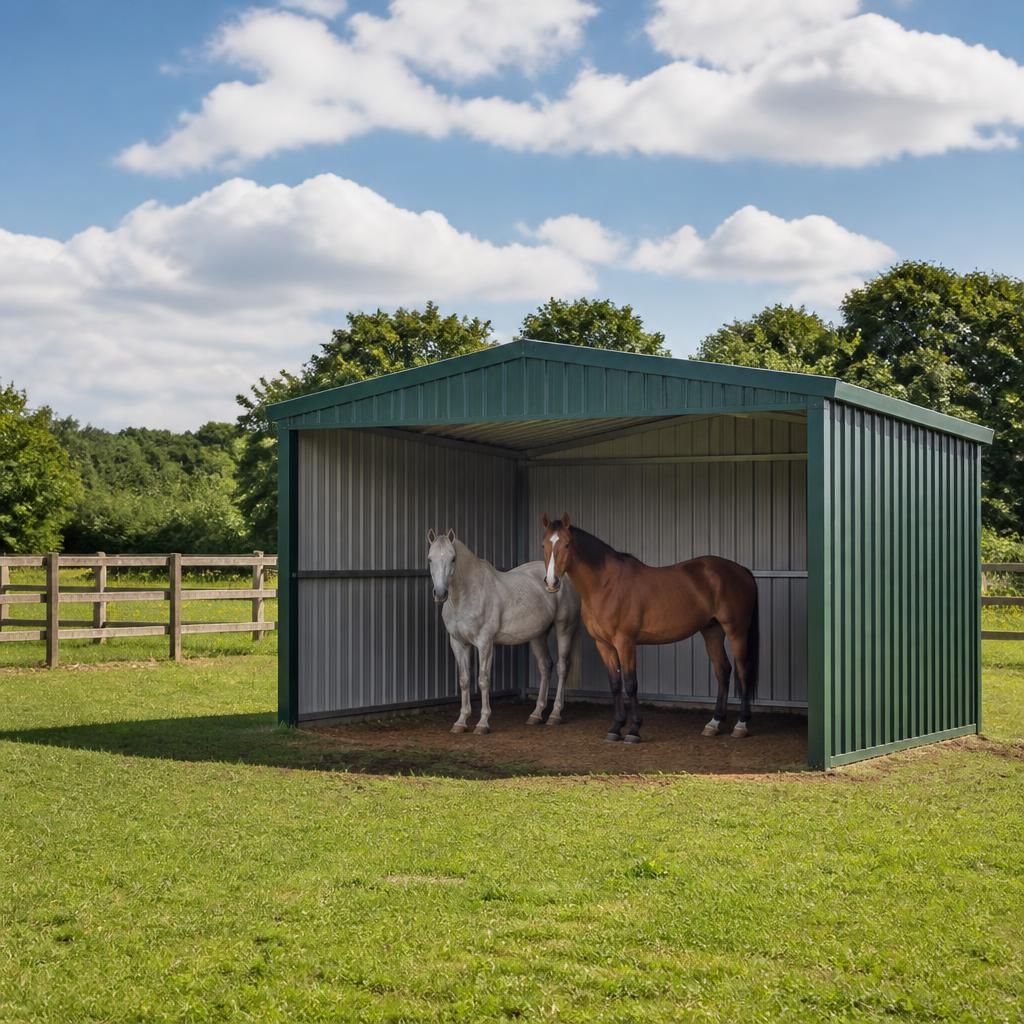
Installing a field shelter before confirming its planning status can create enforcement risk. If the local planning authority considers that the structure required permission, it may seek a retrospective application or take enforcement action requiring the building to be altered, removed or no longer used. Retrospective permission is not automatic, so it should not be treated as a substitute for checking the position beforehand.
Keep a clear record of the shelter’s proposed dimensions, location, construction, intended use and relationship to the land. This information helps distinguish a genuine agricultural shelter from a permanent equestrian building and gives the planning authority a reliable basis for deciding which process applies.