
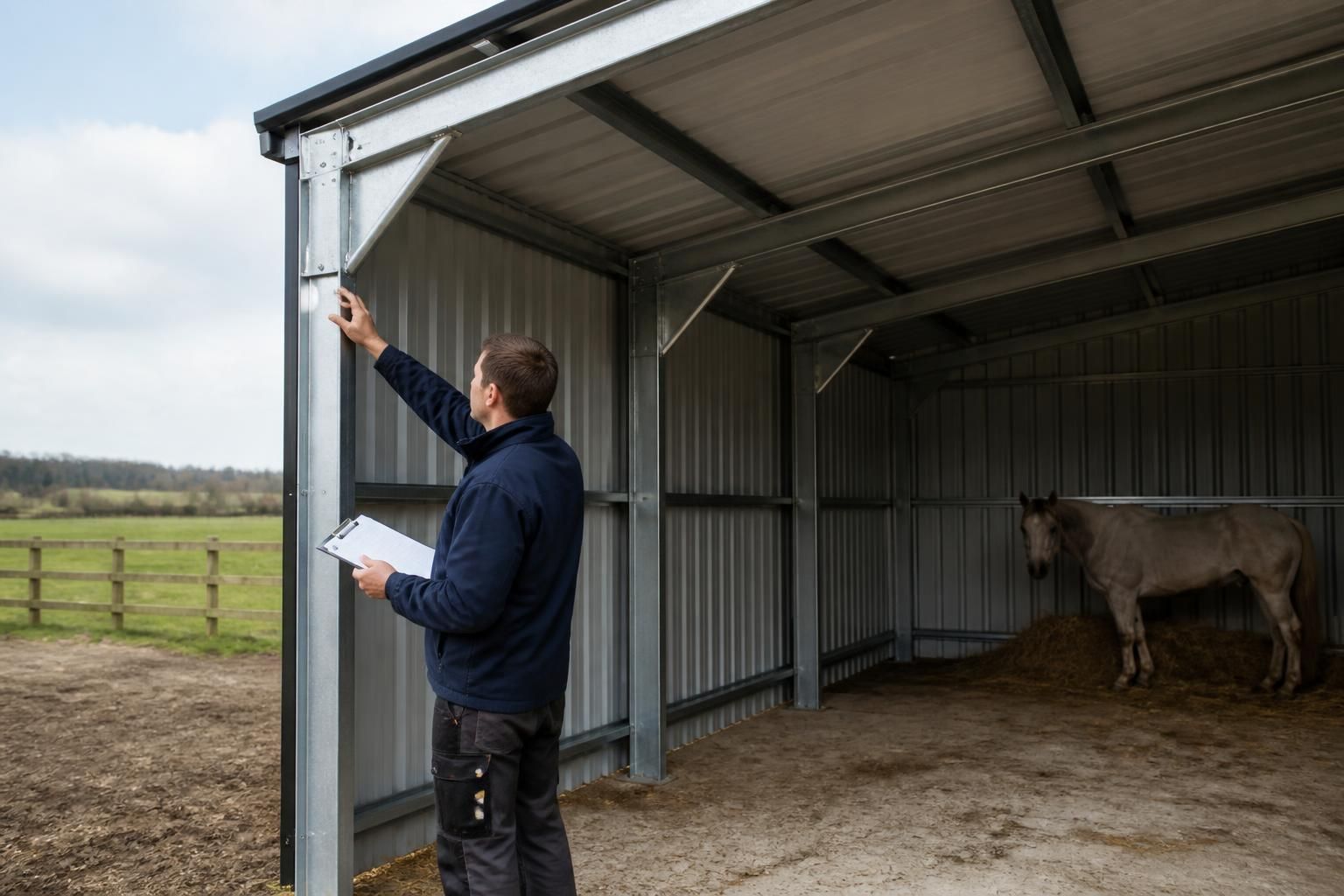
What maintenance does a steel horse field shelter require?
A steel horse field shelter requires regular cleaning, routine checks of the frame, roof, fixings and drainage, and prompt attention to any damaged paint or emerging corrosion. Keeping the shelter dry, secure and free from sharp or loose components helps preserve the steelwork and maintain a safe environment for horses.
Maintenance of a steel horse field shelter is mainly concerned with hygiene, preservation of the protective finish, secure connections and the removal of hazards that could injure horses. The exact routine depends on the shelter’s coating, roof and cladding specification, the condition of the site and how heavily the building is used.
Keep the shelter hygienic. Remove accumulated bedding, manure, hay and feed regularly, particularly from corners and beneath roof edges. Organic material holds moisture against metal and can contribute to corrosion, while damp, soiled bedding can create poor conditions for horses. Sweep or wash hard surfaces where appropriate, then allow them to dry. Avoid leaving wet bedding pressed against steelwork or cladding.
Use clean water and a mild detergent for general washing. A pressure washer can force water into joints, fixings and protected interfaces, so it should be used cautiously and not directed at close range towards seals, fasteners or areas where the coating has been damaged. Do not use abrasive tools or harsh chemicals unless the coating manufacturer confirms that they are suitable.
Check the protective finish in detail. Look for flaking, blistering, deep scratches, exposed steel and areas where impact from equipment or horses may have removed the coating. Surface damage should be cleaned, dried and repaired with a compatible treatment before corrosion becomes established. Preparation is important: loose coating and rust need to be removed without spreading damage to the surrounding finish. Any repair product should be suitable for the existing coating rather than selected solely by colour.
Where corrosion is more than a small surface blemish, or where steel has become noticeably pitted, seek an assessment before carrying out a cosmetic repair. Rust can reduce section thickness over time, and painting over unstable corrosion may conceal rather than resolve the problem. A structural steel specialist should assess any suspected loss of material, distortion or cracking around connections and welds.
Pay particular attention to horse-level hazards. Check that no sharp edges, protruding bolts, split components or loose sheets are accessible to the animals. Replace damaged protective caps and secure any component that has become loose. Inspect areas that may be rubbed or struck by horses, as repeated contact can damage coatings and create projections. Remove wire, broken timber, discarded tools and other foreign objects from inside and around the shelter.
Inspect the building’s interfaces. Examine the points where the steelwork is fixed to the base, including visible bolts, plates and surrounding concrete. Look for movement, cracking, settlement, standing water or gaps that could allow moisture to remain around the connection. Do not tighten or replace structural fixings indiscriminately: the correct bolt type, tightening method and repair detail should follow the building design or the installer’s guidance.
Also check the roof and cladding after severe weather or accidental impact. Look for displaced sheets, damaged laps, failed seals and daylight where a joint should be closed. A damaged roof can admit water and may also leave sharp edges. Work at height should be carried out using suitable access equipment and by someone competent to do so; horses should be kept away from the work area while maintenance is under way.
Keep vegetation, stored materials and accumulated soil from bearing against the shelter. These can retain moisture, obstruct inspection and make it harder for water to drain away from the base. Maintain a clear working margin around the structure so that the lower steelwork and its fixings can be examined properly.
Record inspections and repairs, especially where the shelter is used by more than one person. Note the date, location of any defect, action taken and whether a follow-up inspection is needed. Manufacturer or installer instructions should take priority where they specify cleaning products, coating systems, fixing checks or repair procedures. If the frame is distorted, a connection has failed, corrosion is extensive or the shelter has moved, keep horses away and obtain professional advice before returning it to use.
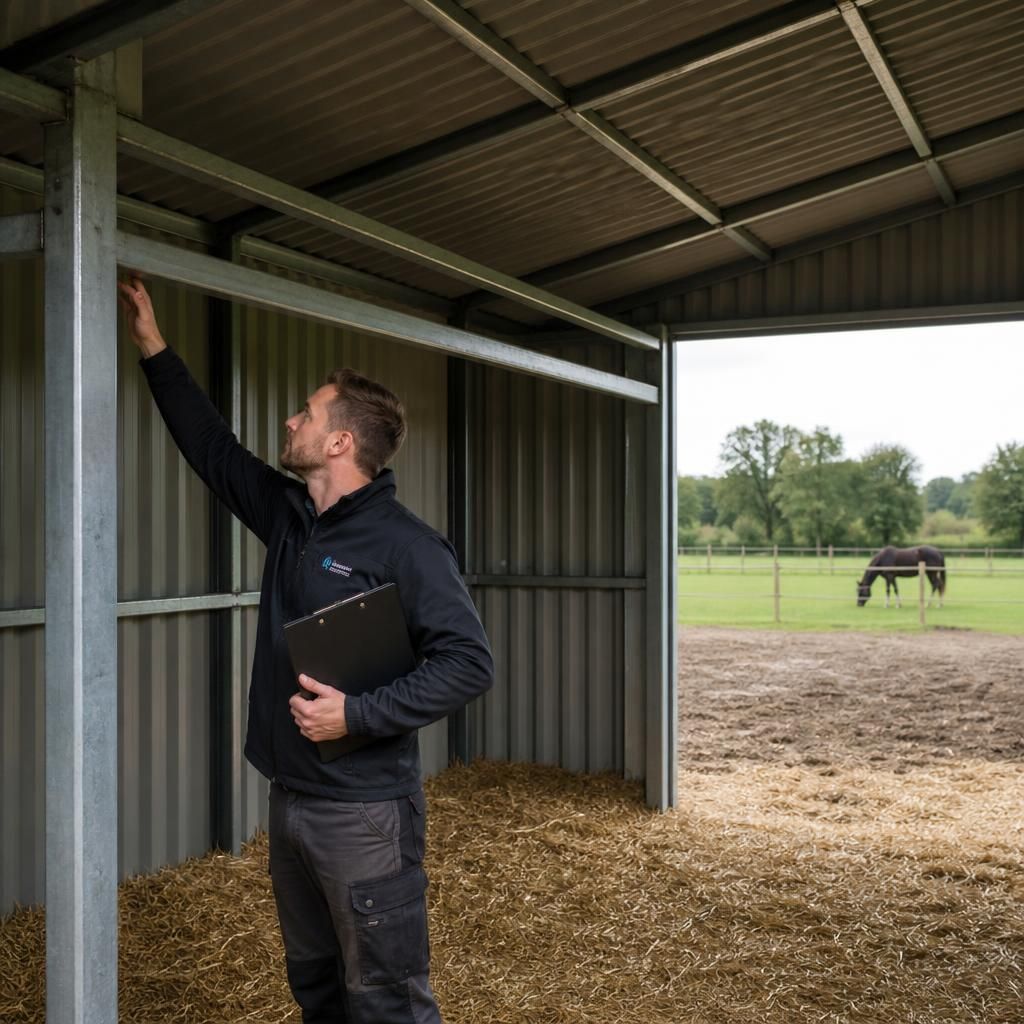
Maintenance also includes checking the surface on which horses stand and move inside the shelter. Remove stones, compacted bedding and other debris, and look for holes, slippery patches, pooling or uneven areas that could cause a horse to stumble. Pay particular attention to the entrance, where heavy traffic can wear the ground and create ruts.
Any damaged concrete, loose surfacing or persistent water should be addressed before the shelter is routinely used. Keep horses away while remedial work is taking place, and allow freshly cleaned or repaired areas to become suitable for use. A stable, well-drained footing reduces injury risks and helps prevent moisture and dirt being carried onto the shelter’s steelwork.