
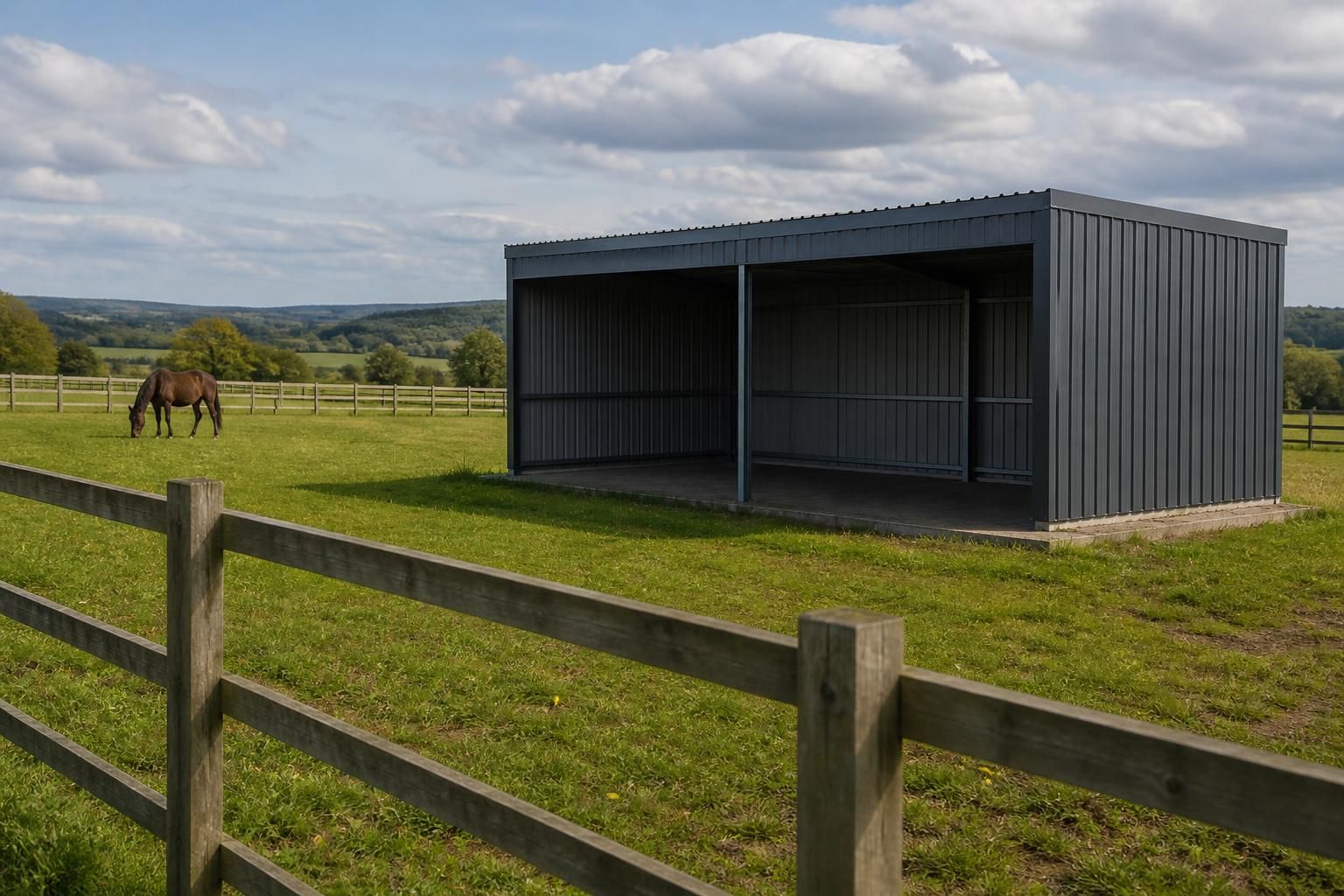
Do metal field shelters require planning permission?
Metal field shelters do not always require planning permission, but the answer depends on their construction, permanence, location and intended use. A genuinely mobile shelter may fall outside the need for an application, while a fixed or regularly sited structure may require approval unless a relevant permitted development right applies; check with the local planning authority before installation.
Whether a metal field shelter needs planning permission depends mainly on its use, permanence and location. A shelter that is genuinely mobile and used temporarily may be treated differently from a structure that remains in one place, is anchored to foundations or serves a permanent change of use. The safest approach is to establish its planning status with the local planning authority before ordering or installing it.
When a field shelter may not need a planning application
A moveable shelter may fall outside the usual planning controls where it can be relocated, has no permanent connection to the land and is genuinely used as temporary accommodation for animals. However, wheels alone do not automatically make a structure exempt. The authority may consider how often it is moved, whether it has been in the same position for a prolonged period, whether it is connected to services and whether its overall arrangement gives it the character of a permanent building.
A shelter can also benefit from permitted development rights where it is reasonably necessary for agriculture and the relevant conditions are met. These rights are subject to restrictions, including the nature of the agricultural unit, the proposed use, the building’s siting and its design. In some cases, the authority must be notified or asked to approve specific details before work starts. This is commonly known as a prior approval process and is not the same as having unrestricted permission to build.
Situations where permission is more likely
- The shelter is fixed to concrete pads, ground beams or other permanent foundations.
- It is intended to remain in one location rather than being moved around a field.
- It includes permanent drainage, electricity, water or other services.
- It is used for storage, commercial activity, accommodation or another purpose beyond the keeping of animals.
- The proposal involves hardstanding, access works or a material change in the use of the land.
- The land is in a sensitive location or is affected by a planning restriction that limits permitted development rights.
The intended use is particularly important. Keeping livestock as part of an agricultural operation may be treated differently from keeping horses for leisure. An equestrian shelter can require permission where the use is not genuinely agricultural, especially if the proposal forms part of a wider change from agricultural land to an equestrian use. The authority will consider the actual use of the land rather than relying only on the name given to the structure.
Location-specific controls
Permitted development rights can be restricted or removed in areas such as conservation areas, National Parks, Areas of Outstanding Natural Beauty and sites affected by heritage designations. Listed buildings, protected landscapes, public rights of way, ecological constraints and local planning conditions may also affect the proposal. A shelter that would otherwise qualify under an agricultural right may therefore still need an application, additional consent or a different form of assessment.
Green Belt policy does not create a blanket ban on field shelters, but it can make new buildings and changes of use more carefully controlled. Visual impact, openness, access, landscape character and the effect on neighbouring land may all be relevant. The authority may also impose conditions concerning materials, positioning, landscaping, drainage or the future use of the building.
Planning permission and building regulations are separate
Planning permission controls the principle, siting and appearance of development. Building regulations deal with matters such as structural stability, safety, drainage and construction standards. A proposal may require one approval, both approvals or neither, depending on its design and use. The absence of a planning application does not automatically confirm that the structure is exempt from building regulations or other legal requirements.
How to check before installation
- Define the proposed use, including whether the shelter is for agriculture, horses, storage or another activity.
- Record whether it will be moved, how it will be supported and whether any permanent services or hardstanding are proposed.
- Check the local development plan, permitted development rights and any restrictions applying to the site.
- Ask the local planning authority whether prior approval, planning permission or another consent is required.
- Provide a site plan, proposed dimensions, elevations, photographs and details of foundations, cladding, access and drainage where requested.
If there is genuine uncertainty about an existing or proposed shelter, a lawful development certificate can provide a formal planning view on whether the use or works are lawful. It is not a substitute for planning permission where permission is required, but it can provide useful evidence of the authority’s decision.
Installing a structure without the necessary consent can lead to an enforcement notice requiring alterations or removal. For that reason, the planning position should be settled before groundworks, delivery or assembly begins. A design package showing the shelter’s dimensions, elevations and construction details can help the authority assess the proposal, but the local planning authority remains responsible for deciding whether consent is needed.
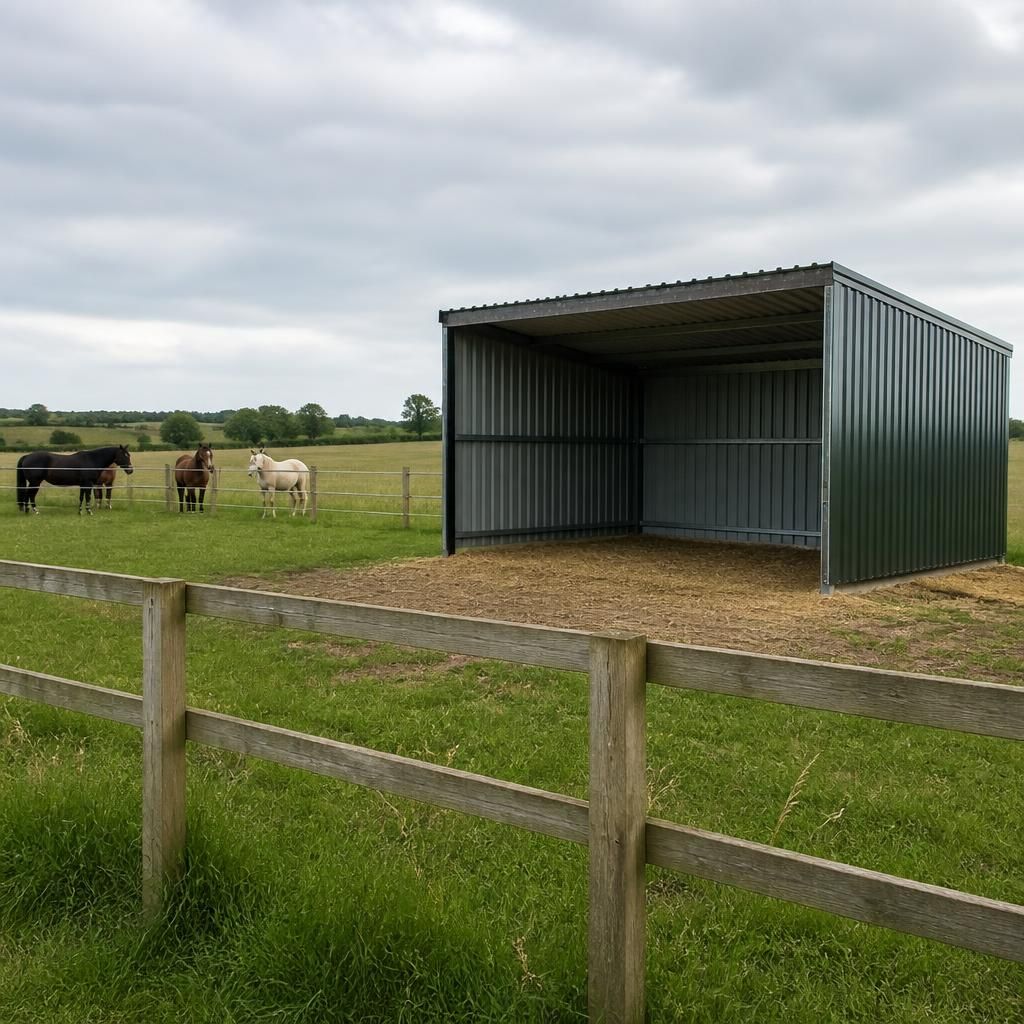
The fact that a field shelter is made from metal does not, by itself, decide whether planning permission is required. The key issue is how the structure relates to the land as a whole, including any previous planning consents, conditions or restrictions recorded for the site.
Before relying on an exemption, check the planning history for the holding and confirm that the proposed shelter would not conflict with an existing condition or restriction. This is particularly important where the land has changed use, forms part of a larger development or is subject to a condition controlling agricultural buildings.