
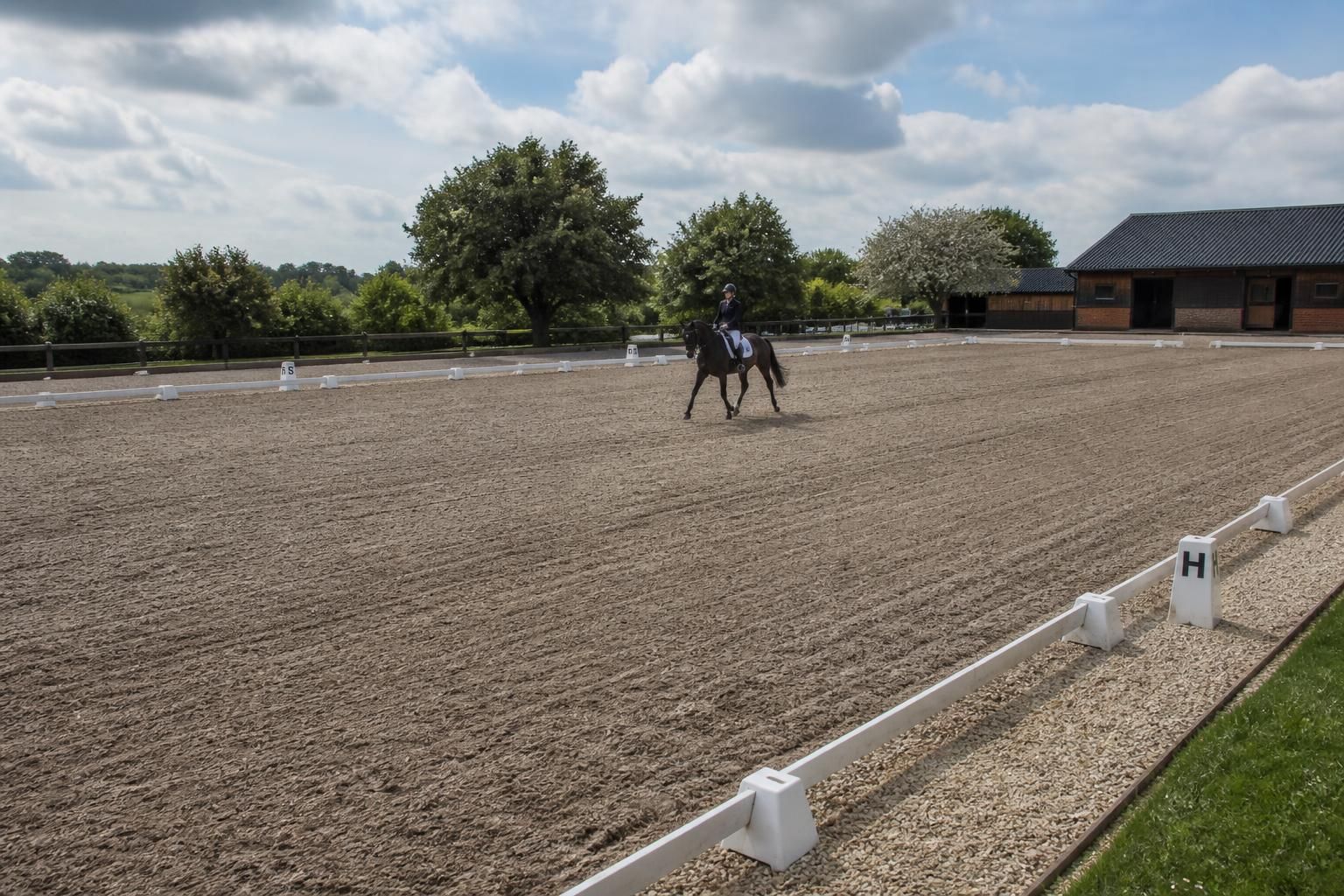
How does arena size affect the specification of dressage arena surfaces?
Arena size affects the specification of a dressage arena surface because larger areas require more material, careful grading and consistent drainage across the full footprint. The surface build-up should therefore be assessed alongside the arena’s dimensions, intended use, base construction and maintenance arrangements.
Arena size affects the specification of a dressage surface through the amount of material required, the need for consistent performance across the whole riding area and the practicalities of installation and upkeep. The correct specification is not simply a smaller or larger quantity of the same product: the arena’s dimensions, proportions, edge details, base and maintenance equipment must work together.
Surface depth and volume
Surface quantity is calculated from the usable area and the specified finished depth. A larger arena therefore needs more material, but the important issue is maintaining an even depth from one end to the other. Small variations can create noticeable differences in cushioning, grip and movement for the horse, particularly where the surface is used for precise transitions, lateral work or collected movements.
The chosen depth should reflect the surface material, the quality of the prepared base and the type of work taking place. Increasing depth is not automatically beneficial. An excessively deep surface can increase effort and reduce stability, while an insufficient depth may allow the base to influence the feel underfoot. The specification should identify a target depth and include a method of checking it during installation and after significant maintenance.
Shape and working area
Two arenas with a similar footprint may still place different demands on the surface if their proportions or internal arrangements differ. A long, narrow layout creates a different distribution of straight lines, corners and turning areas from a more compact layout. The surface should cover the complete working area, including the zones where horses regularly track around the perimeter rather than only the centre of the arena.
In dressage, the edge of the arena is used as a reference for accuracy. This makes the relationship between the riding surface, perimeter boards, fencing and any kickboards especially important. A surface that is level in the centre but changes height or texture along the boundary can affect tracking and the horse’s confidence. The specification should therefore address the finished levels at the edges as well as across the main arena.
Consistency across a larger footprint
As the area increases, consistency of the delivered material becomes more important. The specification should define the required characteristics of the surface, such as particle grading, composition, cleanliness and resistance to migration. Material from different sources or batches can behave differently, so procurement and installation should be planned to minimise noticeable changes between sections.
Large areas also make preparation and quality checks more significant. The base should be sufficiently uniform before the riding surface is placed, because unevenness beneath the top layer may remain detectable after installation. Levels should be checked progressively rather than relying only on a final inspection. This helps identify localised variation before it becomes difficult to correct.
Perimeter and drainage interfaces
The size of an arena influences the amount of perimeter detail required, including edging, retaining boards, access points and transitions to surrounding ground. These interfaces should prevent the riding surface from spreading into adjacent areas while avoiding abrupt ridges that could interfere with movement or maintenance.
Water management must also be considered as part of the complete surface build-up. A larger riding area gives moisture more ground to move through and places greater importance on consistent falls, a suitable base and unobstructed drainage routes. The surface specification should not be selected independently from those underlying elements, because a well-chosen top layer cannot compensate for a poorly prepared formation or blocked drainage system.
Maintenance equipment and access
Arena size affects how the surface can be maintained. The width, weight and turning requirements of the harrow or levelling equipment should be compatible with the available access and the arena’s internal dimensions. Larger arenas may make mechanised maintenance more practical, but they also require a repeatable route or method so that the surface is treated evenly rather than receiving more attention in frequently used areas.
Smaller arenas can present a different challenge. Turning equipment may be restricted, and hand work may be needed around corners, posts, gates and other obstructions. In either case, the specification should allow the surface to be levelled without damaging the base, disturbing the perimeter or creating ridges at the arena margins.
How to compare specifications
- Confirm the usable riding area rather than measuring only the outside dimensions.
- Set a finished surface depth that suits the material, base and intended dressage work.
- Check how the surface will be kept consistent across the full area and around the perimeter.
- Coordinate the top layer with the base levels, edging and water-management design.
- Ensure maintenance equipment can enter, turn and work evenly throughout the arena.
- Allow for future topping-up or redistribution when assessing the original material requirement.
Arena size is therefore one part of a combined specification rather than a standalone purchasing decision. The best result comes from matching the surface depth and material characteristics to the layout, base construction, perimeter treatment and realistic maintenance method.
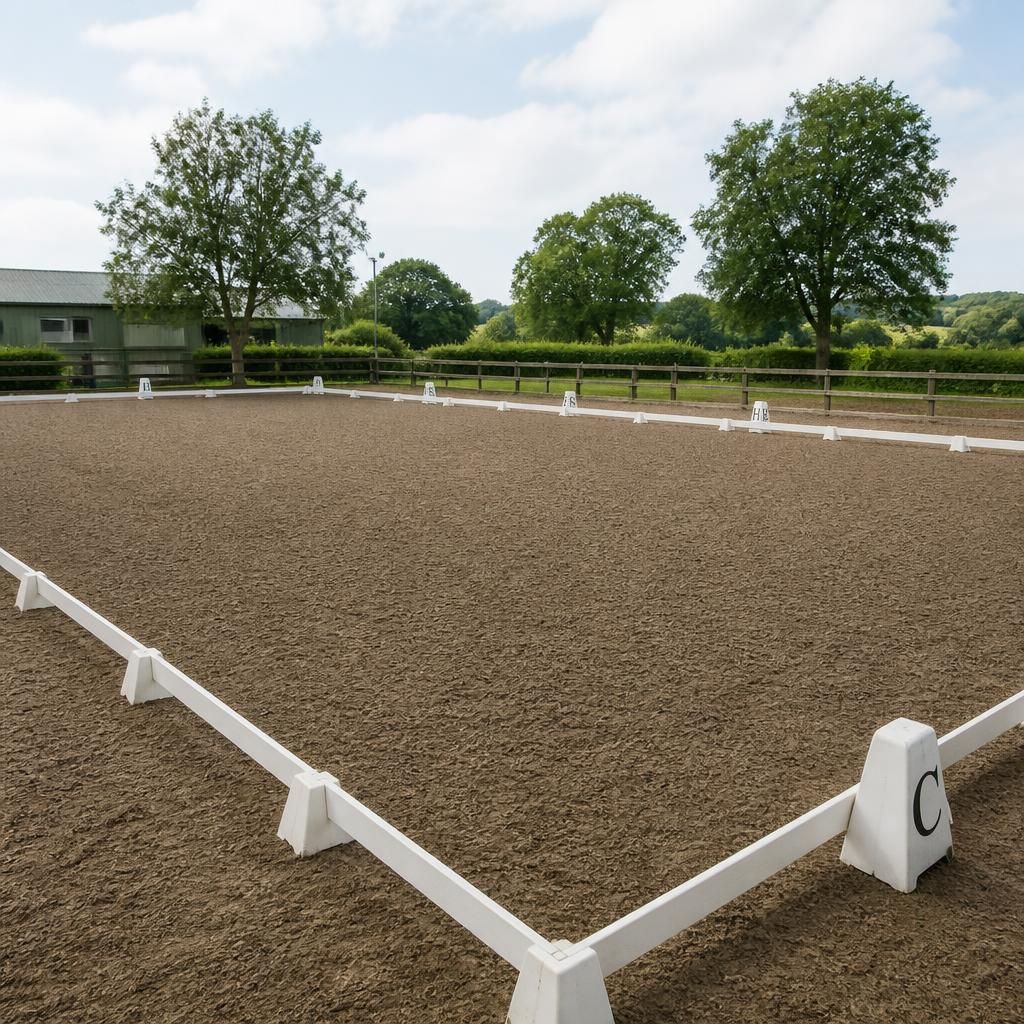
Arena size should be assessed alongside the level of use, because the same riding programme can place very different demands on a smaller or larger working area. In a compact arena, horses repeatedly use the same tracks, corners and halt areas, concentrating loading in particular zones. A larger arena can distribute comparable use across a greater area, although its surface still needs to provide uniform footing throughout.
This distinction can influence the required surface characteristics, including resistance to displacement, ability to retain an even profile and suitability for the expected intensity of schooling. The specification should therefore consider the number of horses, frequency of use and types of movement alongside the arena dimensions, rather than selecting a surface solely by area.