
What maintenance demands should you consider when selecting dressage arena surfaces?
When selecting a dressage arena surface, consider its routine maintenance needs, including harrowing or levelling, moisture management, topping up material, edge control and occasional repairs. The surface should also work with the arena’s drainage design and your riding programme, as usage levels and weather conditions affect how often maintenance is required.
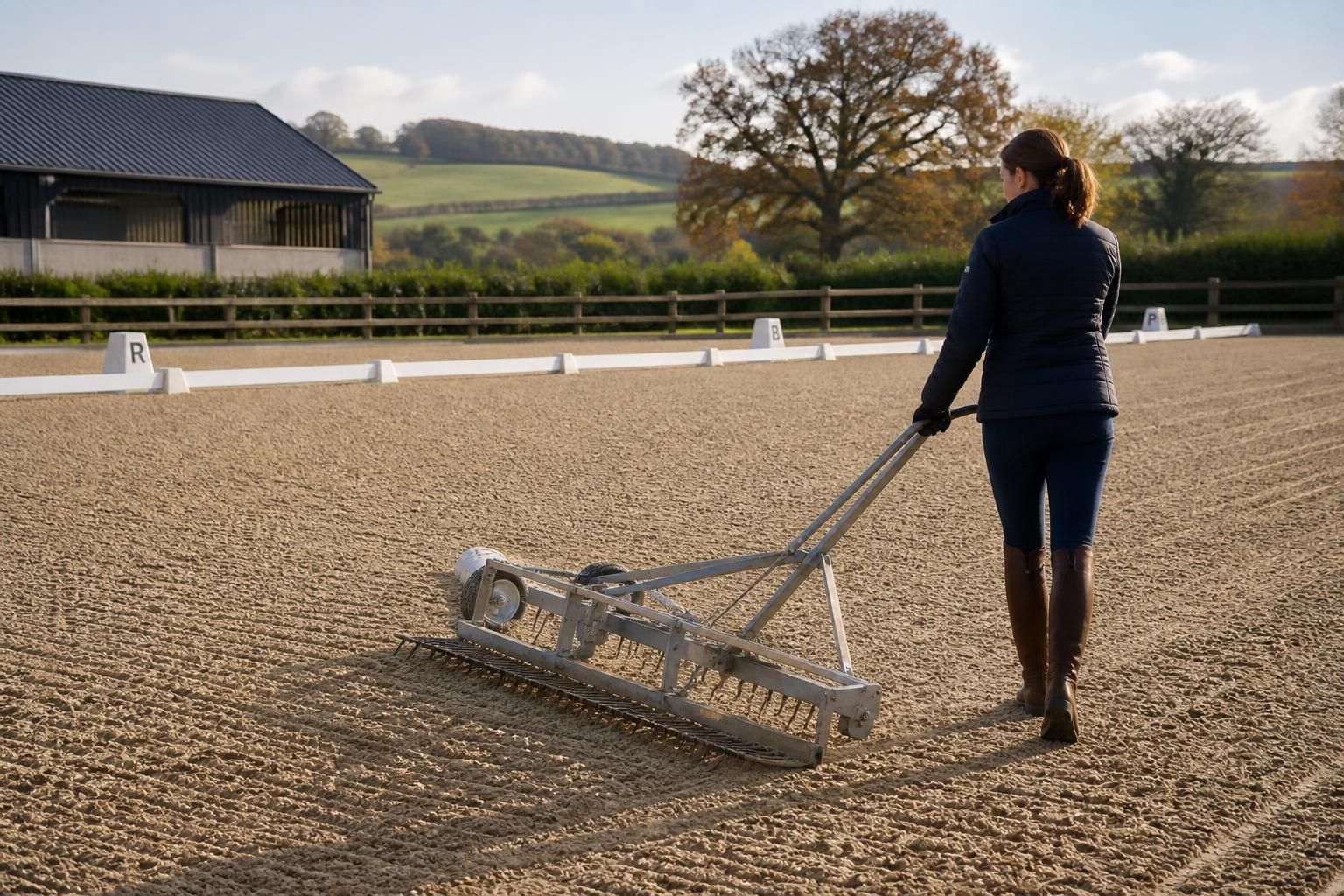
The maintenance demand of a dressage arena surface is determined by more than how often it is groomed. It includes the equipment required, the skill and time needed to manage it, the surface’s sensitivity to contamination or displacement, and how easily local defects can be corrected. A suitable choice should match the available labour, machinery and level of consistency expected from the arena.
Consider the surface construction and its response to use. A loose sand surface may be relatively straightforward to work, but its particles can migrate, compact or become uneven if the grooming method is unsuitable. Surfaces containing fibres or other stabilising materials can offer additional cohesion, yet they may require more careful grooming to prevent the components separating or collecting in particular areas. Bound or prepared systems can have different maintenance limitations again, particularly where aggressive machinery or inappropriate tools could damage the surface.
Ask the supplier for a clear maintenance specification before selecting the surface. This should explain:
- which harrow, leveller or grooming implement is appropriate;
- how deep the implement should work;
- whether a tractor, compact machine or manual tools are needed;
- which actions could disturb the surface layers;
- how often the surface should be checked for changes in depth and consistency;
- which materials are suitable for replacement or corrective work.
Using a tool that is too aggressive can pull stabilising material to the surface, create ridges or expose the underlying layer. A tool that is too light may only disguise unevenness without correcting it. The tractor’s tyre width, turning radius and ground pressure can also matter, particularly in smaller arenas where repeated turning follows the same tracks.
Include contamination control in the maintenance assessment. Manure, bedding, leaves, mud and stones should be removed before they are worked into the riding layer. Organic material can alter the surface texture as it breaks down, while stones or hard fragments may affect hoof comfort and movement quality. Edges and entrance points often collect debris brought in on hooves, wheels or footwear, so the arena design should allow these areas to be inspected and cleaned without disturbing the rest of the surface.
Vegetation is another consideration. Weeds at the perimeter can spread into the riding area, and roots may interfere with the edge detail or drainage components. The chosen method of weed control must not introduce chemicals or loose material that could affect horses, the surface or the drainage system. Keeping surrounding vegetation managed is generally easier than attempting to remove established growth from the arena surface.
Check how the surface can be monitored. Maintenance is more reliable when changes are identified before they become a performance problem. A simple inspection should look for variation in depth, areas that feel firmer or looser under hoof, displaced material near the track, and differences between the centre and heavily used lines. A straight edge, depth probe or consistent reference points can help identify gradual changes that are not obvious by sight alone.
Keep a record of grooming, corrective work, significant contamination and changes in riding use. This provides useful evidence when deciding whether a problem relates to the surface, the underlying construction or the maintenance method. It can also prevent repeated corrective work that treats the visible symptom but leaves the underlying cause unresolved.
Assess the surface’s tolerance for local repairs. Minor defects should be capable of being corrected without rebuilding large areas. Ask whether replacement material can be incorporated into the existing surface without creating a noticeable change in texture, colour or ride. Find out how damaged areas should be isolated, prepared and blended, and whether repairs require specialist equipment. A surface that needs a highly specific repair process may place greater demands on the owner than one that can be maintained using commonly available arena equipment.
The boundary between the riding surface and the surrounding structure also deserves attention. Kickboards, retaining edges, gateways and transitions can trap displaced material or become damaged by machinery. Maintenance access should allow these details to be checked without driving unnecessarily close to vulnerable edges. Where an arena includes internal features such as letters, gates or fixed dressage equipment, these should not obstruct grooming or make it difficult to reach the full surface.
Compare maintenance demand with the riding programme. A private arena used by a small number of horses may tolerate a different routine from a facility with lessons, schooling sessions and regular competitions. Frequent use on the same tracks increases the importance of consistent grooming and inspection, while varied use may create different wear patterns. Consider who will carry out the work, whether suitable storage is available for the machinery, and whether the maintenance process can be completed without compromising the arena’s condition.
Finally, distinguish between normal maintenance and a sign of construction failure. Persistent soft spots, recurring contamination, rapid loss of surface material or repeated changes in ride quality should not simply be corrected by adding more material or increasing grooming. They may indicate an issue with the surface profile, separation between layers, the perimeter detail or the supporting construction. The maintenance guidance should therefore state when routine care is no longer appropriate and professional assessment is needed.
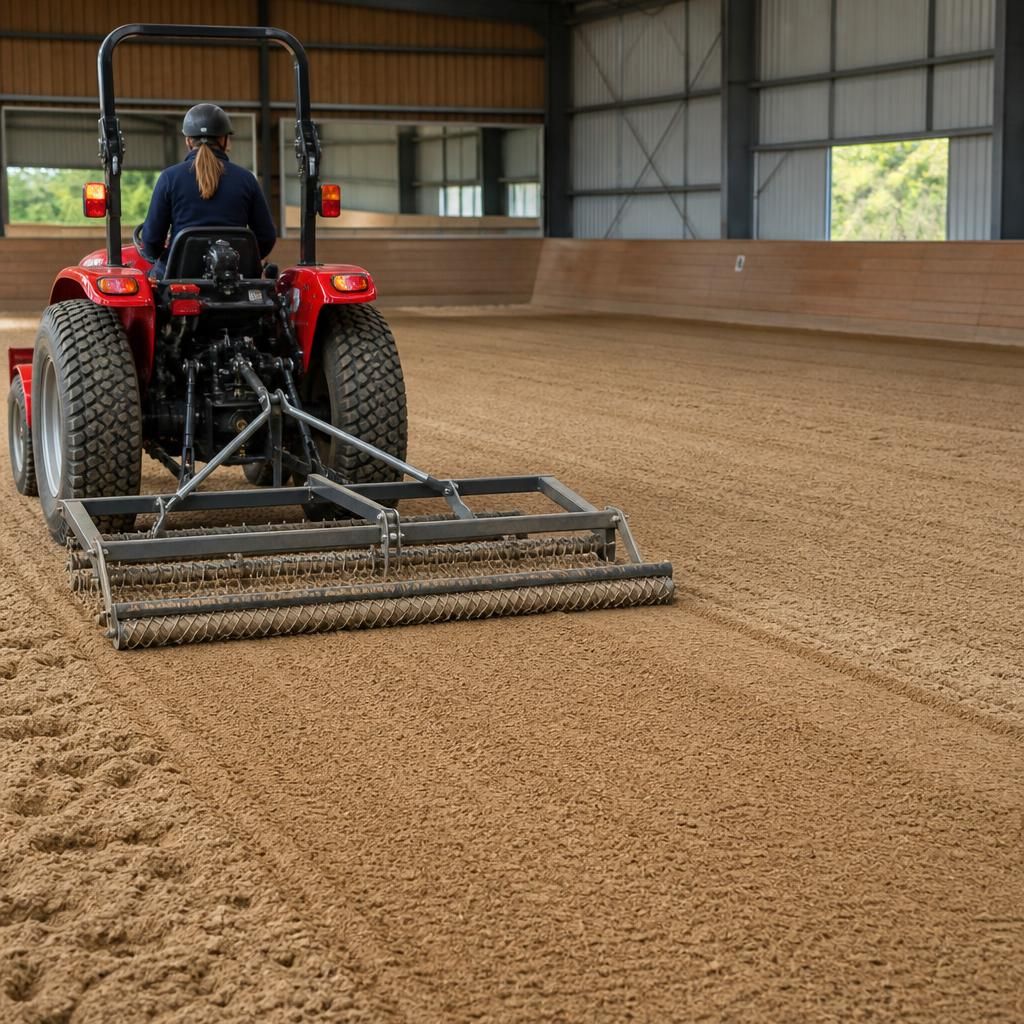
A significant maintenance demand is controlling the way the arena is groomed, not simply completing the task regularly. Repeatedly following the same route, turning tightly in the same places or working at an unsuitable depth can move material away from high-use areas and create ridges. Varying the grooming direction and turning pattern, where the surface manufacturer permits it, helps distribute wear more evenly.
The implement should be set according to the surface condition rather than treated as a fixed routine. A lighter pass may be appropriate when the riding layer is already level, while deeper correction should only be undertaken when the maintenance specification allows it. Operators should also check that the groomer is working evenly across its width and is not collecting or dragging material. This makes the operator’s method, as well as the surface itself, an important part of the maintenance assessment.
Discuss your dressage arena surface maintenance requirements
Discuss the structural and access requirements for your planned equestrian building with Buildings UK Ltd, including how the design may accommodate ongoing arena maintenance. A bespoke design discussion can help you prepare the relevant information before confirming your dressage arena surface specification.