
What riding disciplines can an indoor horse riding arena accommodate?
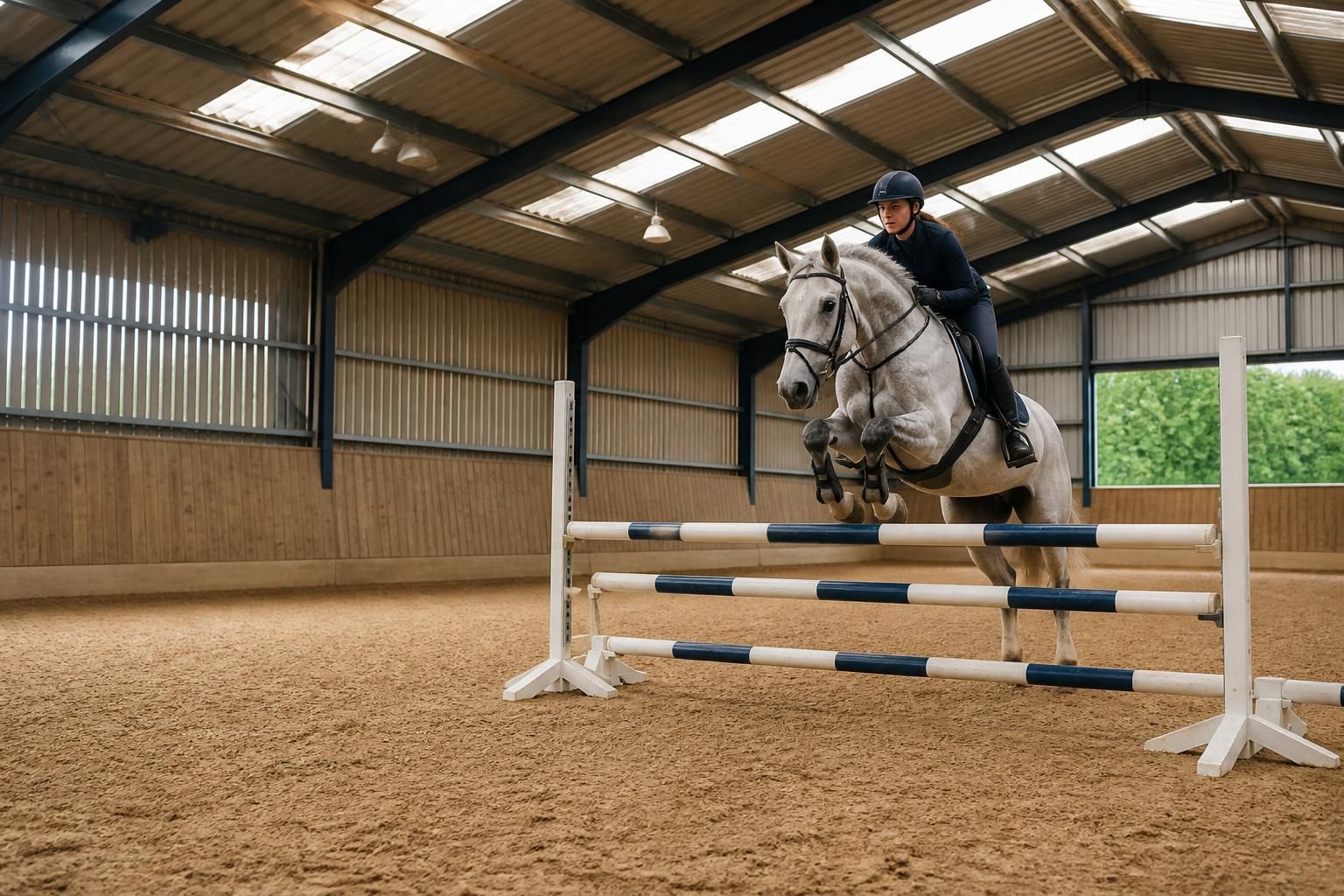
An indoor horse riding arena can accommodate disciplines including dressage, show jumping, general schooling, flatwork and lungeing. Its suitability for each activity depends on the arena’s dimensions, surface, clear height, lighting and internal layout.
An indoor horse riding arena can support a broad range of schooling, training and competitive activities, provided its design reflects the intended use. In addition to everyday riding, a suitably planned arena may be used for eventing preparation, working equitation, western riding, mounted games, young horse education and therapeutic or adaptive riding. It cannot, however, reproduce every outdoor discipline or competition environment.
Eventing preparation is often possible indoors for the flatwork and jumping phases. Riders can practise transitions, rhythm, accuracy, related fences and combinations under controlled conditions. An indoor arena is not a substitute for a cross-country course, because it cannot provide the same terrain, fixed obstacles, water complexes or changes in ground level. Its role is therefore best understood as a training venue for selected parts of the discipline.
Working equitation and western disciplines can also be accommodated where the internal layout leaves enough room for the relevant obstacles and patterns. A course may include poles, gates, cones, bridges or similar equipment, but these features should be positioned so they do not obstruct other users or reduce safe clearance around the perimeter. Reining-style manoeuvres and other activities involving fast turns or sliding stops place particular demands on the surface, so the footing specification should match the intended movement rather than being selected solely for general use.
Mounted games and pony activities require careful consideration of circulation and safety. Riders may need space to approach equipment, turn without crowding and enter or leave the activity area without crossing another rider’s path. If the arena is intended for group sessions, the design should account for the number of horses, instructors and spectators using it at the same time. Equipment storage outside the riding area can also help keep the surface clear and reduce trip hazards.
Therapeutic, adaptive and beginner riding can benefit from an enclosed environment, but these uses may require more than an appropriate riding surface. Consider access for mobility aids, a controlled entry point, mounting arrangements, safe waiting areas and sufficient room for instructors or support workers. The detailed requirements depend on the riders and the type of assistance provided, so they should be established before the building layout is fixed.
Some disciplines are primarily limited by the building rather than by the horses’ ability to perform them. Activities involving raised obstacles, fast movement, groups of riders or unusual equipment need adequate clear height, unobstructed walls and carefully positioned lighting. Roof members, lights, doors and ventilation equipment should not project into the riding zone or create distractions at horse level. Sound control may also matter where sudden noise could affect inexperienced or nervous horses.
The surface is equally important. A jumping-focused arena may need different characteristics from one used mainly for precise flatwork, while sliding movements, repeated turns and intensive group work can create their own demands. The construction should provide consistent traction and shock absorption without becoming excessively deep or unstable. Drainage and maintenance arrangements should be considered alongside the initial surface choice, particularly where the arena will be used frequently.
Before finalising an arena, list the disciplines, class sizes, equipment and level of competition expected. The design can then be checked against:
- the available riding area and the turning space required;
- the clear height needed for horses, riders and equipment;
- the type and maintenance requirements of the surface;
- lighting, ventilation and visibility for both riders and instructors;
- safe access for horses, people, machinery and emergency evacuation; and
- storage for jumps, poles, markers and specialist training equipment.
For venues intended to host formal competitions, the relevant governing body’s current rules should be checked separately. Training use may be possible in a more flexible arrangement, whereas competition use can impose requirements for dimensions, arena markings, warm-up areas, stewarding and spectator separation. A multi-purpose building is achievable, but each additional discipline should be assessed during design so that flexibility does not compromise footing, safety or usable riding space.
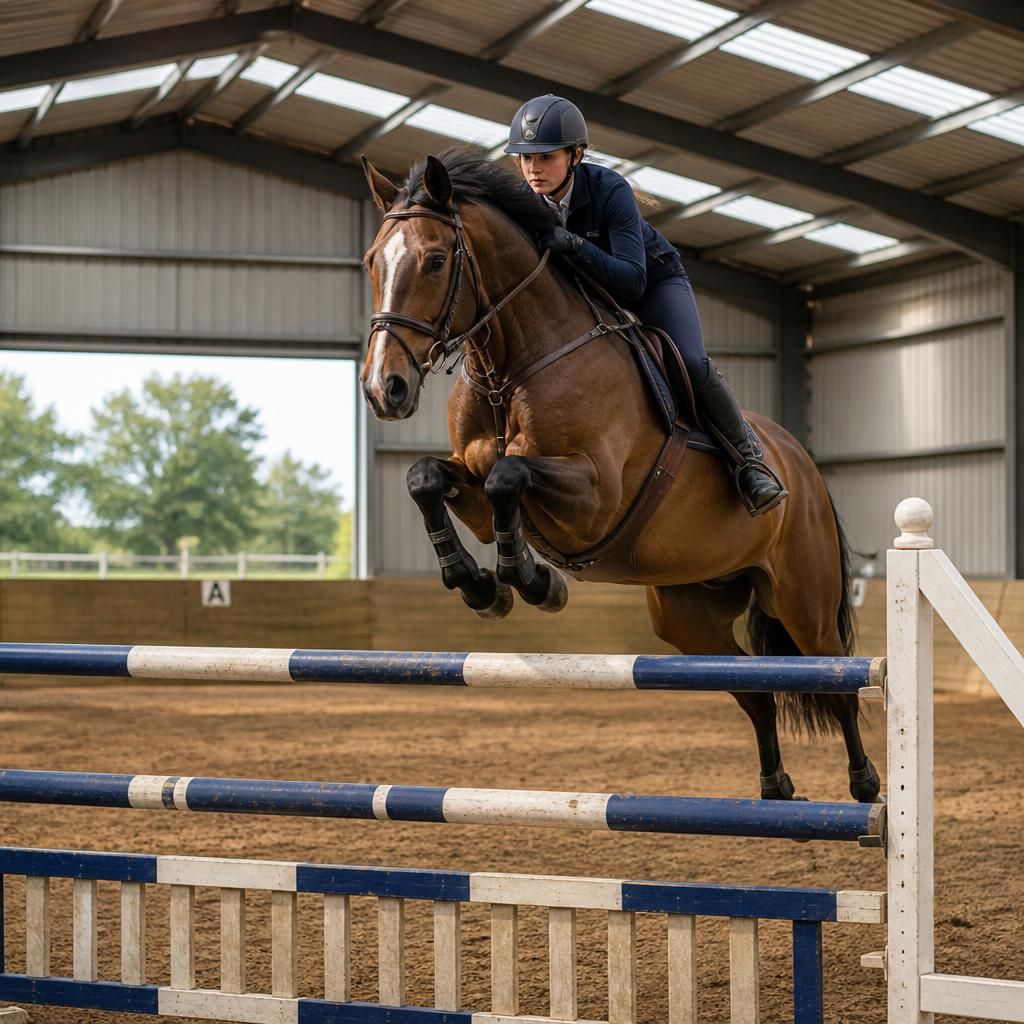
An indoor horse riding arena can accommodate horses at different levels of experience, but the enclosed environment may affect how they respond to movement, echoes, doors, lighting and activity outside the riding area. A horse that is settled outdoors may initially need gradual introduction to indoor schooling, particularly for disciplines involving jumps, fast transitions or shared use with other horses.
This makes the arena suitable for progressive training as well as established competition work. Riders can begin with quiet familiarisation, then introduce poles, jumps, markers or additional horses as the horse becomes more confident. Separating mounting and waiting areas from the main schooling space can also help less experienced horses and riders take part without disrupting more advanced sessions.