
Can a fitted metal garden shed be relocated later?
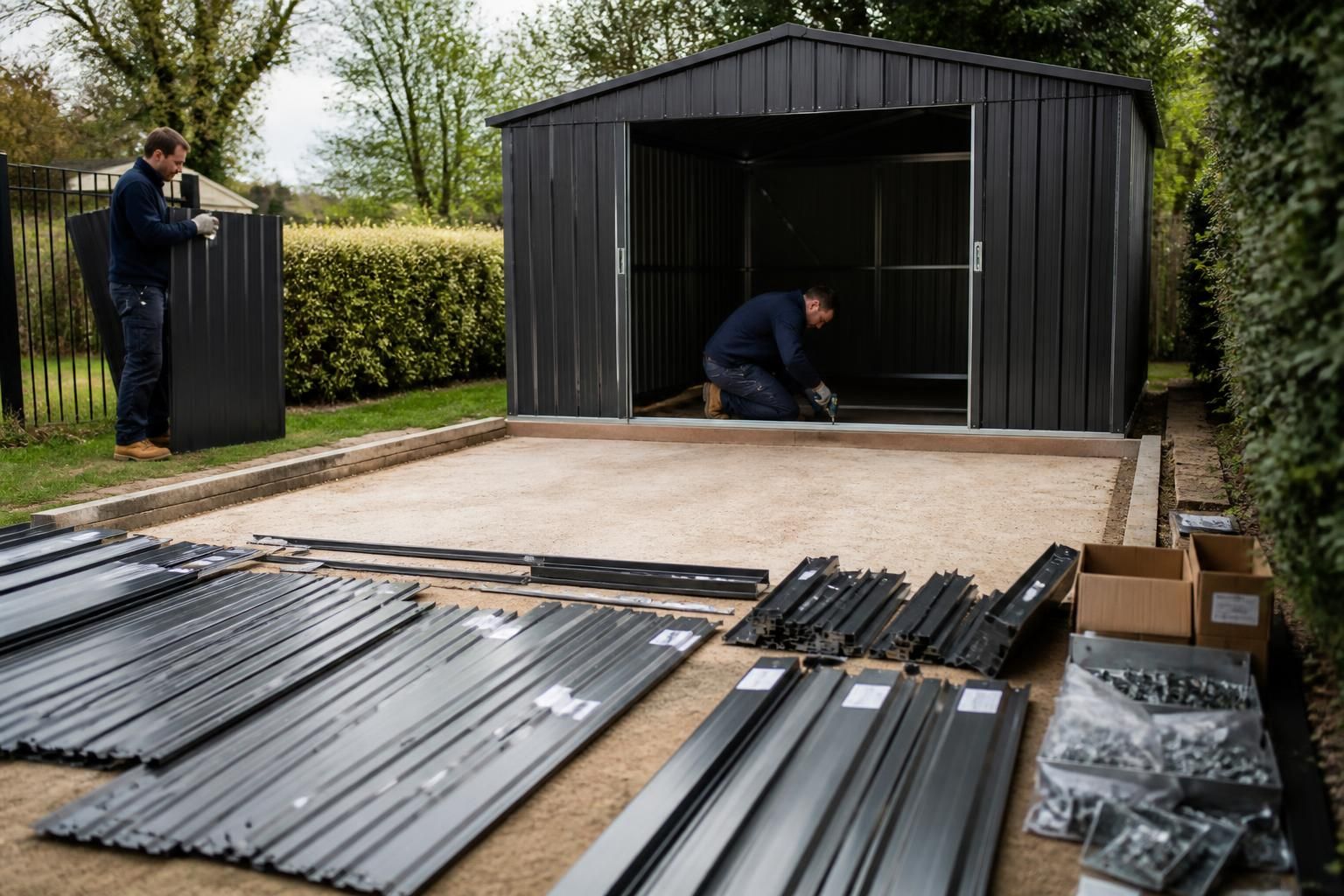
Yes, a fitted metal garden shed can often be relocated, but it will usually need to be carefully dismantled and reassembled rather than moved as one complete unit. The feasibility depends on the shed’s design, fixings, foundation, condition and access to the new site, so a professional assessment is advisable before planning the move.
Relocation is usually most practical when the shed has been assembled from bolted panels and remains in sound condition. A shed that has been welded, heavily modified or affected by corrosion may require more extensive work, because separating components can damage the frame or prevent accurate refitting.
Before arranging a move, check the proposed location as carefully as the existing one. The new site should provide:
- a suitable level base capable of supporting the building and its contents;
- enough clearance to assemble the frame, fit the roof and open the doors;
- access for transporting the dismantled sections;
- appropriate drainage, particularly where the shed will stand on a hardstanding or near a boundary; and
- space for safe anchoring without damaging underground services.
Planning permission or building control requirements can differ between sites, even where the same shed is being reused. The building’s dimensions, position, intended use and proximity to boundaries may need to be checked again. If the shed is used for storing machinery, equipment or other heavy items, the base and anchoring arrangement should also be reviewed for the new location.
A controlled relocation normally involves removing the contents, disconnecting services and recording the existing arrangement before dismantling. Panels, frame members, doors, roof sections and fixings should be labelled as they are removed. This reduces the risk of reversing components during reassembly and makes it easier to identify worn or missing parts.
The existing base may not be suitable for reuse. A concrete slab can sometimes remain in place if the new shed position is unchanged, but moving the building elsewhere commonly requires a new foundation or alterations to the hardstanding. Anchors should not simply be transferred without checking their position, condition and compatibility with the new base.
Fixings, seals, brackets and door hardware deserve particular attention during the inspection. Reusing damaged bolts or distorted panels can affect the frame’s alignment and allow water ingress. Any corrosion should be assessed before the move, as dismantling can expose weakened areas that were not apparent while the shed was assembled.
Costs are affected by several separate elements rather than by the shed alone. The overall work may include:
- disconnection and dismantling;
- transport between the two sites;
- preparation or construction of the new base;
- replacement fixings or damaged components;
- reassembly, alignment and anchoring; and
- reconnection of electrical or other services by appropriately qualified contractors.
Moving the shed as a complete unit is rarely appropriate for a fitted metal building. It can place uneven loads on the frame, damage cladding or doors, and require lifting equipment with adequate reach and capacity. Dismantling also allows the structure and fixings to be inspected before they are installed again.
For a planned relocation, retain any original drawings, fixing schedules and installation information. Buildings UK can review the proposed move as part of a bespoke design and fitting discussion, helping establish whether the existing structure, new base and access arrangements are compatible before work begins.
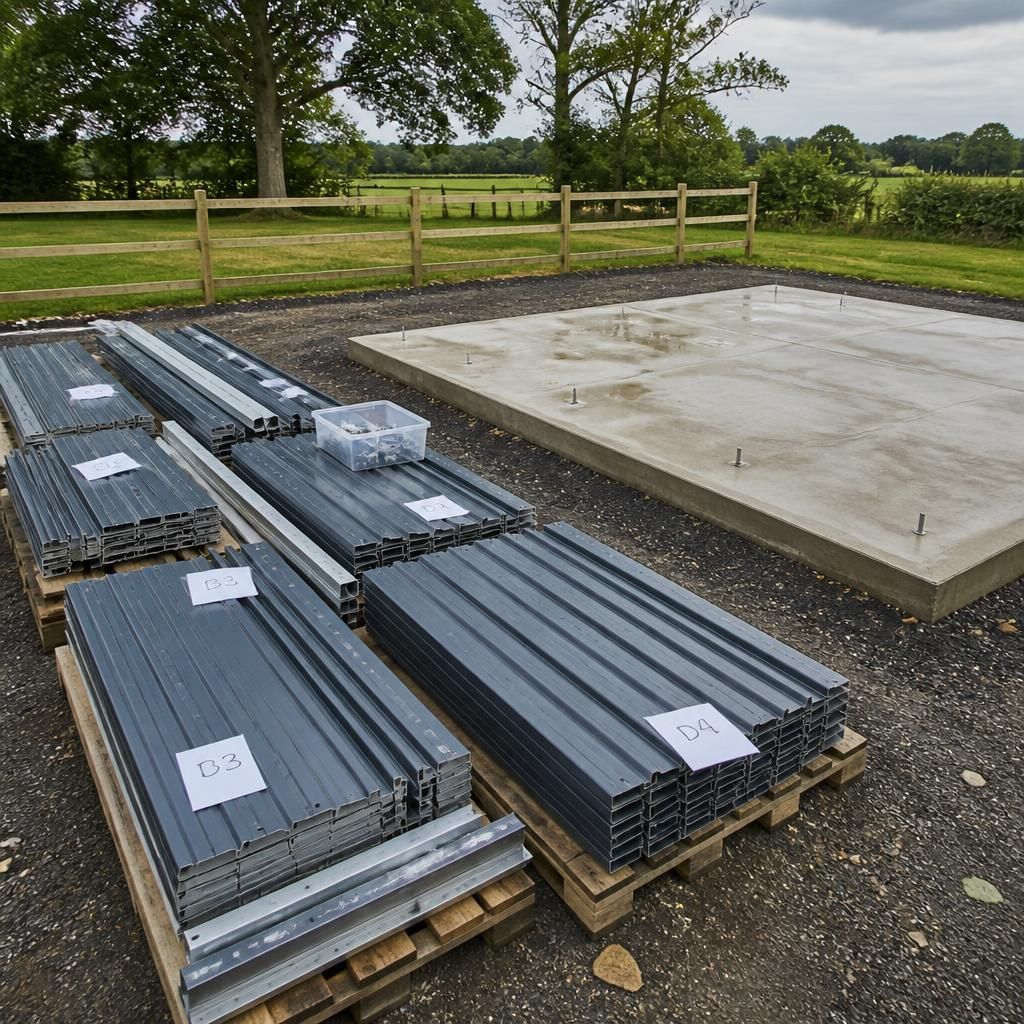
During relocation, the dismantled shed components need to be protected and kept in the correct sequence until they are ready for reassembly. Panels, roof sections and smaller fixings can be damaged or misplaced if they are left exposed or stacked without support, which may complicate the installation at the new site.
- Keep labelled components together according to their position in the building.
- Store panels on suitable supports rather than directly on wet or uneven ground.
- Protect roof and wall sections from impact, distortion and prolonged exposure to moisture.
- Keep fixings, brackets and door hardware in sealed, clearly identified containers.
- Plan the dismantling and reassembly stages so the building is not left partially open unnecessarily.
These precautions do not make an unsuitable building relocatable, but they reduce avoidable damage during the move and help preserve the original arrangement for installation at the new location.