What cladding options are available for metal garden sheds?
Metal garden sheds can be clad with plain steel sheet, corrugated steel panels or insulated composite panels, depending on the required appearance, durability and thermal performance. Profiles, colours and finishes can usually be selected to suit the building’s use and surrounding setting.
Metal garden shed cladding is available as either single-skin steel sheeting or a composite panel system, with the best choice depending on the shed’s intended use, exposure, appearance and need for temperature control. The visible profile is only one part of the specification: the steel substrate, protective coating, panel construction, trims and method of fixing all affect the finished performance.
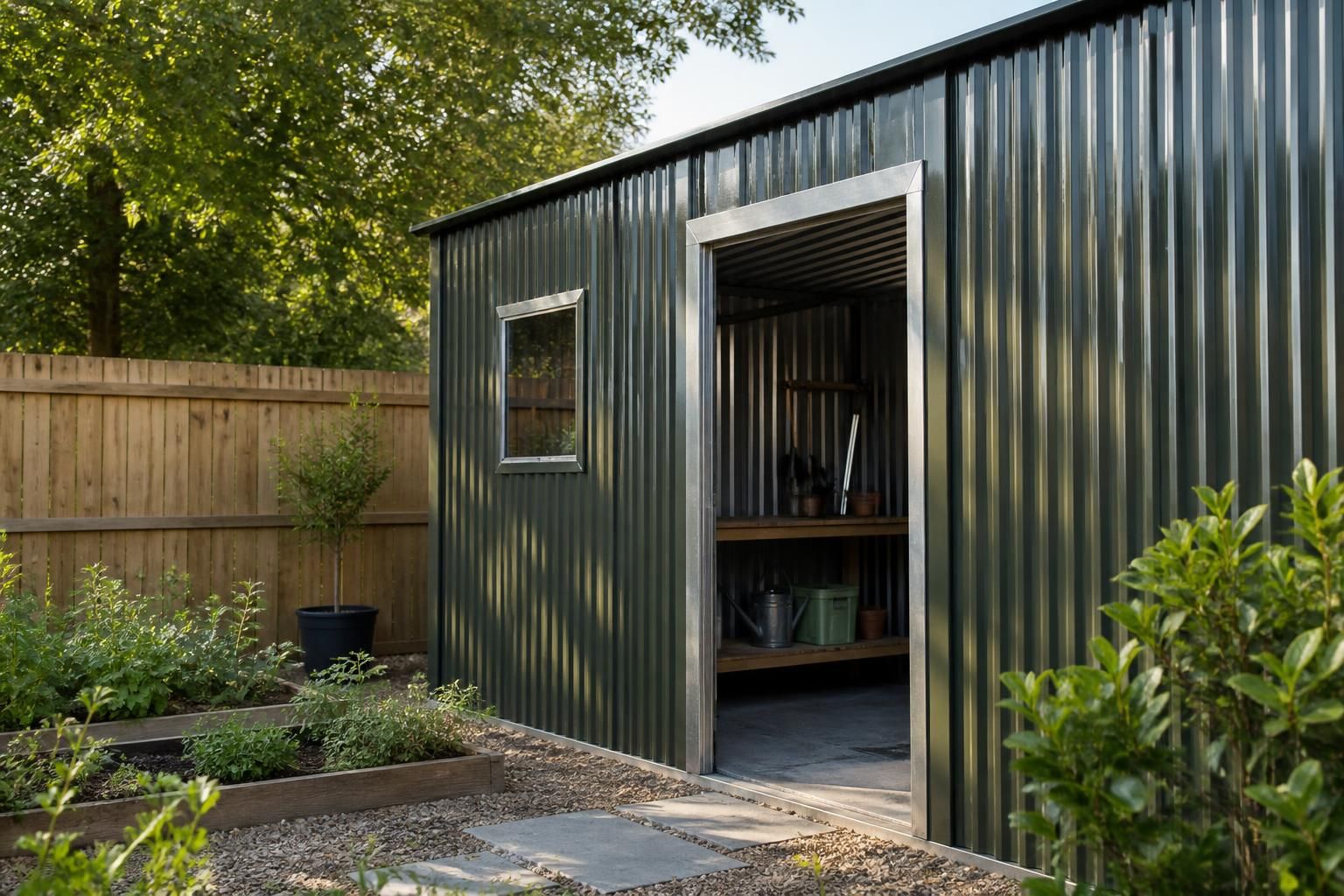
Single-skin steel sheeting is a practical choice for storage sheds, workshops and general-purpose outbuildings where insulation is not a primary requirement. It can be supplied as flat or profiled sheet and is fixed to the structural frame with suitable fasteners. This arrangement is comparatively simple, leaves the internal frame accessible for inspection and generally has a lower material cost than a composite insulated system. It does not, however, provide the same thermal or acoustic separation as a panel with an insulated core.
Corrugated and trapezoidal profiles add rigidity to relatively light steel sheets and create different visual effects. Corrugated profiles have a traditional, agricultural appearance, while trapezoidal profiles tend to produce a more defined, contemporary elevation. The profile affects how the cladding meets at corners, around doors and beneath the roof, so matching flashings and edge trims should be included in the design rather than treated as optional finishing details.
Insulated composite panels have external steel faces around a rigid insulating core. They are appropriate where the shed will be used as a workshop, hobby room, office or other space that benefits from a more stable internal environment. The panel provides insulation and can also reduce the transmission of outside noise, although it does not replace the need for suitable ventilation, doors, windows or heating where those are required. The core type and panel construction should be selected with the building’s intended use and relevant performance requirements in mind.
Steel cladding can have several protective finishes. Galvanised steel has a zinc coating that helps protect the base metal from corrosion, while pre-finished sheets add a coloured coating over the protected steel. Polyester coatings are commonly used for general external applications; more robust coating systems may be considered where the building faces demanding exposure or where a particular surface finish is required. The local environment matters: coastal air, persistent moisture, pollutants and contact with soil or vegetation can all increase the importance of correct coating and detailing.
Colour selection is not only an aesthetic decision. A darker external finish can absorb more solar heat than a lighter one, which may affect the internal temperature of an uninsulated shed. The surrounding buildings, planning considerations and any existing colour scheme may also influence the choice. Where a garden shed is close to a house or boundary, a subdued finish and carefully selected profile can make the building less visually prominent.
Condensation requires attention with any uninsulated metal cladding. Moist internal air can condense on the cooler underside of the sheets, particularly when the shed is poorly ventilated or used to store damp equipment. Depending on the proposed use, the design may incorporate ventilation, an anti-condensation lining or fleece, a separate internal lining, or insulated panels. These measures address different parts of the problem and should be considered alongside the floor, roof and door specification rather than added in isolation.
When comparing quotations or design proposals, check that the cladding specification identifies:
- the steel profile and whether it is flat, corrugated or trapezoidal;
- the steel substrate and corrosion-protection coating;
- the external colour and finish;
- whether the walls are single skin or insulated composite panels;
- the internal face or lining, where applicable;
- corner, verge, eaves and base trims;
- fasteners, washers and seals suitable for the chosen cladding;
- how openings for doors and windows will be framed and weathered; and
- any ventilation or anti-condensation provision required for the intended use.
For a bespoke metal garden shed, the cladding should be coordinated with the frame, roof, doors, drainage and base before fabrication. Buildings UK Ltd can incorporate the selected cladding arrangement into the design and fabrication drawings, allowing the profile, finish, openings and associated trims to be considered as one construction rather than as separate items.
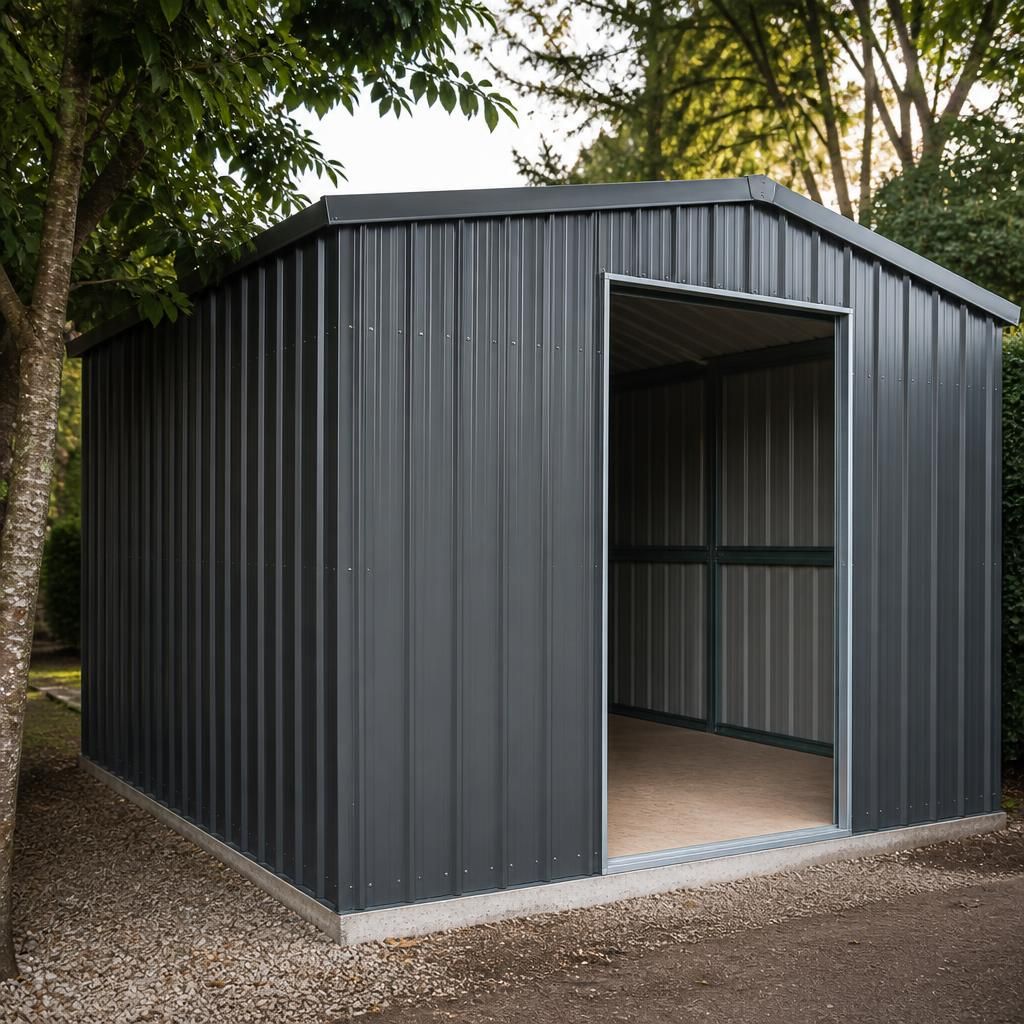
Maintenance requirements vary between metal garden shed cladding options. External sheets should be inspected periodically for damaged coatings, exposed cut edges, loose fixings and debris trapped around trims or openings. Dirt, leaves and persistent contact with wet vegetation can retain moisture against the steel, so keeping the cladding and its edges clear helps preserve the protective finish.
Minor surface damage should be dealt with using a repair method compatible with the original coating, while badly damaged panels or corroded fixings may need replacement. Cleaning should avoid abrasive tools and unsuitable chemicals that could mark or weaken the finish. A cladding specification that allows individual sheets, trims and fasteners to be accessed makes future maintenance more straightforward.