
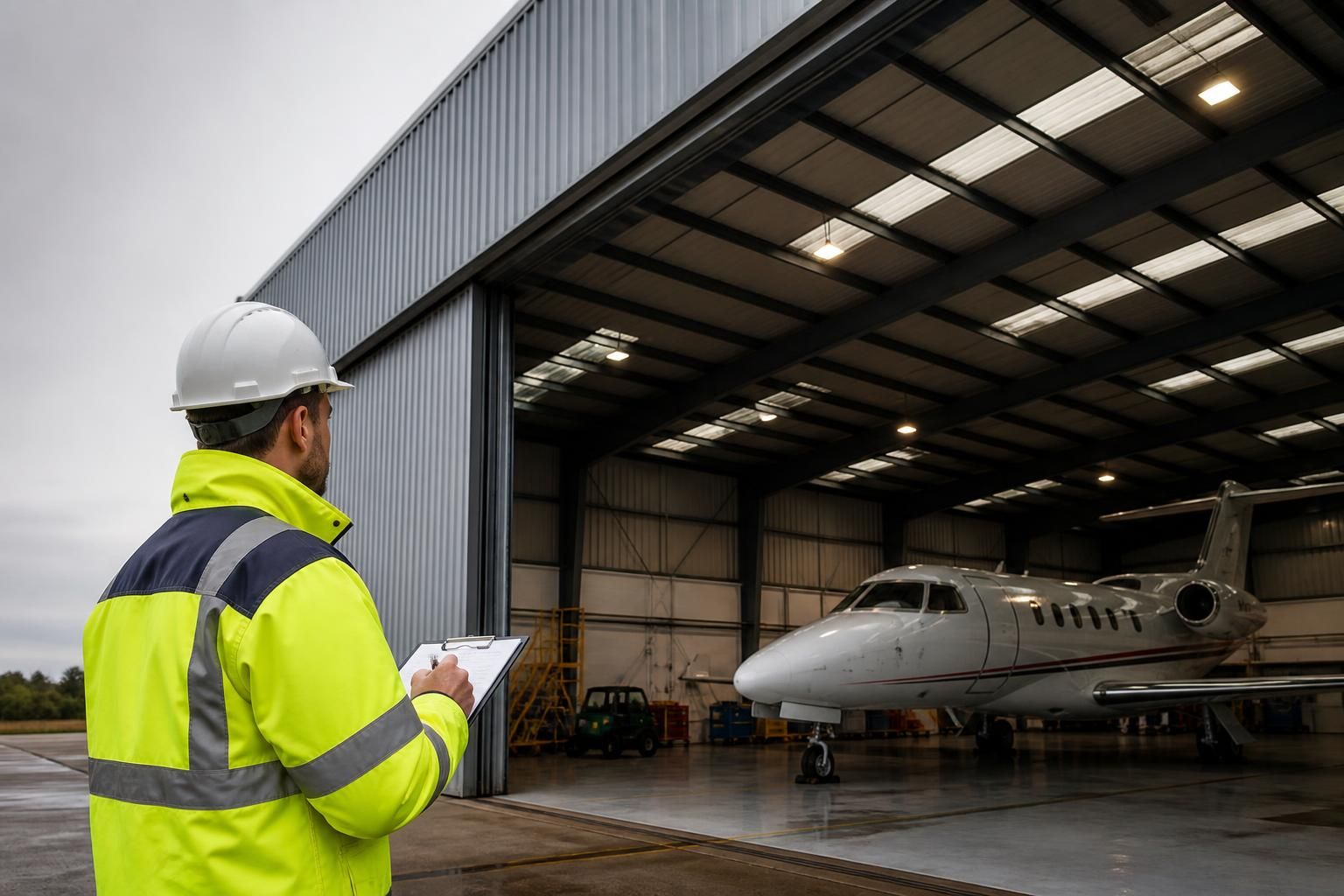
What maintenance does an aircraft hangar building require?
An aircraft hangar building requires planned inspections of its steel frame, roof, cladding, doors, drainage and associated building services. Maintenance should identify corrosion, water ingress, damage, wear and movement early, with defects repaired according to their effect on structural safety, weather resistance and safe operation.
Aircraft hangar maintenance should be managed as a documented, risk-based programme covering the structure, building envelope, access systems, internal services and the conditions created by aircraft operations. The aim is not simply to repair visible defects, but to confirm that the hangar continues to provide adequate strength, weather protection, security, fire safety and operational clearance.
Start with the building records
Keep the structural calculations, fabrication drawings, product information, installation records and any alterations together with the maintenance log. These documents help a competent person understand the original design, identify load-bearing members and verify whether later changes have affected the building. Records should include inspection dates, findings, photographs, repair specifications and details of any materials used.
The maintenance plan should also note the hangar’s operating environment. Coastal exposure, agricultural dust, chemical storage, de-icing products, fuel handling, high humidity and condensation can all influence the rate at which materials deteriorate. Areas exposed to aircraft exhaust, wash-down water or vehicle movements may need closer attention than less heavily used parts of the building.
Steel frame and connections
Steelwork should be examined for localised corrosion, coating breakdown, distortion, impact damage and changes around connection points. Particular attention is appropriate at the base of columns, eaves, roof voids, areas with persistent condensation and locations where water or debris can collect. Bolted connections should be checked for signs of movement, damaged components or abnormal gaps, while welded areas should be assessed for cracking or other damage where relevant.
Corrosion treatment is more than applying paint over rust. The affected area should be cleaned, assessed and prepared properly, with the replacement coating system selected for the exposure conditions. If steel has lost section, buckled, been struck by equipment or appears to have moved, the area should be isolated from further risk and assessed by a suitably qualified structural professional before repair or loading continues. Unapproved drilling, cutting, welding or attachment of equipment to the frame can also alter its performance and should be controlled.
Roof and wall envelope
Roof maintenance should check the condition of sheets or panels, laps, flashings, ridge details, rooflights, penetrations and sealants. Loose fixings, failed washers, damaged coatings and open joints can allow water into insulation and internal spaces before staining becomes obvious. Rooflights may become brittle, opaque or unsafe to walk on, so access should follow the roof manufacturer’s guidance and a suitable permit or safe system of work.
Wall cladding requires similar attention to damaged panels, loose fixings, open joints, failed trims and impact from vehicles or handling equipment. Any replacement panel, rooflight or flashing should be compatible with the existing system and installed without compromising drainage or fire performance. Persistent internal dampness should be investigated rather than concealed, as it may result from a leaking detail, condensation, inadequate ventilation or a plumbing defect.
Hangar doors and moving equipment
Large hangar doors place particular demands on tracks, rollers, hinges, guides, bearings, seals, locking points and supporting fixings. Check that leaves or panels remain correctly aligned, travel smoothly and stop in the intended position. Mechanical damage, unusual noise, excessive vibration, uneven movement and increased operating resistance indicate that adjustment or specialist attention may be required.
Powered doors should have their control equipment, safety edges, sensors, emergency stops and manual release arrangements tested in accordance with the installed system’s instructions. Keep the travel path clear and do not defeat interlocks or protective devices to overcome a fault. Door operation should be recorded where the system is safety-critical, particularly if the opening is used by aircraft, vehicles or personnel at the same time.
Rainwater management and ground-level details
Gutters, valleys, outlets, downpipes, gullies and drainage channels should be kept free of leaves, silt, nesting material and other debris. Inspect joints and discharge points for leakage, overflow or erosion. Water discharged against the building can saturate surrounding ground, damage paving and increase the risk of water reaching the floor or foundations.
At low level, check the condition of plinths, flashings, damp-proof details, concrete edges and movement joints. Ponding water, settlement, cracking or repeated impact from aircraft tugs and vehicles should be investigated. Drainage covers must remain secure and suitable for the loads imposed by the operational area.
Internal environment and building services
Ventilation, heating, lighting and electrical installations affect both the building and the aircraft inside it. Ventilation should control condensation and remove fumes or process contaminants where applicable. Check fans, grilles, ductwork and controls for damage, blockage and excessive noise. Lighting should provide adequate visibility for inspection, maintenance and movement, with fittings protected where the environment presents an impact or contamination risk.
Electrical systems, fixed wiring, distribution equipment and earthing arrangements should be examined and tested by competent persons at appropriate intervals. Where fuel, solvents, batteries or other hazardous materials are handled, the maintenance regime must also reflect the relevant fire, hazardous-area and storage requirements. Fire detection, alarms, extinguishers, emergency lighting, escape routes and fire-resisting elements should remain accessible, serviceable and free from unapproved alterations.
Airside cleanliness and operational damage
Keep the floor free from standing water, loose debris, oil, hydraulic fluid, metal swarf and other foreign object debris. Spills should be dealt with using procedures suitable for the substance involved, and damaged floor areas should be repaired where they could affect aircraft wheels, jacks, tugs or personnel. Marked clearance zones, protective barriers and equipment storage arrangements should be reviewed whenever the hangar layout changes.
Aircraft movement can cause damage that is not typical of ordinary industrial use. Inspect columns, door edges, wall panels, bollards, docking equipment and service points after collisions or near misses. A defect that appears cosmetic may have transferred load to concealed fixings or the primary frame, so impact damage should be assessed before the area is returned to normal use.
How often should maintenance be carried out?
The precise interval depends on the design, exposure, usage and manufacturer’s instructions. A practical programme normally combines routine housekeeping and visual checks, planned servicing of doors and services, periodic examination of the steelwork and envelope, and additional checks after severe weather, impact, alteration or an abnormal event. The responsible person should set intervals from the risk assessment and extend or shorten them when inspection findings show that conditions have changed.
Use trained personnel for routine checks, and appoint appropriately qualified specialists for structural assessment, electrical testing, fire-safety systems, powered doors and any repair that could affect the building’s stability or safe operation. Prioritise defects according to consequence: protect people and aircraft from immediate hazards, prevent water or corrosion from spreading, and plan less urgent fabric repairs before they become more extensive.
At the end of each inspection, record what was checked, what was found, who assessed it, what action is required and when the action was completed. This evidence provides a clear maintenance history and helps the owner demonstrate that the hangar has been managed systematically rather than only repaired after failure.
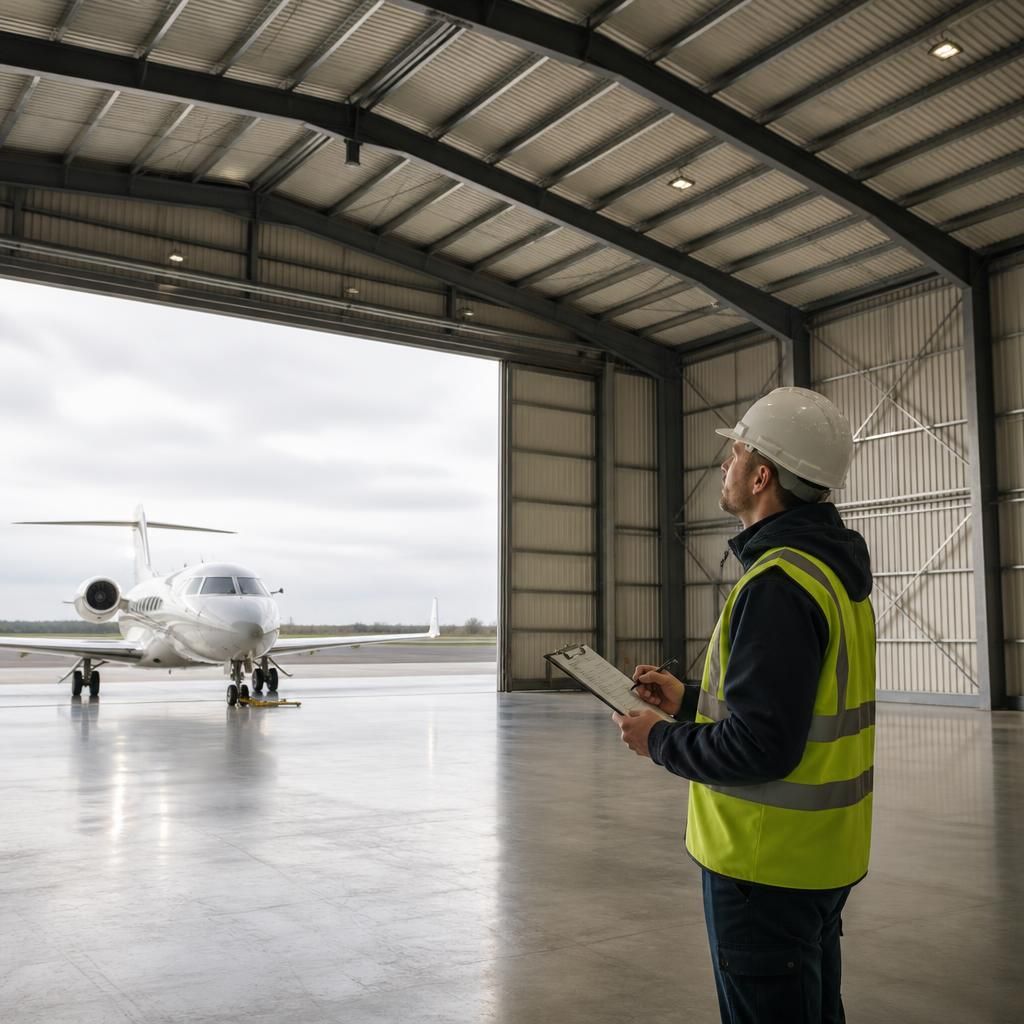
Maintenance access should be designed into the aircraft hangar rather than improvised when a defect appears. High-level steelwork, roof drainage, lighting, ventilation equipment and door mechanisms may require a suitable access platform, mobile elevating work platform or other engineered method. The chosen arrangement must account for floor loading, aircraft clearance, overhead obstructions and the risk of contact with the building or aircraft.
Before work begins, define an exclusion zone and control vehicle, aircraft and pedestrian movements around the task. Where maintenance could release dust, swarf, water or chemicals, protect aircraft and sensitive equipment or move them clear of the work area. Planned access arrangements reduce the likelihood that inspections are deferred or that maintenance introduces a new operational hazard.