
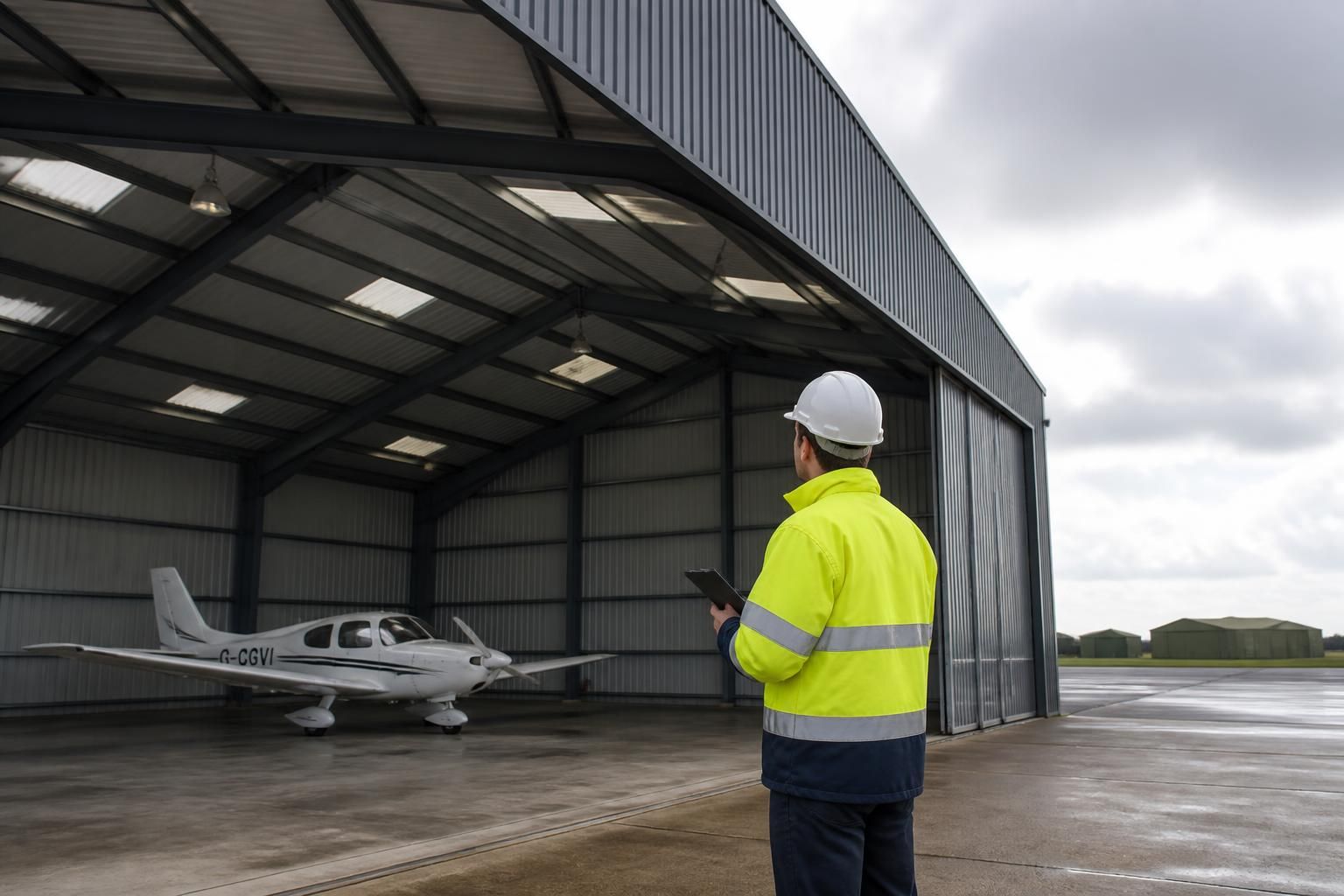
What maintenance does a steel aircraft hangar require?
A steel aircraft hangar requires scheduled inspections of its frame, cladding, roof, drainage, doors and fixings, along with prompt repair of damage or water ingress. Maintenance typically includes corrosion control, clearing gutters and drainage channels, checking seals and moving door components, and renewing protective finishes when needed.
Steel aircraft hangar maintenance is a planned programme covering the building structure, internal environment, access equipment, fire precautions and attached services. The aim is to identify changes before they affect structural performance, aircraft operations or the safe use of the building, rather than relying on repairs after a visible failure.
Start with a building-specific maintenance plan. The plan should reflect the hangar’s design, location, exposure, use and construction materials. A building close to the coast, in an area subject to severe weather, or used for activities involving fuel, oil or chemical products may need different controls from a lightly used agricultural-style storage hangar. The original structural drawings, coating information, manufacturers’ instructions and records of later alterations should be kept together so that future work can be assessed against the design.
- Record the condition of the building: note changes such as staining, deformation, damaged panels, failed sealant, unusual movement or deterioration around openings. Photographs and dated notes make it easier to distinguish a developing defect from an old mark.
- Review after exceptional events: high winds, heavy snowfall, impact from plant or vehicles, flooding and fire can justify an additional assessment, even where no major damage is immediately obvious.
- Control access to vulnerable areas: prevent vehicles, machinery and aircraft handling equipment from striking columns, corners, doors and cladding. Physical barriers can reduce repeated low-level impact damage.
- Keep alterations under control: drilling, cutting, welding, hanging equipment or fixing new services to the frame can alter load paths or compromise protective finishes. Proposed changes should be checked against the structural design by a suitably competent person.
Manage the internal environment as carefully as the external shell. Condensation can form when warm, moisture-laden air meets colder steel or cladding. Repeated condensation increases the risk of deterioration and can damage aircraft, stored equipment and electrical systems. Ventilation, heating and insulation should therefore be operated and maintained as a coordinated system. Look for persistent damp air, water droplets on internal surfaces, mould, staining or wet insulation, and investigate the source rather than simply cleaning the visible mark.
Aircraft hangars may also be exposed to fuel vapour, exhaust deposits, hydraulic fluid, lubricants, cleaning chemicals and de-icing products. Spills should be dealt with using methods suitable for the affected surface and substance. Avoid abrasive cleaning or chemicals that could damage coatings, sealants, fire protection or cladding finishes. Contaminated absorbent materials and other waste should be stored and disposed of in accordance with the relevant safety requirements.
Include the supporting elements in the maintenance regime. The steel frame cannot be considered in isolation from the components attached to it. Check the condition and security of:
- concrete slabs, thresholds and floor joints, particularly where settlement could interfere with aircraft movement or large door operation;
- wall and roof junctions, corners, penetrations and interfaces with adjoining buildings, where movement or failed sealant can allow moisture into the construction;
- electrical installations, lighting, emergency lighting, sockets and cable supports, with defects dealt with by an appropriately qualified electrician;
- ventilation, heating and extraction equipment, especially where fumes, dust or flammable vapours may be present;
- fire alarms, extinguishers, fire doors, fire-resisting construction and emergency escape routes, in line with the building’s fire risk assessment;
- signage, lighting levels and floor markings that support safe vehicle, aircraft and pedestrian movements.
Where aircraft maintenance takes place inside the building, housekeeping is a significant part of protecting the hangar. Keep escape routes and access to safety equipment clear, remove combustible waste, manage trailing cables and prevent stored materials from contacting walls or the frame. Bird nesting, pest activity and accumulated dust should also be addressed because they can obstruct equipment, contaminate surfaces and increase fire risk.
Use specialist advice when defects may affect structural safety. Cracking or movement in foundations, distorted steel members, loose or missing structural connections, significant impact damage, extensive coating failure, or changes to the building’s use should not be treated as routine cleaning or decoration. A structural engineer or other appropriately qualified professional can determine whether the issue is cosmetic, requires local repair or calls for a wider assessment. Repairs should use compatible materials and follow the original design wherever possible.
Maintenance records should identify the date, area inspected, condition found, action taken, materials used and any recommendation for follow-up. Keep records of repairs, repainting, service replacements, incidents and structural alterations with the building information. This provides a clear history for future inspections and helps ensure that recurring defects are investigated rather than repeatedly patched.
A well-maintained steel aircraft hangar is therefore managed as a complete facility: its structure, envelope, floor, environment, services and operating practices all affect its condition. A written schedule, event-triggered checks, controlled alterations and accurate records provide a more reliable approach than responding only when damage becomes obvious.
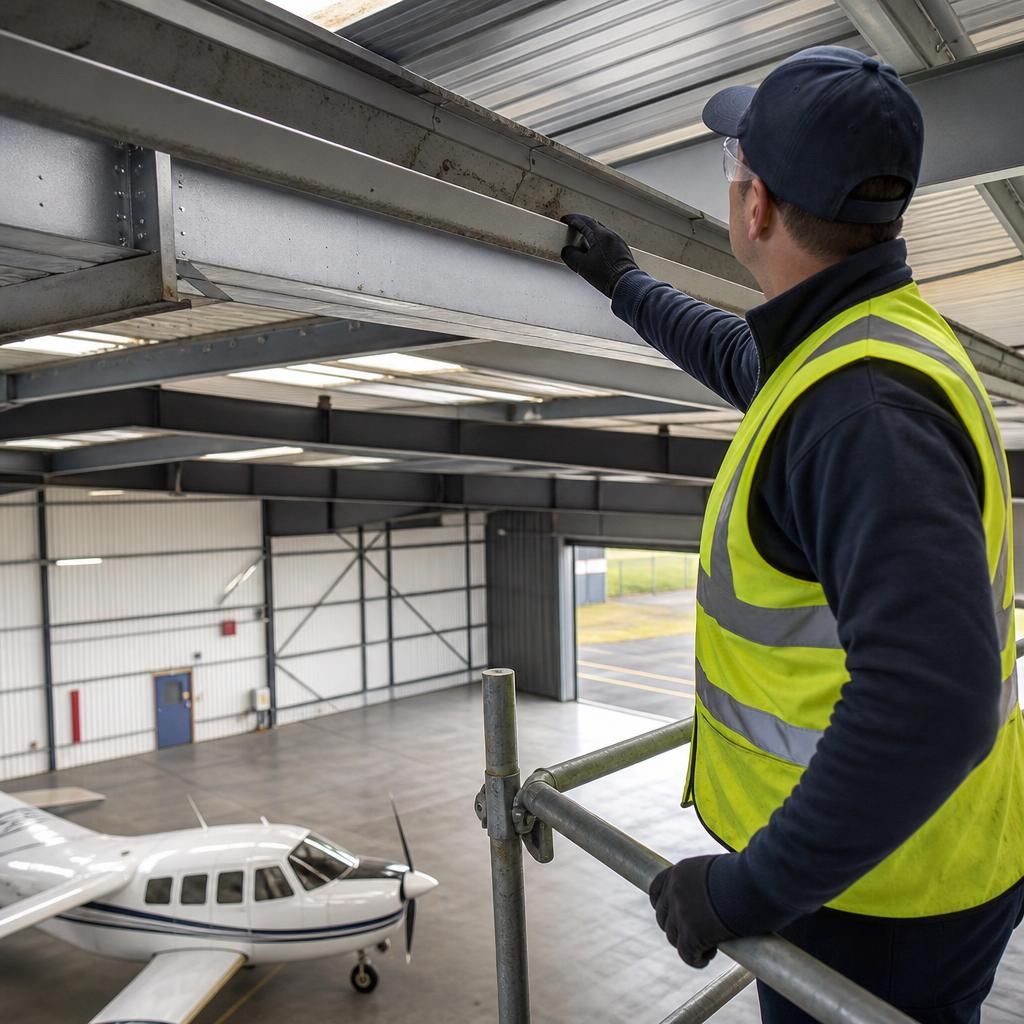
Roof and gutter inspections must be carried out without creating a safety risk or causing new damage. Roof sheets, rooflights and cladding should not be walked on unless they have been specifically designed for foot traffic. Use suitable access equipment and inspect from a safe platform or other controlled position, paying particular attention to areas around roof penetrations, joints and rainwater outlets.
Where close inspection is necessary, the person carrying it out should be competent to recognise fragile surfaces and work at height safely. Any loose components, damaged sealant or blocked outlets should be recorded with their exact location so repairs can be planned without repeated access to the roof.
Discuss your steel aircraft hangar requirements
Discuss your steel aircraft hangar requirements with Buildings UK Ltd, including the design features and access arrangements that can support practical long-term maintenance. The team can help you consider a suitable bespoke building approach for your project.