How is quality controlled during industrial steel building manufacture?
Quality is controlled through a documented process covering the building design, British-made steel components, precision fabrication and final checks. Planning elevation drawings and isometric fabrication blueprints help ensure that the manufactured frame matches the agreed specification before it is supplied or erected.
Quality control in industrial steel building manufacture is the systematic checking of materials, dimensions, connections, workmanship and compliance at each production stage. Its purpose is to prevent defects from passing into the completed frame, where correction would be more disruptive and costly.
Material control begins with confirming that the steel supplied is suitable for the specified structural application. Sections are checked for identification, condition and any visible damage before they enter production. Keeping material information linked to the relevant building package supports traceability, allowing a component to be associated with the correct project and specification.
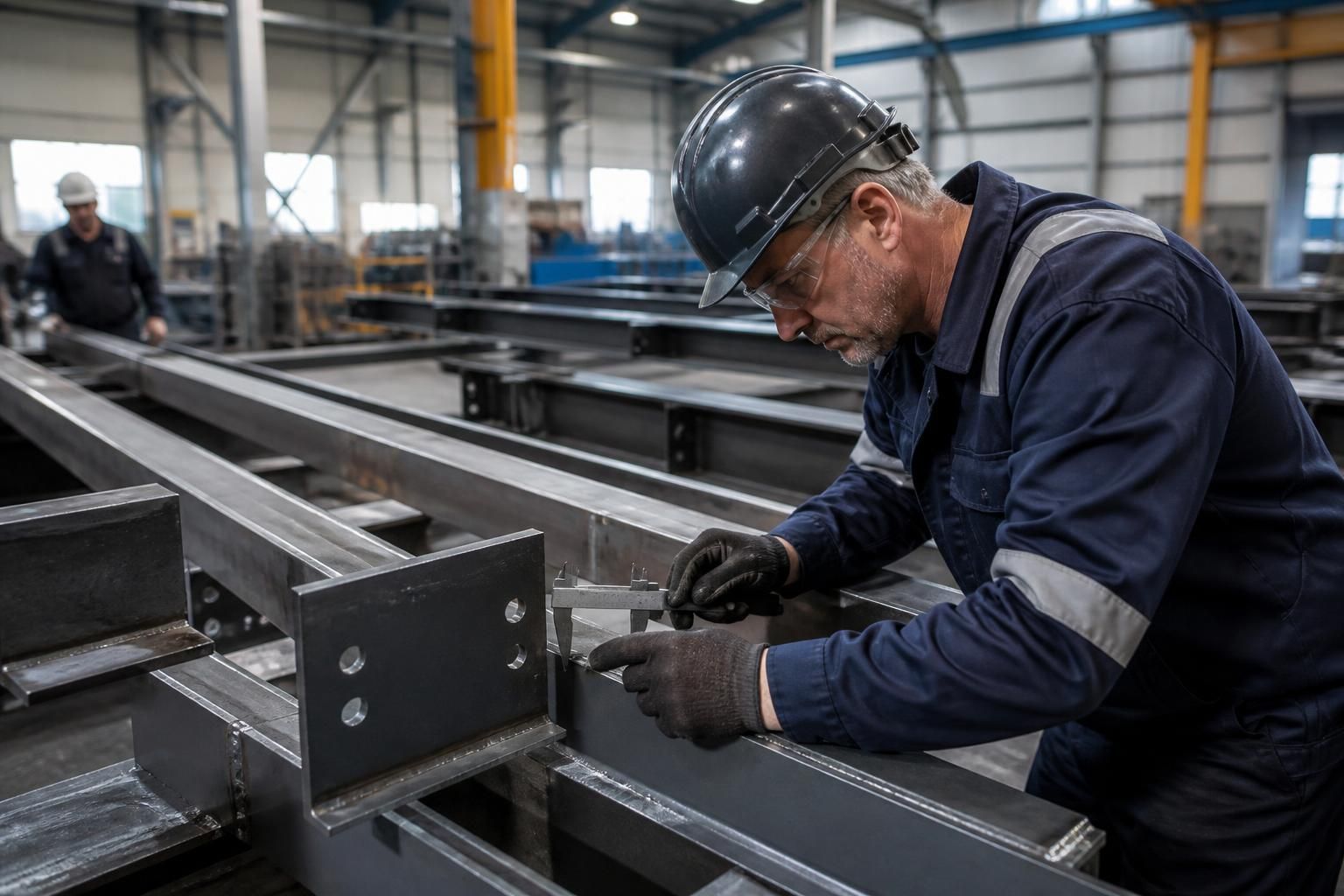
Dimensional accuracy is then controlled during cutting, drilling and preparation. The required section lengths, hole positions, plate sizes and connection details must be reproduced consistently so that members align correctly when the frame is assembled. Checks may be carried out using measuring equipment and controlled production information, with particular attention given to bolt groups, base plates, cleats and other components that affect how the structure fits together.
Fabrication quality also depends on the condition of edges, junctions and welded areas. Steelwork is inspected for issues such as distortion, incomplete preparation, excessive weld irregularity or damage caused during handling. Where a welded connection is specified, its appearance and workmanship are assessed against the applicable requirements for the connection. Any item that does not meet the required standard should be identified, corrected or rejected before it is allowed to progress.
Connection control is especially important in an industrial building because the frame is assembled from many interdependent members. Components must be manufactured with the correct orientation and connection arrangement, while holes and plates need to remain accessible for installation. This reduces the risk of forced fitting, unplanned site modification or changes that could affect the intended structural behaviour.
Compliance is part of quality, not a separate final exercise. A CE marked steel building must satisfy the relevant requirements for the product and its declared performance. Quality control therefore considers whether the manufactured components correspond with the specified structural design and whether the appropriate production records support the conformity of the finished building kit or steelwork package. CE marking should not be viewed simply as a label; it forms part of a wider system of controlled manufacture and documented responsibility.
Non-conforming work needs a defined response. If a measurement, connection or finish falls outside the required specification, the issue should be recorded and assessed rather than overlooked. The affected component may require reworking, replacement or technical review. Corrective action is then checked before the item is released, helping prevent the same issue from being repeated elsewhere in the project.
Quality control also extends to preparation for delivery or erection. Members should be identifiable, grouped logically and protected against avoidable damage during handling and transport. A clear component schedule and consistent labelling help the erection team confirm that the correct parts are being used in the correct locations. This is particularly useful for larger industrial frames containing different section sizes, bracing members and connection components.
For a customer assessing a steel building manufacturer, useful questions include:
- How are incoming steel sections identified and linked to a project?
- What checks are made on cut lengths, drilled holes and connection plates?
- How are welding quality and dimensional deviations dealt with?
- What records support CE marking and conformity?
- How are corrected or replaced components controlled before dispatch?
- How are members labelled and organised for site assembly?
These controls provide a practical way to judge whether quality is being managed throughout manufacture rather than inspected only after production has finished. For Buildings UK Ltd, the combination of CE marked hot rolled steel framed buildings, structural steelwork and detailed fabrication information provides the basis for producing components that can be supplied as a building kit or used as part of an erection service.
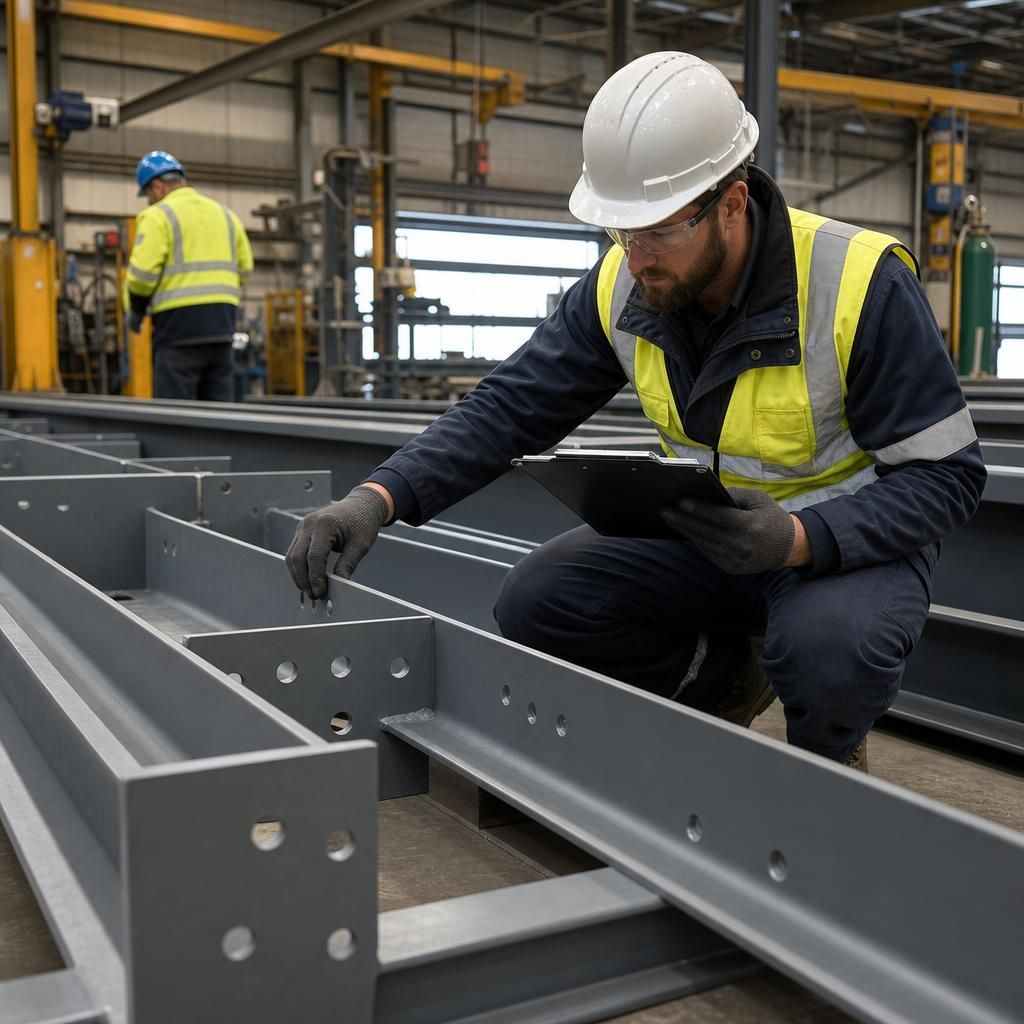
Quality control during industrial steel building manufacture also depends on controlling design information. The workshop must work from the current approved drawings and specifications, with changes identified and assessed before they are introduced into production.
Planning elevation drawings and isometric fabrication blueprints provide different but complementary checks. Elevations show the building arrangement and external proportions, while isometric information clarifies how individual members and connections are intended to fit together. Comparing these documents helps identify discrepancies before steel is cut or fabricated.
When a design change is required, the affected components should be reviewed rather than altered informally. Superseded information needs to be removed from active production use, and the revised details should be issued clearly to the people responsible for fabrication. This form of document control reduces the risk of manufacturing a correct component to an outdated requirement and creates a clearer record of how the finished steel frame was produced.
Discuss your industrial steel building requirements
Discuss your industrial steel building requirements with Buildings UK Ltd to understand how its design and manufacturing process can support your project. Share your proposed use, dimensions and specification needs for an informed discussion about the appropriate steelwork package.