
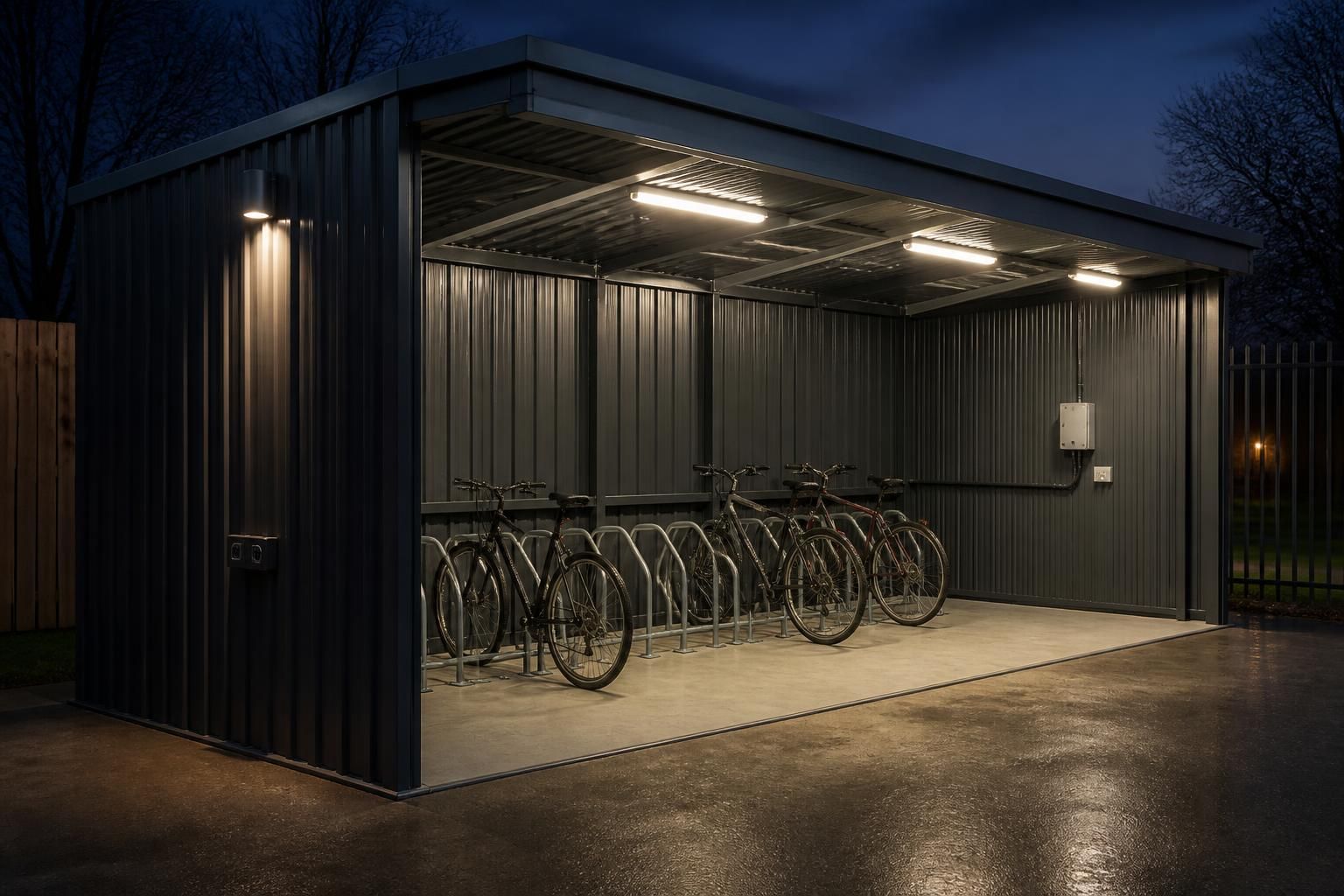
Can a steel bike shed include lighting and electrical services?
Yes. A steel bike shed can be designed to accommodate lighting and electrical services, with cable routes, fittings and power points planned into the structure; electrical installation should be completed by a suitably qualified electrician in accordance with applicable regulations.
Lighting and electrical provision can be incorporated into a steel bike shed when the building is designed around its intended use. The structure can accommodate internal or external light fittings, switches, sockets, security equipment and charging points, but the electrical layout should be agreed before fabrication and installation.
Lighting design: A basic arrangement may use one or more internal fittings controlled by a wall switch. Larger or frequently used facilities may benefit from separate switching for entrances, circulation areas and storage zones. Wall-mounted fittings can be positioned to illuminate cycle racks, doors and changing areas without creating excessive shadowing. External lighting may also be considered around entrances, although its location should avoid obstructing doors, access routes or maintenance work.
LED fittings are commonly suitable because they provide effective illumination with relatively low energy consumption and limited heat output. The choice still depends on the shed’s dimensions, roof height, internal layout and whether the space is dry, dusty or exposed to moisture. Fittings should have an appropriate level of protection for their location, particularly where water could enter through open doors or where the shed is used for washing or maintaining bicycles.
Electrical services that may be included:
- General-purpose sockets for cleaning equipment, tools or small appliances
- Dedicated supplies for alarms, access-control equipment or CCTV
- Power for ventilation equipment or automatic door systems
- Charging points for electric bicycles and associated accessories
- External sockets or lighting where these are justified by the site layout
Electric-bike charging requires particular attention to the position and number of charging points. They should be located where chargers and cables do not obstruct walkways, trap against cycle wheels or create a trip hazard. Charging areas should also be kept clear of stored materials and arranged so that individual bicycles can be connected without trailing leads across the main access route.
The steel frame, doors, cladding and any internal lining can affect how cables and equipment are positioned. Services may need to pass through planned openings, protective conduits or dedicated service zones rather than being fixed directly in a way that interferes with the building envelope. Penetrations through cladding and roofing should be detailed carefully so that they do not compromise weather resistance. Any exposed wiring should be protected against impact from bicycles, racks, tools and vehicle movements.
Coordination before construction: The electrical plan should be considered alongside the door positions, cycle-rack arrangement, roof drainage, ventilation and any security provisions. A plan showing fitting locations, switch points, socket heights, distribution equipment and cable routes helps prevent conflicts during fabrication. It also makes it easier to identify which items are included in the building design and which will be supplied and installed separately.
The final electrical work should be assessed for the site’s supply capacity, earthing and bonding requirements, circuit protection, cable protection and the environmental conditions inside the shed. These matters must be determined by the appropriately qualified electrical contractor responsible for the installation. The building designer can provide the structural and service-planning information needed for that contractor to complete the work safely and in line with applicable requirements.
For a new steel bike shed, the most practical approach is to define the lighting levels, socket requirements, charging provision and security equipment during the design stage. Retrofitting remains possible in many cases, but it can involve additional surface-mounted containment, more visible cabling and restrictions caused by the completed cladding or internal layout.
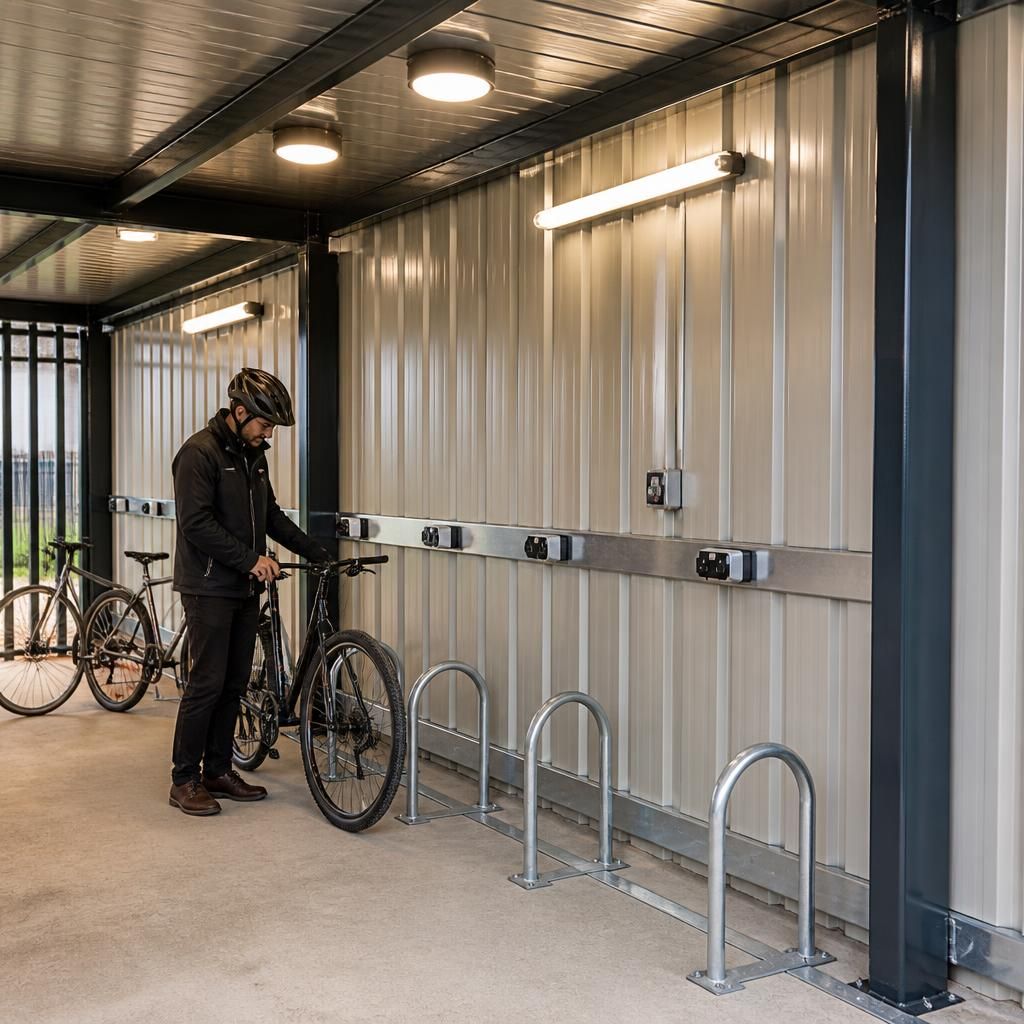
Lighting controls can make a steel bike shed safer and more practical without leaving fittings running unnecessarily. Occupancy sensors, timers or photocells may be suitable for certain areas, while a manual override can allow users to switch the lights on when needed. The control method should reflect how the shed is used, including whether cyclists may arrive with both hands occupied or whether lighting is required for longer periods during maintenance.
Where the shed forms part of a shared or workplace facility, the designer should also consider whether emergency lighting is needed for escape routes and exits. This depends on the building’s use, occupancy and escape arrangement, so it should be assessed by the appropriate competent person rather than assumed from the shed’s size alone. Any emergency fittings, test controls and illuminated signs should be coordinated with the doors and access routes before the building is fabricated.