
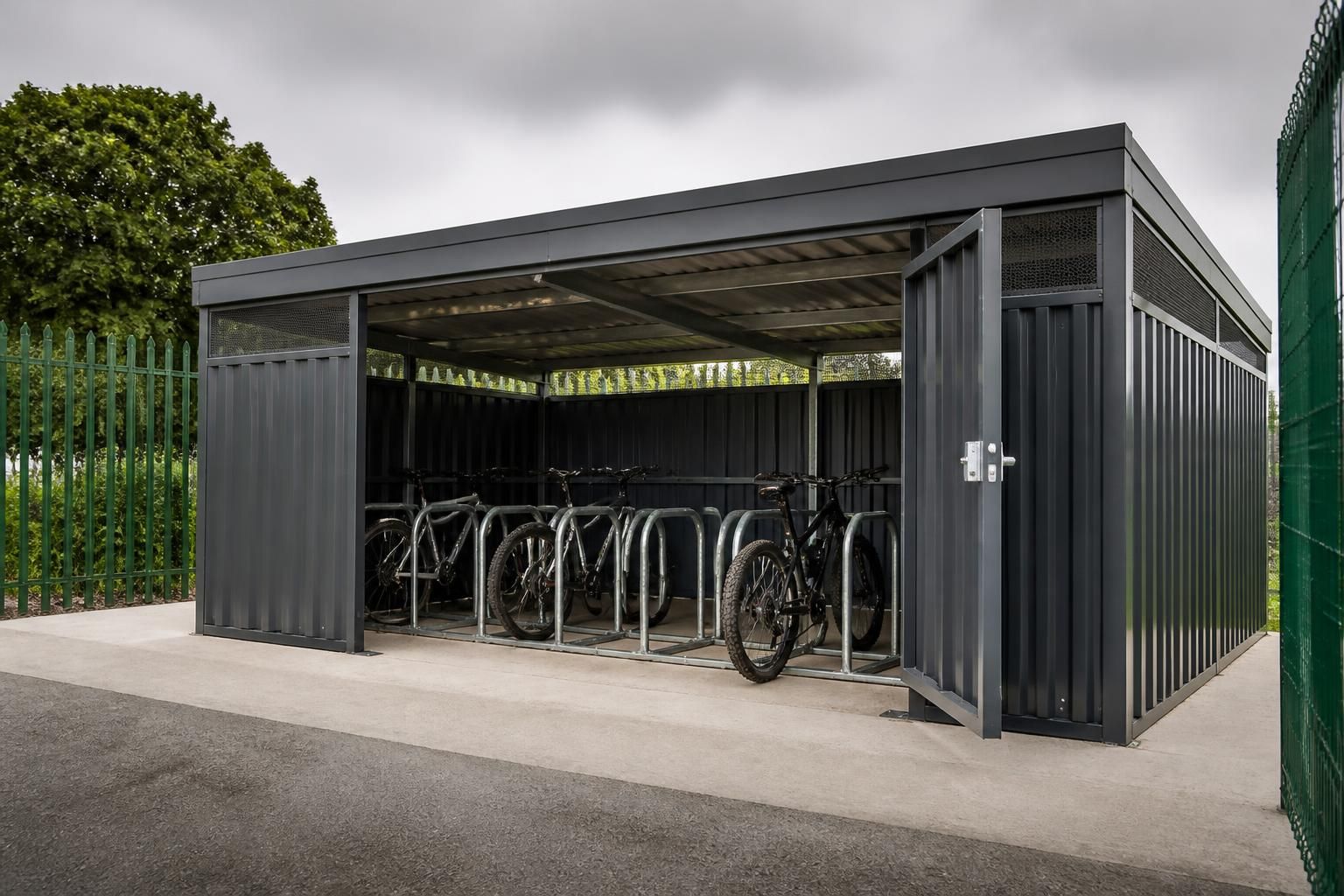
What maintenance do steel bike sheds require?
Steel bike sheds require relatively little maintenance: clean the panels and roof periodically, keep drainage routes clear, and check the finish, fixings, doors and locks for signs of wear or damage. Deal with scratches or early surface rust promptly to help preserve the steelwork and maintain secure cycle storage.
Maintenance for a steel bike shed is mainly concerned with protecting the steel system from prolonged moisture, preserving ventilation and drainage, and preventing changes to the surrounding ground or structure from affecting stability. A simple inspection routine helps identify developing problems before they affect the shed’s performance.
- Check the base and surrounding ground: Look for settlement, cracking or movement around the slab, kerb or other supporting surface. Soil, leaves and other debris should not build up against the lower edge of the shed, as this can retain moisture and obstruct inspection of the base.
- Monitor condensation: Temperature changes can cause moisture to form inside a metal enclosure, particularly where wet bicycles are stored. Keep designed ventilation openings unobstructed and avoid packing items tightly against walls or roof components. Persistent internal dampness may indicate inadequate airflow or a building defect that needs assessment.
- Protect the coating correctly: Establish whether the steel is galvanised, factory-painted or finished using another protective system before carrying out remedial work. Use compatible repair materials and follow the coating manufacturer’s preparation instructions. Abrasive methods or unsuitable paints can reduce protection and make future maintenance more difficult.
- Inspect junctions and penetrations: Pay attention to places where cladding meets the frame, roof edges, vents, trims or service penetrations. Failed sealant, open gaps or damaged trim can allow water into areas that are difficult to inspect. Repairs should restore the intended weather seal without blocking ventilation routes.
- Keep the interior usable: Remove accumulated mud, leaves and abandoned materials so that the floor and lower sections remain visible. Avoid storing corrosive chemicals, fertilisers or wet materials inside the shed, as their vapours or prolonged contact can affect metal components.
- Review the shed after severe weather: Strong winds, falling branches or impact from vehicles and equipment can cause distortion that is not immediately obvious. Check for displaced panels, altered roof lines or gaps at joints before continuing normal use.
Do not weld, cut, drill or attach heavy equipment to the steel frame without confirming that the change is suitable for the original design. Unauthorised alterations can affect load paths, introduce points where moisture collects and invalidate the assumptions used for the building’s structural design.
Keep a basic record of inspections, coating products and repairs. If there is significant distortion, deep section loss, movement at the base or recurring water entry, obtain an assessment from a suitably qualified steelwork professional rather than covering the affected area or making an improvised repair.
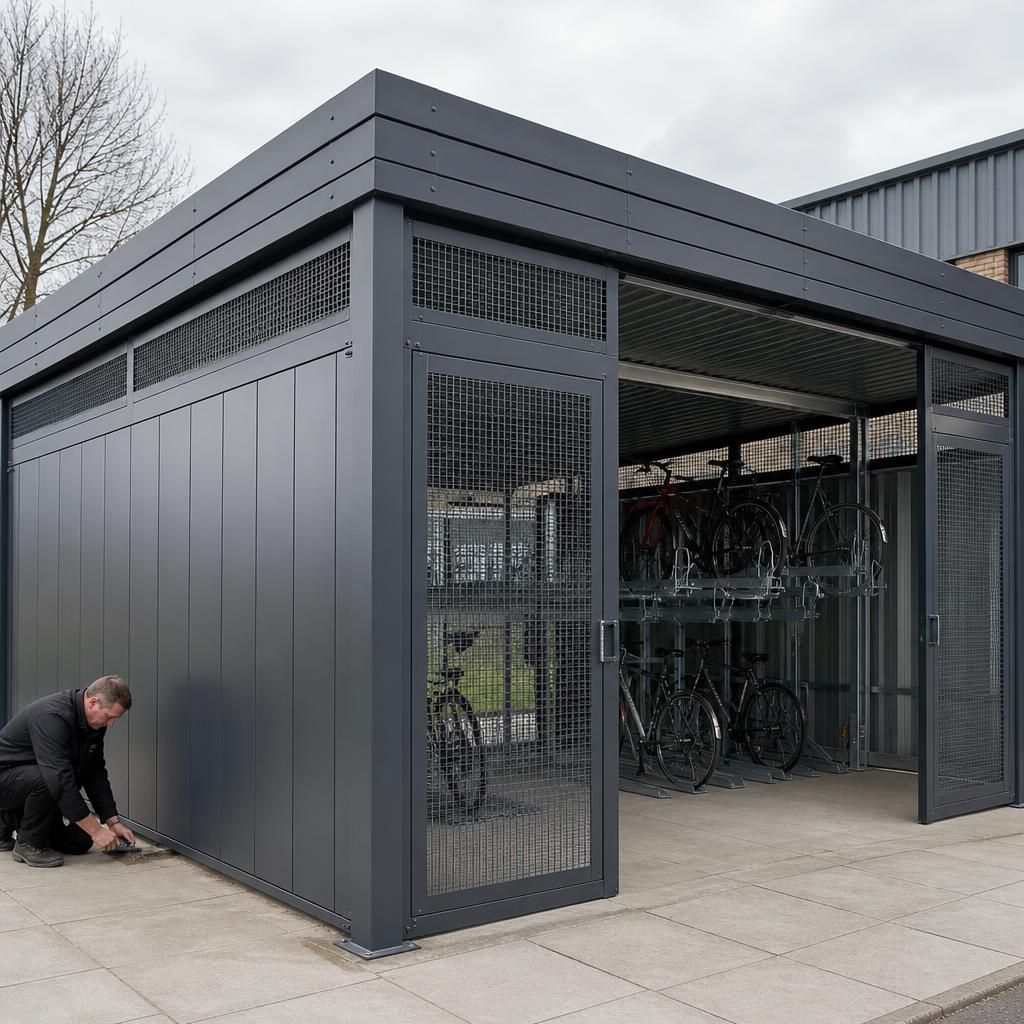
Moving hardware needs separate attention from the steel panels. Hinges, sliding mechanisms, latches and locking points can collect grit and become stiff even when the surrounding structure remains sound. Clean away dirt, apply a lubricant suitable for the hardware, and operate each door and lock to confirm that it moves without excessive force.
- Check that doors remain correctly aligned and do not scrape the frame or floor.
- Tighten accessible fixings that have loosened through normal use, taking care not to overtighten them.
- Remove grit from lock barrels and avoid forcing a key if the mechanism feels obstructed.
- Replace worn seals, damaged handles or faulty locking components with compatible parts rather than modifying the door or frame.
Regular attention to the operating hardware helps prevent minor stiffness or misalignment from developing into a damaged door or unreliable security point.
Plan a low-maintenance steel bike shed
If you are planning a new steel bike shed, discuss the proposed location, access arrangements and maintenance requirements with Buildings UK Ltd so the design and finish suit its intended use. Their bespoke design service can provide the planning elevation drawings and fabrication information needed before manufacture.