What maintenance does an industrial metal building require?
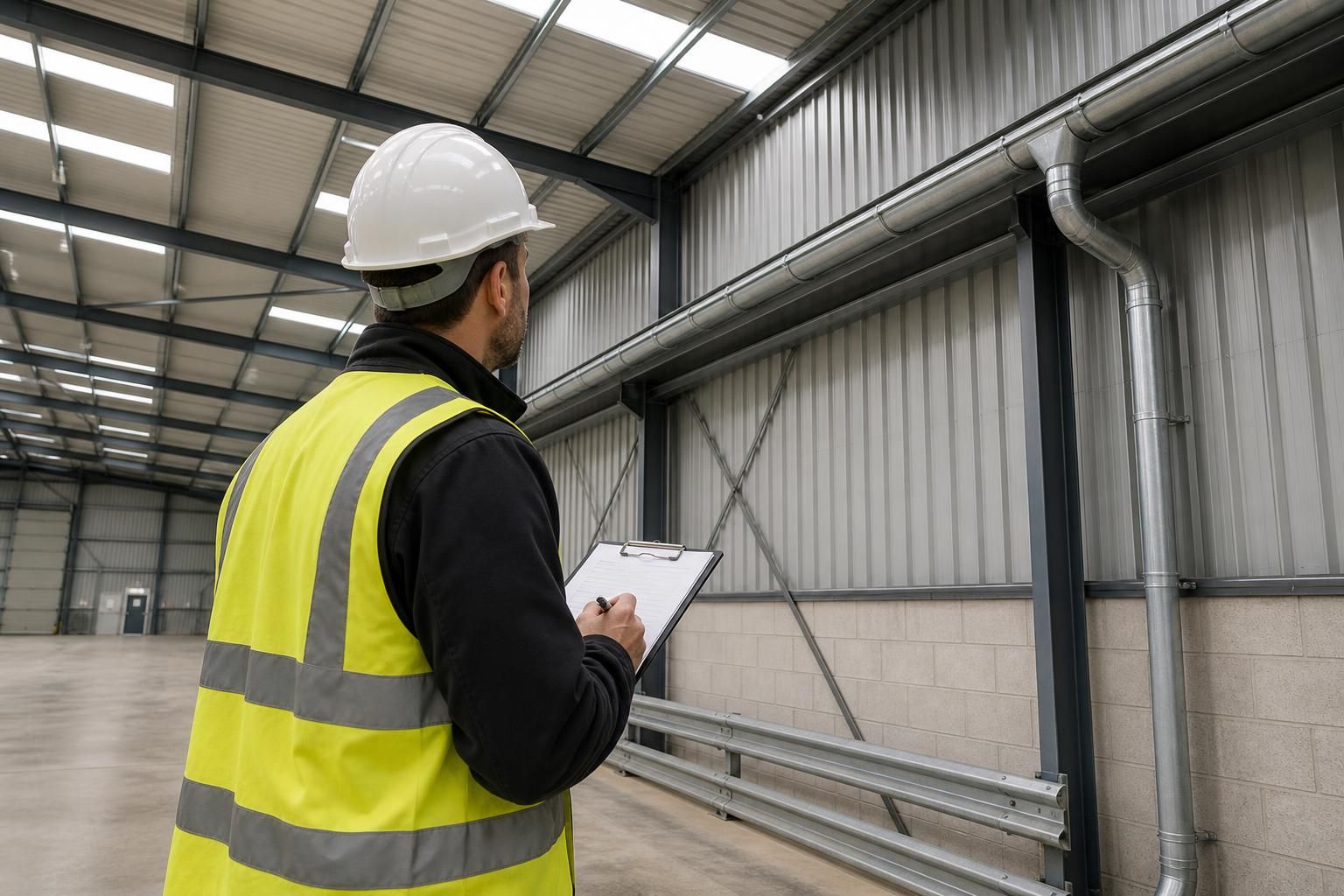
Industrial metal buildings generally require routine inspections, cleaning and prompt repair of corrosion, damaged cladding, roof defects, fixings, doors, gutters and drainage components. A planned maintenance schedule helps identify minor issues before they affect the building’s weather resistance, structural protection or day-to-day use.
Industrial metal building maintenance is the planned care of the steel frame, protective finishes, building envelope and associated components so that the structure continues to perform safely throughout its service life. The work should be based on the building’s design, environment and use rather than a generic checklist, with greater attention where the building is exposed to chemicals, salt, livestock conditions, high humidity, condensation or frequent vehicle movement.
Start with the building information. Keep the structural drawings, fabrication information, cladding specifications, coating details, product instructions and records of later alterations together. This information helps identify the materials used and prevents incompatible repairs. It is particularly important where a coating system, sealant or protective treatment has a specified preparation method.
Check the structural frame and its connections. Maintenance inspections should consider whether any part of the frame has been struck, distorted, cut, drilled or subjected to loads that were not part of the original design. Particular attention may be needed at column bases, bracing members, connection plates, welds and areas where water or debris can remain in contact with steel. Cracking, unusual deflection, buckling, significant section loss or movement should be assessed by a suitably competent structural professional before remedial work is attempted.
Do not assume that a proposed alteration is minor simply because it does not change the building’s external appearance. Mezzanines, suspended equipment, solar installations, extraction systems, conveyors, cranes, internal partitions and heavier storage arrangements can introduce new loads or affect the original load path. Obtain design advice before cutting, welding, removing bracing or attaching equipment to the frame.
Maintain the protective system correctly. Steelwork protection may rely on galvanising, paint, a multi-coat system, fire protection or a combination of treatments. When damage is found, identify the existing system and follow the appropriate preparation and recoating procedure. Surface preparation is essential: applying new material over loose coating, contamination or active corrosion can conceal the problem rather than resolve it. Where corrosion has reduced the steel’s thickness or affected a connection, local touch-up painting may not be sufficient.
Control condensation and internal conditions. Moisture can form on cold metal surfaces when warm, humid air meets them, particularly in buildings used for wash-down, processing, storage of wet materials or housing livestock. Persistent condensation can affect steelwork, insulation, stored goods and electrical installations. Review ventilation, insulation, vapour control layers and the way internal activities generate moisture. Look for recurring damp areas, staining, degraded insulation or moisture trapped behind linings, and investigate the cause rather than treating only the visible symptom.
Protect vulnerable areas from operational damage. In industrial buildings, forklifts, telehandlers, loaders, cranes and stored materials can damage columns, wall panels, lower rails and internal finishes. Use suitable barriers or bollards where traffic passes close to structural members, and keep impact protection separate from the frame unless its attachment has been designed for that purpose. Storage should not obstruct bracing, impose unplanned loads or prevent access for inspection.
A practical maintenance plan should include:
- the locations and components to be checked;
- the environmental or operational conditions that increase risk;
- the person responsible for carrying out each task;
- the competence required for specialist assessment or repair;
- the procedure for recording defects and assigning remedial action; and
- the documents to retain, including photographs, inspection notes, repair details and updated drawings where alterations have been made.
Records should identify the exact location of a defect and distinguish between a condition that can be monitored and one requiring immediate professional attention. A recurring defect should not simply be recorded repeatedly; its underlying cause may involve movement, moisture, impact, overloading or a failure in the protective system.
Maintenance responsibilities should also be clear where the building is leased, shared by several occupiers or serviced by external contractors. Everyone working on the structure needs to know which alterations require approval and which areas contain concealed steelwork, services or fire-protection materials. Specialist work, including structural repairs, welding, fire-protection repairs and significant coating renewal, should be specified and inspected by appropriately qualified personnel.
Buildings UK Ltd can incorporate practical maintenance considerations into the design and documentation of a new industrial steel building, helping the owner understand the construction, materials and areas that require future attention. For an existing building, a suitably qualified professional should assess any suspected structural damage or substantial corrosion before a repair strategy is selected.
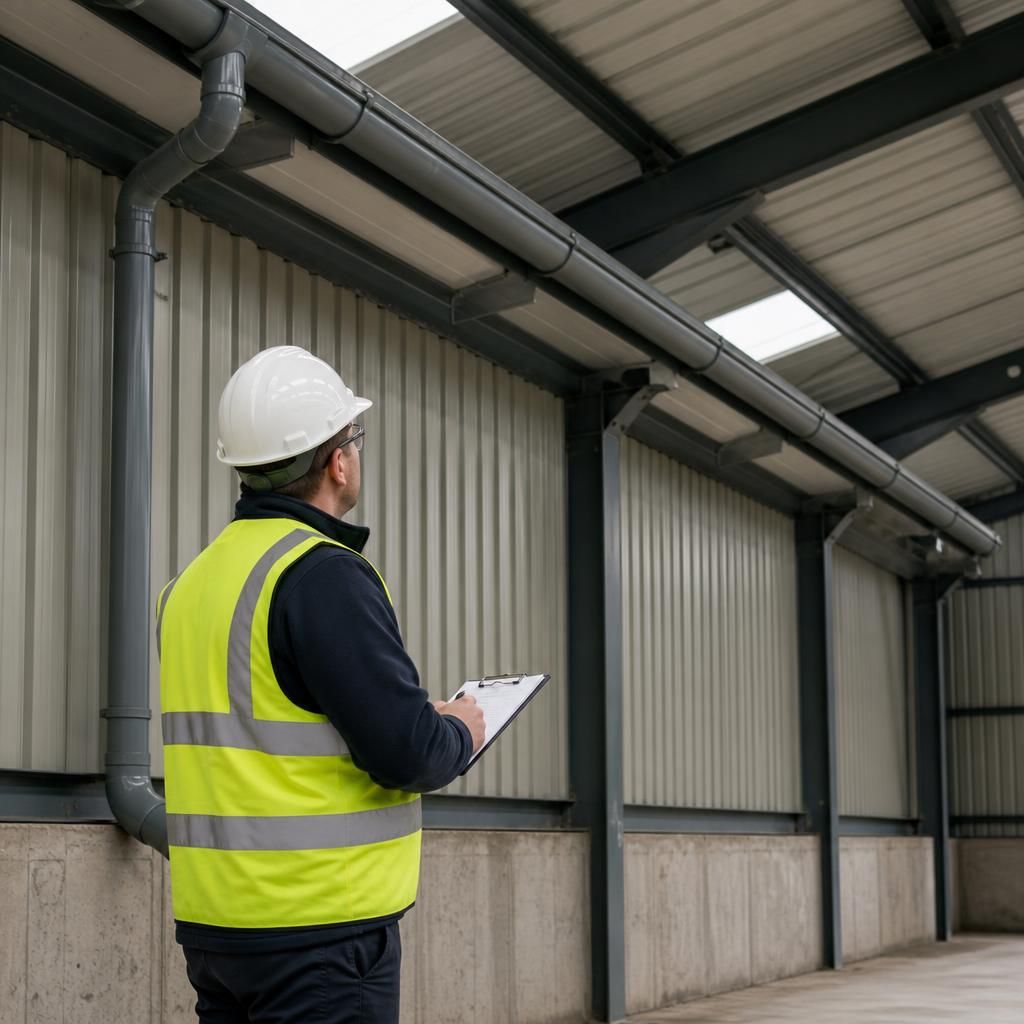
Roof and rainwater system maintenance is a key part of protecting an industrial metal building from water ingress. Inspections should check roof sheets, laps, flashings, sealants, gutters, downpipes and roof penetrations for displacement, splits, blockages or signs that water is entering the building.
Remove leaves, silt and other debris from gutters and outlets before they restrict drainage. Check that downpipes discharge correctly and that water is not collecting beside foundations or splashing onto lower cladding. Sealants around rooflights, vents and service penetrations may deteriorate separately from the surrounding metalwork, so any failed joint should be assessed and renewed using a compatible product.
Roof inspections should be carried out using suitable access equipment rather than walking directly on unsupported cladding or rooflights. After severe weather, impact from maintenance work or changes to rooftop equipment, inspect vulnerable areas for displaced sheets and damaged flashings, recording defects so that repairs can be prioritised before water reaches insulation, stored materials or internal equipment.