
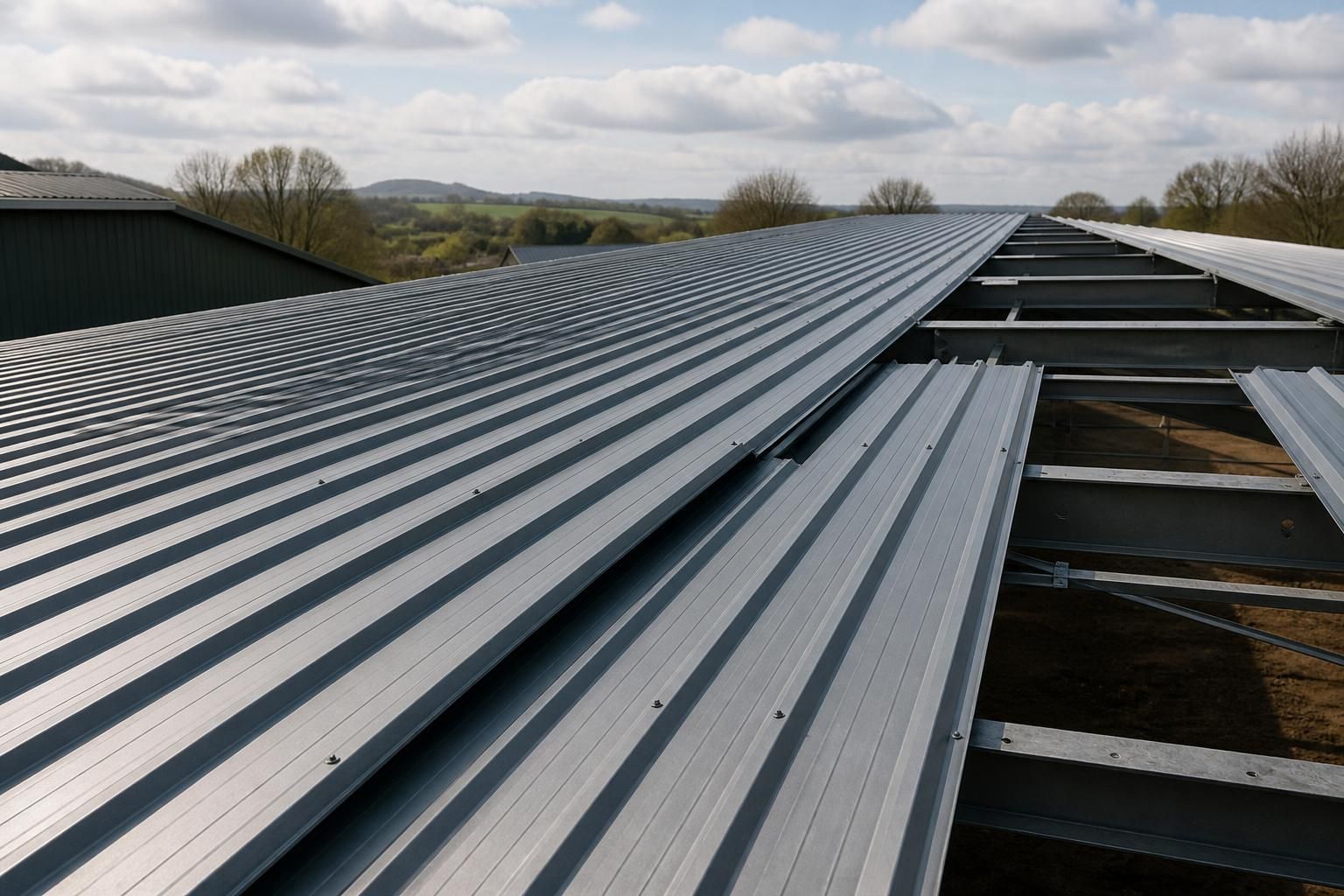
How thick should corrugated roofing sheets be?
There is no single correct thickness for corrugated roofing sheets: the suitable gauge depends on the sheet profile, roof span, purlin spacing, wind and snow loads, and the building’s intended use. Select the thickness from the manufacturer’s load tables or have it specified as part of the roof design so the sheets provide adequate strength without unnecessary weight or cost.
The correct corrugated roofing sheet thickness is the one that meets the required structural load for the selected profile, support arrangement and building conditions. A thicker sheet is not automatically the best choice: the profile shape, steel grade, purlin layout, fixings and coating all affect the roof’s performance.
Thickness and structural strength
Sheet thickness affects resistance to bending, denting and local damage. It becomes particularly important where sheets span between widely spaced purlins, are exposed to strong wind uplift, or may be subject to snow loading. The designer should check the manufacturer’s load-span tables for the precise profile, thickness and support condition rather than comparing thickness in isolation.
Load tables normally distinguish between simple spans and sheets supported over several purlins. They may also specify permitted deflection limits, maximum support spacing and fixing requirements. These details matter because a sheet can have sufficient ultimate strength but still deflect excessively under service loads. The specification should therefore satisfy both strength and serviceability requirements.
Profile depth and support spacing
A deeper corrugation can provide greater stiffness without relying solely on additional steel thickness. Two sheets with the same thickness may therefore have different load capacities if their profiles differ. The span between purlins, the position of end supports and the arrangement of side laps should all correspond with the data for the chosen profile.
Reducing purlin spacing can sometimes allow a lighter sheet to be used, while increasing the spacing may require a thicker or stiffer sheet. This should be assessed as part of the overall roof design, since changing the sheet specification without reviewing the supporting steelwork can create an unsuitable combination.
Building use and loading conditions
The roof’s use should be considered before selecting a thickness. An agricultural building may experience wind exposure, snow, condensation and occasional contact from maintenance equipment. An industrial building may have plant, services or access requirements that impose additional loads. Where people may need to access the roof, the sheeting must not be treated as a working platform unless the system has specifically been designed for that purpose.
Wind uplift is often critical at corners, edges and roof perimeters. These areas may need a different fixing pattern or closer support arrangement, even where the same sheet thickness is used across the main roof. Open-sided buildings and exposed sites can also require particular attention to uplift and edge detailing.
Thermal performance is a separate issue
Increasing the thickness of a metal sheet does not provide the same thermal performance as installing insulation. A single-skin corrugated sheet can transmit heat and cold readily, and it may allow internal condensation to form when warm, moist air meets the underside of the roof. If the building needs temperature control, condensation management or a regulated thermal envelope, the specification may need insulation, a liner, a vapour-control layer or an appropriate composite roofing system.
This distinction is important for agricultural and industrial buildings. The sheet thickness should be selected for structural and durability requirements, while the insulation build-up should be designed separately around the building’s intended use.
Durability and the external environment
Thickness contributes to resistance against minor impact and handling damage, but it does not by itself determine how long a sheet will perform. The metallic coating, paint finish, exposure conditions, drainage and maintenance are also significant. Areas with persistent moisture, pollutants, coastal exposure or contact with incompatible materials may require a more suitable coating system rather than simply a thicker sheet.
Correct detailing helps protect the sheet regardless of thickness. Water should be able to drain freely, cut edges and penetrations should be treated as specified, and fixings should be compatible with the sheet and supporting structure. Debris trapped against the coating can hold moisture and increase the risk of local deterioration.
How to specify the right thickness
- Confirm the corrugated profile and material, including the coating or finish.
- Establish the purlin spacing, support conditions, roof geometry and sheet span.
- Assess the relevant wind, snow and maintenance loads for the site and building.
- Check the manufacturer’s load tables for both strength and deflection.
- Confirm the fixing type, fixing pattern, edge zones, side laps and end laps.
- Review condensation, insulation and fire requirements separately from sheet thickness.
For a new steel-framed building, the roofing specification should be coordinated with the frame and purlin design. For a replacement roof, the existing supports should be checked rather than assuming that a new sheet of the same thickness will be suitable. Buildings UK can incorporate roofing requirements into bespoke design information, including planning elevations and fabrication drawings, so the sheeting and supporting steelwork are considered together.
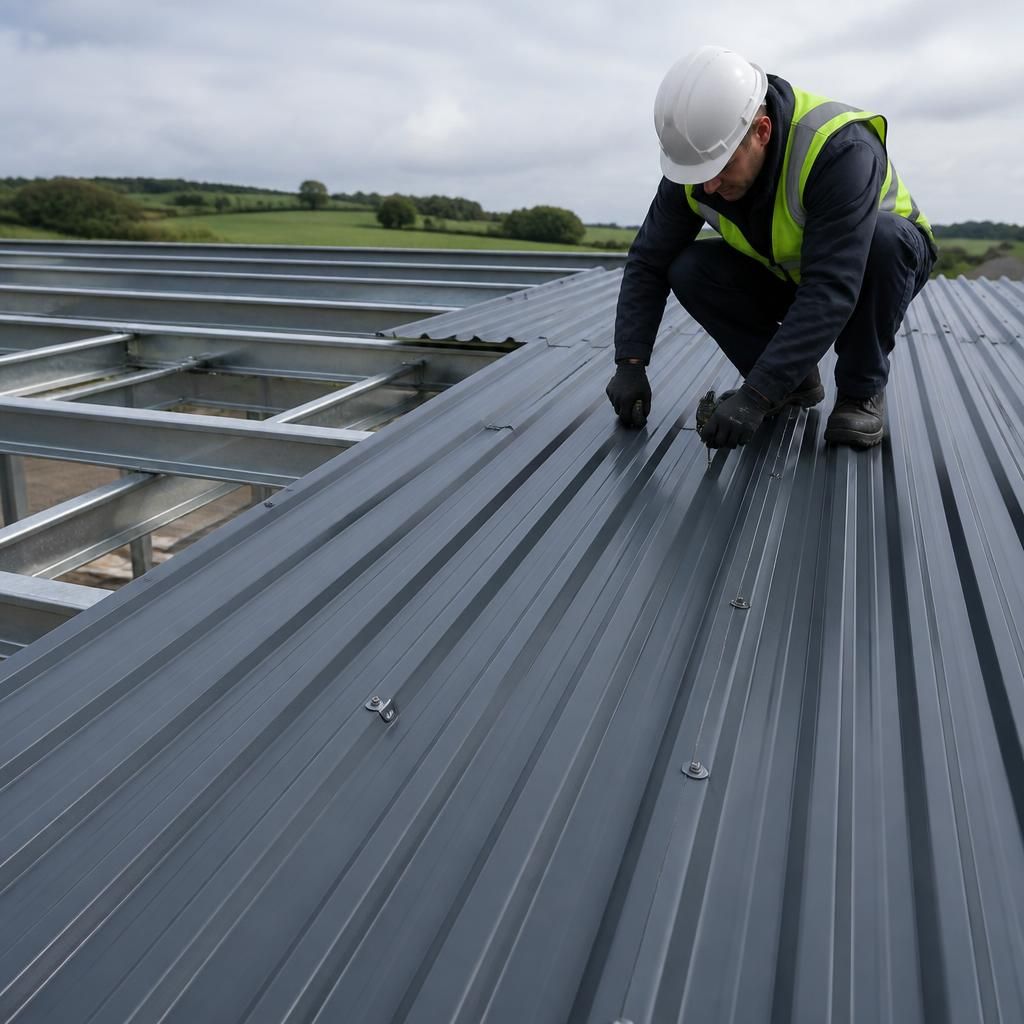
Corrugated roofing thickness should be specified as the nominal steel thickness in millimetres, rather than by gauge alone. Gauge references can vary between materials and suppliers, so a clear specification should identify the corrugated profile, steel thickness, coating and product standard together.
Check whether the stated thickness refers to the base steel or includes any applied coating, as suppliers may present this information differently. The manufacturer’s technical datasheet should also be checked for permitted manufacturing tolerances. When sheets are delivered, confirm the product description and documentation against the agreed specification; visual appearance alone is not a reliable way to judge thickness.