Which coating is suitable for corrugated roofing sheets?
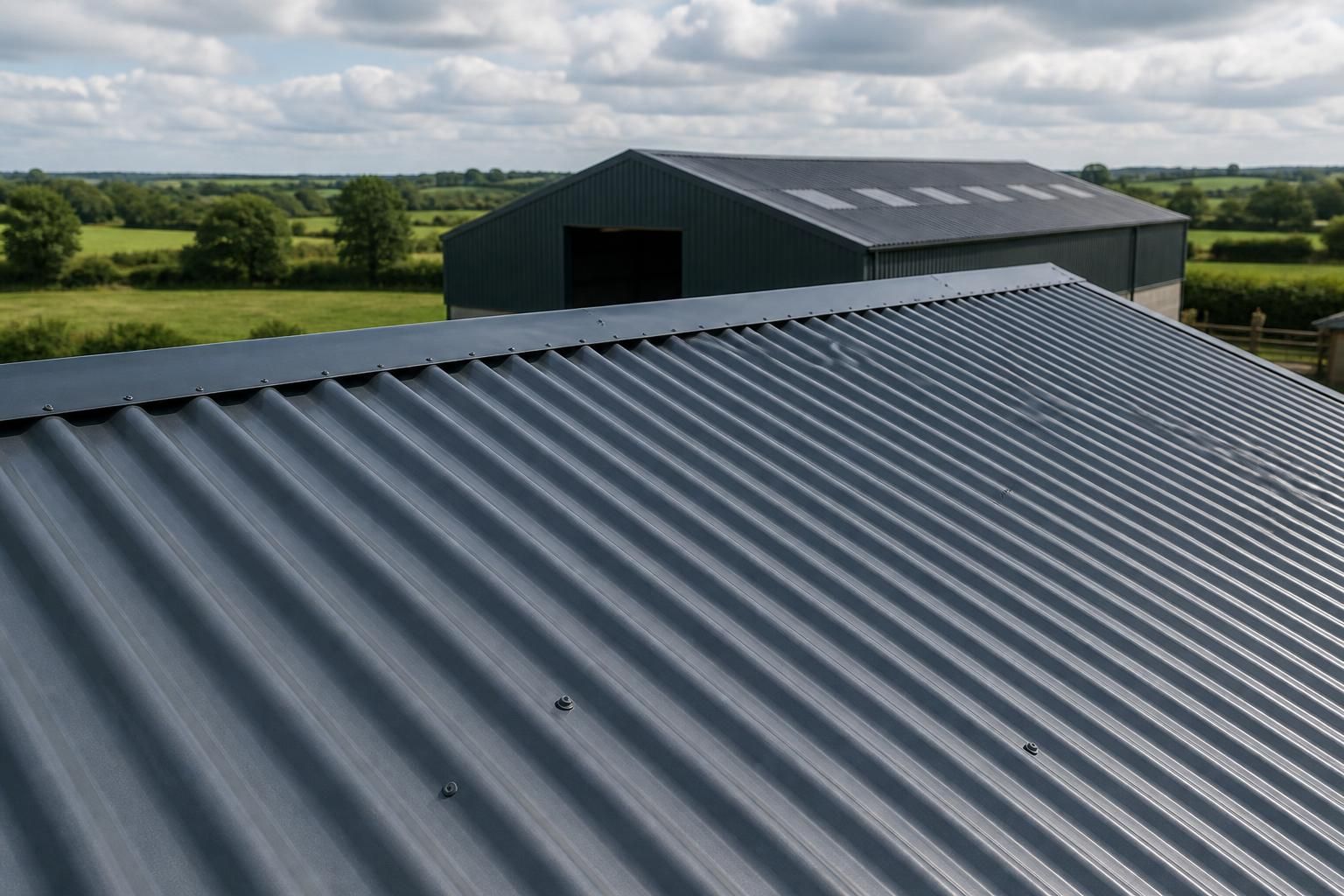
The most suitable coating for corrugated roofing sheets depends on the building’s exposure, expected service life and appearance requirements. Galvanised steel provides dependable corrosion protection, while plastisol-coated sheets add a durable coloured finish and are often preferred where enhanced weather resistance and appearance are required.
The suitable coating for corrugated roofing sheets is the one specified for the building’s corrosion exposure, internal atmosphere, expected service life and appearance requirements. A standard galvanised finish is appropriate for many general-purpose roofs, whereas a factory-applied organic coating is usually preferable where colour retention, additional surface protection or a more finished appearance is important.
Galvanising protects steel with a zinc layer. The zinc provides a barrier against moisture and also offers sacrificial protection if the steel is exposed by a minor scratch or cut edge. Its performance depends on the coating mass, the local environment and whether water can drain freely from the roof. Galvanised sheets are commonly considered for agricultural and industrial buildings where a practical, low-maintenance finish is required.
A plastisol coating consists of a protective organic layer applied over the steel substrate and metallic coating. It is available in coloured finishes and provides a comparatively robust surface against ordinary handling, weathering and light abrasion. It can therefore be suitable when the roof must coordinate with surrounding elevations or when the appearance of the building is a significant design consideration. The coating should still be protected from deep scratches, sharp impact and contact with incompatible materials.
For a more precise specification, assess the following conditions before selecting the coating:
- External exposure: Coastal locations, areas exposed to salt contamination and sites affected by industrial pollutants generally require a more carefully specified coating system than sheltered inland locations.
- Agricultural atmosphere: Moisture combined with ammonia, fertiliser dust or other corrosive contaminants can accelerate deterioration. Livestock buildings and stores containing aggressive materials may need enhanced protection and suitable ventilation.
- Condensation: The underside of the sheet can be exposed to persistent moisture even when the external surface is protected. Anti-condensation measures, insulation and ventilation should be considered as part of the roof design.
- Appearance: Galvanised steel provides a metallic finish that changes naturally with weathering. Pre-finished coloured sheets offer a more consistent appearance, but the coating specification should reflect the required resistance to fading, chalking and surface damage.
- Roof detailing: Valleys, laps, gutters, penetrations and exposed edges can retain moisture or collect debris. A suitable coating cannot compensate for poor drainage, inadequate laps or unsuitable flashing details.
Cutting and installation also affect coating performance. Sheets should be cut using methods recommended for coated steel, with swarf removed promptly so that particles do not rust on the surface. Cut edges, drilled holes and damaged areas should be treated in accordance with the sheet manufacturer’s guidance. Compatible fasteners and washers are essential; unsuitable metals can create galvanic corrosion, while damaged washers can allow water into the fixing point.
Where the environment is particularly aggressive, do not select a coating solely by colour or initial appearance. Request the complete specification, including the metallic substrate, organic coating type, coating thickness, rear-face treatment and intended exposure category. The roof designer or supplier can then match the sheet to the building’s location and use. In many cases, the most durable result comes from combining the correct coating with sound detailing, compatible fixings, adequate ventilation and periodic inspection.
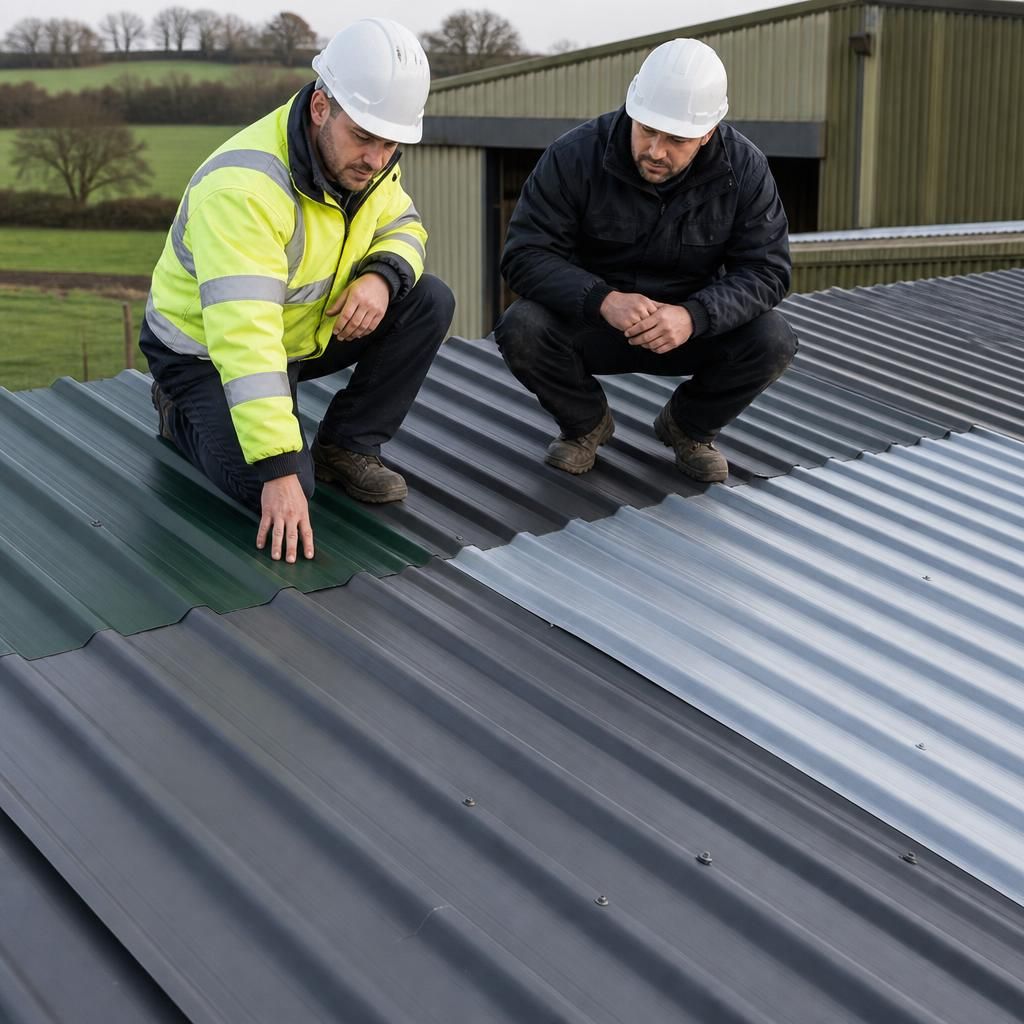
For corrugated roofing sheets, a factory-applied coating is generally more suitable than relying on paint applied after installation. The coating is applied under controlled conditions to provide an even finish across the profiled sheet, including the areas that are difficult to cover consistently on site.
Site-applied paint can still have a role in maintenance or local repair, but it should not be treated as an equivalent substitute for the original coating. Before repainting, the surface must be clean, sound and compatible with the proposed product. Flaking areas, corrosion and contamination should be dealt with first, and the paint manufacturer’s preparation requirements should be followed.
When comparing coated sheets, check whether the stated system is intended as the finished external surface or as a substrate for later decoration. This distinction helps prevent incompatible paint being applied over a factory finish and makes the coating choice more appropriate for the roof’s intended service conditions.
Discuss the right coating for your corrugated roofing sheets
If you are unsure which coating specification suits your building, contact Buildings UK Ltd to discuss the roof’s environment, use and design requirements. Their team can help you identify the appropriate corrugated roofing sheet finish before ordering.