
What preparation does an industrial roof coating require?
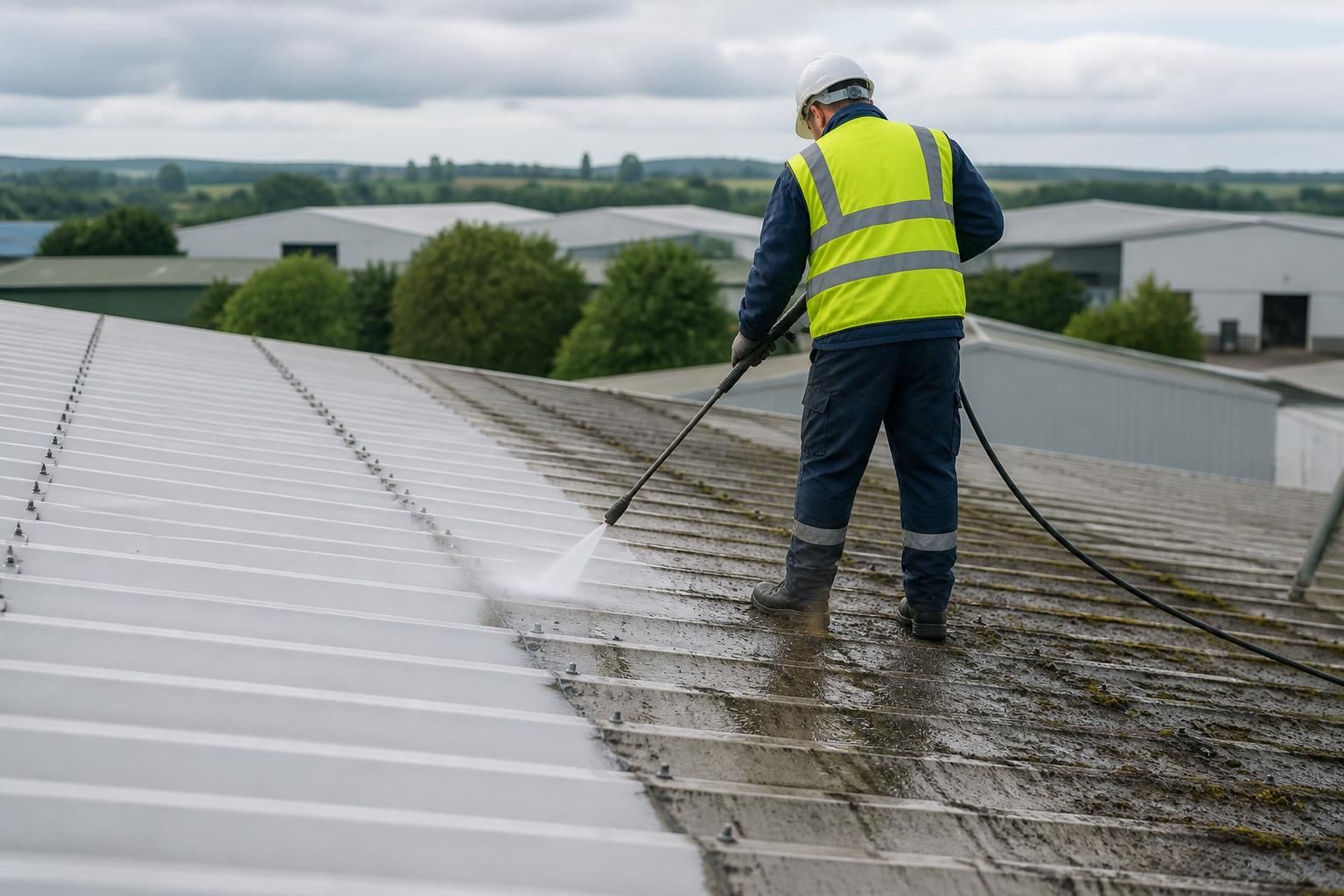
An industrial roof coating requires a clean, dry and sound surface before application. Preparation typically includes inspecting the roof, removing dirt, oil, loose paint and corrosion, repairing damaged sheets or fixings, and allowing the substrate to dry fully so the coating can adhere properly.
Preparation for an industrial roof coating is a controlled process that establishes whether the roof is suitable for treatment, identifies defects that must be addressed first and creates the surface conditions needed for reliable adhesion. It should be planned around the roof construction, the existing finish, the proposed coating system and the condition of associated details such as laps, penetrations, gutters and edge trims.
Before physical preparation begins, the roof should be assessed as a whole. This includes confirming the substrate material, identifying previous coatings and checking whether areas have different finishes or levels of deterioration. A coating may behave differently over galvanised steel, painted steel, older factory finishes and previously repaired sections, so these areas should not automatically be treated as one uniform surface.
The survey should also consider matters that affect safe access. Fragile sheets, rooflights, corroded sections and areas with inadequate support need to be identified before operatives work on the roof. Suitable access arrangements, edge protection and exclusion measures should be specified for the building and its surroundings. If the roof or existing materials may contain asbestos, the appropriate survey and control procedures must be completed before preparation starts.
Once the substrate has been prepared, attention should turn to the details that commonly affect coating performance:
- sheet laps and joints should be checked for movement, open gaps or failed sealing;
- fasteners should be assessed for corrosion, looseness and damaged sealing washers;
- penetrations around vents, pipes and roof-mounted equipment should be examined for splits or failed interfaces;
- ridge caps, verge details, flashings, gutters and outlets should be checked for defects that could allow water to remain against the coated surface; and
- existing sealants or patch repairs should be tested for adhesion and compatibility rather than simply coated over.
Any remedial materials used during preparation need to be compatible with the coating system. Hard, brittle repairs, uncured sealants, incompatible primers and contaminating residues can create weak points beneath the new finish. Where a repair transitions between different materials, the preparation should account for movement at that joint rather than treating it as a flat area.
Surface profiling may also be required on a previously painted roof. The aim is to remove unsound material and provide an appropriate key without unnecessarily thinning the underlying steel. The method should be selected according to the existing finish and the condition of the metal. Abrasive work, mechanical preparation and washing can each introduce residues or moisture, so the surface should be checked again afterwards rather than assumed to be ready.
After preparation, the roof should be assessed for remaining dust, salts, moisture, exposed metal and areas where the existing coating has lifted. Particular care is needed at overlaps, around fixings and beside repairs, as these locations can retain contamination or dry more slowly than the main roof surface. The substrate should meet the coating system’s stated requirements before primer or coating is introduced.
Primer is not automatically required over every roof, but it may be specified for exposed steel, difficult substrates, isolated repairs or areas where the existing finish has different characteristics. Its use, coverage and drying conditions should follow the relevant technical data. Applying a general-purpose primer without checking compatibility can be counterproductive.
On larger or varied roofs, a small test area can help confirm adhesion, appearance and compatibility before the full treatment proceeds. This is especially useful where the existing paint is weathered, several coatings have been applied previously or the substrate changes across the building. Any poor adhesion, bubbling, staining or reaction observed in the test area should be resolved before wider application.
Weather and timing form part of preparation rather than being an afterthought. The roof must remain within the coating system’s permitted conditions for temperature, humidity and moisture, and the surface should not be at risk of condensation or rain during the relevant drying period. Shaded sections, northern elevations and areas beneath roof-mounted equipment may remain damp after the rest of the roof appears dry.
A properly prepared roof is therefore more than one that looks clean. It has been surveyed for structural and detailing issues, made safe to access, treated according to its substrate and existing finish, repaired with compatible materials, checked for adhesion and left in suitable conditions for the specified coating system. This preparation helps prevent defects being concealed beneath the coating and gives the applicator a sound basis for the next stage of the work.
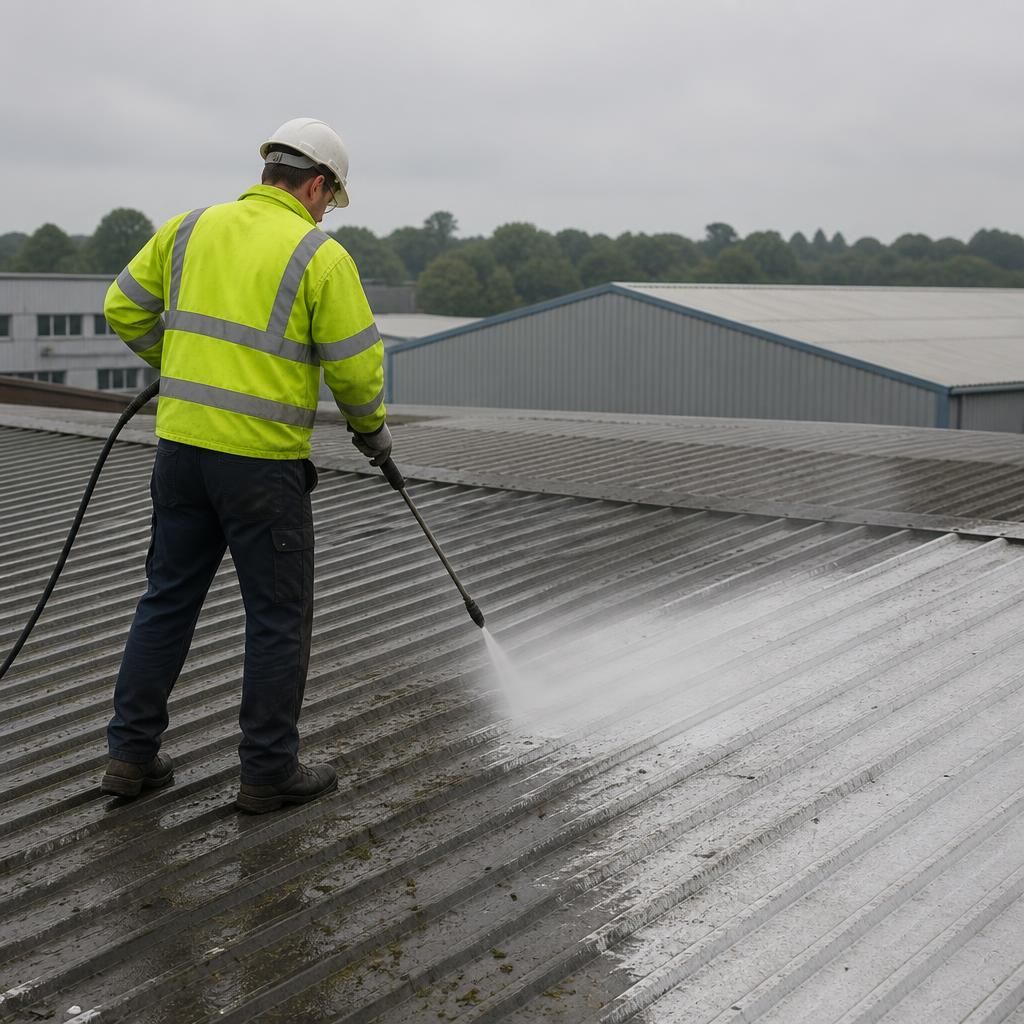
Preparation should also protect the building and its surroundings from contamination during cleaning and surface treatment. Dust, loose scale, wash water and preparation debris must be controlled so they do not enter production areas, collect on lower roofs or block gutters and outlets.
Rooflights, vents, roof-mounted equipment, wall finishes and vulnerable external surfaces may need temporary protection. Rainwater goods should be kept clear, while any collected debris or contaminated water should be removed using a suitable method. This housekeeping stage is part of proper preparation because contamination left on adjacent surfaces can affect the building even when the roof substrate itself is ready for coating.