
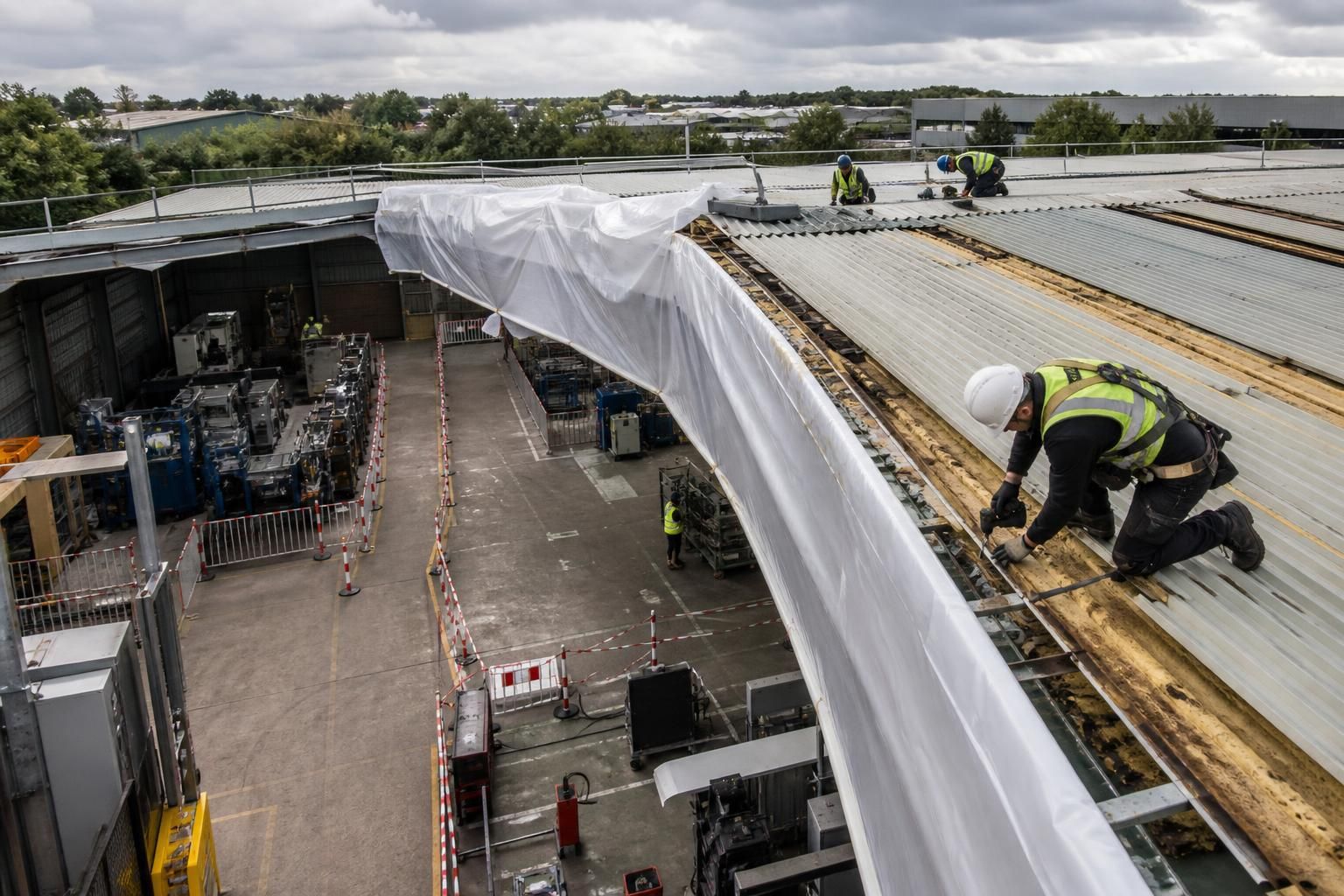
Can an industrial building remain occupied during roof replacement?
An industrial building can sometimes remain occupied during roof replacement, but only where a documented risk assessment confirms that safe separation, weather protection, access control and emergency arrangements are achievable. If the work creates unacceptable risks from falling materials, dust, noise, water ingress or restricted escape routes, affected areas may need to be vacated temporarily.
Yes, an industrial building may remain partly occupied during roof replacement, but only when the work can be separated from normal operations and controlled through a suitable construction phase plan, risk assessment and method statement. Occupation is not appropriate where the roof work exposes people to uncontrolled falling objects, hazardous materials, unsafe access, excessive dust or noise, water ingress, fire, or blocked escape routes.
The decision should be based on the building’s layout, the roof replacement method and the activities taking place below. A warehouse with clearly defined bays may allow unaffected areas to continue operating, whereas a production line, storage area or office directly below the work may need to close temporarily. The assessment should consider employees, contractors, visitors, delivery drivers and anyone who may enter the building without understanding the construction hazards.
- Separate the work area: Use secure hoardings, barriers or other suitable protection to prevent unauthorised access beneath or beside the roof work. The boundary must remain effective as the operation moves across the building.
- Control falling objects: Materials, tools and removed roof components must not be able to fall into occupied areas. Debris netting, edge protection, exclusion zones and controlled lifting arrangements may be required, depending on the roof design and removal sequence.
- Maintain safe access and escape: Staff routes, fire exits, fire-fighting equipment and access for emergency services must remain available. If a route has to be closed, a clearly signed alternative should be established before work starts.
- Protect against weather: Opening the roof can expose stock, machinery and occupants to rain, wind and falling water. Temporary coverings and a planned weatherproofing sequence are important, particularly where the building contains moisture-sensitive goods or electrical equipment.
- Manage dust, noise and vibration: Cutting, drilling and removal work can affect production, communication and concentration. Dust control, suitable ventilation, hearing protection and restrictions on particularly disruptive tasks may be needed.
- Coordinate deliveries and lifting: Roof sheets, structural components, skips and lifting equipment can conflict with vehicle movements and pedestrian routes. A delivery and lifting plan should define loading areas, exclusion zones and banksman arrangements where necessary.
A phased replacement programme is often the most practical approach. The contractor can complete a defined section, make it secure and weather-tight, then move to the next section. Occupants should never be moved back into an area merely because the roof covering has been removed; the section must also be checked for incomplete edges, temporary works, debris, exposed services and other residual hazards.
Before work begins, the existing roof should be surveyed for its construction, condition, access limitations and any hazardous materials. In particular, older industrial roofs may contain asbestos-containing materials, fragile rooflights or deteriorated sheets. These issues affect the removal method and may make continued occupation unsuitable until specialist controls or removal procedures have been completed. A roof that appears sound from inside may still be unsafe to work above, so the replacement design must account for load-bearing capacity and safe access.
Occupied areas also need protection from damage caused by leaks, condensation and construction traffic. Stock may need to be relocated away from the working zone, machinery covered or isolated, and sensitive processes temporarily stopped. Where production cannot tolerate contamination, vibration or a loss of environmental control, a temporary shutdown may be safer than trying to maintain partial occupation.
Communication is part of the control system rather than an administrative afterthought. The building operator and contractor should agree who controls access, how daily work zones are identified, how changes are reported and what occupants should do if water enters the building or an exclusion barrier is disturbed. Inductions and briefings should reflect the actual work sequence, especially where the boundary changes during the project.
Temporary evacuation or full closure is more likely to be necessary when the roof structure requires substantial temporary support, when large sections are open, when lifting takes place over occupied space, or when emergency routes cannot be maintained. It may also be required if the assessment identifies risks that cannot be reduced to an acceptable level through segregation, scheduling or protective equipment.
The final decision should therefore be made jointly by the building operator, designer and roofing contractor, with the arrangements reviewed as conditions change. Buildings UK Ltd can incorporate practical access, phasing and protection considerations into a bespoke steel building or structural design package where they are relevant to the proposed replacement work.
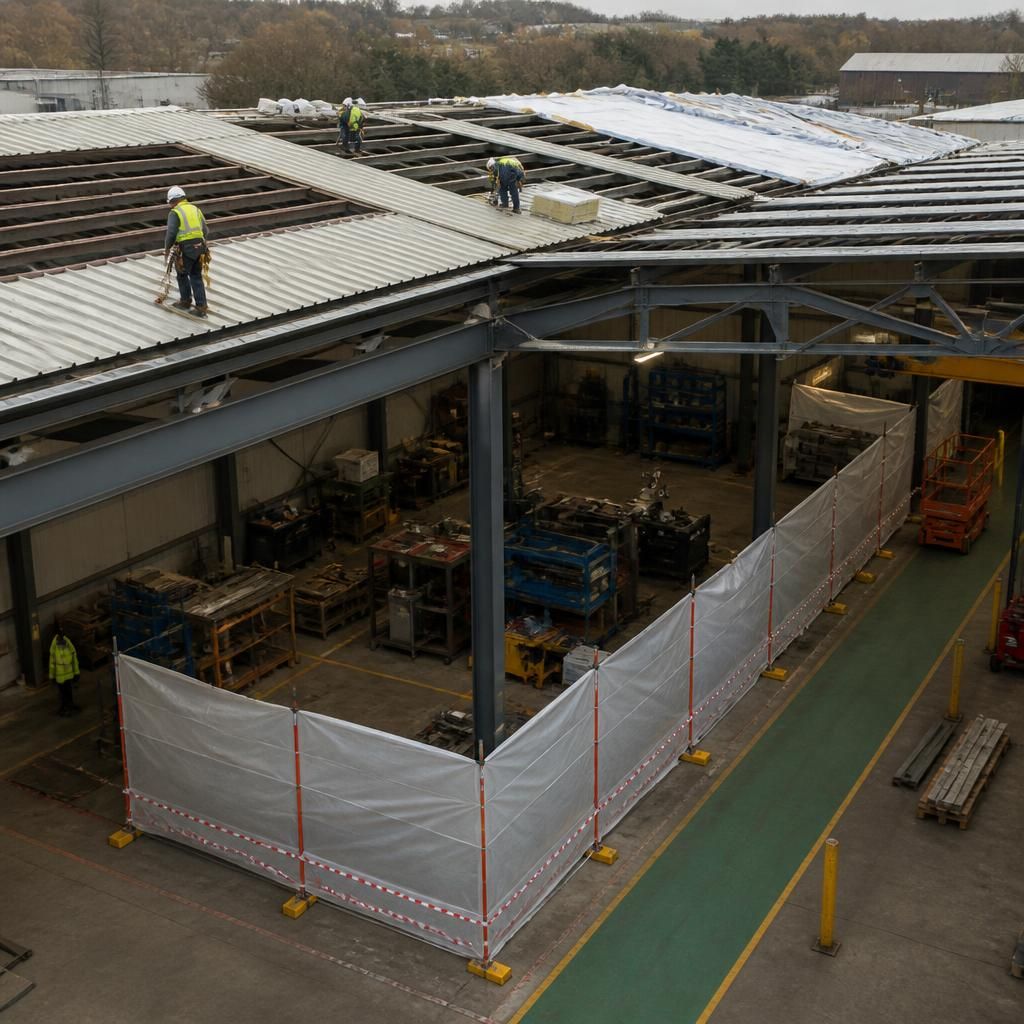
Continued occupation should be treated as a controlled operating condition, not a permanent assumption. The work plan should define clear hold points at which roof operations stop and the occupied areas are reassessed, particularly after changes to temporary coverings, access arrangements or the roof structure.
A nominated person should check that the separation between construction and occupied areas remains effective before work resumes. Stop-work triggers may include damage to temporary weather protection, unexpected movement or deterioration in the roof structure, dust entering occupied spaces, loss of an agreed escape route or changing weather conditions that affect safe working. If any of these conditions occurs, the affected area should remain vacant until the control measures have been restored and the revised arrangements have been confirmed.
Plan your industrial building roof replacement
If you are assessing whether your industrial building can remain occupied during roof replacement, discuss the proposed phasing, access arrangements and structural requirements with Buildings UK Ltd. Their bespoke design packages can help inform a practical replacement plan for your project.