When is an industrial roof coating preferable to full roof replacement?
An industrial roof coating is preferable to full roof replacement when the existing roof is structurally sound and has surface deterioration, minor corrosion or localised water ingress that can be treated. Replacement is generally more appropriate where the roof structure, substrate or sheeting has widespread failure that a coating cannot reliably remedy.
An industrial roof coating is preferable to full roof replacement when assessment shows that the existing roof sheets, fixings and supporting structure can remain in service, but the external finish is weathered or locally deteriorated. A coating can restore weather resistance and protect suitable metal surfaces, whereas it cannot compensate for unstable framing, extensively failed sheeting or defects caused by movement within the building.
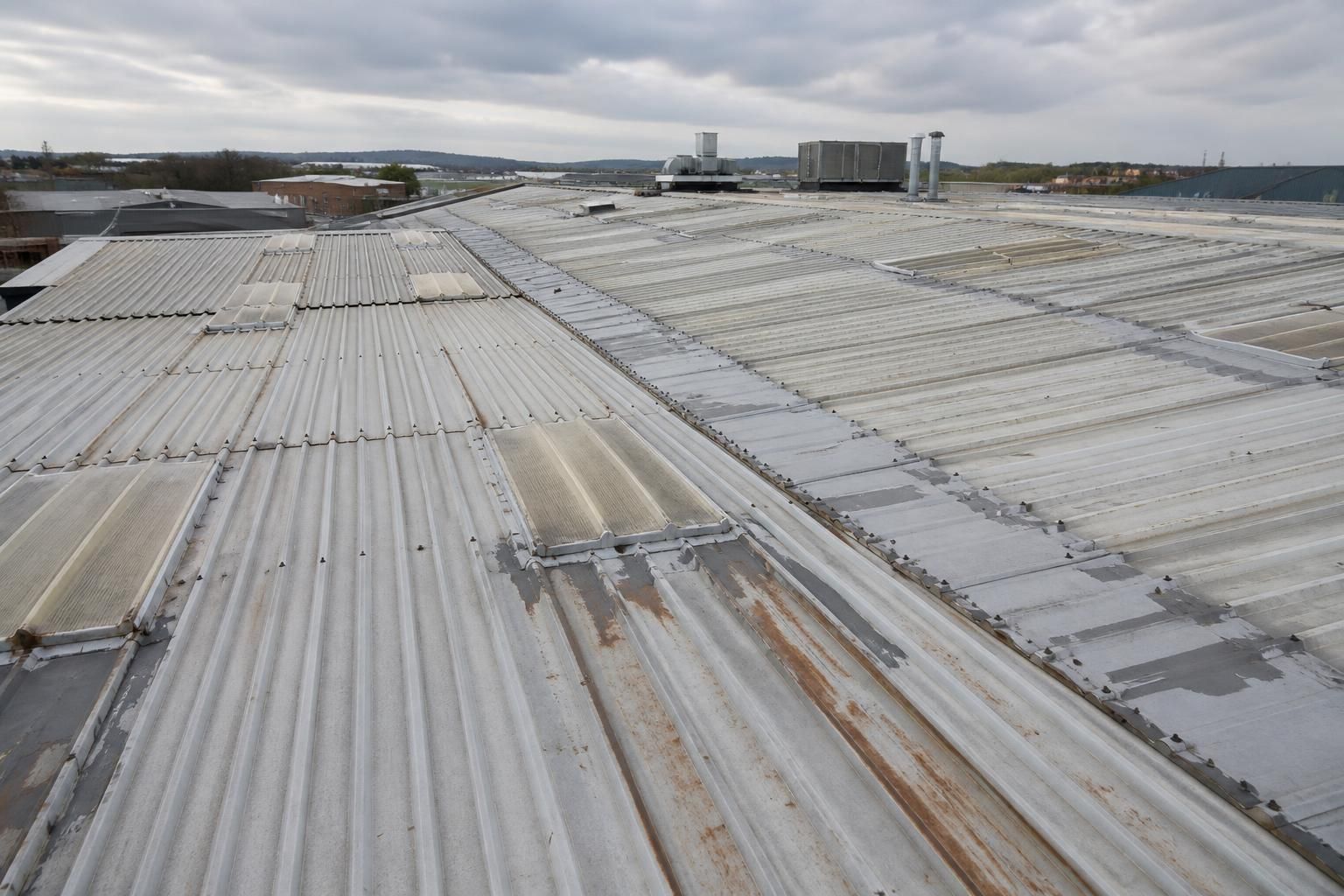
The decision should begin with a condition survey rather than the appearance of the roof alone. The assessment should consider the roof sheets, laps, fixings, seams, flashings, penetrations, gutters, outlets and the supporting steelwork. It should also identify the source of any internal dampness. Water may be entering through failed sealants or corroded areas, but it may instead be associated with blocked drainage, defective flashing, condensation or movement around roof-mounted equipment. Coating the surface without correcting the underlying cause is unlikely to provide a dependable solution.
A coating is more likely to be suitable where:
- the sheets remain securely fixed and are not distorted across widespread areas;
- corrosion is superficial or localised and affected areas can be cleaned and repaired;
- the roof surface is sufficiently sound for the coating to bond to it;
- joints, laps, penetrations and edge details can be made watertight as part of the work;
- the roof has adequate falls and drainage, without persistent standing water caused by a defective layout; and
- the existing roof build-up is compatible with the proposed preparation and coating system.
Surface preparation is central to the comparison. Loose material, rust, dirt, biological growth and failed coatings may need to be removed before application. Corroded fixings may require replacement, while holes, open laps and damaged flashings need separate repairs. The coating specification should account for the existing substrate, the degree of corrosion, expected exposure and the conditions under which the roof is used. A product selected without confirming these factors may fail through poor adhesion, blistering, cracking or renewed corrosion beneath the coating.
Coating can also be preferable where preserving the existing roof avoids unnecessary removal of serviceable materials. It may reduce the extent of dismantling and help retain the established roof profile and interfaces with walls, gutters and adjoining structures. This can be relevant on occupied industrial or agricultural premises where access, internal operations, stored goods or fixed equipment make extensive removal more disruptive. These practical benefits still need to be weighed against the preparation, access arrangements and repairs required to achieve a suitable surface.
Full replacement becomes more appropriate when the survey identifies widespread perforation, advanced corrosion, repeated failures, seriously damaged sheets, unsafe access conditions or movement that the roof covering cannot accommodate. Replacement should also be considered where insulation, ventilation, drainage or the overall roof build-up needs a fundamental upgrade. In those circumstances, applying a new surface may conceal deterioration without resolving the condition of the roof beneath it.
The expected service requirement is another important factor. A coating is a maintenance intervention that depends on the continuing integrity of the substrate and on periodic inspection. It does not turn an old or weakened roof into a new structural system. If the building is being adapted for a different use, if additional loads are proposed, or if the roof is approaching the end of its practical serviceability, replacement may provide a more appropriate basis for the next stage of the building’s use.
Cost should be assessed across the complete scope rather than by comparing the coating material with new sheets alone. A coating quotation may need to include access, cleaning, corrosion treatment, local sheet repairs, replacement fixings, sealing, detail work and follow-up maintenance. If these items become extensive, the difference between coating and replacement may narrow. Conversely, where the substrate is sound and preparation is limited, coating may be a proportionate way to extend the useful performance of the existing roof.
Roofs containing older or hazardous materials require particular care. The material should be identified before cleaning, repair or removal begins, and any work must follow the applicable safety and legal requirements. Specialist assessment may be needed before deciding whether coating is technically and safely appropriate.
In practice, the most reliable decision comes from documenting the roof’s condition, separating repairable defects from fundamental failures, and obtaining a specification that explains preparation, repairs, application conditions and future maintenance. Coating is preferable when it addresses the actual defects without relying on the roof to perform beyond its remaining capability; replacement is preferable when the covering or structure has deteriorated too far for surface treatment to be a sound long-term measure.
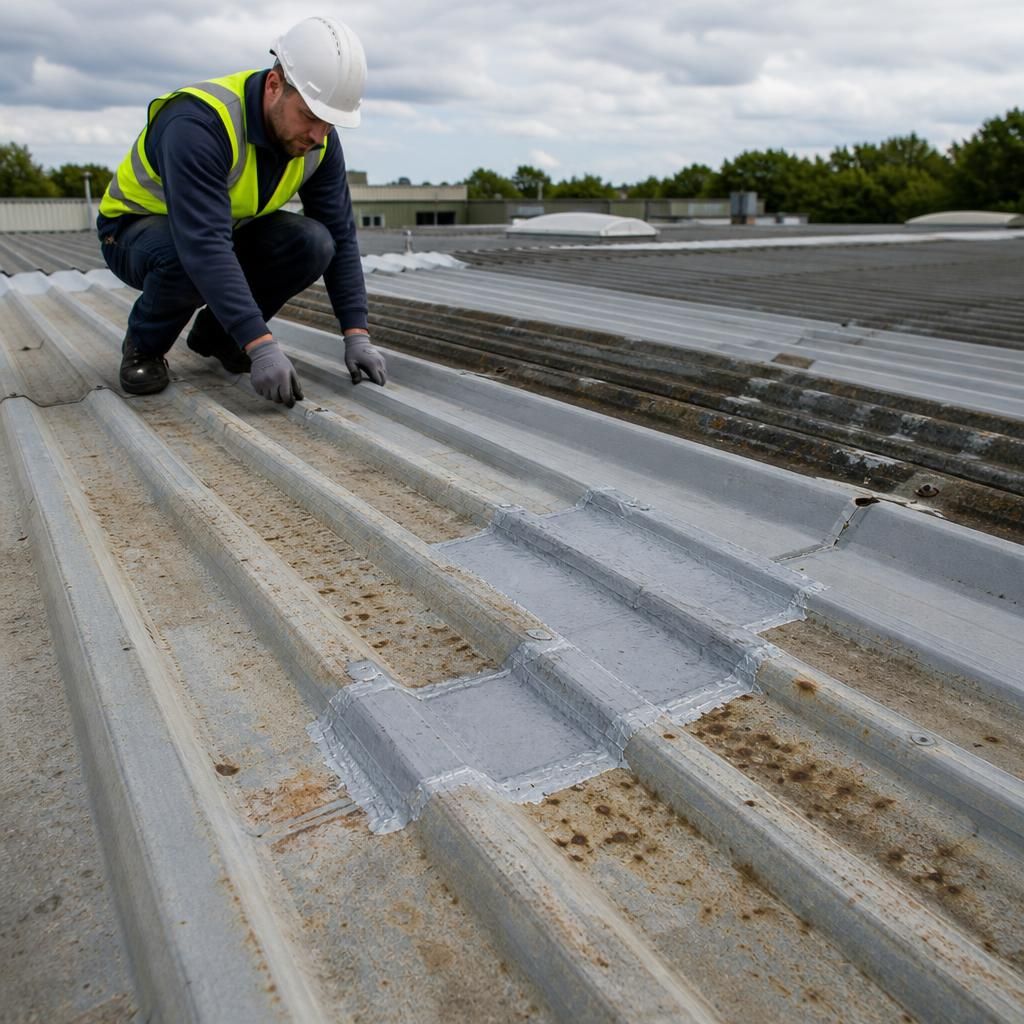
An industrial roof coating is more defensible when its performance can be verified across the different roof zones, rather than judged from one apparently sound area. Exposed sheets, shaded sections, repaired patches and areas around rooflights or plant may have different surface conditions, so a representative inspection and, where appropriate, trial application can identify adhesion or compatibility problems before the full coating is specified.
This approach helps distinguish a roof that is consistently suitable for coating from one containing too many variable substrates or concealed defects. If the proposed system bonds reliably and produces a continuous finish across the representative areas, coating may be a proportionate alternative to replacement. If results are inconsistent, full renewal or a more extensive remedial design should be considered instead.