How are metal roof structures protected against corrosion?
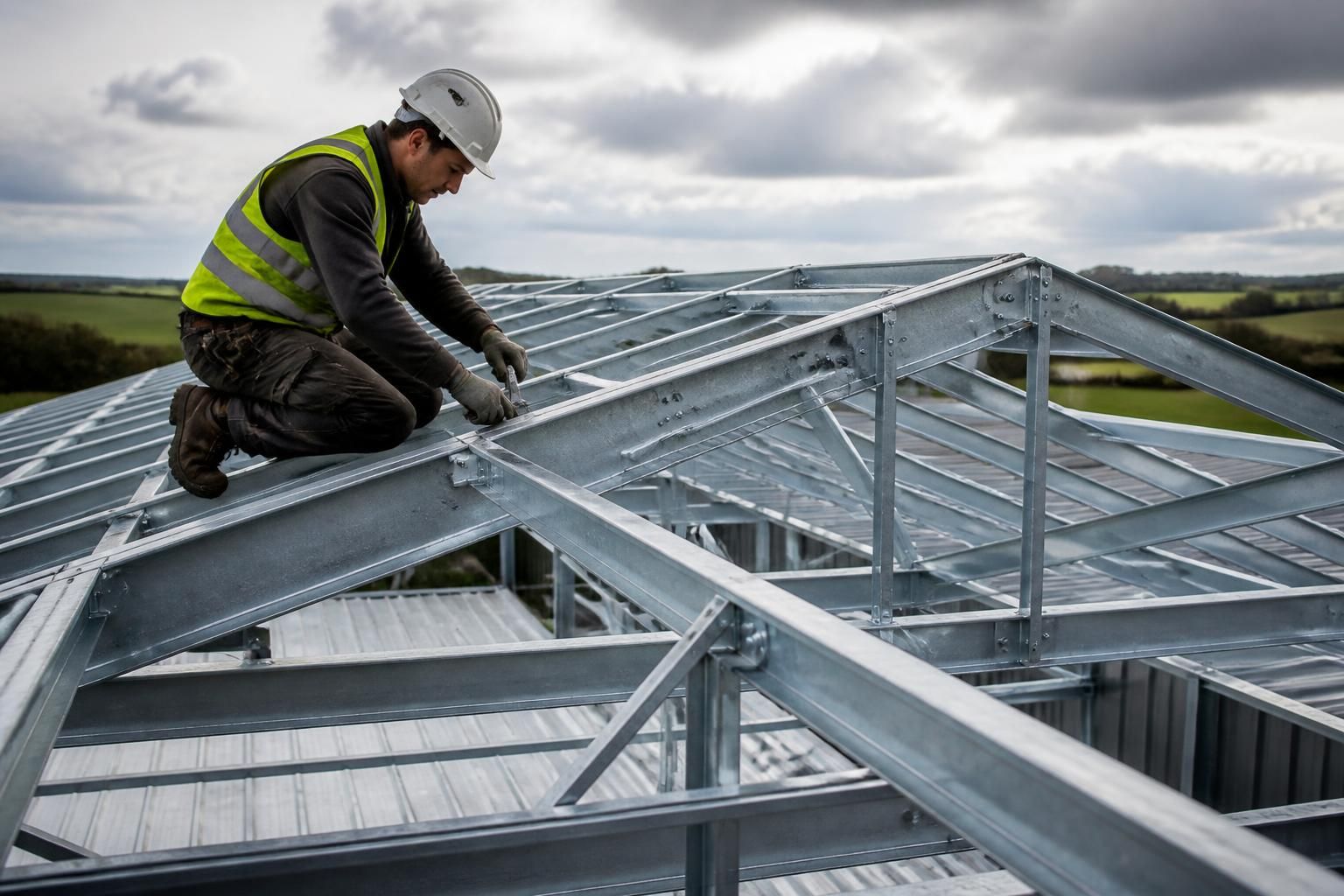
Metal roof structures are protected against corrosion primarily through galvanising, protective paint systems, or a combination of both. The design should also prevent water traps, provide effective drainage and protect cut edges, joints and connection points so moisture cannot remain in contact with the steel.
Corrosion protection for a metal roof structure is a specification covering the steel surface, the surrounding environment, fabrication details, installation and future inspection. The most suitable system depends on whether the frame is exposed to rain, condensation, agricultural chemicals, coastal air, industrial pollutants or enclosed internal conditions.
Galvanising protects steel by bonding a zinc layer to its surface, commonly through hot-dip galvanising after fabrication. Zinc provides a physical barrier and also offers sacrificial protection: if a small area is damaged, the zinc corrodes preferentially to the underlying steel. This makes galvanised steel particularly useful where a structure may be exposed to moisture during its service life or where regular repainting would be difficult.
The galvanising specification needs to account for the steel sections, plate thicknesses, venting and drainage of hollow components, and the size of parts that can be processed. Fabricators also need to consider how lifting points, drilled holes and temporary attachments are handled so that the treatment remains suitable after manufacture. Any areas altered after galvanising require an appropriate repair treatment rather than being left as exposed bare steel.
Protective paint systems are selected as a sequence rather than as a single product. Surface preparation removes mill scale, contamination and loose material; a compatible primer establishes adhesion and corrosion resistance; intermediate coats build the protective film; and a finishing coat protects the system from weathering and ultraviolet exposure. The specification should identify the preparation standard, coating materials, dry film requirements and inspection arrangements, not simply state that the steel is to be painted.
Paint performance is strongly affected by the condition of the steel and the application environment. Coating work requires suitable control of surface cleanliness, temperature, moisture and curing conditions. Welds, sharp corners, bolt areas and difficult-to-reach faces often need particular attention because a thin or incomplete coating at these points can become the starting point for localised corrosion.
Duplex protection combines galvanising with a paint or powder coating. The zinc layer protects the steel beneath, while the additional coating reduces exposure of the zinc and can provide a specified architectural finish. This approach can be appropriate where the frame faces a more demanding atmosphere or where appearance and extended maintenance intervals are important. The coating system must be designed for use over galvanised steel, with suitable cleaning and preparation to prevent adhesion problems.
The internal environment matters as much as the external weather. Unheated agricultural buildings may experience condensation beneath roof sheets, while livestock housing can contain moisture and corrosive contaminants. Industrial buildings may expose steel to process fumes, dust or chemicals. A design review should therefore consider ventilation, insulation, vapour movement and the possibility of condensation on cold members, rather than selecting a protection system from the building’s location alone.
Connections require compatible corrosion protection across all components. Bolts, washers, brackets, purlins, sheeting fixings and any dissimilar metals should be considered together. Direct contact between unlike metals in the presence of an electrolyte can cause galvanic corrosion, so separation, compatible finishes or a suitable jointing detail may be needed. Water should not be allowed to collect between contacting surfaces where it cannot dry.
Protection can be damaged during transport, erection, drilling, cutting or welding. Site procedures should identify how exposed areas will be cleaned, repaired and inspected before they are enclosed by roof or wall cladding. Repairs need to match the original system as far as practicable, with attention to surface preparation and the edges of the damaged area. Touching up visible damage without addressing contamination or poor adhesion can leave a weak point in the overall system.
Routine inspection helps identify problems before they spread. Checks should look for:
- blistering, flaking, cracking or peeling paint;
- white corrosion products or exposed steel on galvanised surfaces;
- rust staining around bolts, welds, laps and penetrations;
- standing water, blocked drainage paths or persistent condensation;
- damage caused by impact, alterations or contact with stored materials; and
- accumulations of dust, manure, salts or chemical residues.
Cleaning methods and repair materials should be compatible with the existing protection system. Abrasive cleaning, chemical cleaners and pressure washing can cause further damage if used without considering the coating or the surrounding building components. Where corrosion has reduced the steel section or affected a connection, the issue should be assessed structurally rather than treated as a cosmetic defect.
For a new steel roof structure, corrosion protection is normally recorded within the design and fabrication information. The specification should state the exposure conditions, treatment required for each component, treatment of welds and edges, repair procedures, inspection requirements and any maintenance recommendations. This gives the contractor and building owner a clear basis for checking that the completed frame has the protection intended by the design.
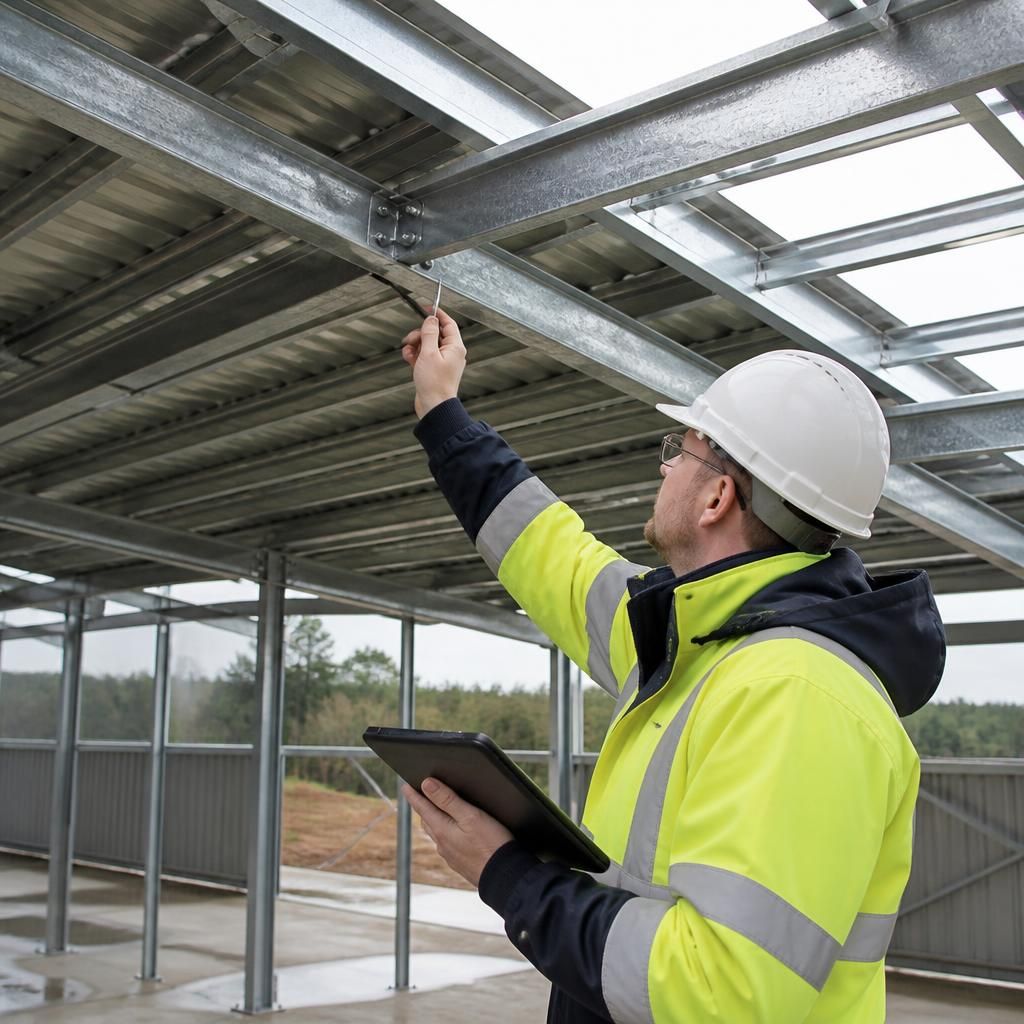
Inspection confirms that the specified corrosion protection has been applied consistently before the roof structure is enclosed. For painted steel, checks may include surface preparation, coating continuity, dry film thickness and adhesion, with particular attention to welds, edges, bolt groups and concealed faces. Galvanised components should be examined for bare areas, excessive runs, damage and signs that fabrication or handling has exposed the underlying steel.
Inspection records should identify the components checked, the treatment applied and any repairs completed. This provides a useful reference for future maintenance and helps distinguish original coating defects from damage caused during erection or later alterations.