
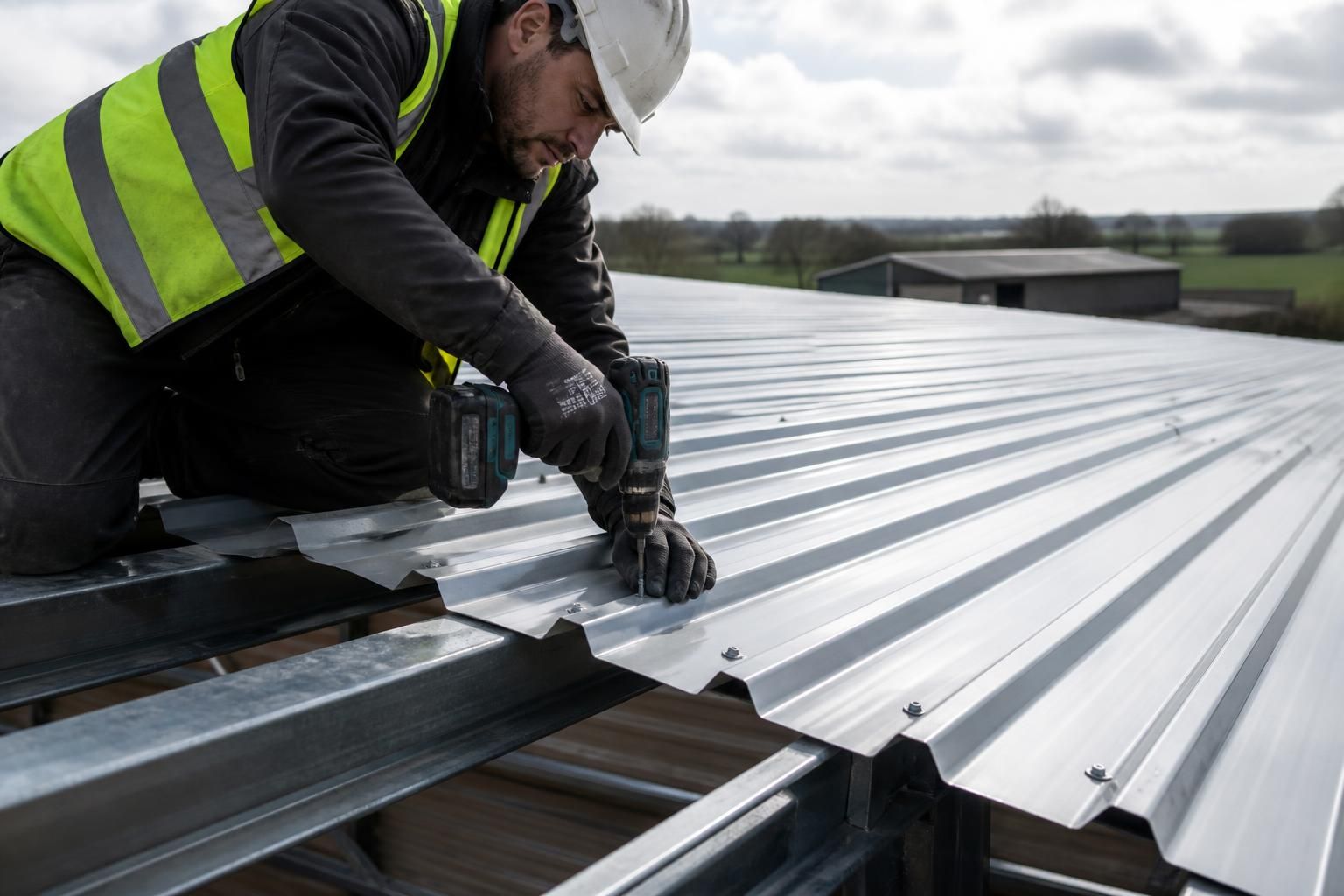
How are galvanised roofing sheets fixed to steelwork?
Galvanised roofing sheets are typically fixed to steel purlins using corrosion-resistant self-drilling or self-tapping roofing screws fitted with sealing washers. Screws are positioned through the sheet’s supported areas, with side and end laps secured as specified, and tightened enough to seal the washer without distorting the sheet.
A sound fixing system transfers wind and imposed loads from the galvanised roofing sheets into the steel purlins without damaging the protective coating or allowing water to reach the structure. The exact arrangement depends on the sheet profile, purlin layout, roof pitch, wind exposure, lap configuration and the design loads for the building, so the fixing schedule should be confirmed against the manufacturer’s technical information or the project engineer’s design.
Use fasteners suitable for the complete roof build-up. Roofing screws should be compatible with galvanised steel and supplied with durable sealing washers. The screw length must provide adequate engagement in the steel purlin while avoiding unnecessary penetration into services, insulation systems or internal linings. Where sheets overlap, separate stitching fasteners may be required to hold the side lap firmly together; these should also be suitable for the roof environment and fitted with the appropriate sealing arrangement.
Set out the steelwork before laying the sheets. Purlins need to be correctly aligned and adequately supported so that the fixing points form a consistent line. Irregular support can pull sheets out of alignment, create stress around the holes and prevent washers from sealing evenly. Sheets should be laid to the specified gauge and lap direction, with the eaves, ridge, verges and openings checked before permanent fixing begins.
Keep the fixing position consistent. Screws should be installed at the positions specified for the particular profile and structural design, including any additional requirements at sheet ends, roof perimeters, corners and exposed elevations. These areas can experience greater wind effects than the central roof field. A screw should pass squarely through the sheet and into the supporting steel, rather than being installed at an angle or too close to a sheet edge.
The sealing washer should be compressed sufficiently to close the hole, but not crushed, split or forced out from beneath the screw head. Over-tightening can deform the profile, damage the coating and reduce the washer’s ability to seal. Under-tightening may leave a path for water ingress or allow the sheet to move. Impact drivers with an adjustable clutch or depth control can help installers achieve consistent results, but each fixing still needs visual inspection.
Protect the sheets during drilling and cutting. Swarf and metal filings should be removed promptly because they can rust on the surface and stain the coating. Cut edges should be treated in accordance with the sheet supplier’s guidance, particularly where they are exposed to weather. Abrasive cutting methods that damage the coating or leave excessive heat at the edge should be avoided where the specified installation method requires a cleaner cut.
Roof sheets must also be allowed to accommodate normal thermal movement within the limitations of the profile and fixing system. This is achieved through the specified laps, hole clearances and fastening method rather than by leaving fixings loose. Enlarging holes on site, omitting fasteners or altering the lap arrangement can compromise both weather resistance and structural performance.
Before the roof is signed off, the installation should be checked for:
- secure engagement of every required fixing with the steel support;
- correct side and end laps, including any specified lap sealant or stitching fasteners;
- evenly compressed, undamaged sealing washers;
- deformed profiles, torn holes, loose screws or fixings installed at an incorrect angle;
- loose swarf, cuttings and debris left on the roof or in gutters; and
- damage to the galvanised coating or exposed cut edges requiring remedial treatment.
For agricultural and industrial buildings, the internal environment should be considered when selecting the fixing system. Condensation, fertiliser residues, livestock atmospheres and other corrosive contaminants can affect fastener durability even where the roof sheet itself is galvanised. The specified screw material, coating and washer type should therefore reflect the building’s use, ventilation and exposure rather than being selected solely by appearance.
Where the roof includes insulation, liner sheets, photovoltaic supports, rooflights or service penetrations, the fixing details need to account for the additional layers and loads. Penetrations should be formed and sealed using details appropriate to the profile, while any attachment that introduces a separate load into the roof should be checked by a competent designer. Altering the original fixing pattern to accommodate later equipment can create leaks or overstress the sheet.
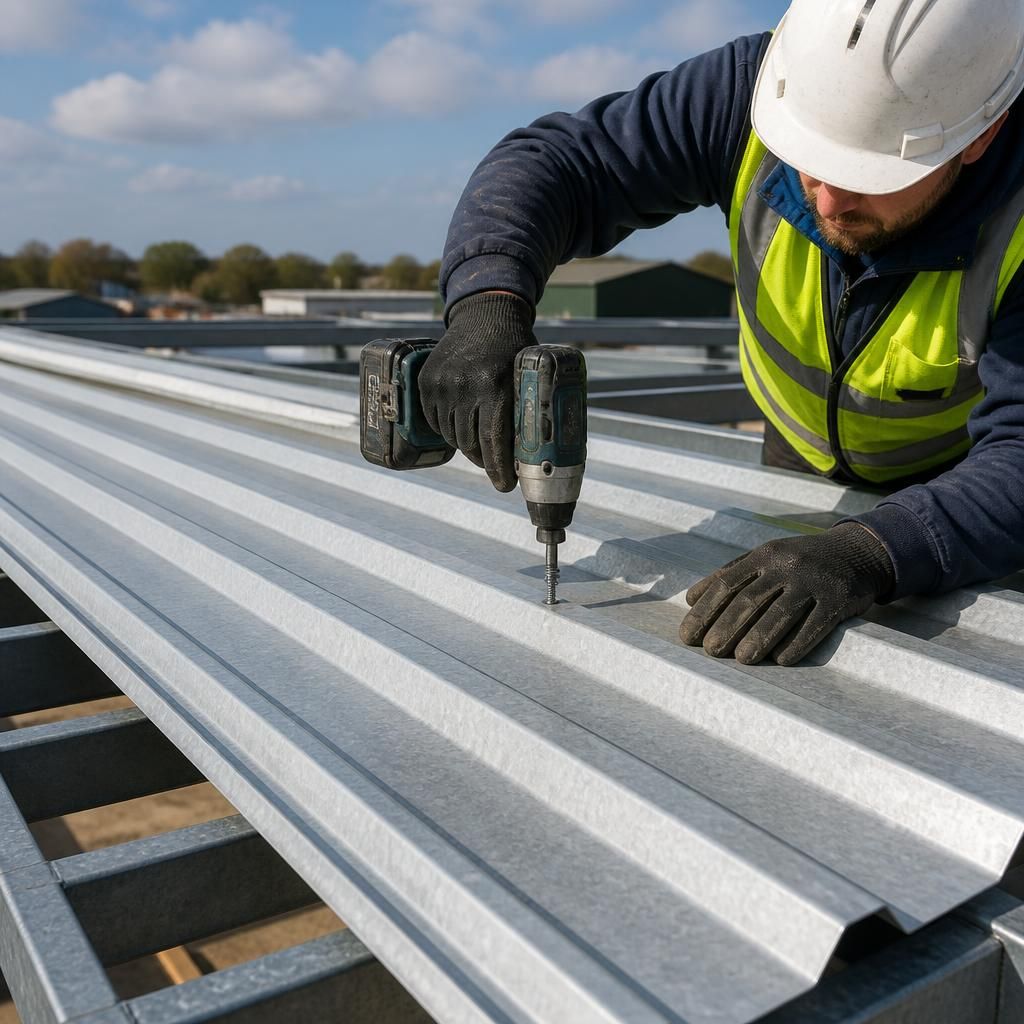
The fixing position across the sheet profile depends on the roofing system. Many profiled sheets are fixed through the crest, keeping the screw and sealing washer above areas where water may collect, while some corrugated or system-specific profiles use valley fixings. The manufacturer’s installation detail should always determine the correct position rather than applying one method to every sheet type.
Whichever position is specified, the screw must sit squarely on the profile so the sealing washer bears evenly without being distorted. Fixing through an unsupported part of the sheet can cause local deformation and leave the washer unable to form a reliable seal.
Discuss your galvanised roofing sheet requirements
Discuss your galvanised roofing sheet requirements with Buildings UK Ltd to review the proposed roof build-up and identify suitable sheet and fixing details for your project. Share your plans and project requirements with the team for informed guidance.