How should galvanised roofing sheets be maintained?
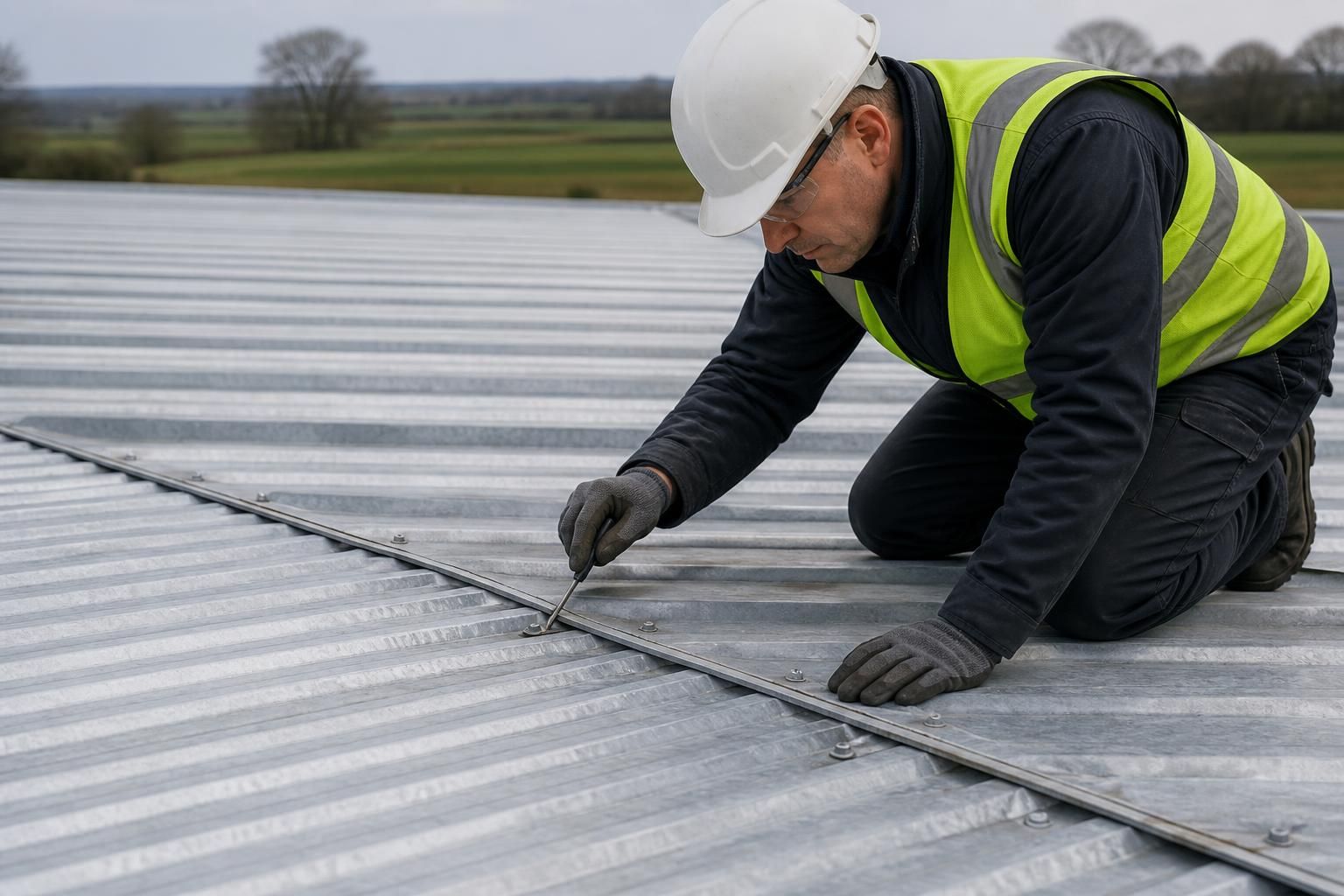
Maintain galvanised roofing sheets by keeping them clean, checking regularly for damage or corrosion, and repairing any defects before moisture reaches the underlying steel. Remove debris and standing water, use suitable non-abrasive cleaning methods, and inspect fixings, laps, edges and penetrations as part of routine building maintenance.
Effective maintenance of galvanised roofing sheets centres on protecting the zinc coating, controlling the conditions that accelerate corrosion and preserving the performance of the roof’s details. Galvanising provides both a physical barrier and sacrificial protection: if the steel is exposed, the surrounding zinc can corrode preferentially, but this protection is not unlimited.
Understand the exposure conditions
The maintenance approach should reflect the building’s use and surroundings. Agricultural buildings may have increased exposure to ammonia, condensation and moisture from livestock or stored materials. Industrial buildings can be affected by fumes, dust or process chemicals, while coastal locations may experience salt deposits. These contaminants can hold moisture against the coating or react with the zinc, so roofs in harsher environments require closer attention than those in clean, dry conditions.
Internal conditions matter as well as weather. Persistent condensation beneath the sheets can keep the steel damp even when the external surface appears sound. Ventilation, insulation and vapour-control measures should therefore be considered as part of the building’s overall moisture management. Changes in use, such as converting a storage building to livestock housing or a process facility, may alter the exposure and justify a review of the maintenance regime.
Protect the galvanised finish
- Prevent contact with wet materials, trapped organic matter and residues that can remain against the sheet for prolonged periods.
- Keep incompatible substances, including strong acids, strong alkalis and certain chemical cleaners, away from the galvanised surface unless their suitability has been confirmed.
- Use tools and handling methods that do not score, gouge or abrade the zinc coating during alterations or maintenance work.
- Where temporary access equipment is used, avoid dragging components across the roof and prevent metal items from rubbing against the sheets.
Bird fouling, leaves, moss and other deposits should not be allowed to accumulate in areas where they can retain moisture. Removal should be carried out using methods appropriate to coated steel. Aggressive wire brushing, abrasive blasting and unapproved solvents can remove or damage the protective layer and may create a larger maintenance problem than the deposit itself.
Give particular attention to interfaces
Corrosion often develops at interfaces rather than across an undisturbed sheet. Cut edges, drilled holes, overlaps, eaves, ridges, gutters and areas around roof penetrations can retain moisture or expose uncoated steel. These details should be kept clear and correctly sealed where the design requires sealing. Sealants that are incompatible with galvanised steel, or that have deteriorated and trapped water, should not be left in place without assessing the underlying condition.
Contact between galvanised sheets and dissimilar metals can create galvanic corrosion when moisture is present. This risk is relevant around fixings, flashings, brackets, gutters, solar installations and other additions. Materials should be compatible, and where separation is required it should be maintained during the life of the installation. New equipment should not be attached in a way that punctures or places sustained pressure on the roof sheets without suitable detailing.
Deal with exposed steel correctly
If a localised area has lost its zinc coating, the preparation and repair material should be selected for compatibility with galvanised steel and the surrounding exposure. The affected area should be dry and free from loose corrosion, dirt, oil and other contaminants before a suitable zinc-rich repair coating is applied in accordance with its manufacturer’s instructions. A decorative topcoat may also be needed where appearance or additional environmental protection is required; it should not be applied over a contaminated or poorly prepared surface.
Widespread coating loss, recurring corrosion, distortion or leakage may indicate that local touch-up work is no longer appropriate. In that situation, the condition of the sheet, supporting steelwork and roof detailing should be assessed so that the underlying cause is addressed rather than repeatedly treating the visible symptom.
Plan maintenance safely
Roof maintenance should be planned as work at height. Galvanised sheets may not support a person, particularly where corrosion, age or hidden damage has reduced their capacity. Use suitable access equipment, edge protection and a safe method of work, and do not assume that purlins or sheet profiles provide a safe route across the roof. Any work near rooflights, fragile panels, electrical equipment or service penetrations requires additional controls.
A maintenance record can help identify changes over time. Record the date, location, environmental conditions, products used and any alterations made to the roof. This is particularly useful for buildings exposed to livestock housing, industrial emissions, marine air or frequent condensation, where recurring patterns may reveal a ventilation, drainage or material-compatibility issue.
Where the roof forms part of a larger steel-framed building, maintenance decisions should consider the sheets, flashings, fixings, gutters and supporting structure together. A suitably competent roofing or structural professional should assess significant corrosion, suspected loss of sheet capacity, repeated water ingress or proposed alterations before remedial work proceeds.
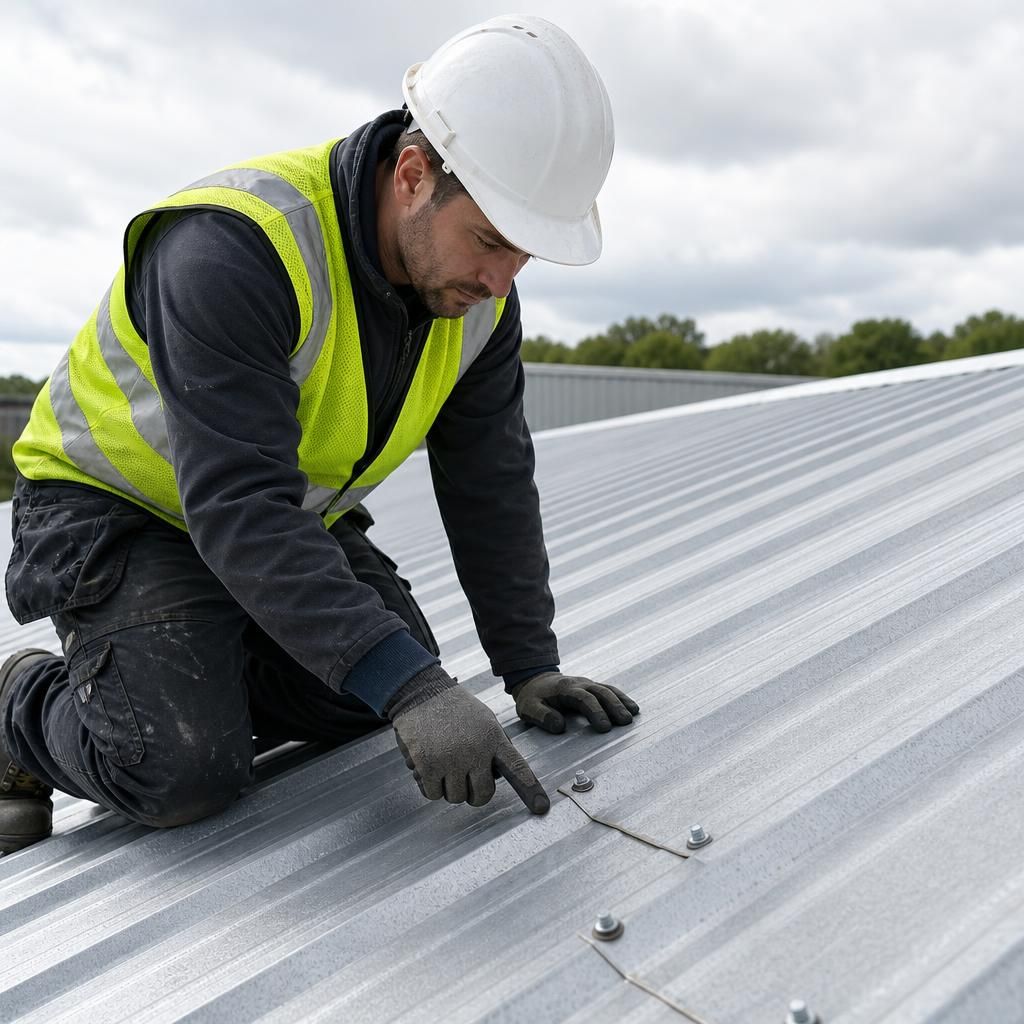
White, powdery staining on galvanised roofing sheets is often wet storage stain rather than advanced corrosion. It develops when newly galvanised sheets remain tightly packed while damp, restricting air movement and allowing zinc oxidation products to form on the surface. Light staining can often be treated by allowing the sheets to dry naturally and gently removing loose deposits with a soft brush. Do not apply paint or sealant until the surface is dry, clean and firmly bonded. Persistent staining, dark corrosion products or pitting should be assessed to establish whether the zinc coating has been compromised.