
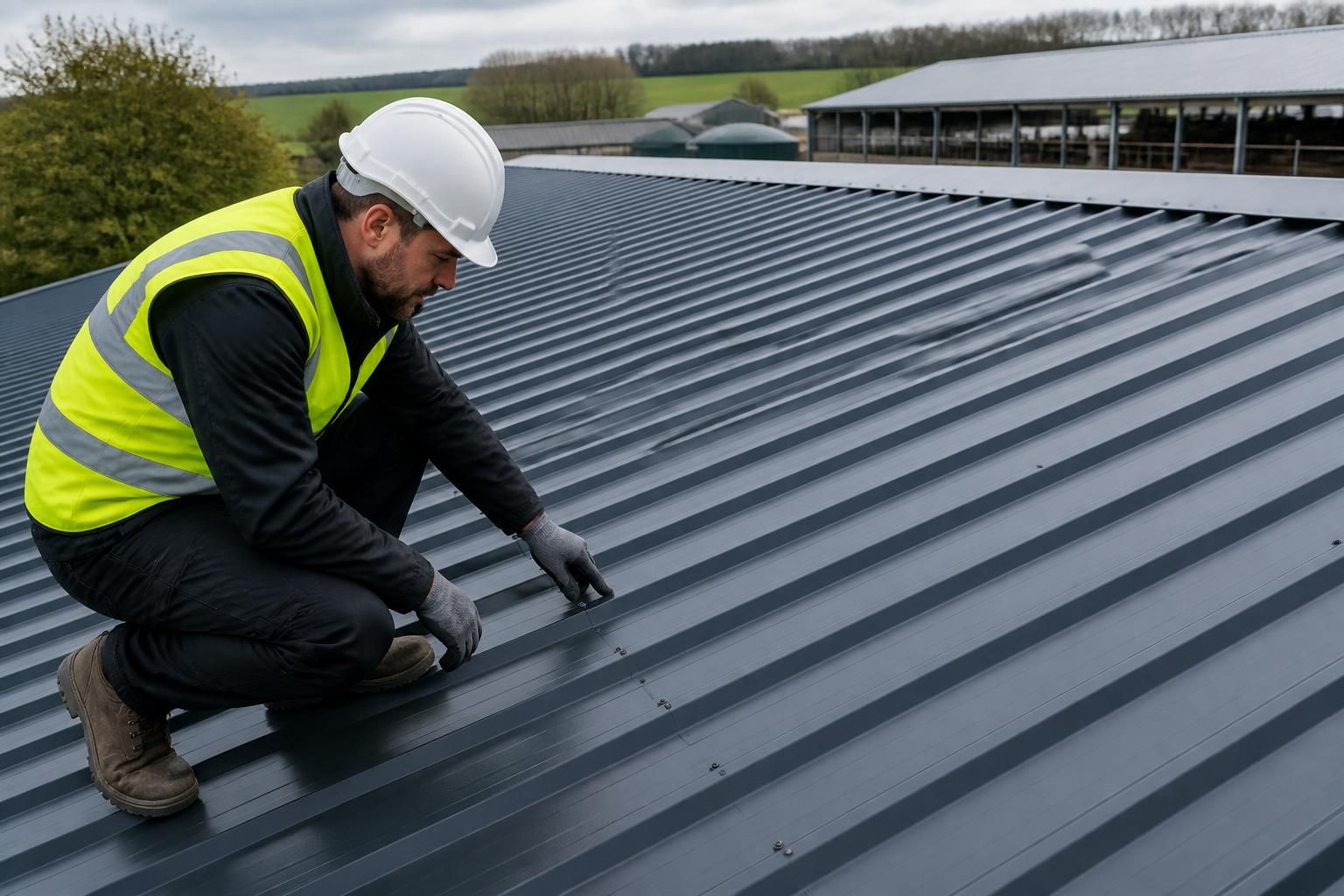
What maintenance do profile metal roofing sheets require?
Profile metal roofing sheets require routine inspections, cleaning and prompt repair of minor damage to prevent corrosion, water ingress and deterioration of the roof build-up. Maintenance should focus on keeping sheets, fixings, joints, gutters and roof penetrations in sound condition.
Maintenance of profile metal roofing sheets is primarily a process of monitoring the protective finish, controlling contamination and dealing correctly with any local deterioration. The required approach depends on the sheet material, coating system, roof environment and the condition of the supporting build-up. A maintenance plan should therefore use the product documentation and the original roof design rather than applying the same treatment to every metal roof.
Inspect the roof environment as well as the sheets. Industrial emissions, agricultural dust, fertiliser residues, animal waste and coastal salt can increase the risk of surface degradation. Areas beneath overhanging trees may collect organic matter, while nearby cutting, grinding or welding can leave metallic swarf that rapidly stains or corrodes the coating. Any source of persistent contamination should be identified and controlled where possible, rather than relying solely on repeated cleaning.
Clean using methods that protect the coating. Loose dirt can generally be removed with a soft brush or clean water. Where deposits have adhered to the surface, use a mild, compatible cleaning solution and follow the sheet manufacturer’s instructions. Avoid abrasive pads, aggressive chemicals and uncontrolled high-pressure washing, as these can damage the finish, force water into vulnerable areas or remove protective treatment from cut edges. Cleaning should include the sheltered areas where dust and moisture remain trapped, but it should not dislodge sealants, coatings or components that are still sound.
Pay particular attention to coating damage. Scratches, scuffs and exposed metal should be assessed rather than covered immediately. Remove loose material, ensure the area is clean and dry, and use a compatible repair coating where the product guidance permits it. Touch-up products should match the original coating system; an unsuitable paint may weather differently, fail to adhere or accelerate deterioration. Widespread fading, chalking, flaking or blistering may indicate that the finish has reached the end of its serviceable condition and needs professional assessment rather than isolated touch-up work.
Check the fixings without disturbing sound work. Fasteners should remain seated correctly, with washers intact and no signs of corrosion, loosening or distortion around the fixing point. A loose fixing may allow movement and moisture entry, while excessive tightening can deform the sheet or damage the washer. Replacements should be compatible with the sheet, support material and exposure conditions. Removing and refitting fixings unnecessarily can create additional weaknesses, so corrective work should be limited to components showing a genuine defect.
Look for signs of movement or water-related damage inside the building. Staining, damp insulation, mould, drips, corrosion on internal steelwork and changes in the appearance of the underside can indicate a problem that is not visible from ground level. Condensation should also be distinguished from a roof leak. In agricultural and industrial buildings, warm moist air can condense on colder surfaces where ventilation or insulation is inadequate. Correcting the moisture source may require attention to the building’s ventilation and insulation strategy, not simply sealing the external sheet.
Keep the roof structure and accessories compatible. Unauthorised attachments, stored materials, signs, solar equipment or service installations can impose loads on the sheets or interrupt drainage and movement allowances. Any later alteration should be checked against the original structural and weathering design. Sealants and closure materials can become brittle or lose adhesion over time; replacing them should follow the intended detail, with compatible products and adequate preparation of the surfaces.
Use safe inspection and repair procedures. Profiled sheets may not safely support a person, particularly where they are corroded, damaged, wet or used as part of a liner and insulation system. Inspection should be carried out from suitable access equipment or designated walkways wherever possible. Work at height requires appropriate planning, edge protection and fall-arrest measures, and fragile roof areas should be identified before anyone accesses the roof. Do not rely on a sheet’s apparent strength or on purlin spacing as evidence that walking on it is safe.
Record findings after each maintenance visit. A useful record notes the areas inspected, contamination observed, coating condition, defective components, photographs, corrective work and any points requiring further investigation. Comparing records over time helps distinguish isolated damage from progressive corrosion or movement. It also provides useful information when planning refurbishment or assessing whether local repairs remain suitable.
Minor defects are usually easier to manage when they are identified before the sheet has perforated, the supporting steel has corroded or moisture has reached the insulation and internal finishes. Where there is extensive corrosion, distortion, repeated leakage, suspected structural movement or uncertainty about the original roof build-up, obtain an assessment from a suitably competent roofing or structural professional before carrying out repairs.
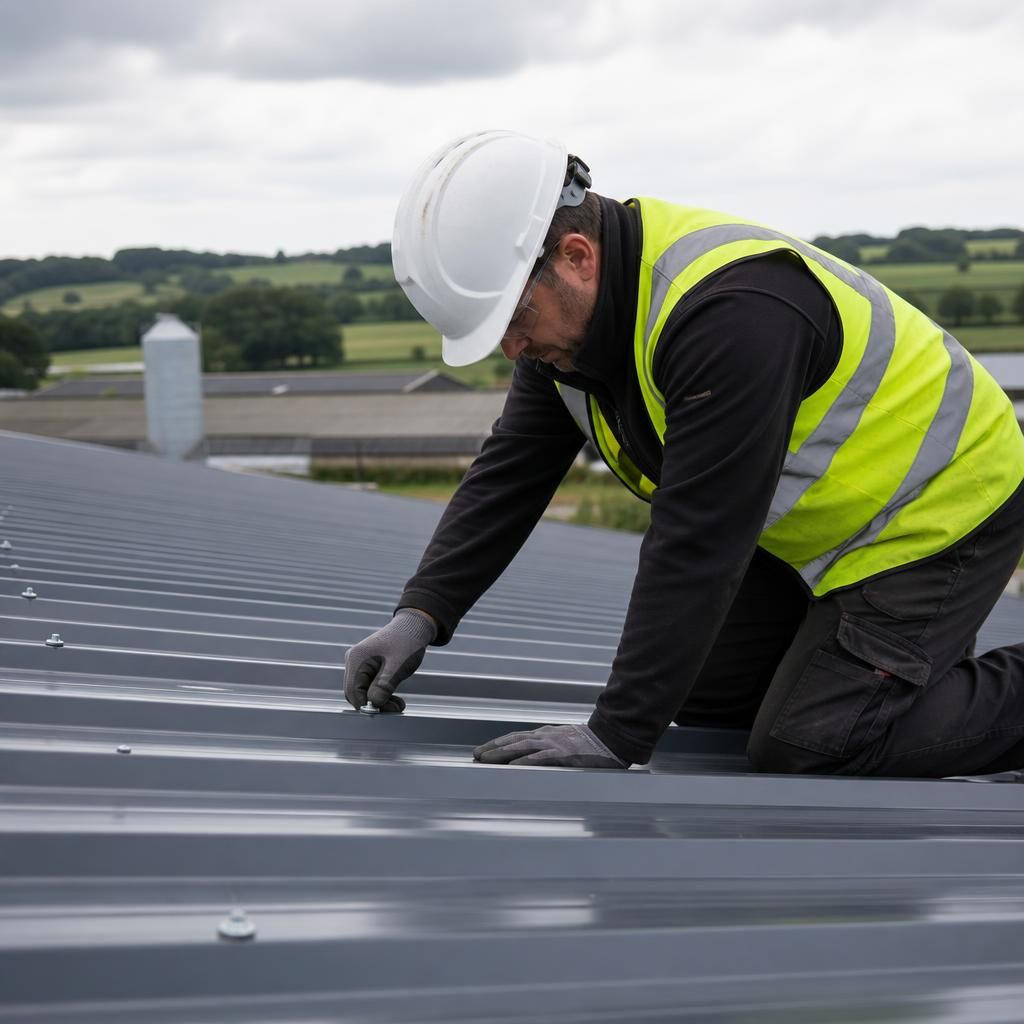
Maintaining the roof drainage system is an essential part of caring for profile metal roofing sheets. Gutters, outlets, valleys and downpipes should be kept clear so rainwater does not back up beneath laps, remain against cut edges or discharge onto walls and supporting steelwork.
Remove leaves, silt and other accumulated debris using methods that do not scratch the coating, and check that joints, brackets and outlets remain secure. Pay particular attention after nearby construction, tree work or periods of heavy weather, when debris can collect quickly. Persistent overflow, staining beneath a gutter or dampness around the eaves indicates that the drainage arrangement needs investigation rather than simply repeated cleaning.