When is a low-maintenance metal roofing system the right choice?
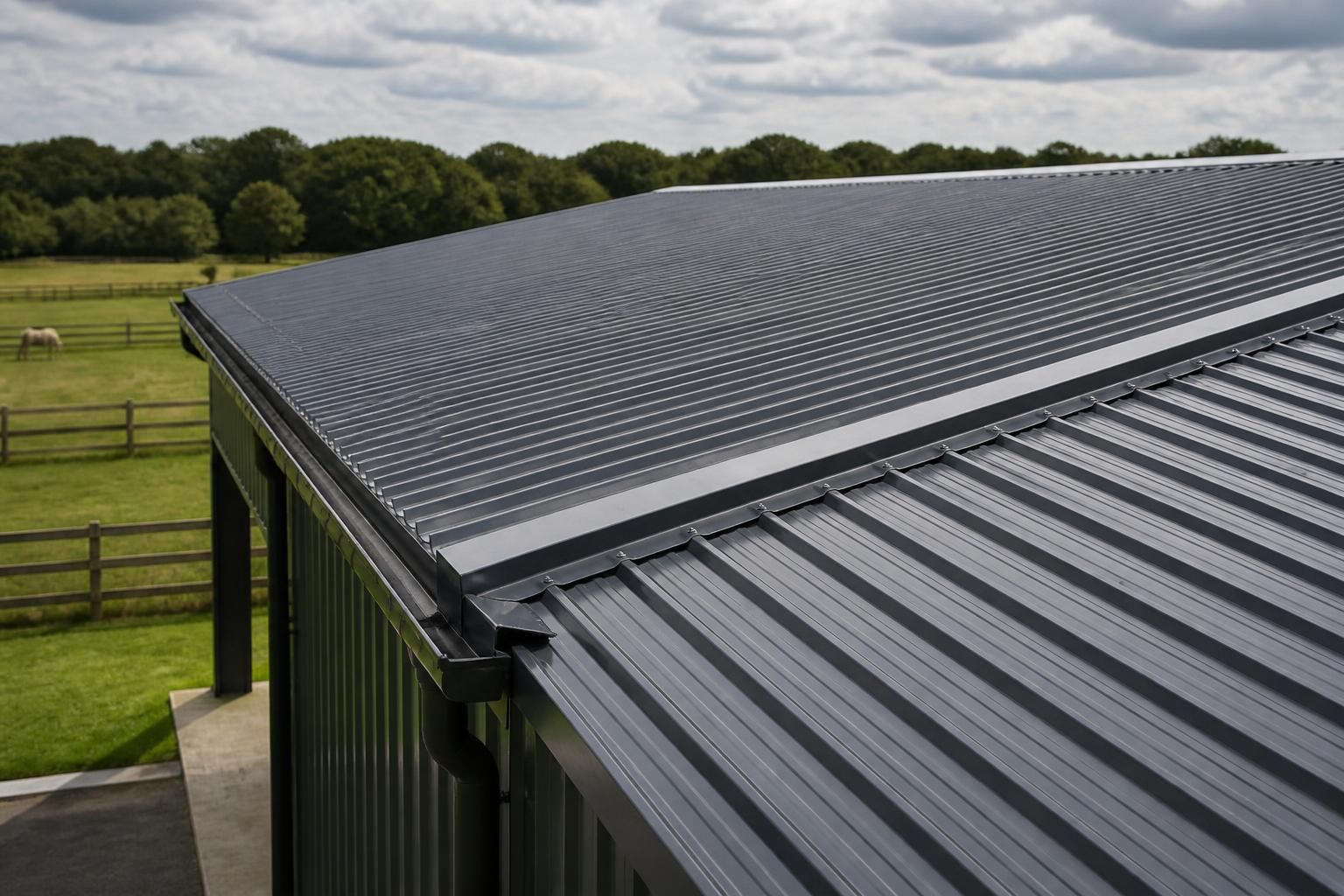
A low-maintenance metal roofing system is the right choice for buildings that need a durable, practical roof with minimal routine upkeep. It suits agricultural, industrial and equestrian buildings particularly well where long service life, weather resistance and straightforward maintenance are important considerations.
A low-maintenance metal roofing system is the right choice when a building requires a roof that can be inspected easily, withstand its operating environment and avoid frequent specialist treatment. The decision depends on more than the roof covering itself: material selection, protective coating, drainage, ventilation, roof access and the detailing of joints and penetrations all affect the amount of future maintenance required.
Metal roofing is particularly suitable where the building owner wants predictable routine care rather than a roof dependent on regular coating, sealing or replacement of exposed surface materials. Correctly specified sheets can provide a consistent external envelope, while their relatively straightforward layout makes faults, fixings and flashings easier to identify during inspection.
- The building has a suitable environment: ordinary agricultural, industrial and equestrian conditions can often be accommodated, provided the roofing specification accounts for moisture, condensation, dust, fumes and any chemicals present.
- Access for inspection is practical: a roof that can be safely checked allows blocked gutters, damaged sheets, loose fixings and failed flashings to be dealt with before they develop into larger defects.
- The roof design is properly detailed: adequate falls, effective drainage, correctly positioned overlaps and carefully sealed penetrations reduce the risk of water collecting or entering at vulnerable points.
- The selected finish matches the exposure: the coating or corrosion protection should be appropriate to the site and the building’s internal atmosphere, rather than chosen on appearance alone.
Low maintenance does not mean maintenance-free. A metal roof should still be inspected periodically, particularly after severe weather or work has taken place around the roof. Leaves, dirt and other debris can obstruct gutters and outlets; damaged coating, exposed cut edges and deteriorating sealants should be addressed before corrosion or water penetration spreads. Internal checks are also useful because staining, condensation or daylight at a joint may reveal a problem that is not obvious from ground level.
The internal use of the building is an important part of the specification. Livestock, stored materials, wet processes and poorly ventilated spaces can increase condensation beneath the roof. In industrial settings, airborne chemicals or fumes may affect the suitability of a standard finish. These conditions do not automatically rule out metal roofing, but they may require a different coating, additional ventilation, insulation or vapour-control detailing. Insulation selection should therefore be considered alongside the roof covering rather than treated as a separate decision.
A low-maintenance system is less suitable where the proposed design has numerous roof penetrations, complicated junctions or inadequate drainage. Each opening for plant, extraction, rooflights or services creates another location requiring careful flashing and future inspection. A complex roof can still be built with metal coverings, but the detailing needs more attention and the maintenance burden may be higher than that of a simpler arrangement. Sites with unusually aggressive atmospheres or a high risk of impact also need a specific assessment before a standard system is selected.
During design, the following points should be confirmed:
- What substances, moisture levels and temperatures will the roof be exposed to internally and externally?
- Which roof profile, material and protective finish are appropriate for those conditions?
- How will water drain from the roof, and can gutters and outlets be accessed safely?
- Where will rooflights, vents, plant and service penetrations be positioned?
- How will insulation, ventilation and condensation control be coordinated with the roofing system?
- What inspection and cleaning tasks will be needed once the building is in use?
For a bespoke steel-framed building, these decisions should be coordinated with the structural layout and fabrication drawings. Buildings UK Ltd can incorporate roof falls, purlin arrangements, openings and relevant detailing within a design package, helping the proposed covering work with the building rather than being selected in isolation. The most appropriate choice is ultimately the system whose specification reflects the site conditions and whose inspection requirements can be carried out consistently throughout the building’s service life.
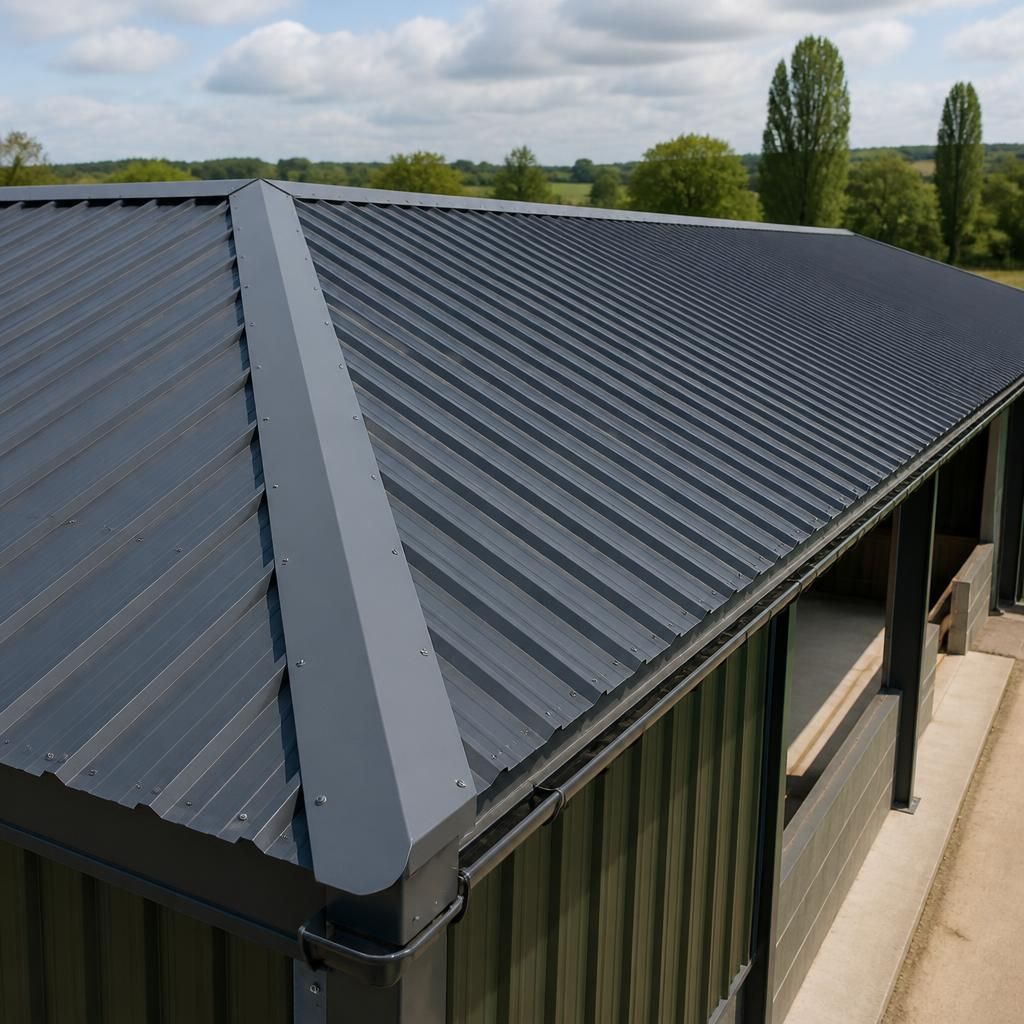
The right low-maintenance metal roofing system is not necessarily the one with the lowest initial price. It should be assessed over the building’s expected service life, taking account of the roof covering, protective finish, compatible fixings and flashings, drainage components, and the practical cost of future inspection and repair.
This whole-life view is especially useful when comparing specifications that appear similar. A more suitable finish or better-coordinated detailing may reduce the likelihood of remedial work, while readily available replacement components can simplify repairs if local damage occurs. The preferred system is therefore the one that provides an appropriate balance between initial cost, durability, maintainability and compatibility with the building’s use.