
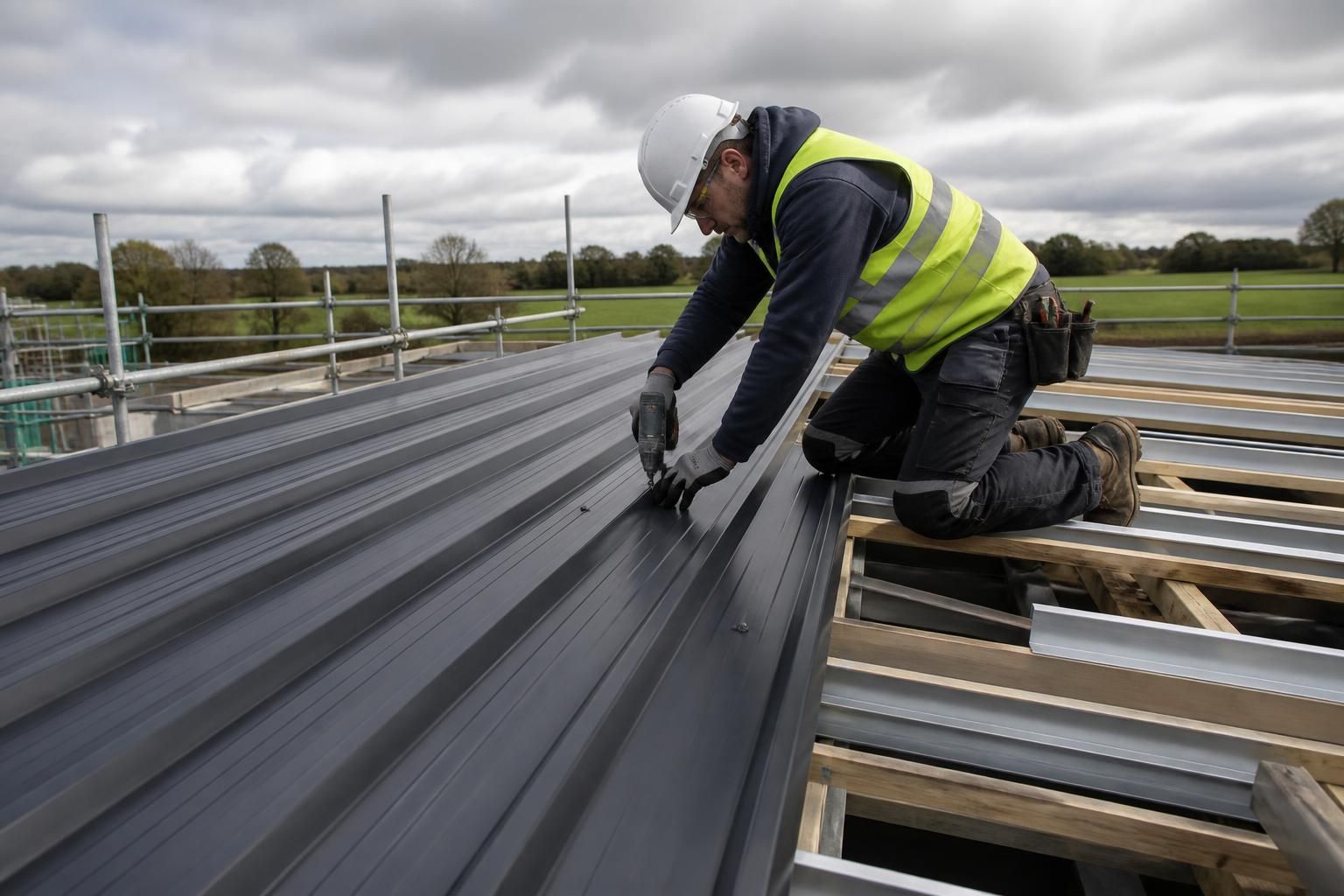
What safety measures apply when fitting steel roofing sheets?
Fitting steel roofing sheets safely requires a documented risk assessment, suitable edge protection or access equipment, and trained workers using appropriate personal protective equipment (PPE). Sheets should be handled with care, secured progressively with the correct fixings, and never fitted in conditions that make work at height or handling materials unsafe.
Safety measures for fitting steel roofing sheets cover the condition of the structure, controlled access to the roof, safe movement of materials, suitable tools, and checks throughout installation. The work should be planned so that nobody is exposed unnecessarily to falls, falling objects, sharp sheet edges, unstable materials or contact with electrical services.
Check the building before work starts. Confirm that the frame, purlins, rails and supports are complete, correctly positioned and capable of carrying the anticipated loads during installation. Do not use unfinished roof areas as storage platforms. Identify fragile rooflights, openings, unsupported sheet ends and any areas where a person could fall through, then mark and protect them clearly.
Control access around the work area. Establish an exclusion zone below and beside the roof so that people cannot walk beneath lifting or installation operations. Keep visitors, vehicles and unrelated site activities away from the handling route. Materials, tools and offcuts should be positioned so they cannot slide or fall from the roof or obstruct access routes.
Use a safe method for getting sheets to roof level. Sheets should be lifted using equipment and accessories suitable for their length, weight and profile. Long sheets can flex or twist in the wind, so the handling team should maintain control at both ends and follow an agreed lifting signal. Never improvise with damaged lifting equipment, and do not stand beneath a suspended load.
Protect against cuts and manual-handling injuries. Sheet edges and cut-outs can be extremely sharp. Wear gloves that provide suitable cut protection, keep hands clear of laps and supports, and carry sheets in a manner that prevents sudden movement. Consider the sheet length, weight, route and number of people required before lifting manually. Do not drag sheets across one another, as this can damage coatings and create unstable stacks.
Use access equipment correctly. Scaffolds, towers, roof ladders, temporary platforms and other equipment must be suitable for the roof design and positioned on stable ground or properly supported surfaces. Inspect them before use and after any alteration or event that could affect their condition. Ladders are for access or short-duration, controlled tasks rather than as a substitute for a properly supported working platform.
Take particular care around fragile areas. Rooflights, older roof sheets and openings may not support a person’s weight, even where they appear sound. They should be identified before installation and protected with suitable covers, guard systems or other controls. Do not step on a rooflight, sheet overlap or unsupported sheet edge unless the installation method specifically provides safe support.
Manage tools, fixings and electrical risks. Use tools that are suitable for the sheet profile and keep leads, extension cables and air lines away from access routes and roof edges. Battery-powered equipment can reduce trailing cables, but batteries and tools still need to be secured against falling. Check for overhead and concealed electrical services before positioning access equipment or handling long sheets. Remove sharp swarf and unused fixings as work progresses.
Install in a controlled sequence. Work from the designated starting point and secure each sheet sufficiently before moving on, while maintaining the required support and overlap arrangement. Avoid leaving loose sheets, partially fixed panels or unsecured flashings at the end of a task. Check that fixings are seated correctly without over-tightening, which can damage the sheet and compromise its support.
Plan for changing conditions and emergencies. Suspend the operation if wind, rain, ice, poor visibility or other conditions make sheets difficult to control or roof access unreliable. Everyone involved should know the communication method, first-aid arrangements, site address and rescue procedure. A rescue plan is particularly important for work at height; relying solely on the emergency services can leave an injured person exposed for too long.
Before the area is handed over, inspect the roof for loose materials, exposed sharp edges, incomplete fixings, unsecured trims and debris. Confirm that access equipment and temporary protections are removed only when they are no longer needed and that the completed roof can be accessed safely for subsequent trades or maintenance.
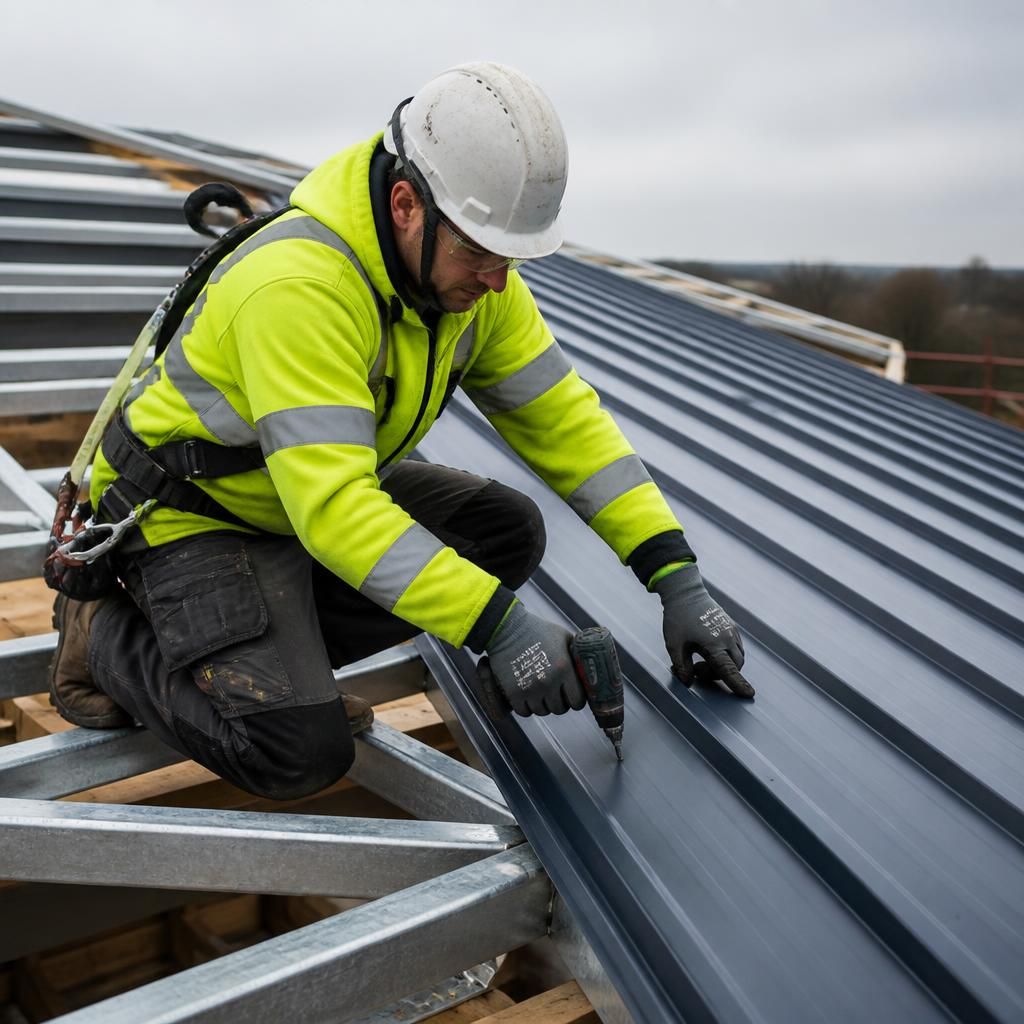
Personal protective equipment (PPE) is the final layer of protection when fitting steel roofing sheets, not a substitute for safe access and controlled working methods. Select it for the specific task and check that it is compatible with other equipment. Safety footwear should provide secure footing, gloves should protect against sharp edges without reducing grip, and eye protection should be worn when drilling, cutting or clearing swarf. A safety helmet and high-visibility clothing may also be required under the site’s control arrangements.
Inspect PPE before use and replace items that are damaged, contaminated or no longer fit correctly. Fall-arrest equipment requires particular care: it should be suitable for the planned system, attached only to approved anchor points and supported by a rescue procedure. Workers should understand how to wear, adjust and inspect it before starting work.