How should roofing sheet coatings be selected?
Roofing sheet coatings should be selected according to the building’s environment, expected service life, appearance and maintenance requirements. Consider exposure to moisture, condensation, pollutants and agricultural chemicals, then match the coating specification and finish to the roof’s location and intended use.
Roofing sheet coatings should be selected by assessing the complete coating system rather than choosing a colour in isolation. The relevant specification includes the steel substrate, metallic protection, organic coating type, coating thickness, finish, reverse-side treatment and the conditions created by the building’s use. A suitable combination protects the sheet from corrosion, provides the required appearance and remains compatible with fabrication and installation methods.
Start with the substrate and metallic protection. Most profiled steel roofing sheets use a metallic-coated steel substrate, commonly based on zinc or a zinc alloy. This layer provides sacrificial protection to the underlying steel if the surface is lightly damaged. The quality and designation of this metallic coating should be confirmed alongside the external paint finish, because a premium organic coating does not compensate for an unsuitable or poorly specified substrate.
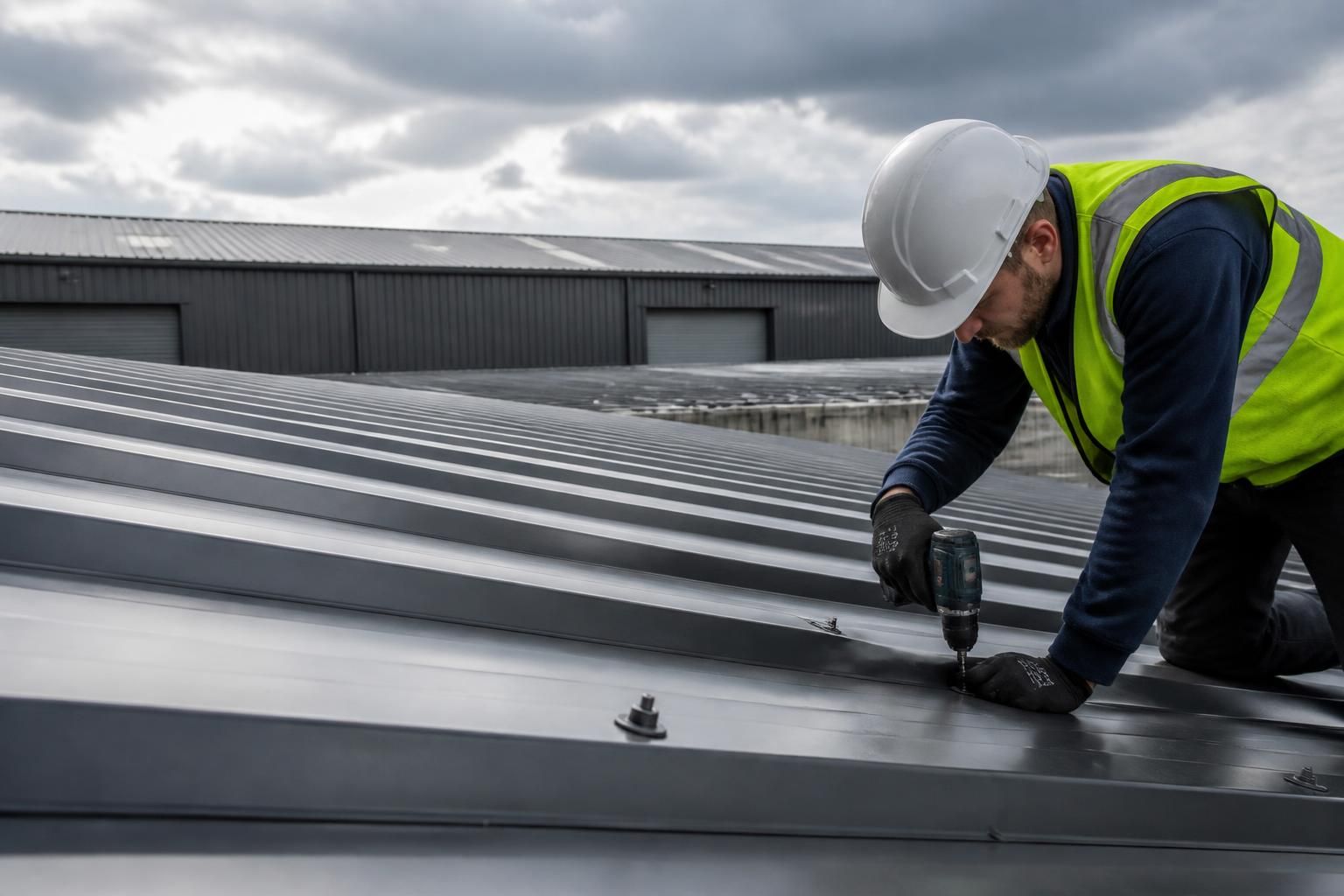
Where cut edges, penetrations or fixings are unavoidable, the specification should also allow for correct edge protection and detailing. Cut edges should not be left with swarf or exposed contamination, and fasteners should have washers and finishes suited to the sheet coating. These installation details affect the practical performance of the roof just as much as the coating selected at manufacture.
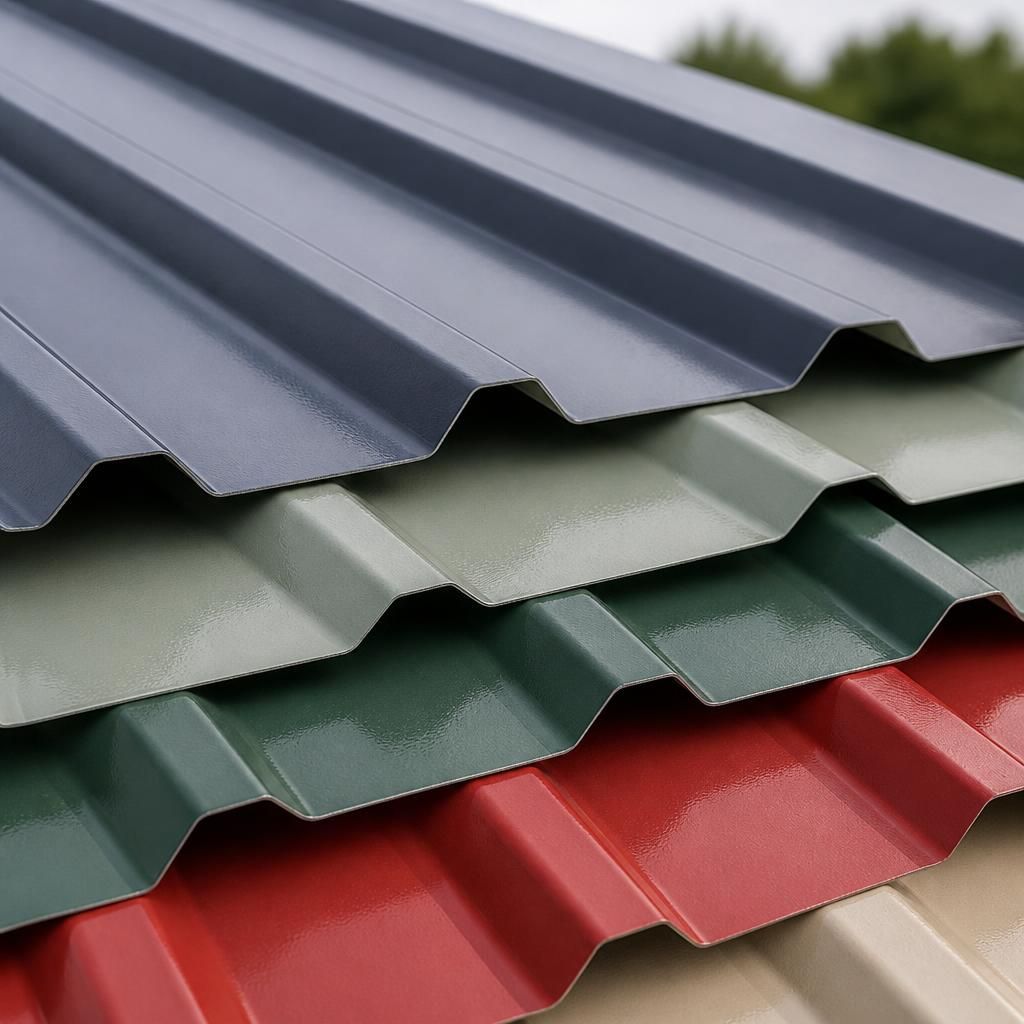
Compare the main organic coating types. Common options include polyester-based finishes, higher-performance modified polyester systems and plastisol-type coatings. They differ in resistance to ultraviolet exposure, abrasion, handling, flexibility, surface texture and long-term colour retention. A basic finish may be appropriate for a straightforward building with limited demands, while a more robust system is normally considered where the roof will be subject to greater handling, weathering or operational wear.
- Standard polyester finishes are often used where a practical coloured finish is required and the building has relatively conventional performance demands.
- Enhanced or modified polyester finishes can offer improved resistance to fading, weathering and surface damage compared with entry-level systems, subject to the manufacturer’s specification.
- Plastisol-type finishes have a thicker textured coating and may be selected where increased resistance to handling and impact is important. Their texture can also retain dirt differently from a smoother finish, so appearance and cleaning requirements should be considered.
Coating names are not sufficient on their own. Two products described in similar terms may have different resin formulations, film thicknesses and performance classifications. The technical data sheet should therefore be checked for the exact coating designation, nominal thickness, permissible applications and any stated limitations.
Specify the reverse side as well as the weather face. The underside of a sheet is exposed to the building’s internal conditions and should not be treated as an afterthought. An appropriate reverse-side coating or backing treatment helps protect the sheet during its service life and can be particularly relevant in buildings where warm, humid or chemically active air may reach the roof lining. For agricultural and industrial buildings, the internal atmosphere, ventilation arrangement and presence of insulation or a liner should all be included in the specification.
Consider how the roof will be used and maintained. A roof that will be accessed for maintenance, fitted with roof-mounted equipment or exposed to repeated handling during construction may require a finish with greater resistance to scuffing and mechanical damage. Smooth finishes can be easier to clean, whereas textured coatings may conceal minor surface marks but hold more airborne dirt. The choice should reflect the building’s visual requirements and the realistic cleaning method, not simply the initial colour selection.
Colour can also influence the finished appearance and the roof’s heat absorption, but it should be considered after the technical suitability of the coating has been established. Darker colours may show fading, dust and surface irregularities more readily, while lighter colours can make contamination more visible in some settings. Colour matching should be based on an approved coating range and the intended use of the building, with the understanding that samples and finished sheets can appear different under changing light.
Check compatibility with adjoining materials. Run-off from some metals, treated timber, concrete products, sealants or incompatible fixings can mark or accelerate deterioration of coated steel. The roof design should avoid trapping water and should use compatible flashings, fillers, sealants and fixings. Particular care is needed where sheets meet dissimilar metals or where debris can remain against the coating, since persistent contact can create localised corrosion or staining.
Use the manufacturer’s performance information. The coating specification should identify the intended exposure category or application environment, permitted forming and installation conditions, cleaning guidance and any exclusions. If a project requires documented durability information, obtain it before ordering rather than relying on a general description such as “high performance”. Any stated warranty conditions should also be read alongside the installation and maintenance requirements, as unsuitable use, incorrect cleaning or incompatible accessories may affect the validity of that documentation.
- Define the building’s use and internal atmosphere.
- Confirm the steel substrate and metallic coating designation.
- Compare coating chemistries, film thicknesses and surface finishes.
- Specify the reverse-side treatment and compatible accessories.
- Check colour, cleaning, handling and maintenance requirements.
- Review technical data and installation limitations before placing the order.
For a bespoke building, the coating choice should be recorded on the roofing schedule and coordinated with the sheets, flashings, fixings and insulation system. Buildings UK can incorporate the selected roofing specification into design and fabrication information, helping ensure that the coating is considered as part of the complete roof assembly rather than as a separate colour decision.
Coating selection should also account for future repairs. Small scratches, drilled penetrations and damaged cut edges may need local treatment during installation or maintenance, so the roofing specification should identify a compatible touch-up product and preparation method. A general-purpose paint may not bond correctly or provide the same protection as the original coating.
Before work begins, confirm whether damaged areas should be cleaned, lightly abraded, primed or sealed, and which products are approved for that particular coating system. Touch-up materials should be applied only to sound, dry surfaces and kept clear of drainage paths where they could affect adjoining sheets or flashings. This helps maintain a consistent repair approach throughout the roof’s service life.