Should roofing sheet prices be compared by area or by sheet?
Roofing sheet prices should be compared by covered area first, then checked against the number, dimensions and specification of the sheets required. A price per sheet can appear lower while covering less roof, so calculate the total cost for the complete roof area, including overlaps, trims, fixings and any insulation where applicable.
For a like-for-like decision, compare roofing sheet quotations against the same usable roof area, then use the sheet count to check whether the quantity and specification are correct. A sheet price alone can be misleading because sheets with different widths, lengths or lap requirements do not provide the same finished coverage.
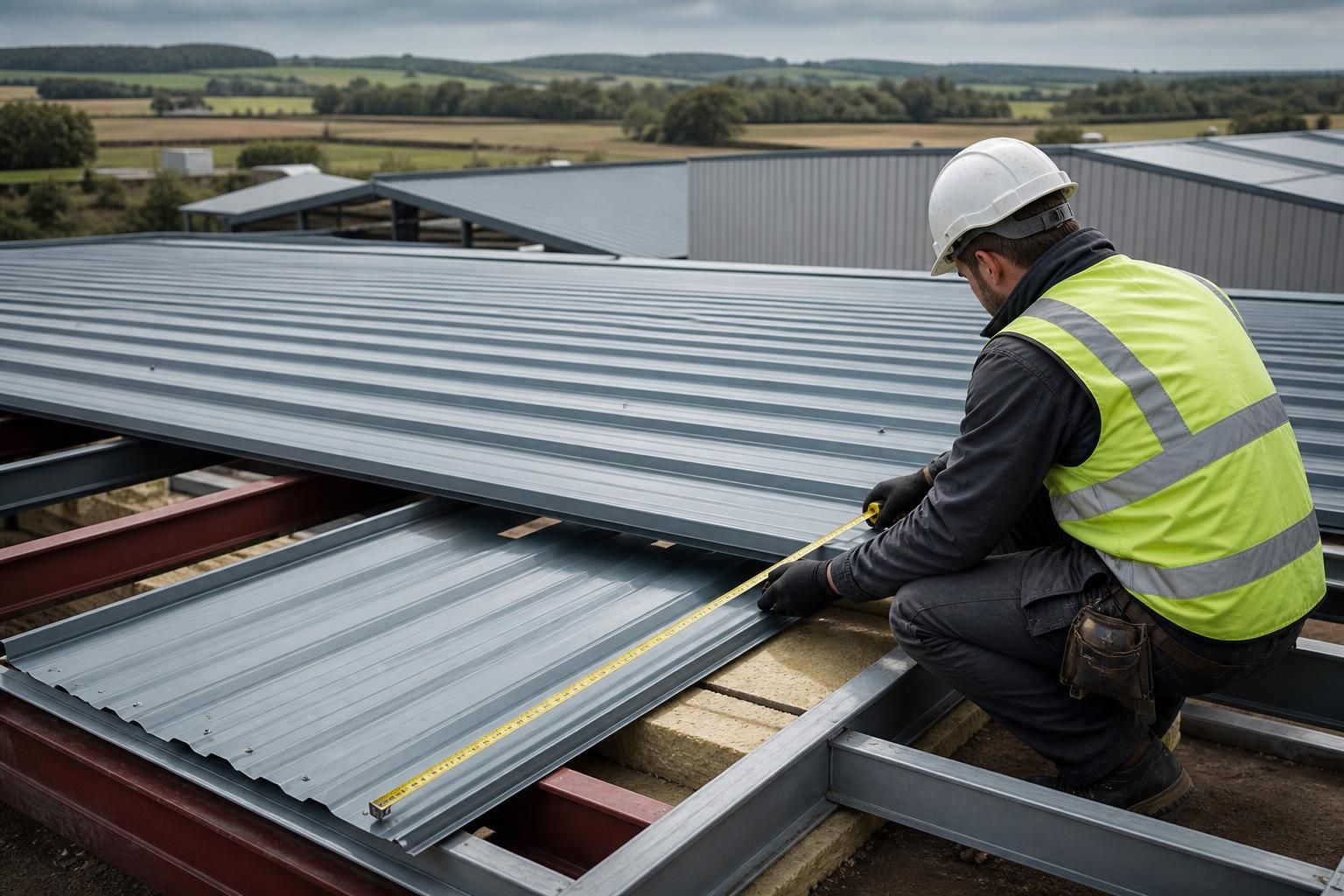
Start with the net covered area. Measure each roof slope rather than relying only on the building footprint. A simple rectangular roof may be calculated from its slope length and eaves-to-ridge width, while roofs with verges, valleys, hips, rooflights or openings need to be divided into measurable sections. The total should represent the area that needs covering, not merely the plan area shown from above.
Next, distinguish between the sheet’s nominal width and its effective cover width. Part of a profiled sheet is concealed by the adjoining sheet at the side lap, so the usable width is less than the overall width. End laps can also reduce the covered length where a roof requires more than one sheet per slope. The relevant lap dimensions should be taken from the product specification and checked against the roof pitch and installation guidance.
A useful comparison calculation is:
- identify the effective cover width and cover length;
- calculate the area covered by one sheet after allowing for required laps;
- establish the number of sheets needed for each roof slope;
- multiply the quantity by the price per sheet; and
- divide the sheet cost by the total usable area covered.
This produces a meaningful sheet-only cost per square metre. It should not be treated as the complete roof price until associated materials and any installation costs have also been included.
Why sheet count still matters
Area is the better starting point, but the number of sheets can affect the final cost substantially. Two quotations may cover the same nominal area but use different sheet lengths. One option may cover a slope in a single run, while another needs an additional row with an end lap. The second arrangement can require more material, additional fixings and more installation time.
Sheet dimensions should also be checked against the roof geometry. Ordering sheets that are longer than necessary may increase handling and cutting requirements, while selecting short sheets can create extra joints. Neither the lowest unit price nor the lowest sheet quantity is automatically the most economical arrangement. The suitable option is the one that covers the roof correctly with an appropriate layout and acceptable detailing.
Compare the specification, not just the dimensions
Prices should only be compared directly when the products have equivalent specifications. Check the following points on each quotation:
- profile and effective cover width;
- steel thickness and coating specification;
- sheet length and whether it is supplied cut to the required size;
- single-skin or insulated construction;
- colour and finish, where these affect the quoted product;
- side-lap and end-lap requirements; and
- the intended roof use and design requirements.
A thinner sheet or a different coating may have a lower price but should not be treated as an equivalent alternative without confirming that it is suitable for the building. Likewise, a wider sheet may appear better value per unit while having a different structural or installation specification.
Include the items that complete the roof
A reliable comparison should separate sheet cost from the rest of the roof package, then combine the figures for a total project comparison. Allow for ridge and verge details, eaves items, barge flashings, valley components, closures, sealants and compatible fixings. Rooflights, access panels, ventilation details and openings may also change the take-off.
For refurbishment work, check whether the existing roof requires additional support, replacement purlins, repair work or alterations around existing features. These requirements are not reflected in a basic price per sheet. For a new agricultural or industrial building, the roof layout should be checked against the structural design and purlin arrangement before the quantity is finalised.
Delivery and installation should be shown separately where possible. A quotation that includes erection cannot be compared fairly with a supply-only price unless the labour, lifting requirements and installation scope are accounted for in both totals. It is also sensible to check whether prices are stated on the same VAT basis.
Use a quotation comparison schedule
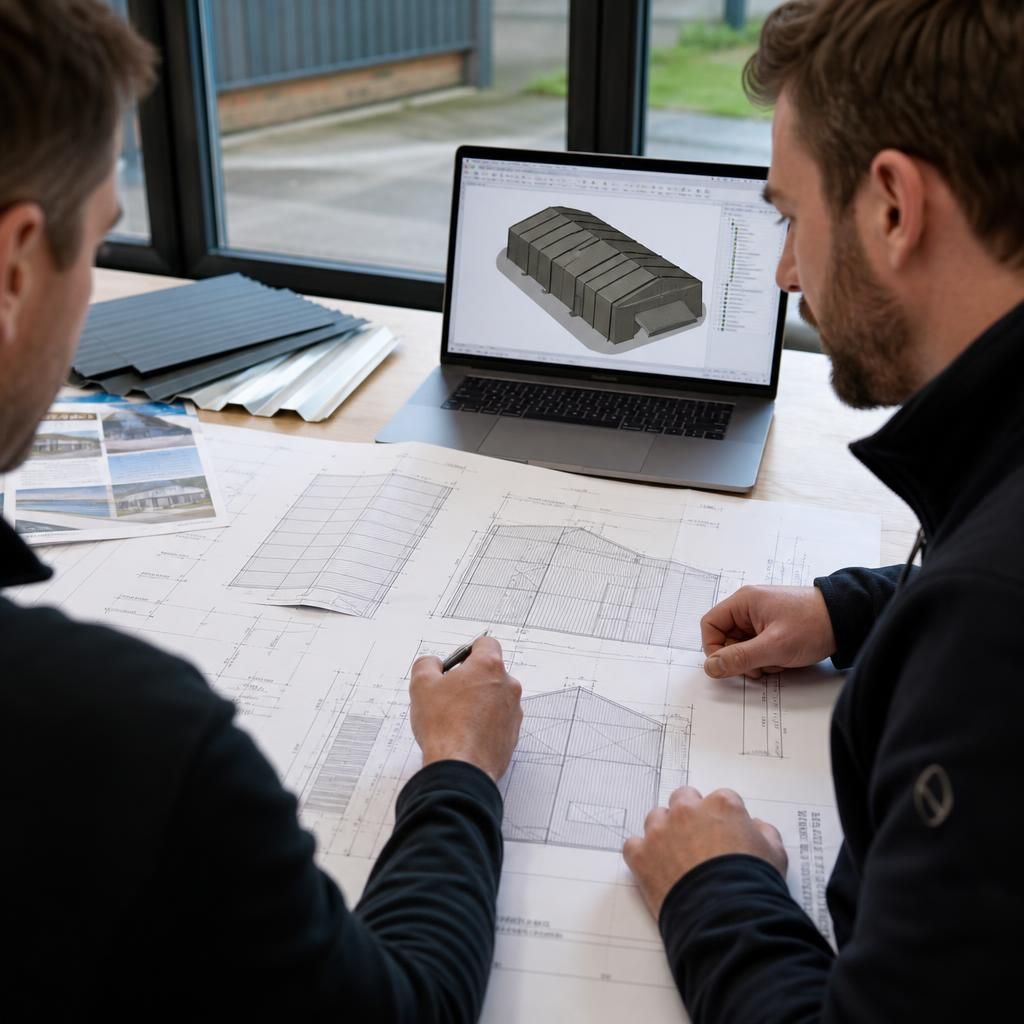
Record the roof area, sheet profile, effective cover dimensions, quantity, price per sheet, calculated covered area, accessories, delivery and installation for each option. This makes differences visible and highlights omissions. If the figures do not reconcile with the roof drawings, ask for the take-off to be explained before placing an order.
For a bespoke steel-framed building, planning elevation drawings and fabrication information can help coordinate the roof dimensions with the structure. Reviewing the sheet layout alongside those drawings reduces the risk of comparing prices based on an incorrect area or incomplete quantity.
Roofing sheets are purchased as complete units, so the calculated requirement must be rounded up for each roof slope rather than for the building as a whole. This matters where several small slopes, dormers or roof openings create separate sheet runs: a small unused portion on one slope cannot normally be transferred to another. The resulting surplus is part of the material cost, even though it is not included in the finished covered area.
For this reason, an area-based comparison is most useful as a benchmark, while the sheet quantity confirms the actual order. When reviewing quotations, check whether the quoted area rate allows for these whole-sheet requirements and whether cut-to-length sheets are priced differently from standard lengths. Converting each option to both a total order cost and a cost per finished square metre gives a clearer comparison than relying on either figure alone.
Request a roofing sheet quotation based on your measured area
Provide your measured roof areas and relevant sheet requirements to Buildings UK Ltd for a quotation based on the actual scope of your project. Include roof plans or drawings where available so the proposed sheet quantities and associated details can be assessed accurately.