
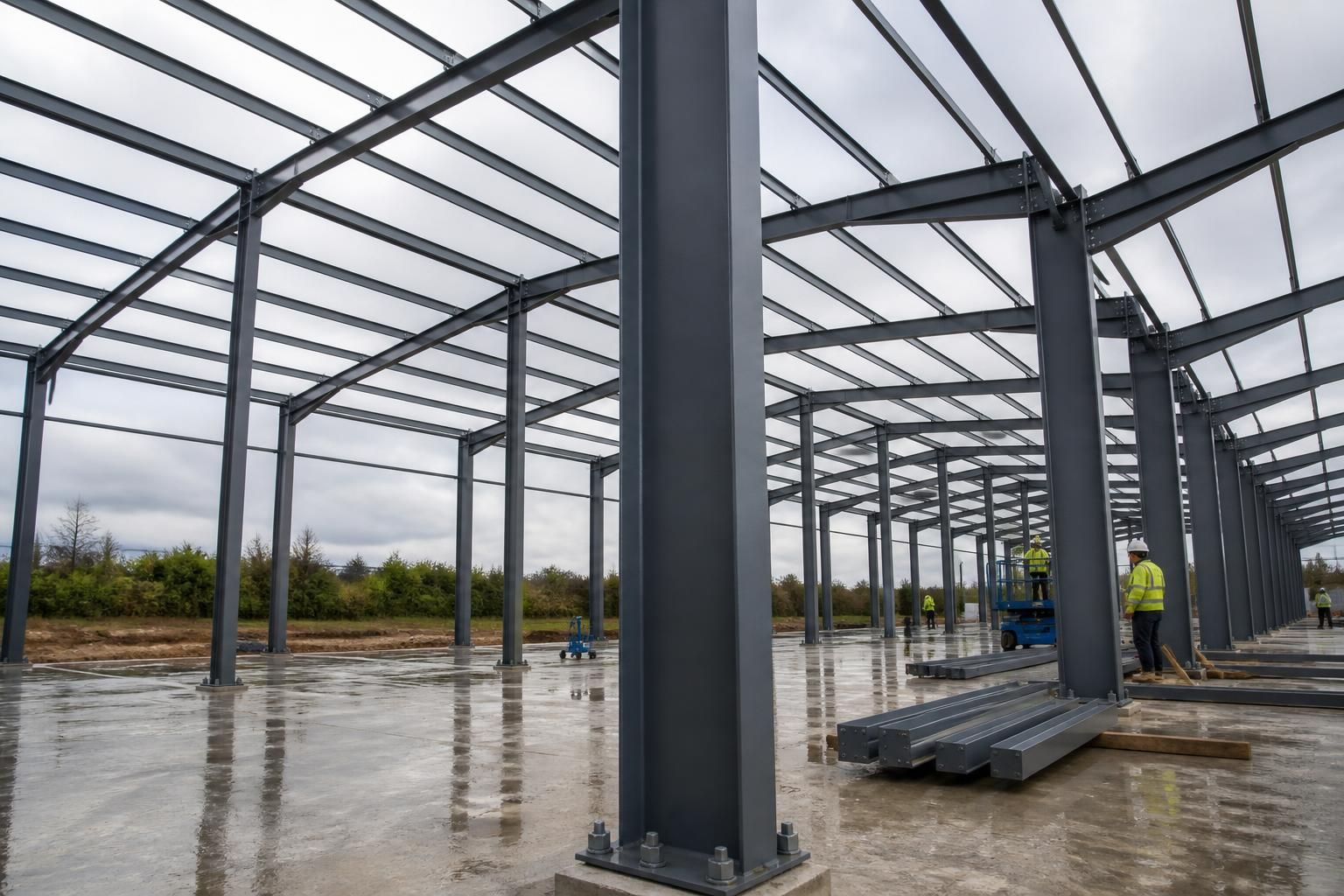
What corrosion protection does a portal frame building require?
A portal frame building typically requires a corrosion protection system matched to its environment, such as galvanising or a specified protective paint coating for the steelwork. The design should also prevent water traps, allow drainage and protect vulnerable connections, with the chosen system maintained according to the exposure conditions.
Corrosion protection for a portal frame building is a specified system selected for the building’s exposure, use, construction details and expected maintenance. The steelwork should be assessed for both external weathering and internal conditions, because a livestock building, fertiliser store, workshop and dry industrial unit can place very different demands on the same structural frame.
Environmental assessment comes first. The specification should consider humidity, rainfall, temperature changes, airborne salt, industrial fumes, chemical vapours and contamination from stored materials. Agricultural buildings can experience persistent moisture and ammonia, particularly where livestock, slurry or wash-down activities are present. Coastal sites may be exposed to salt-laden air, while industrial buildings may contain chemical pollutants or abrasive dust. An unheated building can also experience condensation on the underside of roof and wall components, even where the external climate is relatively mild.
The exposure classification should be recorded as part of the structural steelwork specification. This provides a consistent basis for choosing the preparation method, coating build-up and inspection requirements. The system should be suitable for the most demanding areas of the building rather than being based only on the average conditions. Locations subject to splash, deposits, standing moisture or frequent cleaning may need additional attention compared with high, exposed sections of the frame.
Surface preparation is central to performance. Mill scale, rust, grease, moisture and fabrication residues can prevent a coating from bonding correctly. Steel should therefore be prepared to the grade required by the selected protection system, with weld spatter, sharp edges and surface irregularities addressed before application. Rounded edges and properly finished welds help provide a more even film thickness, as coatings tend to become thinner at sharp corners.
Fabrication and application should be coordinated so that the protection system is applied under suitable conditions. The steel surface must be sufficiently clean and dry, and the application environment should be controlled in line with the product and project specification. The required dry-film thickness, curing intervals and coverage should be recorded, particularly on edges, welds, bolt groups, brackets and other areas that are easily missed during routine application.
Details at connections and interfaces deserve specific treatment. Bolted joints, splice plates, cleats, base plates and areas around site modifications can become weak points if they are not prepared and protected consistently. Site cutting, drilling and welding can expose bare steel, so any alteration should be followed by an approved repair procedure. The repair material should be compatible with the original system and should extend sufficiently beyond the damaged area to provide continuity.
Protection should also be coordinated with the building envelope and foundations. Steel should not be left in conditions where it can remain wet against concrete, masonry, cladding or accumulated debris. Interfaces at the base of columns, door openings, gutters and service penetrations should be checked for water or contamination. Where different metals meet, the detail may need separation to reduce the risk of galvanic corrosion, particularly in damp or salt-exposed locations.
Where a zinc-based system is specified, fabrication details may affect the result. Closed sections and hollow components require suitable venting and drainage arrangements during treatment, while contact points and areas damaged during transport or erection need appropriate repair. These requirements should be resolved during design rather than improvised on site. The same principle applies to any factory-applied coating system: access, handling and erection should be planned so that the finished protection is not unnecessarily damaged.
Fire protection is a separate requirement from corrosion protection. Intumescent coatings, board systems and other fire-resisting measures may need to be applied over or alongside the corrosion system, but the products must be compatible and the complete build-up must be specified by the relevant specialists. A fire-resisting coating should not be treated as a substitute for a corrosion-control system unless its technical documentation explicitly supports that use.
Inspection should continue after erection. The completed frame should be checked for transport damage, erection marks, exposed fasteners, missed areas and coating defects. During the building’s service life, inspections should look for rust staining, blistering, flaking, cracking, coating loss and corrosion around joints or column bases. Deposits such as dust, fertiliser, salt or animal waste should be removed using cleaning methods that do not damage the protective surface.
Maintenance records should identify the protection system used, preparation requirements, repair products and areas treated. Repairs are most effective when minor damage is dealt with before corrosion spreads beneath the surrounding coating. The inspection interval should reflect the building’s exposure and use; a chemically aggressive or frequently washed environment requires closer attention than a clean, dry internal space.
For a new portal frame, the corrosion specification should therefore be agreed alongside the frame design, fabrication drawings and cladding details. It should state the exposure conditions, preparation standard, protection system, application controls, treatment of connections and site-repair procedure. This joined-up approach protects the structural steel while ensuring that later alterations, maintenance and replacement work do not undermine the original specification.
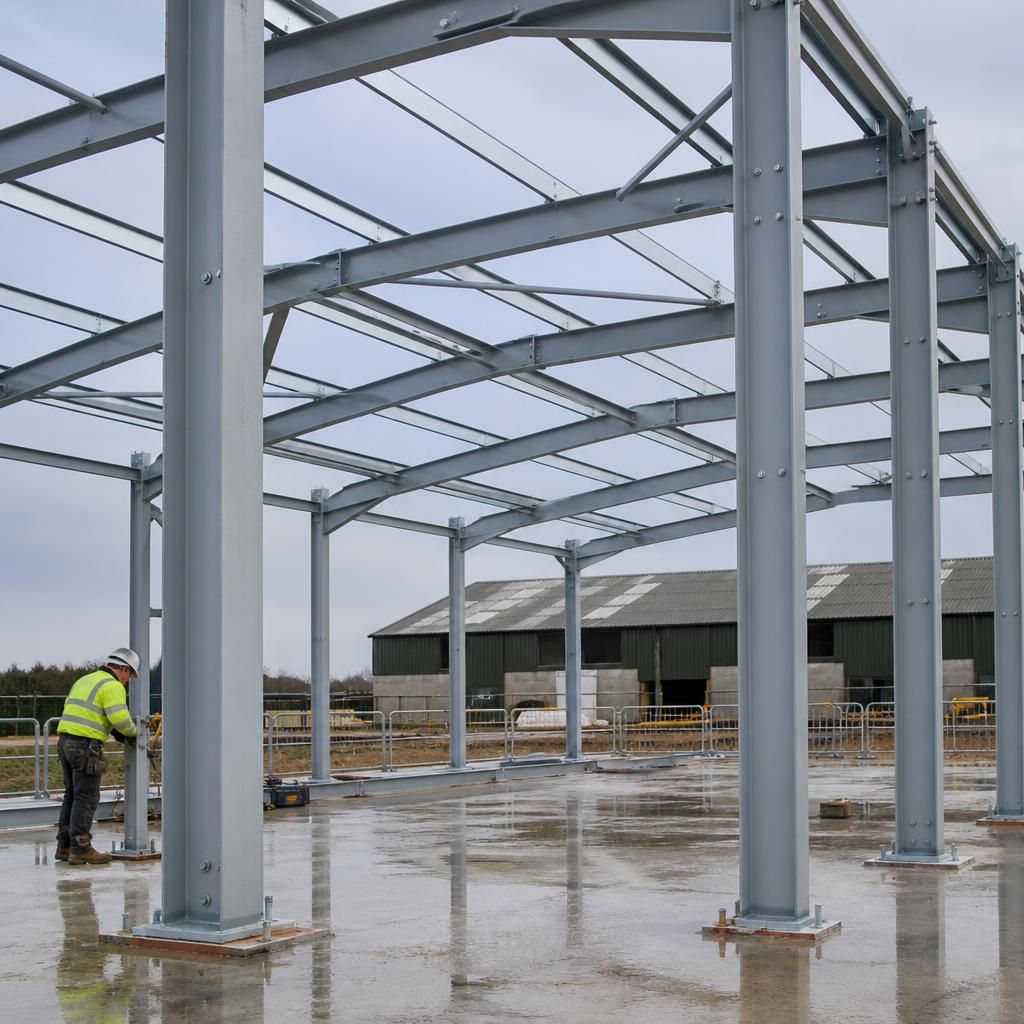
Where a portal frame faces a particularly demanding environment, a duplex system can combine hot-dip galvanising with a compatible paint coating. The zinc layer provides a continuous barrier and sacrificial protection, while the outer coating adds further separation from moisture, salts or aggressive contaminants and can provide the required finish. This approach must be specified as a complete, compatible system: the galvanised surface may need cleaning and conditioning before painting, and the coating manufacturer’s preparation and application requirements should be followed. Duplex protection is not automatically necessary for every building, but it can be considered where the exposure makes a single protective method less suitable.