What corrosion protection should a steel building manufacturer specify?
A steel building manufacturer should specify corrosion protection based on the building’s exposure, internal conditions and expected service life. Common options include hot-dip galvanising for durable zinc protection and compatible paint systems, with the specification covering surface preparation, coating thickness, application and repair requirements.
The specification should match the corrosion protection system to the building’s environment, design life, construction details and future maintenance arrangements. A suitable system is not selected by coating type alone: the manufacturer should define the exposure category, preparation and application requirements, interfaces between materials, inspection criteria and the method for repairing damage.
Assess the exposure conditions first. The external atmosphere may be relatively mild, while the internal environment is more aggressive. Agricultural buildings can experience persistent moisture, condensation, fertiliser dust, animal waste and ammonia. Industrial buildings may contain airborne chemicals, process vapours or abrasive dust. Coastal sites can be affected by salt deposits, and buildings that are poorly ventilated may retain moisture for long periods. The specification should consider the most severe credible condition rather than relying only on the building’s general location.
For painted steelwork, the environmental classification in BS EN ISO 12944 provides a structured way to assess atmospheric corrosivity and select a suitable coating system. The manufacturer should record the classification used and explain any assumptions about humidity, pollution, salt exposure, condensation and internal contaminants. Where conditions are unusual, the specification may need project-specific advice from the coating manufacturer or a corrosion specialist.
Design life should be stated clearly. A system intended for a temporary agricultural shelter will not necessarily be appropriate for a continuously damp industrial space or a building where access for future maintenance is restricted. The specification should identify the required durability range, expected inspection regime and any planned recoating or repair work. This allows the initial protection system and the building details to be considered together, rather than treating maintenance as an afterthought.
Detailing is part of corrosion protection. Steelwork should be designed to avoid water traps, unsealed crevices and surfaces where dirt can collect. Horizontal ledges should be minimised or arranged so that water drains away. Hollow sections may require appropriate sealing, drainage or venting, depending on the fabrication and protection method. Welds, cut edges, bolted connections and areas around fixings need particular attention because they can be more vulnerable than broad, accessible steel surfaces.
Drainage and ventilation should also be considered at the building-design stage. Standing water, persistent condensation and blocked drainage paths can shorten the effective life of an otherwise well-specified coating. The manufacturer should identify details that could retain moisture and coordinate protection requirements with cladding, gutters, flashings, floors and other connected components.
Compatibility between materials must be checked. Galvanised steel, painted steel, stainless steel, aluminium, concrete and treated timber can behave differently when exposed to moisture. Direct contact between dissimilar metals may create galvanic corrosion, particularly where an electrolyte such as rainwater or condensation is present. The specification may therefore require separation, compatible fixings, suitable sealants or a defined treatment at interfaces. It should also address areas where site-applied materials come into contact with factory-applied protection.
For hot-dip galvanised components, the specification should refer to the relevant requirements for fabrication, venting and drainage, coating acceptance and treatment of damaged areas. BS EN ISO 1461 is commonly used for hot-dip galvanised coatings on fabricated iron and steel articles. Fabricators should identify components that need special preparation before galvanising, including enclosed sections, overlapping parts and assemblies that could trap chemicals during the process.
For paint systems, the specification should state the compatible primer, intermediate and finish coats, together with the required preparation standard and application conditions. Steel should be clean and suitably prepared before coating, and the system should be applied in conditions that do not cause condensation, poor adhesion or delayed curing. Edges, welds and difficult-to-reach areas may require stripe coating or additional attention. The chosen system should not be changed on site without confirming compatibility with the existing layers.
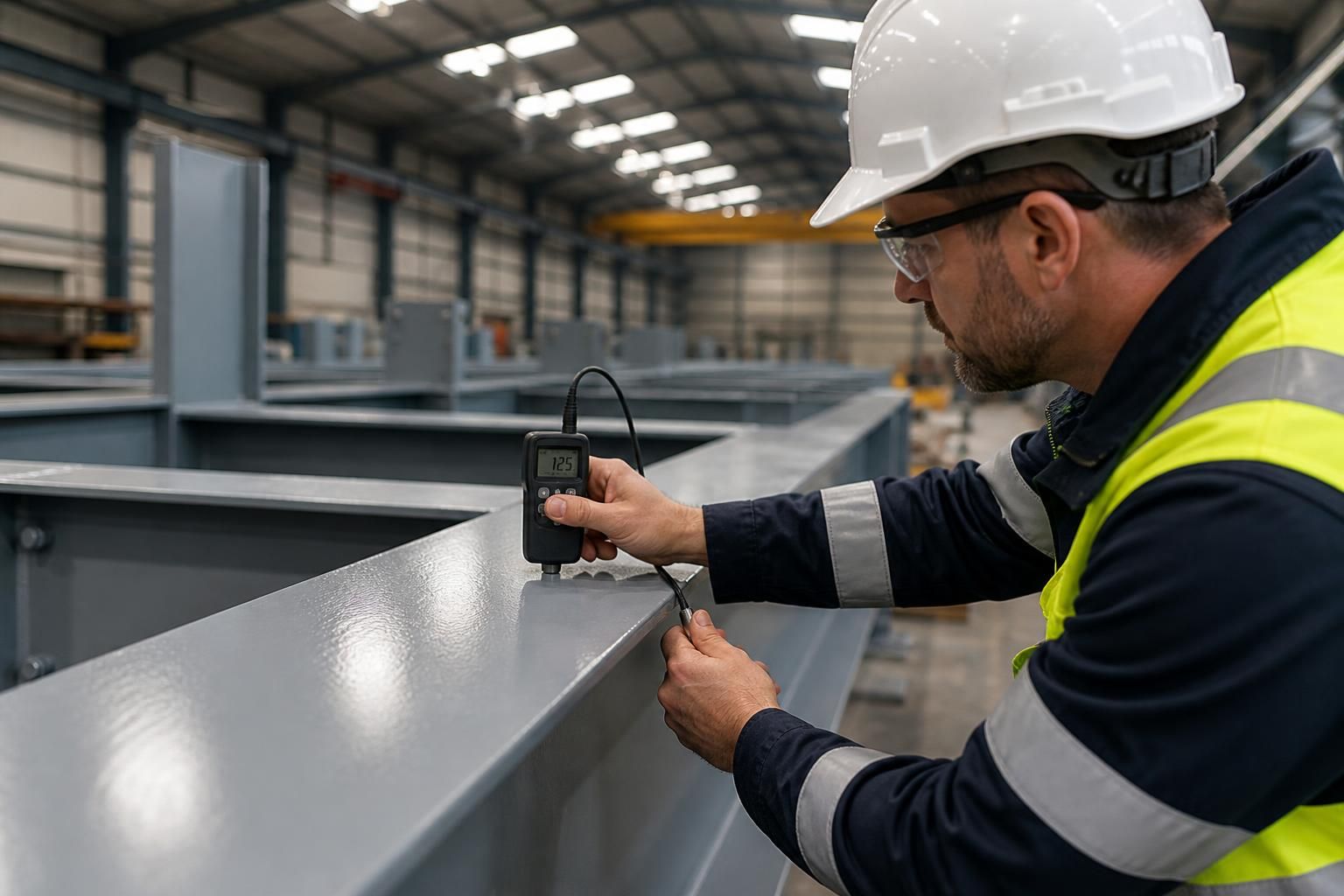
Inspection and acceptance requirements should be measurable. The documentation should identify who checks the prepared steel, which coating characteristics are verified, how defects are recorded and what constitutes acceptable repair. Depending on the system, checks can include visual cleanliness, surface profile, dry film thickness, adhesion, continuity and the condition of repaired areas. Coating thickness alone does not prove that a system is suitable if the substrate was poorly prepared or the wrong products were applied.
Site damage is likely to occur during transport, lifting, bolting and cladding installation, so the specification should include a repair procedure. This should identify the approved repair materials, preparation of the damaged area, overlap onto sound protection, curing requirements and final inspection. Repairs should be recorded rather than concealed beneath later construction work.
Finally, the completed building should be supplied with a corrosion-protection record. This can include the environmental classification, selected system, product data, preparation requirements, application records, inspection results, areas repaired and recommended inspection or maintenance measures. Clear records help the owner distinguish original protection from later repairs and make informed decisions if the building’s use or internal environment changes.
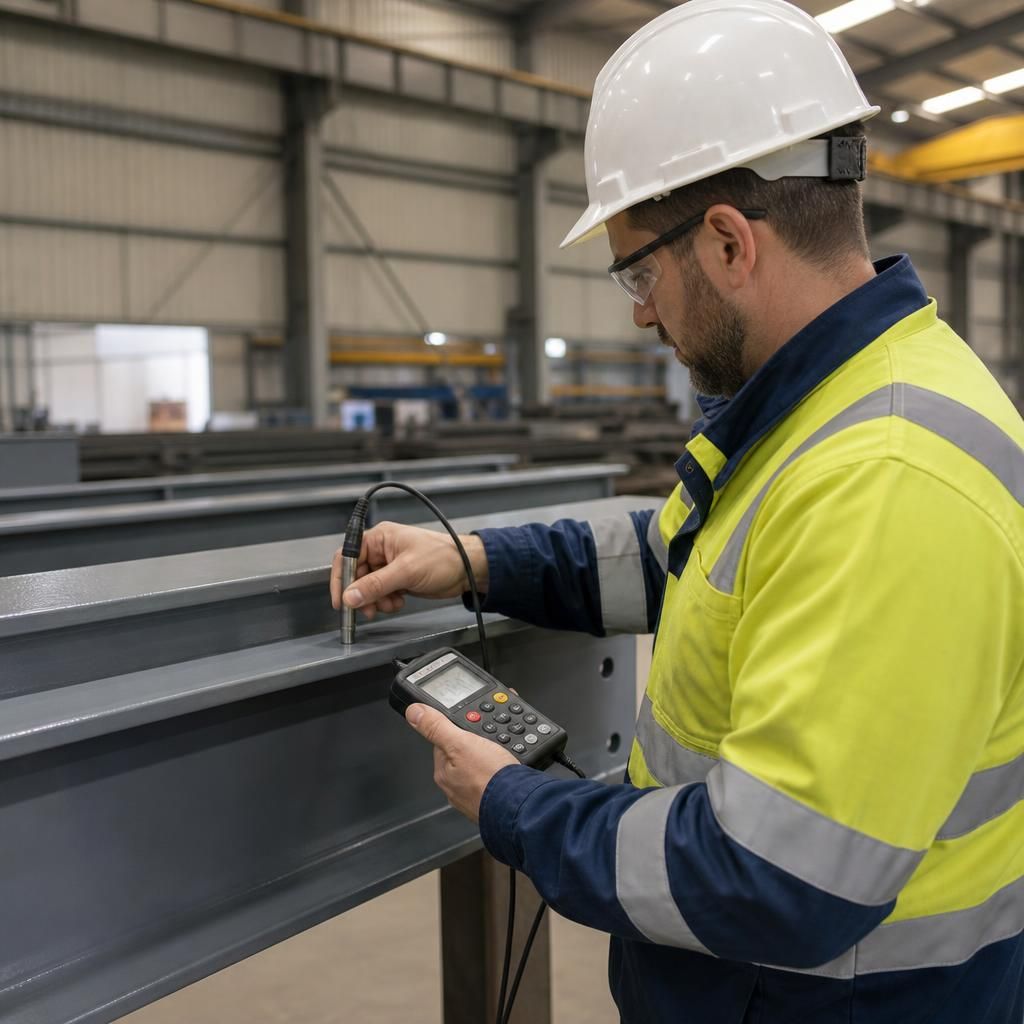
A duplex system combines hot-dip galvanising with a compatible paint coating, giving the steel both sacrificial zinc protection and an additional barrier against the environment. A steel building manufacturer may specify this approach where the structure has a demanding exposure, where a particular finish is required, or where the appearance of the galvanised surface needs to be controlled.
The specification should treat the galvanised surface as the substrate for a separate coating system, not as ordinary bare steel. It should identify the preparation method, compatible primer and finish coats, application conditions, areas requiring additional treatment and the inspection requirements for the completed duplex system. The galvaniser and paint-system supplier should confirm compatibility before fabrication is finalised, particularly around welds, edges, fixings and repaired areas.