
What site preparations are needed before steel frame erection?
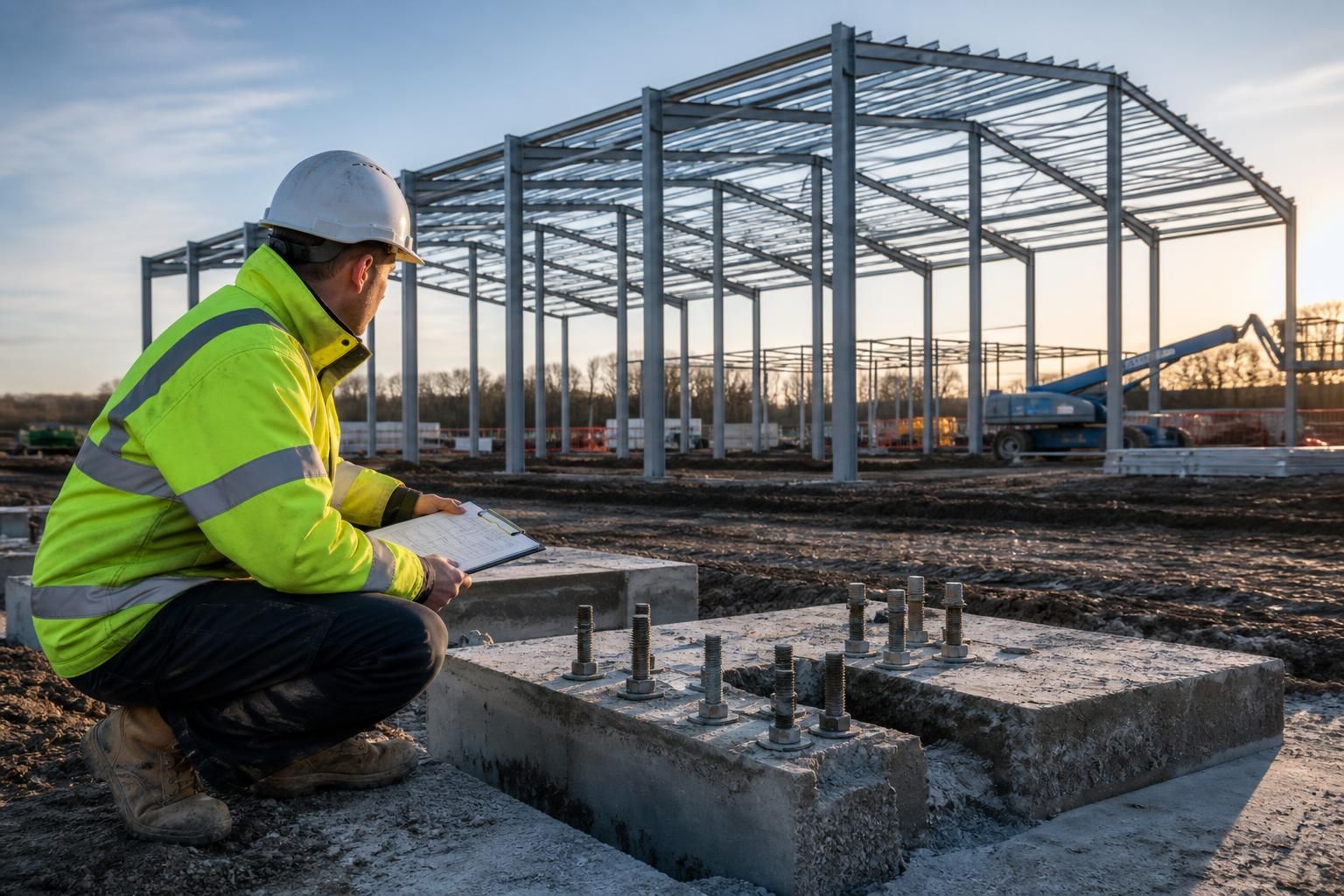
Before steel frame erection, the site should have suitable foundations and completed groundworks, with firm, level bearing areas and accurately positioned holding-down bolts. Provide clear, stable access for delivery and lifting equipment, confirm drainage and underground services, and establish safe areas for material storage and site operations.
Site preparation for steel frame erection comprises the technical checks, safety controls, sequencing arrangements and site facilities needed before the erection team begins work. In addition to completed foundations and access arrangements, the project should have approved information, a coordinated method of work, verified setting-out data and clearly controlled working areas.
Confirm the construction information. The latest approved fabrication drawings, erection drawings and connection details should be available to everyone involved. Check that revisions are consistent with the foundation design, cladding requirements, door openings, mezzanines, cranes, services and any attached structures. Changes made after fabrication can affect member identification, connection details and the planned erection sequence, so discrepancies should be resolved before steel is delivered to site.
Complete a pre-erection survey. A competent person should verify the relevant dimensions and levels against the design information. This can include checking grid lines, column positions, base levels, bolt arrangements and the dimensions of areas that will connect to the frame. Any difference between the surveyed site and the approved drawings should be recorded and corrected or formally assessed before lifting starts. This avoids forcing steel into position or introducing unplanned site modifications.
Plan the erection sequence. The frame should be divided into practical erection stages, taking account of stability during each stage rather than only the completed building. The plan should identify temporary bracing, holding arrangements, connection requirements and the point at which the frame becomes self-stable. It should also coordinate the work with concrete, cladding, roof, services and other trades so that materials or equipment do not obstruct the steelwork operation.
Put the lifting plan and safety controls in place. The appointed team should prepare suitable risk assessments and method statements covering lifting operations, work at height, temporary stability, connection work and foreseeable weather conditions. Establish exclusion zones beneath suspended loads and around the erection area, with a clear system for controlling personnel and vehicles. Confirm that the appointed lifting equipment, accessories and operators are suitable for the planned loads and sequence, and that inspections and records are available where required.
Site rules should cover communication between the banksman, operators and erection team, as well as emergency arrangements, first aid, fire precautions and rescue procedures for work at height. Welfare facilities, suitable personal protective equipment, secure boundaries and clear warning signage should be available before the work starts. The principal contractor should also coordinate the arrangements with other contractors and maintain control of access to the active erection zone.
Prepare the working environment. Remove obstructions that could interfere with lifting, temporary bracing, mobile plant or the movement of personnel. Mark designated pedestrian routes and keep the erection area free from unrelated materials and equipment. Provide suitable locations for tools, connection components and small items so that they are protected from damage and cannot create trip hazards. Where temporary lighting, power or communications are needed, these should be installed and checked as part of the site setup.
Coordinate deliveries and handling. The delivery plan should match the erection sequence, with steel members identified and arranged so that they can be unloaded and used without unnecessary rehandling. Confirm the unloading responsibilities, communication arrangements and any restrictions affecting the delivery vehicle. Review the planned position of lifting equipment and the sequence of loads with the erection supervisor before steel arrives, rather than relying on changes during the operation.
Environmental and neighbouring-site considerations should also be addressed. Control dust, noise, waste and runoff where they may affect adjoining land or other construction activities. Protect completed work from impact by plant and prevent debris, packaging and temporary materials from entering drainage systems or public areas. If the building is being erected within an operating farm or industrial site, separate the construction zone from livestock, production areas, stored goods and unauthorised personnel.
A practical pre-start check should confirm that:
- the approved design, fabrication and erection information is current and available;
- the site survey has identified and resolved discrepancies affecting the frame;
- the erection sequence includes temporary stability and bracing arrangements;
- lifting plans, risk assessments and method statements have been briefed to the relevant team;
- exclusion zones, pedestrian controls and emergency procedures are established;
- the working area is free from obstructions and unrelated site activity;
- steel members, connection components and tools can be identified and handled in sequence; and
- the principal contractor and other trades understand when and where erection activities will take place.
Only once these technical, logistical and safety arrangements have been checked should the frame erection proceed. The exact requirements vary with the building’s span, height, connection design, surrounding site and chosen lifting method, so the final preparation should be reviewed against the project-specific drawings and erection plan.
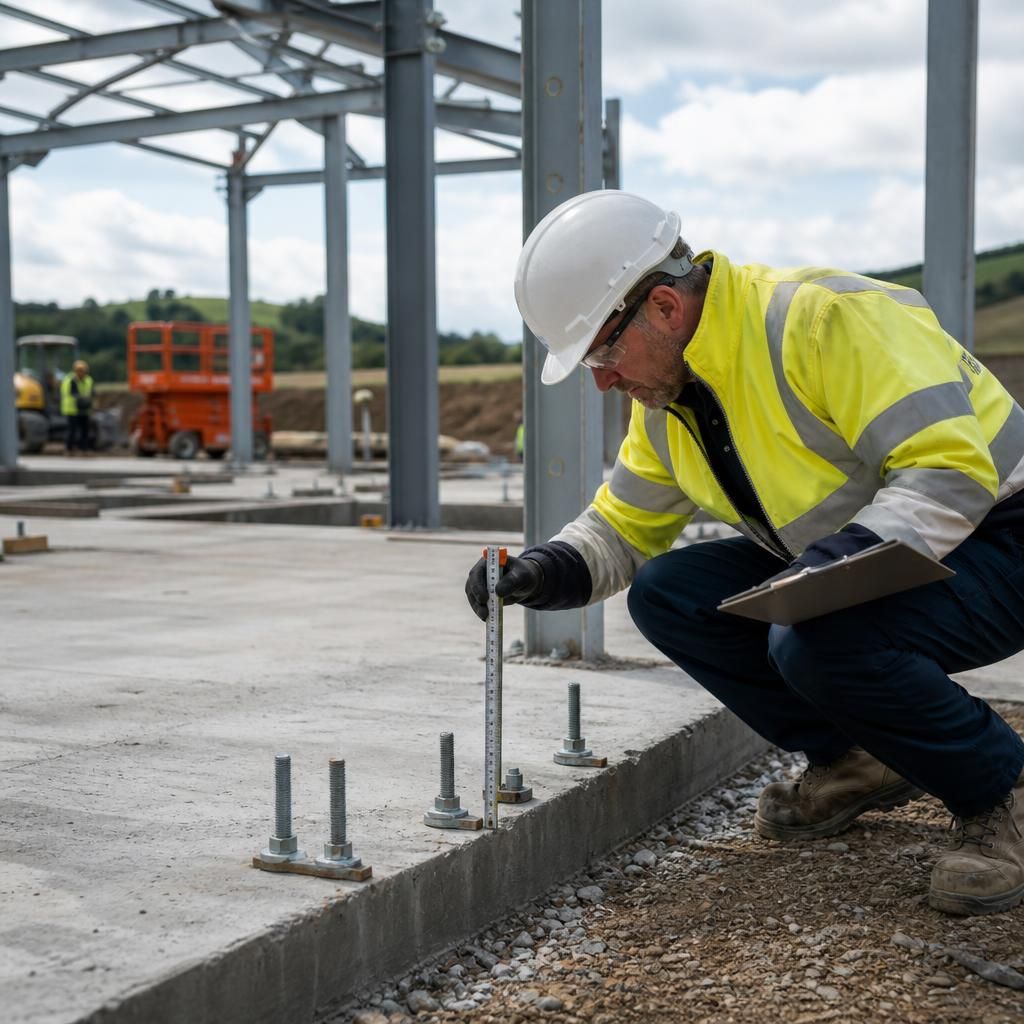
The lifting area needs its own preparation, separate from general site access. Confirm that the ground can support the planned crane or telehandler, including concentrated loads from outriggers, wheels or tracks. Where required, provide an engineered working platform or suitable bearing mats, and check that the setup remains level throughout the lifting operation.
Before equipment arrives, verify the crane position, reach and lifting capacity against the heaviest or most demanding lifts. Also check overhead clearances, nearby structures and the route for setting up or removing the equipment. These checks help prevent a delivery or lifting arrangement that cannot safely serve the erection sequence.