How are steel framing components protected against corrosion?
Steel framing components are protected against corrosion through suitable surface treatments, most commonly galvanising or durable protective coatings. Careful fabrication, detailing and application help keep moisture away from vulnerable areas and support long-term performance in industrial, agricultural and equestrian buildings.
Corrosion protection for steel framing components is a complete control system rather than a single finish. It combines the steel specification, connection design, fabrication, surface preparation, protective treatment, transport, installation and subsequent inspection. The correct approach depends on the building’s exposure, including humidity, condensation, agricultural gases, airborne salts, chemical contamination and the likelihood of mechanical damage.
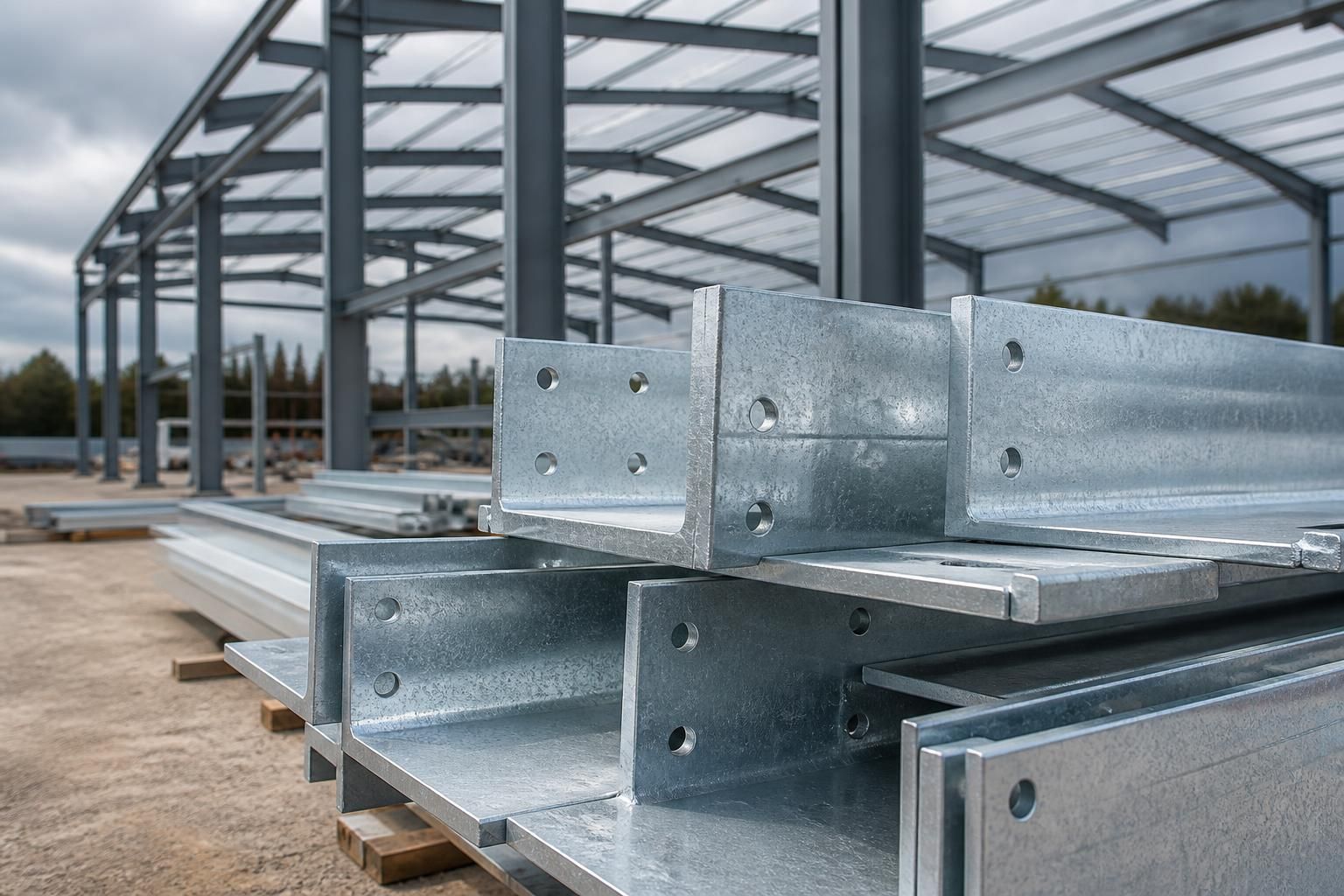
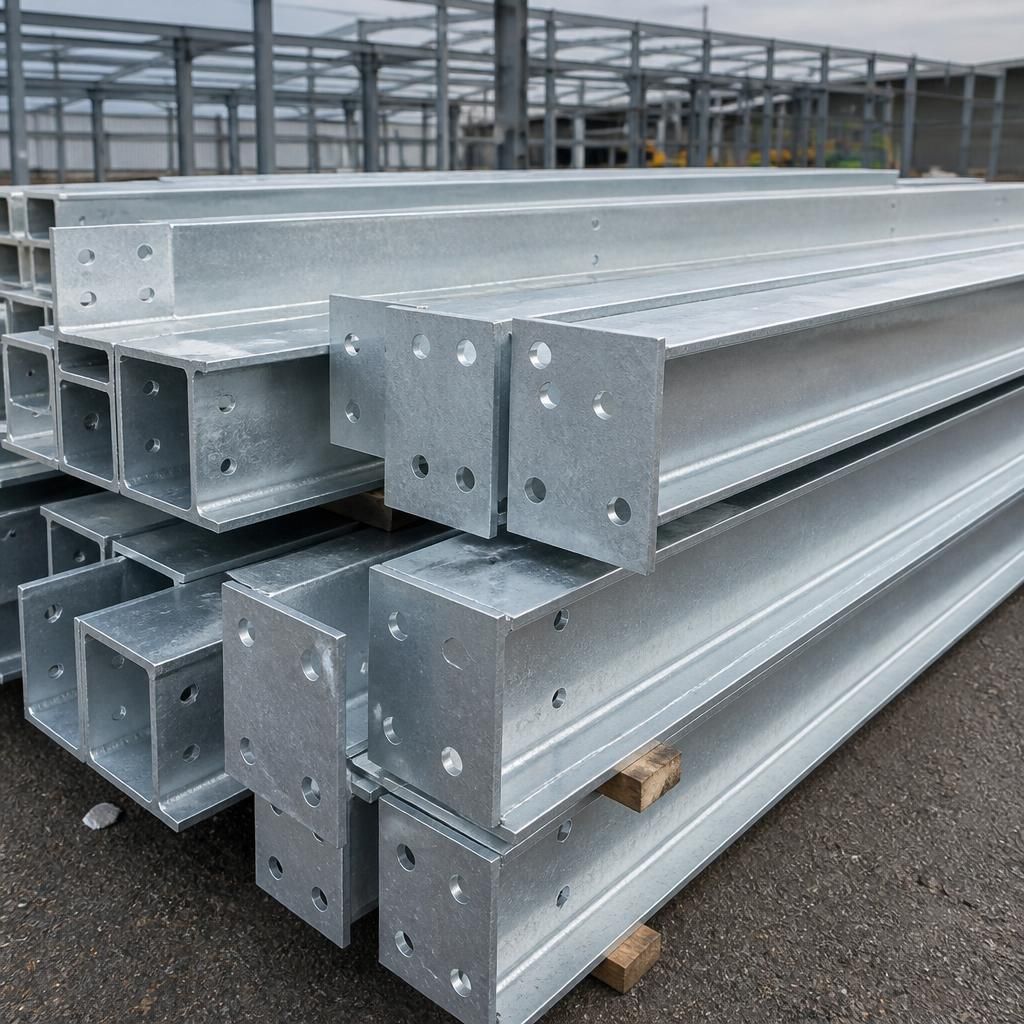
Hot-dip galvanising protects steel by forming a metallurgically bonded zinc coating over the prepared surface. Zinc provides a physical barrier and also offers sacrificial protection: if a small area is exposed by a scratch or cut, the zinc corrodes preferentially to the underlying steel. This makes galvanised components particularly useful where access for future repainting is limited or where framing is exposed to damp conditions.
Galvanising must be considered during design and fabrication. Hollow sections need suitable vent and drain holes so that cleaning fluids and molten zinc can move safely through the section. Closed pockets, narrow gaps and poorly detailed overlaps can retain moisture or prevent complete coating coverage. Drainage, access for inspection and the avoidance of water traps are therefore important parts of corrosion-resistant detailing, not merely finishing operations.
Paint and other protective coating systems work primarily by separating steel from water and oxygen. Their performance depends heavily on preparation: mill scale, rust, grease, weld spatter and other contaminants must be removed to the required standard before coating. Particular attention is needed at welds, corners, bolt interfaces, cut edges and areas where coating thickness can become uneven. A system may include a preparation coat, a corrosion-inhibiting primer and one or more finishing coats selected for the service environment.
For demanding conditions, a duplex system can combine galvanising with paint. The zinc layer provides sacrificial protection while the paint reduces exposure of the zinc to the atmosphere. This approach is not automatically suitable for every project; the coating products, surface condition, preparation method and detailing must be compatible. Coating selection should also account for whether the steel is internal or external, exposed to persistent condensation, located near livestock or stored chemicals, or subject to washing and abrasion.
Fabrication quality has a direct effect on the result. Continuous welds, smooth transitions and the removal of sharp projections reduce places where water or contaminants can collect. Components should be handled and stored so that the finish is not damaged and water is not trapped between stacked members. During erection, drilled holes, cut ends, abraded areas and damaged coating should be treated with a compatible repair system rather than left exposed.
Protection should be checked throughout the life of the building. Inspections commonly look for:
- scratches, impact damage, flaking or blistering;
- rust staining around joints, fasteners, welds and drainage points;
- standing water, blocked drains or persistent condensation;
- coating breakdown in areas exposed to chemicals, wash-down water or animal waste; and
- crevices or contact points where debris and moisture have accumulated.
Minor damage can often be dealt with by cleaning back to sound material and applying a compatible repair coating, while widespread corrosion may require a more detailed assessment. Keeping drainage routes clear, controlling internal moisture where practical and repairing damage promptly all help preserve the intended protection of steel framing components.
Steel framing components can also be protected by controlling contact between dissimilar metals. When metals with different electrochemical properties are connected in the presence of moisture, galvanic corrosion may occur, causing the less resistant metal to deteriorate more quickly.
Designers therefore consider the compatibility of the frame, fasteners, cladding, brackets and drainage components. Suitable fastener materials, separating washers or isolation layers can reduce direct metal-to-metal contact where required. Water should also be prevented from sitting at these interfaces, since a continuously damp connection increases the risk of corrosion.
This detail is particularly relevant where galvanised steel connects to aluminium, copper or other materials. Reviewing interfaces at the design stage helps ensure that the corrosion protection system works as a coordinated assembly rather than treating each component in isolation.
Discuss your steel framing components corrosion protection requirements
Discuss your steel framing components corrosion protection requirements with Buildings UK Ltd, including the building environment, exposure conditions and intended finish. Sharing these details will help establish the appropriate protection approach for your project.