What should you look for when choosing a steel building fabricator?
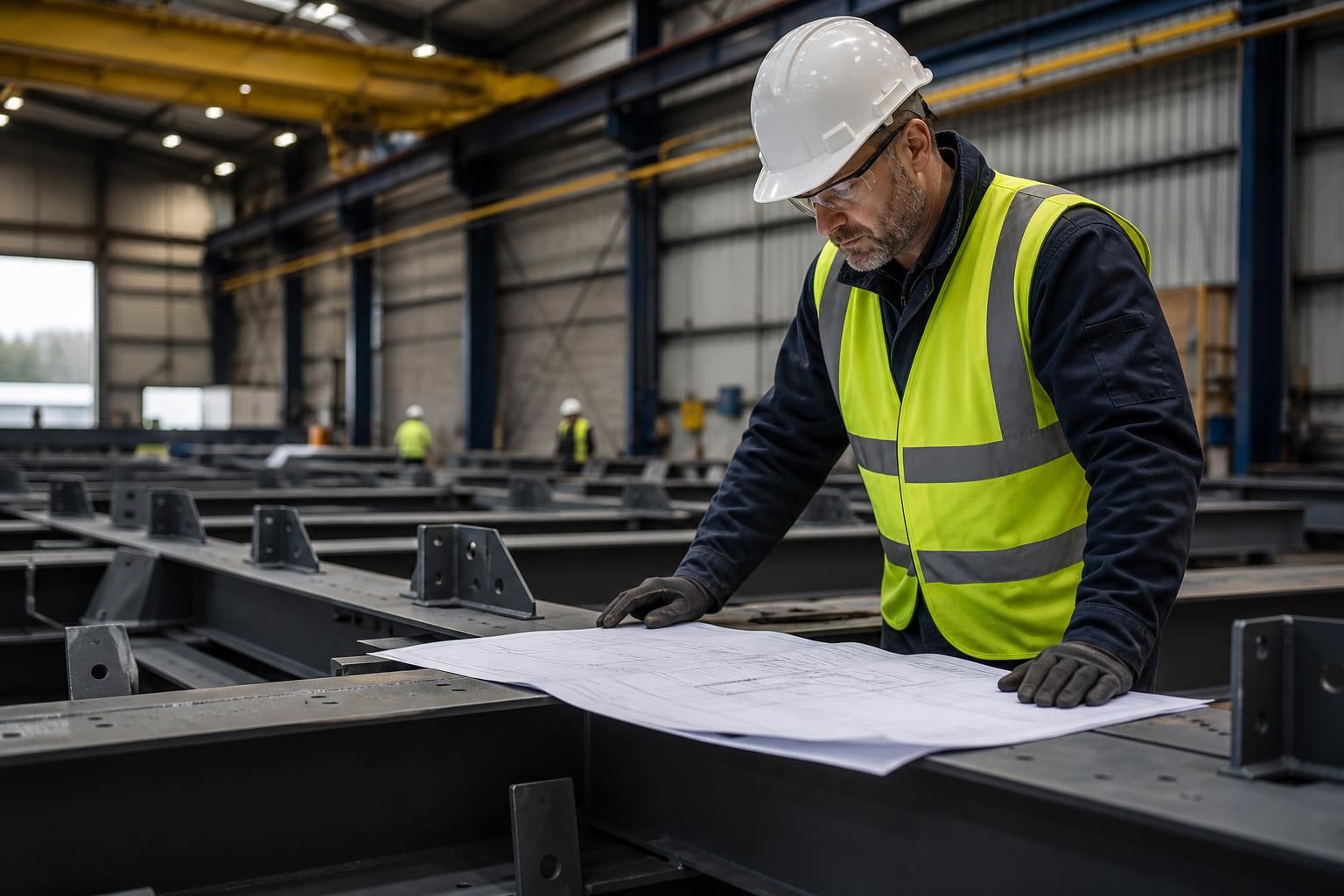
Look for a fabricator that combines relevant sector experience with British-made, CE marked steelwork, accurate bespoke design and clear fabrication documentation. Assess whether they can provide the level of support your project requires, from planning elevation drawings and isometric fabrication blueprints through to building kits, erection and after-sales assistance.
Choosing a steel building fabricator involves assessing more than the quoted steel price. The right supplier should demonstrate sound structural engineering, controlled manufacturing, clear responsibility for each part of the project and a scope that matches the building’s intended use, site conditions and installation requirements.
- Relevant technical experience
Look for experience with buildings of a similar scale, loading arrangement and end use. Agricultural, industrial and equestrian buildings can have different requirements, including large clear spans, storage loads, machinery access, livestock environments, impact risks or suspended equipment. A fabricator should be able to discuss these factors before the design is finalised rather than treating every building as a standard frame. - A clear design responsibility
Establish who is responsible for structural calculations, connection design, member selection and coordination with foundations, cladding and other trades. Ask what information the fabricator needs from you, such as site dimensions, ground conditions, imposed loads, door openings, crane requirements or future expansion plans. Clear responsibility reduces the risk of gaps between the building designer, steel fabricator, groundworks contractor and installer. - Understanding of site interfaces
A steel frame does not operate independently of the rest of the project. Check how the proposed solution will interface with foundations, drainage, cladding, roller doors, personnel doors, services and internal equipment. Access for delivery and lifting should also be considered, particularly on farms and industrial sites where existing buildings, yards or operational areas may restrict vehicle and crane movements. - Defined materials and fabrication standards
The quotation and technical information should identify the steel grades, connection materials, protective treatment and any relevant tolerances. Ask which execution requirements and inspection procedures apply to the frame. This helps you compare like-for-like proposals and determine whether the specification is suitable for exposure, condensation, corrosive conditions or the building’s intended working environment. - Evidence of manufacturing control
Reliable fabrication depends on repeatable checks at each stage, from receiving materials and preparing members to welding, drilling, finishing and dispatch. Ask whether materials can be traced through production, how welds and connections are inspected, how dimensions are verified and how non-conforming work is dealt with. The fabricator should be able to explain what records are produced and who reviews them. - Accurate coordination and information management
Steelwork must fit the approved design and the components that connect to it. Check how revisions are identified, issued and recorded, and whether the latest approved information is used for manufacture. A controlled drawing register, revision numbering and documented approvals are particularly important where openings, plant loads or architectural requirements change during the project. - A transparent scope of supply
Compare quotations by listing exactly what is included and excluded. Items to clarify can include primary and secondary steelwork, connection plates, bolts, brackets, finishes, packing, delivery, unloading, lifting and installation. Also establish whether foundation design, cladding, doors, drainage, electrical work and internal fittings sit outside the fabricator’s contract. A lower headline price may simply reflect a narrower scope. - Practical installation planning
Where erection is included, ask how the installation will be planned around the site, access restrictions, ground conditions and other contractors. Clarify who provides lifting equipment, temporary stability measures, site supervision and any required health and safety documentation. If the frame is supplied as a kit for others to erect, confirm that the component labelling, fixing information and assembly sequence are sufficiently clear for the appointed installer. - A documented approach to changes
Changes should be recorded before they are incorporated into manufacture. Find out how the fabricator handles revised dimensions, additional openings, altered loads or changes to the installation sequence. A sound process identifies the effect on drawings, materials, cost and programme, and obtains approval before work proceeds. This is more dependable than relying on informal instructions or verbal agreements. - Commercial clarity and after-sales arrangements
Read the contract for payment stages, exclusions, delivery responsibilities, design approvals, cancellation terms and procedures for reporting defects or missing components. Confirm what technical assistance is available after delivery and how queries are logged and resolved. These details are relevant even when the engineering and fabrication appear satisfactory, because they determine how issues are managed once the steelwork reaches site.
Before appointing a fabricator, prepare a comparison schedule covering technical scope, design responsibility, materials, inspection records, finishes, delivery, erection and contractual exclusions. Give each supplier the same site and loading information, then compare the assumptions behind each proposal rather than selecting solely on price. A suitable fabricator will be able to explain its decisions in precise, project-specific terms and provide information that allows the building owner, architect and other contractors to coordinate their work.
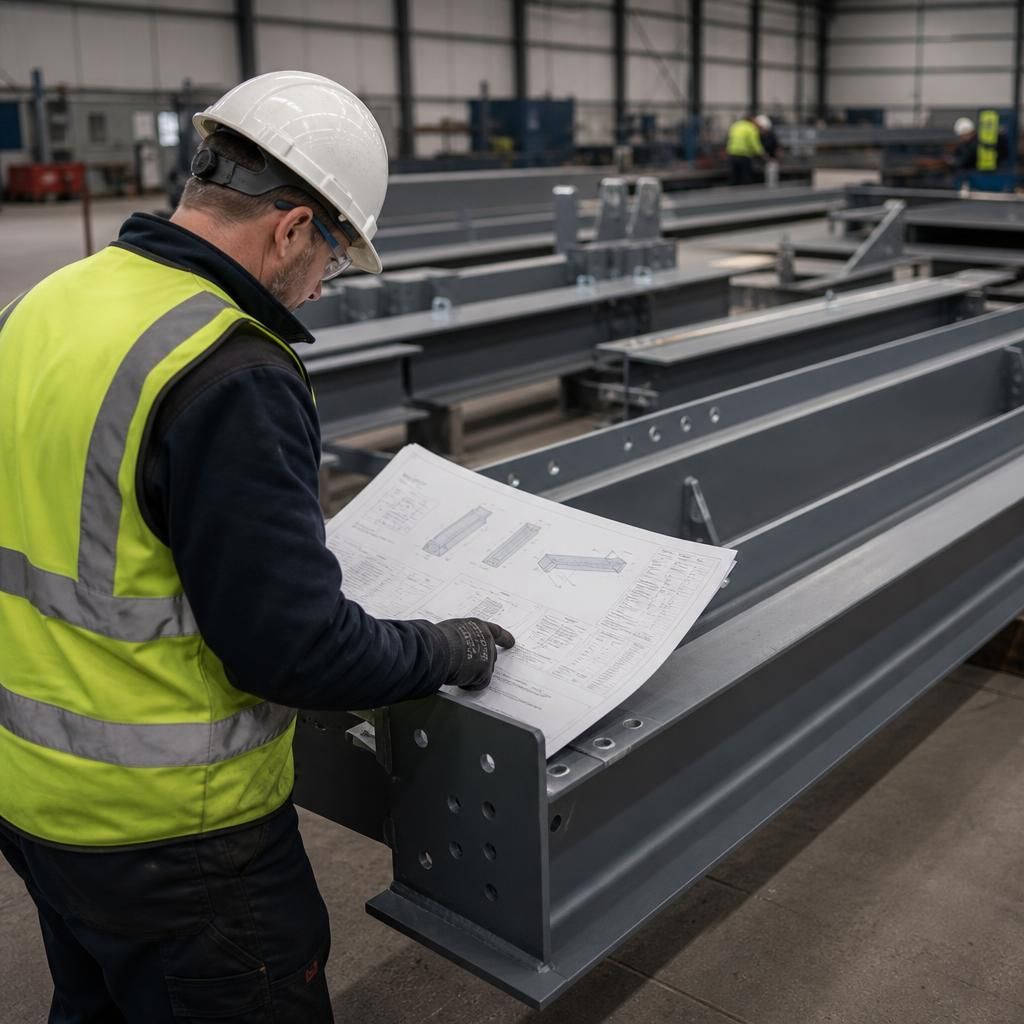
Consider how the fabricator manages the physical manufacturing environment. If practical, ask to view the workshop or inspect examples of completed steelwork. This can provide useful evidence of whether members are stored securely, components are kept identifiable and finished steel is protected during handling and dispatch.
- Look for orderly storage that separates different projects and material types.
- Check whether fabricated members can be matched clearly to the relevant drawings or schedules.
- Ask how finished steel is protected from damage before it reaches site.
- Where previous work can be inspected, consider the consistency of fabrication, connection details and finish.
This is not a substitute for technical documentation, but it is a practical way to assess whether the fabricator’s working methods appear suitable for the accuracy and coordination your building requires.