
Can site access influence structural steel beam prices?
Yes, site access can influence structural steel beam prices because restricted routes, limited unloading space and difficult lifting conditions may increase delivery, handling and installation requirements. Providing accurate information about entrances, ground conditions, working space and available lifting equipment helps ensure the price reflects the practical demands of the project.
Site access can influence the overall price of a structural steel beam, although it does not usually change the underlying cost of the steel itself. The main effect is on the planning, transport, temporary works and installation methods needed to move the beam from the delivery vehicle into its final position.
Access should therefore be considered as part of the installed cost rather than treated as a separate site matter. A beam may be straightforward to fabricate but more expensive to install if it cannot be delivered or positioned using the intended method. Conversely, a well-planned site with suitable access may allow the work to proceed using simpler handling arrangements.
Beam dimensions and delivery planning
Structural beams are often supplied in substantial lengths, and their dimensions can affect how they are transported and positioned. If a beam cannot be carried directly to the construction area, the project may require an alternative delivery sequence, temporary storage or a method of joining sections on site. These arrangements need to be assessed carefully because storing steel in an unsuitable location can create additional handling and double-moving requirements.
The delivery plan may also need to account for the position of the entrance, the route from the public highway to the building and any internal obstructions. Narrow gateways, sharp turns, overhead services, soft verges or uneven surfaces can limit the type of vehicle or lifting equipment that can be used. The issue is not simply whether a vehicle can enter the site; it must also be able to approach the unloading or erection area safely.
Choice of lifting method
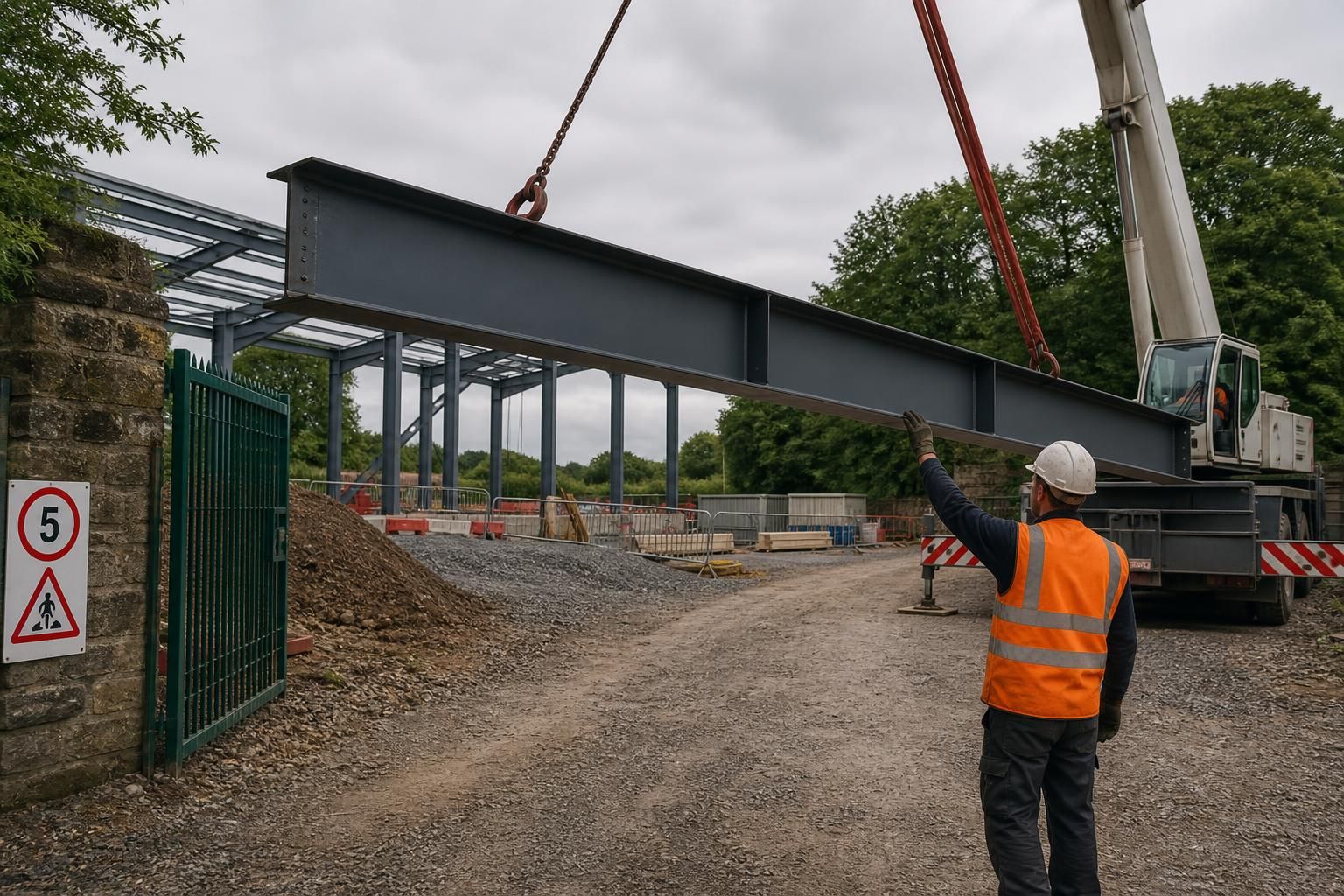
Access conditions can affect whether beams are installed with a mobile crane, telehandler or another suitable lifting arrangement. The appropriate method depends on the beam’s weight and reach, the ground’s ability to support the equipment, the available set-up position and the distance between the lifting point and the building frame.
A crane may need a stable position with sufficient room for its outriggers and a clear lifting radius. A telehandler may require a suitable route and firm running surface. Where neither option is practical, the installation sequence may need to be altered or the design divided into more manageable components, subject to the structural engineer’s approval. Each alternative can affect labour, plant, transport and site preparation costs.
Ground conditions and temporary works
Ground conditions are particularly important for heavy lifting. Unmade ground, recently excavated areas, slopes or waterlogged surfaces may not provide adequate support for vehicles or lifting equipment. Measures such as temporary trackway, crane mats, compacted working platforms or local ground improvement may be needed before installation can begin.
These measures are not automatically part of a standard steelwork price because they depend on the site and the equipment selected. If they are identified during the planning stage, they can be allocated to the correct part of the project budget. If they are discovered only after delivery, they may cause changes to the installation method and additional costs.
Site sequencing and coordination
Access also influences when steel can be brought into the build sequence. Completed groundwork, cladding, stored materials, scaffolding and other trades can reduce the space available for steel erection. Delivering beams before the site is ready may mean they have to be moved or stored, while delivering them too late can interrupt other construction activities.
For this reason, the steelwork package should be coordinated with foundations, slab construction, roofing, cladding and any existing operations on the site. A clear erection sequence helps determine where materials can be placed and whether lifting equipment can work without conflicting with other activities.
Information needed for an accurate assessment
Useful access information includes:
- the dimensions and surface condition of the route to the building;
- any height, width or weight restrictions on approaches and entrances;
- the location of overhead cables, trees, structures and other obstructions;
- the proposed position of foundations, slabs and working platforms;
- areas that can be used for vehicle set-up, temporary storage and safe movement; and
- any restrictions created by neighbouring buildings, occupied areas or ongoing site activities.
Photographs, a site plan and accurate measurements can help the steelwork designer and installer assess the practical constraints. Where the information is incomplete, the initial figure may need to include assumptions about delivery and erection. Confirming those assumptions before fabrication reduces the risk of changing the installation plan later.
For a bespoke steel building, the access review should form part of the wider design and erection discussion. Buildings UK Ltd can provide either a building kit or a full erection service, so the effect of access depends on which elements of delivery and installation are included in the project. Comparing quotations on the same basis—materials only, supply and delivery, or a complete erected structure—helps identify whether access-related allowances have been included and makes the prices easier to assess fairly.
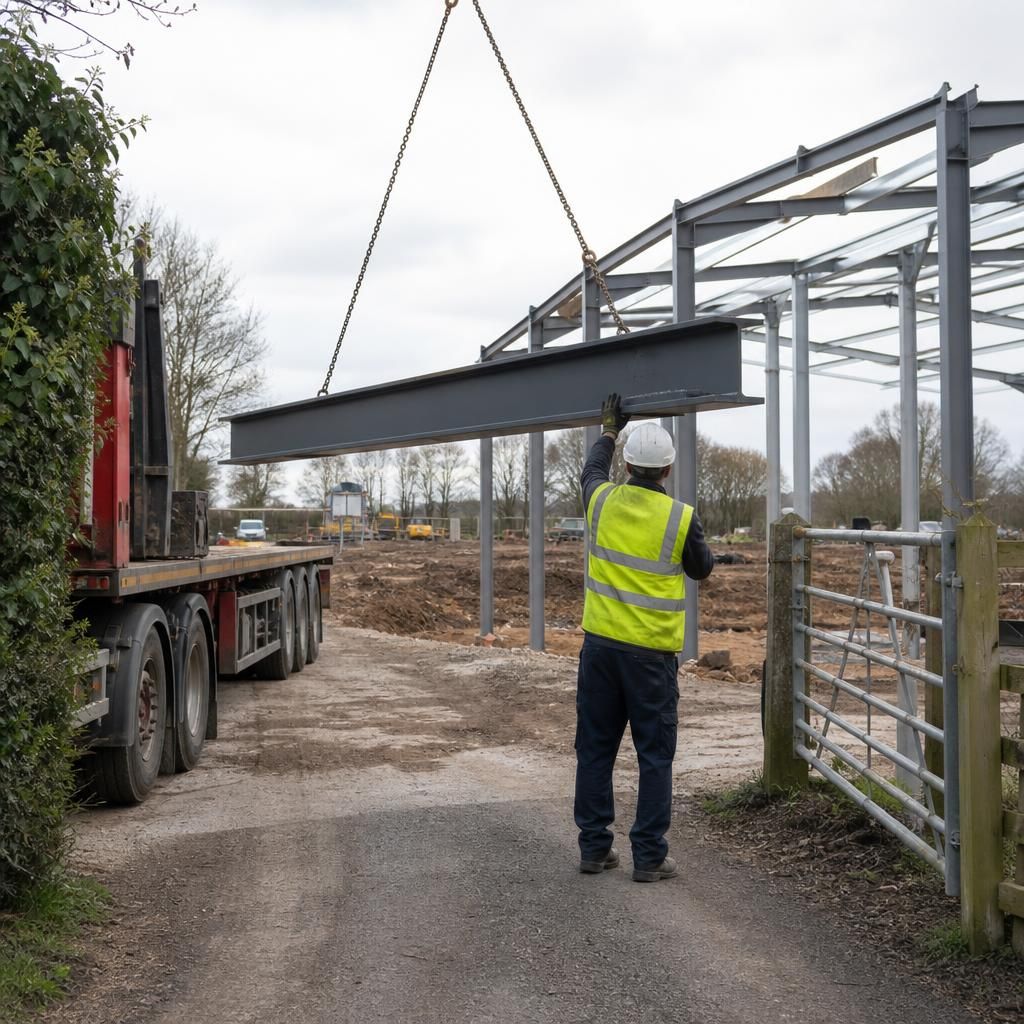
Access assumptions should be recorded clearly in the quotation. A structural steel beam price may be based on the expectation that the client provides a suitable unloading area, stable working surface or agreed lifting facilities. If those responsibilities are not defined, it may be unclear whether additional plant, ground protection, traffic management or handling is included in the steelwork package or remains a separate site cost.
For this reason, review the quotation for more than the beam dimensions and steel grade. Check how delivery, unloading, lifting equipment, temporary access measures and installation labour have been treated. A quotation that identifies these assumptions makes it easier to compare the true installed cost and reduces the risk of access-related items being overlooked during project planning.