
What should a steel erection quotation include?
A steel erection quotation should clearly set out the steel frame and associated materials, the drawings and specification used, the erection work included, and the assumptions made about site access and ground conditions. It should also identify plant and equipment charges, exclusions, taxes, payment terms, quotation validity and any items the client must provide before installation begins.
A steel erection quotation should be a defined commercial and technical record of the work being priced, not simply a single total. It should allow the client to identify the proposed scope, understand how the price has been calculated, and compare quotations on a like-for-like basis.
Project identification and document control
The quotation should identify the project, the building or frame being priced, the client, and the documents on which the price is based. Drawing numbers, revision letters, specifications and any schedules should be listed. This matters because a change between drawing revisions can affect steel quantities, connection details, access requirements and installation methods. A quotation referring only to “the supplied drawings” is difficult to verify if several versions are in circulation.
Technical description of the frame
Look for enough information to establish what is being erected. This may include the frame arrangement, bay layout, portal or truss configuration, columns, rafters, bracing, purlins, side rails, connection components and secondary steelwork. The quotation should make clear whether the structure has been priced as shown on the referenced design or whether allowances have been made for information that is not yet finalised.
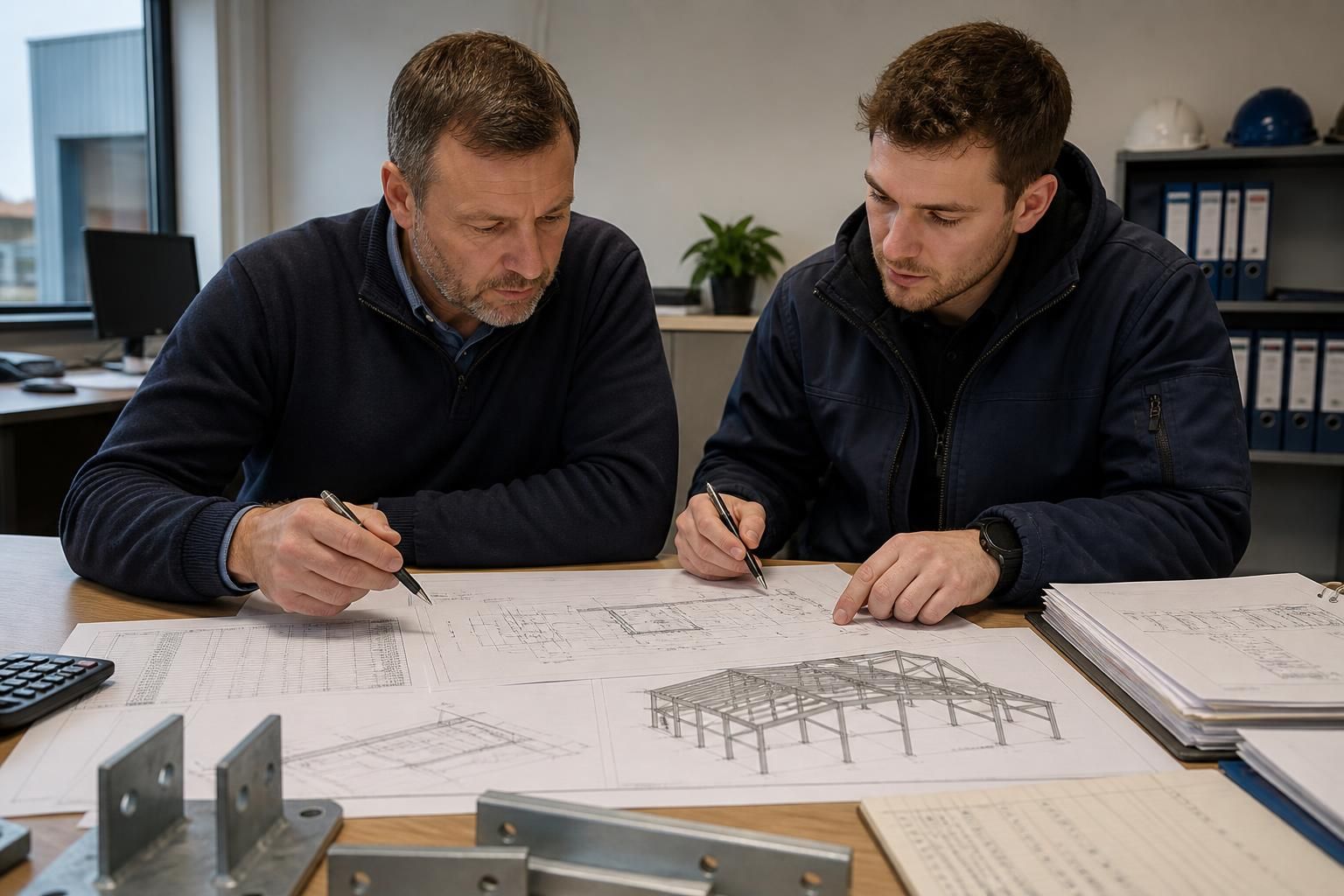
Where the project includes a bespoke design package, the quotation should distinguish between planning information and fabrication information. Planning elevation drawings explain the external arrangement, whereas isometric fabrication blueprints provide installation-relevant information about individual members and connections. The quotation should state which design deliverables are included and whether revised information could lead to a change in price.
Materials and associated components
The description should go beyond the phrase “steel frame”. It should identify the principal steelwork and state whether items such as bolts, cleats, base plates, bracing components, purlins, side rails, sheeting rails and other connection materials are included. If the building package also involves cladding, doors, rooflights, flashings, gutters, insulation or protective coatings, each item should be listed separately or expressly excluded.
For structural steelwork, the quotation should also refer to the relevant material specification, finish and treatment. If painting, galvanising, fire protection or other corrosion protection is required, the extent and finish should be stated rather than assumed. This prevents a low headline price from being based on a different level of protection to that required for the building’s use.
Definition of the erection service
The installation element should explain how the contractor’s responsibility ends. For example, it should clarify whether the price covers unloading, positioning, bolting, temporary stability measures, final alignment, tightening and completion checks. It should also identify whether the quotation is for a complete erection package or for specified installation activities only.
Interfaces with other parties deserve particular attention. The document can state who is responsible for supplying lifting information, providing setting-out details, completing foundations, installing cladding, connecting services and dealing with alterations requested after fabrication. Clear interfaces reduce the risk of two parties each assuming that the other has included the same task.
Plant, labour and installation assumptions
A useful quotation explains the basis on which labour and lifting operations have been priced. It may identify the type of lifting equipment required, the expected working area, delivery sequence, storage arrangements and any restrictions affecting assembly. It should also state whether specialist plant, traffic management, temporary works or additional lifting operations are separate items.
These details are important when comparing quotations. One contractor may include a complete lifting arrangement while another may price installation labour only and leave the client to arrange the crane and associated equipment. The difference may not be obvious from the total figure alone.
Exclusions, provisional items and variations
Read the exclusions alongside the included work. Common areas requiring clarification include foundation alterations, concrete repairs, temporary access works, removal of existing structures, unforeseen obstructions, survey work, design changes and work by other trades. A provisional item should describe what it relates to and how it will be valued if the final requirement becomes known.
The quotation should explain how variations are authorised and priced. Ideally, additional or omitted work is agreed in writing before it is carried out, with the effect on the contract sum identified. It should also distinguish a genuine change to the client’s requirements from work needed because the original quotation was incomplete.
Commercial information to check
In addition to the total, check whether the price is broken into meaningful stages or elements. A breakdown might separate design, fabrication, delivery, steelwork, ancillary materials, plant and erection. This makes it easier to understand what changes if the client alters the building or chooses to arrange part of the work independently.
The quotation should identify the contracting party, the basis of acceptance, payment milestones, any deposit or stage-payment requirements, and the documents that will form part of the agreement. It should also explain how cancellation, postponement, storage or remobilisation would be treated where those matters are relevant to the proposed arrangement.
Questions to ask before accepting
- Which drawing and specification revisions form the basis of the price?
- Is the quotation for a supply-and-erect package, an erection-only service or another defined arrangement?
- Which steel members, fixings, secondary components and protective finishes are included?
- Who provides the crane, lifting accessories, temporary works and other installation equipment?
- Which activities must be completed by the client or another contractor before erection can begin?
- How will design revisions, alterations and additional work be approved and valued?
- Are any parts of the price provisional, estimated or dependent on information still to be confirmed?
A sound quotation leaves little room for interpretation: it links the price to identifiable technical documents, separates the frame from ancillary work, defines the installation responsibilities and records the assumptions behind the proposal. If an important element is not expressly included, excluded or identified as provisional, it should be clarified in writing before the quotation is accepted.
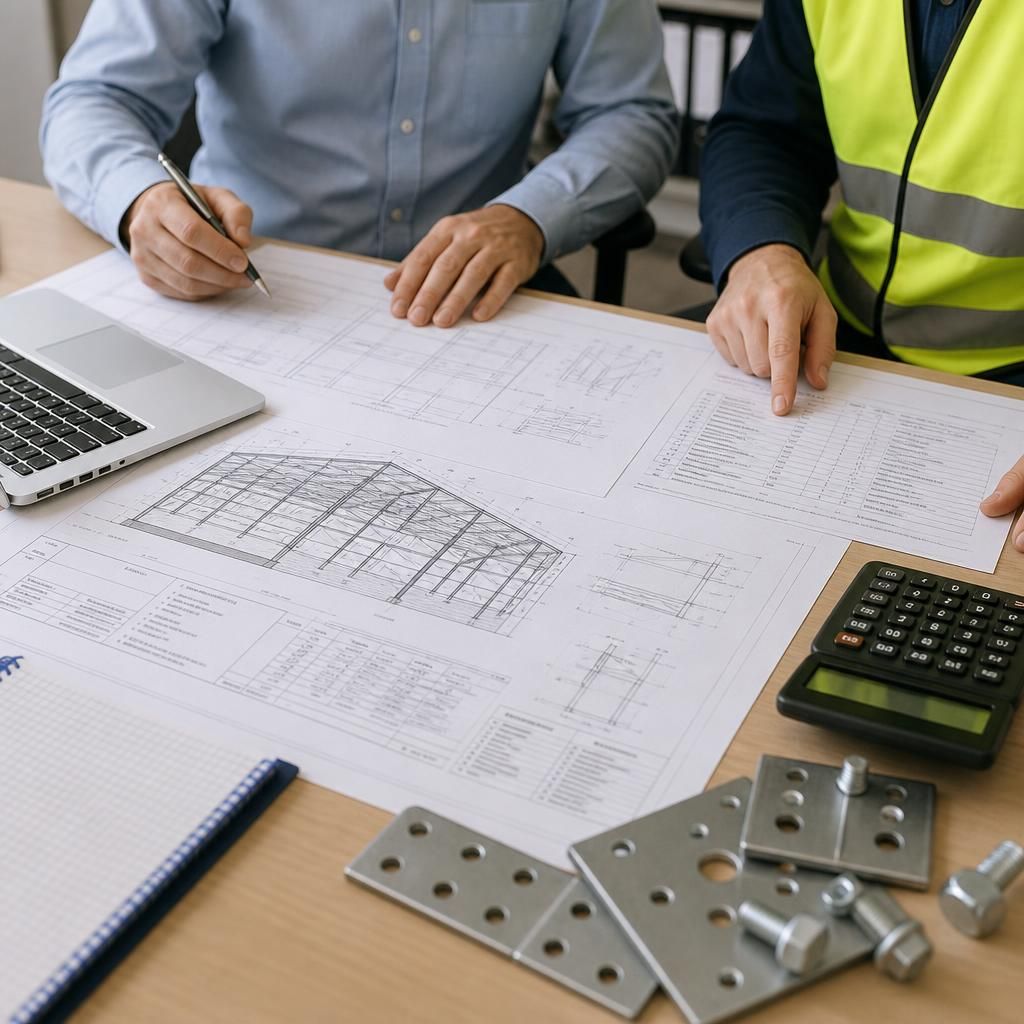
The quotation should state how long the offered price remains valid and whether tax is included or added separately. It should also identify any conditions that could affect the price during that period, such as outstanding design information or a requirement for the client to confirm a particular specification.
This information helps distinguish a firm quoted price from an indicative estimate. Before accepting, check that the total, tax treatment, validity period and acceptance requirements are clear, and ask for any ambiguity to be confirmed in the quotation rather than relying on a verbal explanation.