
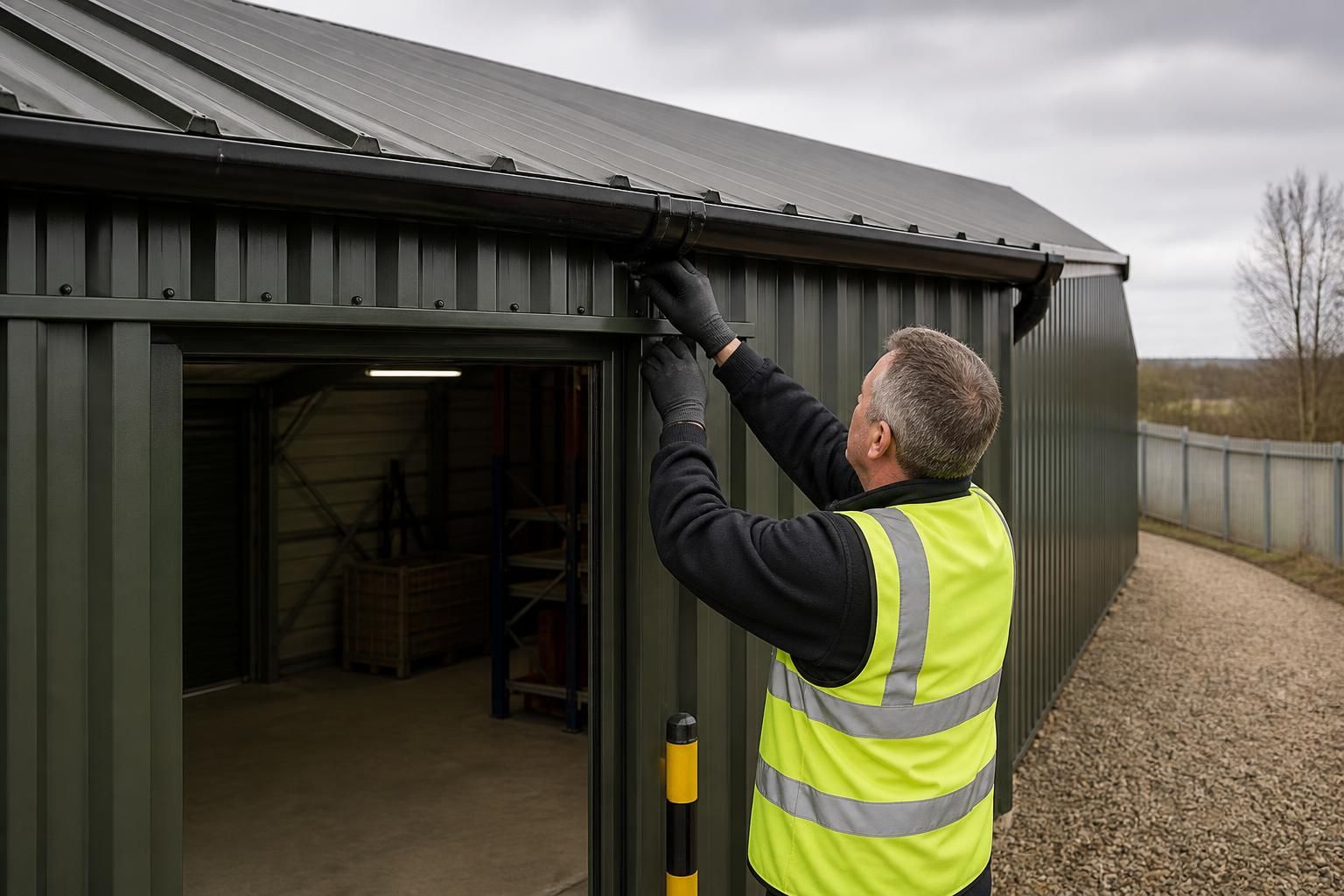
How should a secure metal storage shed be maintained?
A secure metal storage shed should be maintained through regular inspections of its steel frame, protective finishes, roof, doors, locks and fixings. Remove dirt and standing water, treat any surface rust promptly, keep drainage routes clear, and repair damage before it affects weather resistance or security.
A secure metal storage shed should be maintained through a documented preventative maintenance routine that covers the building’s structure, internal environment, security controls, services and surrounding area. The aim is to preserve safe use, prevent small defects from becoming structural or security problems, and ensure that stored goods remain suitable for the conditions inside the shed.
Set an inspection schedule. The frequency should reflect the shed’s exposure, usage and contents. A building in a coastal, industrial or heavily trafficked location may need closer monitoring than one in a sheltered setting. Keep a maintenance record noting the date, findings, photographs and any remedial work. This provides a useful history and helps identify recurring movement, moisture or access problems.
- Check that the building remains level and stable, with no unusual distortion, movement or separation at structural connections.
- Look for changes around joints, corners, roof edges and areas where different materials meet.
- Confirm that stored items have not been stacked against structural members, walls or door leaves in a way that causes impact or restricts safe access.
- Review the condition of safety notices, emergency information and any site controls that apply to the building.
Control the internal environment. Metal buildings can experience condensation when warm, moisture-laden air meets colder steel surfaces. Improve air movement where the design permits, avoid bringing wet materials inside, and do not store goods directly against external walls where this prevents circulation. Items that are sensitive to moisture should be raised from the floor on suitable pallets or racking, while combustible materials should be kept away from heat sources and electrical equipment.
Storage arrangements also affect security. Keep valuable goods in an orderly layout so that stock can be checked without moving large quantities. Maintain clear routes to exits and access points, avoid creating concealed spaces that cannot be inspected, and use racking only within its rated capacity. Any change in the type, weight or height of stored materials should be considered before the layout is altered.
Maintain security controls as a system. Check that authorised users can identify the correct access procedure and that keys, codes, fobs or other credentials are controlled. Remove access permissions when personnel or contractors no longer require them, and investigate unexplained marks, damaged components or evidence of attempted entry. If cameras, alarms or lighting form part of the security arrangement, test them in line with their instructions and make sure their power and communications connections remain protected.
Manage electrical and fire risks. Electrical installations, sockets, lighting and portable equipment should be kept in good condition, with damaged cables or enclosures taken out of use until assessed by a competent person. Do not use the shed for unsuitable charging, heating or hot-work activities without the necessary controls. Keep fire-fighting equipment accessible, maintain clear escape routes, and store fuels, gases or chemicals in accordance with their safety data and site procedures.
Cleaning should be carried out using methods compatible with the building’s protective system and stored contents. Avoid abrasive tools or chemicals that could damage coatings, seals or adjacent materials. Remove accumulations that retain moisture, harbour pests or obstruct inspection, and arrange specialist assessment where a defect affects the structure, electrical installation, fire safety or resistance to forced entry. Prompt professional advice is particularly important if movement, repeated moisture ingress or unexplained security failure is found.
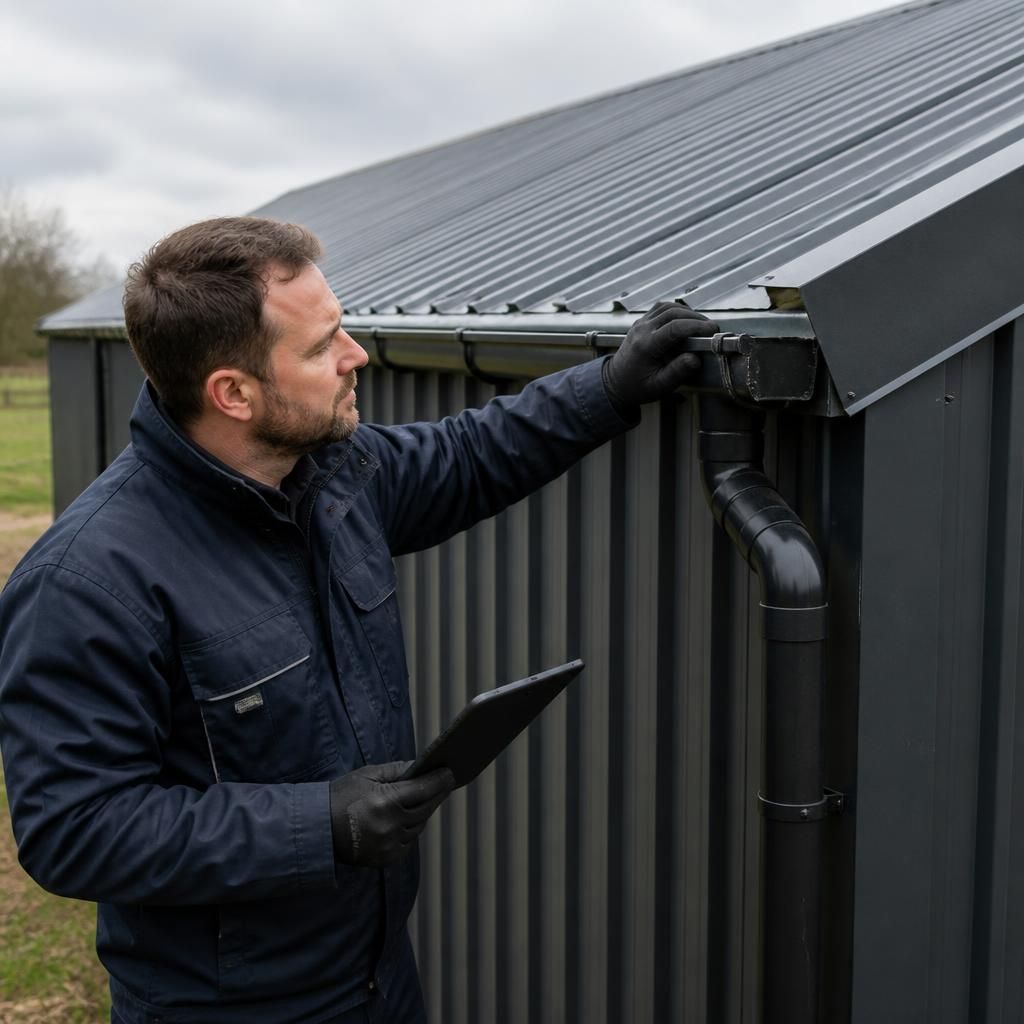
Maintaining the area around a secure metal storage shed is important because vegetation, soil and surface water can conceal damage and keep the lower sections of the building damp. Keep soil, mulch and stored materials below the wall cladding and avoid building up ground levels against the base of the shed. This helps prevent persistent moisture at the steel-to-ground interface and makes the lower frame easier to inspect.
- Cut back vegetation so it does not touch the walls, roof or access points.
- Remove leaves, mud and debris from the perimeter before they retain moisture against the cladding.
- Check for animal burrows, displaced edging or ground settlement that could affect access or drainage.
- Keep the route around the shed sufficiently clear for safe inspection and maintenance.
After storms, vehicle impact or nearby groundworks, inspect the perimeter for dents, displaced panels and newly exposed steel. Deal with the cause of any recurring dampness or ground movement rather than repeatedly treating the visible symptom.