
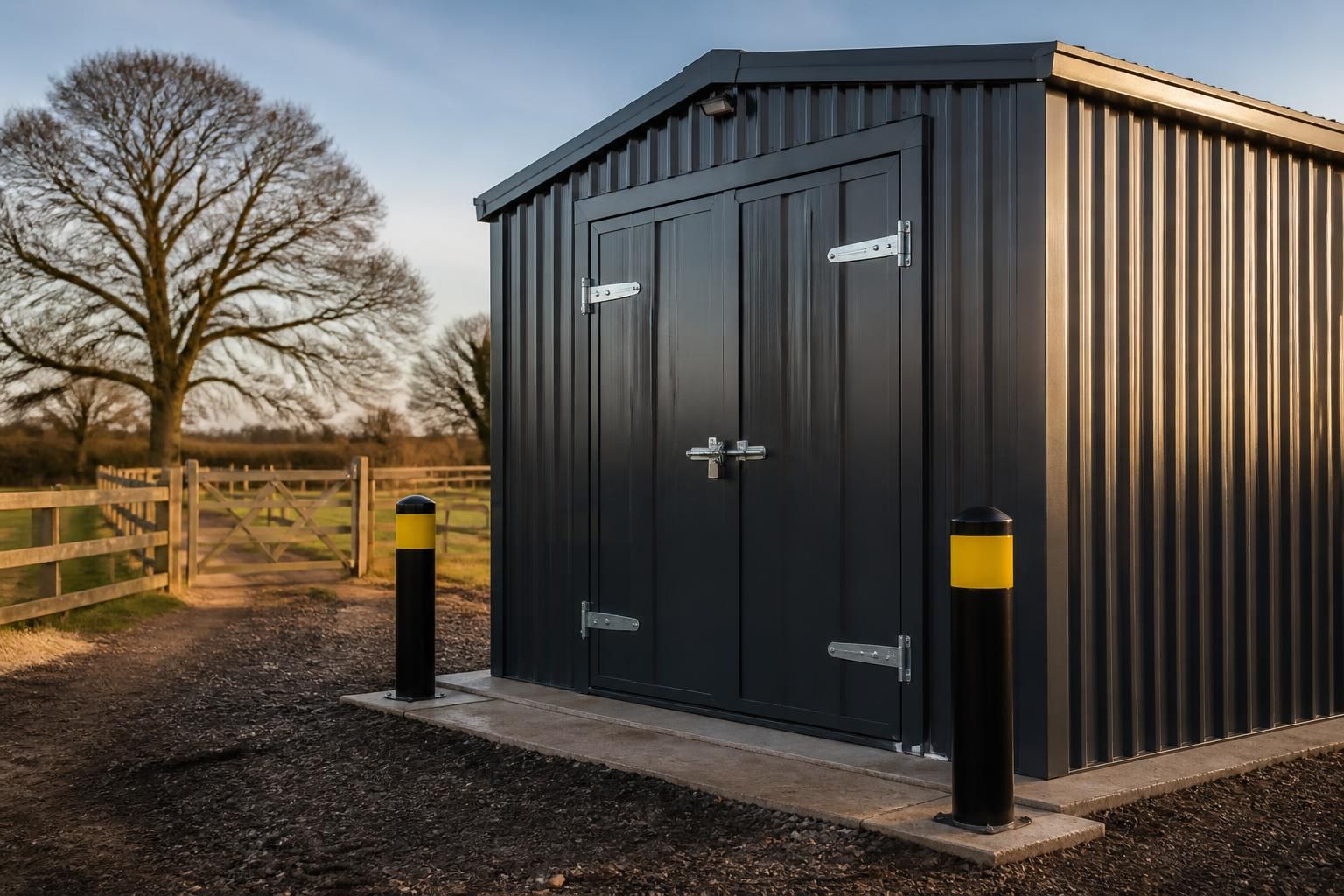
What security features should a secure metal storage shed include?
A secure metal storage shed should include a robust external door, tamper-resistant locking hardware, reinforced hinges and a strong steel frame fixed to a suitable foundation. Security can be strengthened with controlled access, protected openings, suitable lighting and an alarm or monitored system where the stored contents justify it.
A secure metal storage shed needs a layered security specification: the building should deter unauthorised entry, delay a determined attempt, detect interference and support a clear response. The right combination depends on what is stored, the site layout, the likely method of attack and whether people need regular access.
Start with a site-security assessment. Positioning affects security as much as the building specification. Avoid creating concealed approaches behind large structures, dense planting or stored materials. Where possible, orientate the building so access points are visible from occupied areas, provide a clear perimeter and restrict vehicle approach to authorised routes. A firm, well-drained approach also reduces the risk of gates, access controls or surveillance equipment being undermined by poor ground conditions.
Control the surrounding area. Perimeter fencing, lockable gates and appropriate external lighting can establish a controlled zone around the shed rather than relying on the building alone. Lighting should reduce shadows at access points without creating glare that prevents cameras from producing useful images. Its controls should be reviewed carefully where the site contains livestock, machinery or neighbouring properties, and any electrical installation should be designed and fitted by a suitably competent person.
Minimise and protect openings. Windows, rooflights, personnel doors, service penetrations and ventilation openings can weaken an otherwise robust enclosure. Use only the openings required for the building’s purpose, and specify security grilles, internal guards or tamper-resistant covers where appropriate. Openings should still provide the ventilation and safe escape arrangements required for the intended use. Cables and pipes should enter through protected routes, with gaps sealed against removal of the surrounding material.
Use monitored detection where the contents justify it. A security system may combine door-position sensors, movement detection, vibration or shock sensors and camera verification. Detection zones should be planned around the internal layout so that normal movement, stored equipment and environmental conditions do not create unnecessary alerts. An alarm is most useful when responsibility for receiving and acting on an alert is clear. Systems should therefore be integrated with the site’s access procedures and tested according to the manufacturer’s instructions.
Consider access control rather than shared keys. For several users, an individually issued access credential creates better accountability than a key passed between staff or contractors. Depending on the risk, this could involve a coded entry system, proximity credentials or a managed key register. Remove permissions promptly when someone no longer needs access, review records periodically and keep emergency access arrangements documented. Access control must not obstruct escape or create hazards during a fire or other emergency.
Protect high-value contents inside the building. Security can be improved by separating tools, fuel, chemicals, spares or sensitive equipment into defined storage zones. Lockable internal cabinets, cages or anchor points can prevent an intruder who reaches the main space from removing everything quickly. Heavy items may be secured to suitable structural or purpose-designed fixing points, subject to the building design and the manufacturer’s guidance. Flammable or hazardous materials require separate consideration under relevant storage and fire-safety requirements.
Maintain evidence and accountability. Keep an inventory with identifying details, photographs and records of ownership for valuable equipment. Asset marking can make items easier to identify and may deter resale, while a simple issue-and-return process shows who has custody of shared tools. Avoid displaying the value or type of contents through external signage or careless storage around the building.
Design for inspection and future changes. Security features should remain accessible for testing, cleaning and repair without creating an obvious weak point. Review the arrangement when the stored contents change, more users are added, machinery alters internal sightlines or the surrounding site is redeveloped. A bespoke design package can record the intended layout, opening positions and relevant security details so that later alterations do not accidentally compromise the enclosure.
For most agricultural and industrial applications, the most effective approach is a documented combination of physical delay, controlled access, detection, sensible site planning and disciplined storage procedures. The specification should be proportionate to the value and risk of the contents, while also satisfying structural, fire, electrical, ventilation and workplace-safety requirements.
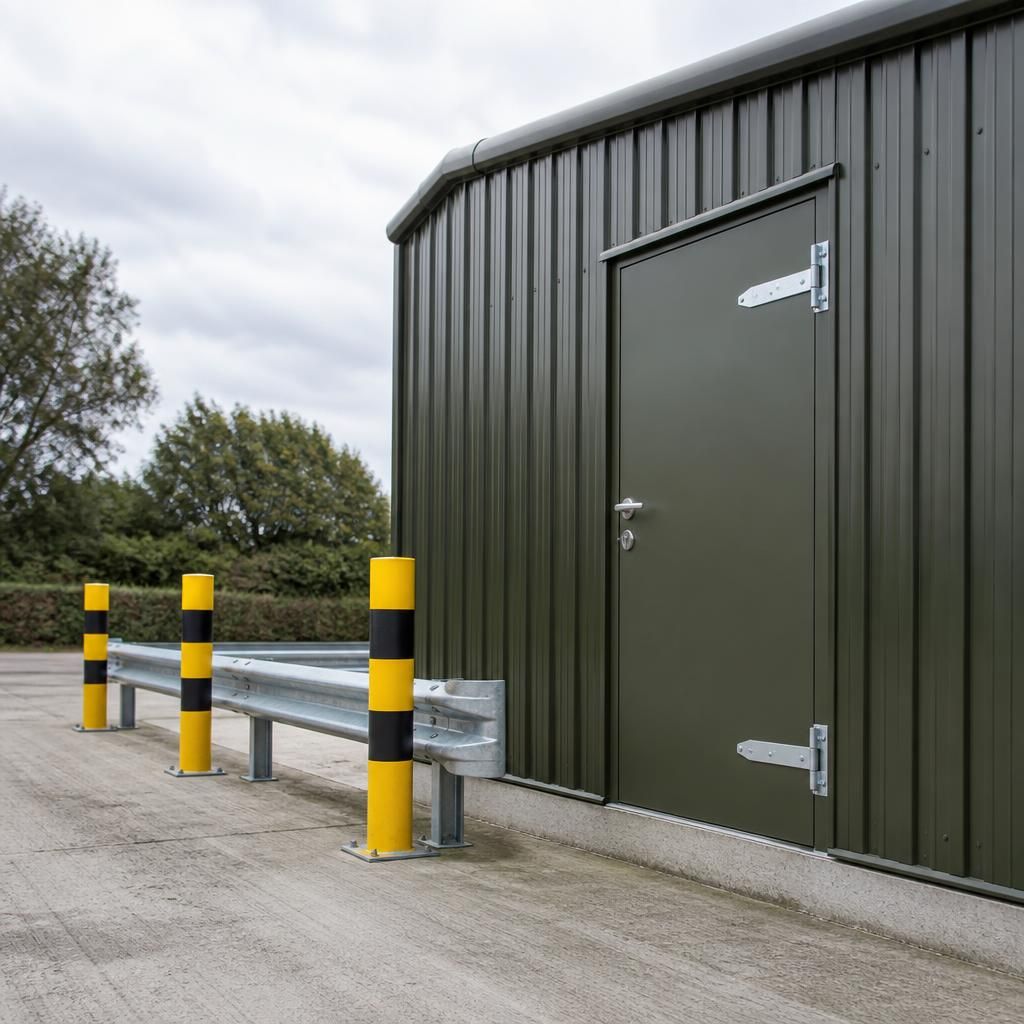
Vehicle impact protection is an important security feature for storage sheds on agricultural and industrial sites. A machine or vehicle striking a door, corner or wall can create an opening even when the building’s locks and steelwork are robust. Where vehicle movements take place nearby, consider fixed bollards, guard rails or a suitable protective barrier around vulnerable elevations.
Protection should be positioned far enough from the shed to absorb or redirect an impact without obstructing doors, emergency access or routine loading. Its design should reflect the vehicles and machinery operating on the site, including their turning paths and working clearances. Marking the protected route clearly and keeping it free from stored materials also reduces the likelihood of accidental collision.