
What ventilation does a secure metal storage shed need?
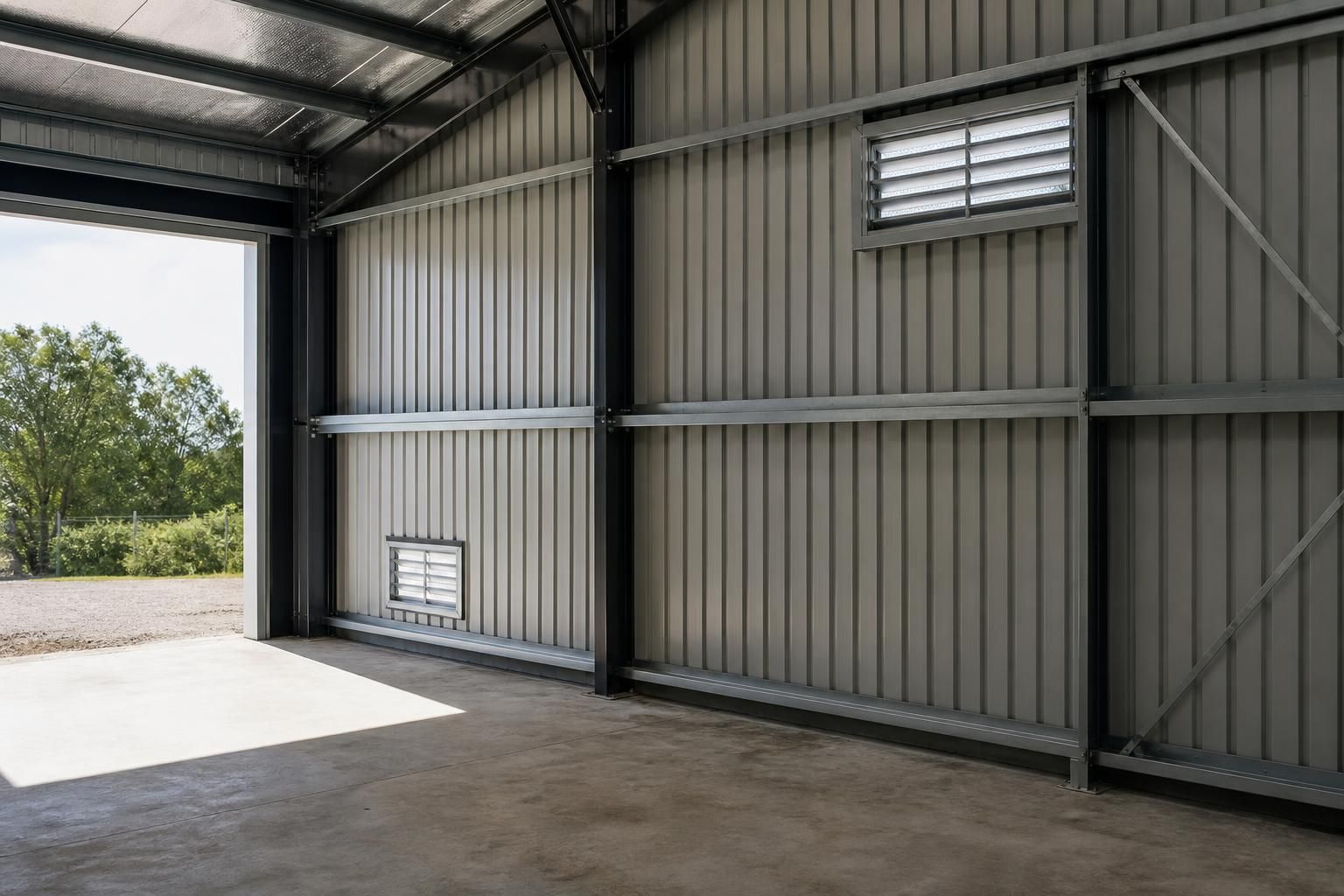
A secure metal storage shed needs controlled ventilation to reduce condensation, maintain airflow and protect stored goods from damp-related damage. A typical arrangement combines high-level and low-level louvred vents, positioned on opposite sides where possible, with insect mesh and security features that prevent unauthorised access.
Ventilation for a secure metal storage shed should be designed around the building’s use, the moisture it contains and the conditions needed to protect its contents. The correct approach is not simply to add openings; it is to provide a controlled route for air movement while preventing rain penetration, pest entry and avoidable security weaknesses.
Start with the source of moisture. Condensation forms when moist air meets a colder surface, such as an uninsulated steel panel, roof sheet or stored item. Moisture may enter with wet machinery, vehicles, timber, pallets or packaging. It can also rise from an unfinished or damp floor. A shed used for dry, inert goods has different ventilation requirements from one regularly used to store wet agricultural equipment.
Ventilation should therefore be considered alongside the floor, roof and wall specification. A properly prepared foundation helps limit moisture rising from the ground, while insulation and suitable vapour-control layers reduce the temperature difference that causes surface condensation. Ventilation cannot compensate for persistent water ingress, leaks or a damp floor, so these issues should be addressed at the design stage rather than relying on greater airflow later.
Natural ventilation is often suitable for general storage. It uses pressure and temperature differences to move air through fixed vents, with the opening area and position selected for the building’s size and intended use. Airflow is affected by the shed’s orientation, surrounding buildings, prevailing wind, roof shape and internal obstructions. Racking, stacked goods and partitioned areas can restrict circulation even when the external vents are correctly specified.
For a larger shed or one containing moisture-producing equipment, the designer may need to assess whether natural airflow is sufficient. Mechanical extraction can be considered where passive ventilation cannot remove moisture reliably. A powered system should have a defined intake and discharge route, suitable controls and an electrical installation appropriate to the environment. Extracting air without allowing replacement air to enter can create poor performance, excessive negative pressure and unintended routes for dust or damp air.
The required ventilation level depends on the contents and use:
- Dry packaged goods generally need protection from condensation and stagnant air, rather than strong continuous air movement.
- Machinery brought into the shed while wet may require additional drying time and more effective moisture removal.
- Timber, paper, textiles and some building materials can absorb moisture, so humidity control may be more important than simply increasing airflow.
- Fuels, chemicals, batteries or other hazardous materials may require separate storage provisions and specialist ventilation based on the substance involved.
- Dust-producing agricultural or industrial activities may need designed extraction and filtration, not ordinary storage-shed ventilation.
Vent openings should be selected for their environment as well as their airflow performance. Weather-resistant louvres, drip details and correctly positioned openings help limit wind-driven rain. In exposed locations, the design may need additional protection against blowing rain and snow. Openings should also be accessible for inspection and cleaning without requiring stored goods or fixed equipment to be moved.
Internal air circulation matters too. Keeping goods clear of external walls and allowing space around large items helps prevent cold pockets where damp air can settle. Storing materials directly against wall or roof sheets can trap moisture and conceal early signs of corrosion. Pallets, shelving and machinery should be arranged so that ventilation paths are not blocked, particularly around corners and beneath roof spaces.
Security and ventilation need to be coordinated from the outset. Any grille, fan housing or duct termination forms part of the building envelope and should not create an easy point of attack. Robust assemblies, tamper-resistant fixings and an arrangement that avoids exposing internal access points should be considered within the overall security design. Ventilation components must also remain serviceable; a permanently sealed or obstructed opening is not an effective provision.
During use, condensation should be monitored rather than judged only by the apparent freshness of the air. Signs of a problem include droplets on steelwork, damp patches, musty odours, surface rust, softened packaging and repeated moisture on stored equipment. If these appear, check for roof or wall leaks, ground moisture, blocked vents, overloaded storage areas and wet items being brought inside. Increasing ventilation alone may not solve the issue if the main source is water ingress or inadequate insulation.
For a bespoke building, the ventilation design should be reviewed with the intended storage layout, local exposure and contents before fabrication. This allows vents, ducts, insulation, roof details and internal clearances to be coordinated rather than added as an afterthought. The final arrangement should also be checked against any requirements applying to the materials stored and the building’s intended use.
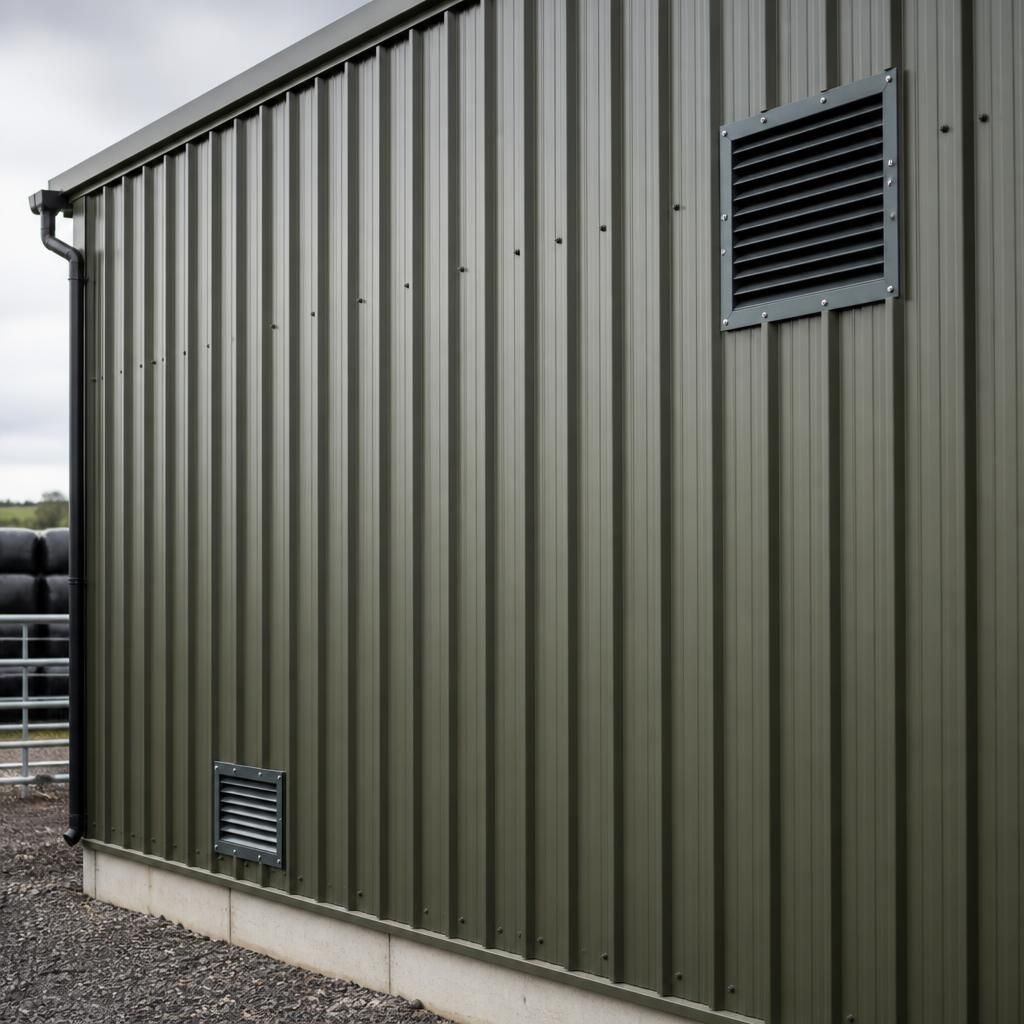
The useful ventilation area of a louvred vent is its free opening after the blades, mesh and protective grille have been taken into account, not the outside dimensions of the frame. These components can significantly restrict airflow, so the specification should identify the effective free area and the resistance created by the complete assembly.
Ventilation performance also depends on keeping the air path clear after installation. Check that mesh has not become blocked by dust or debris and that stored items, racking or later partitions do not obstruct the intended route between intake and exhaust openings. This is particularly important in agricultural and industrial storage buildings, where airborne dust can reduce the effective opening over time.