
How should steel construction materials be protected during storage and handling?
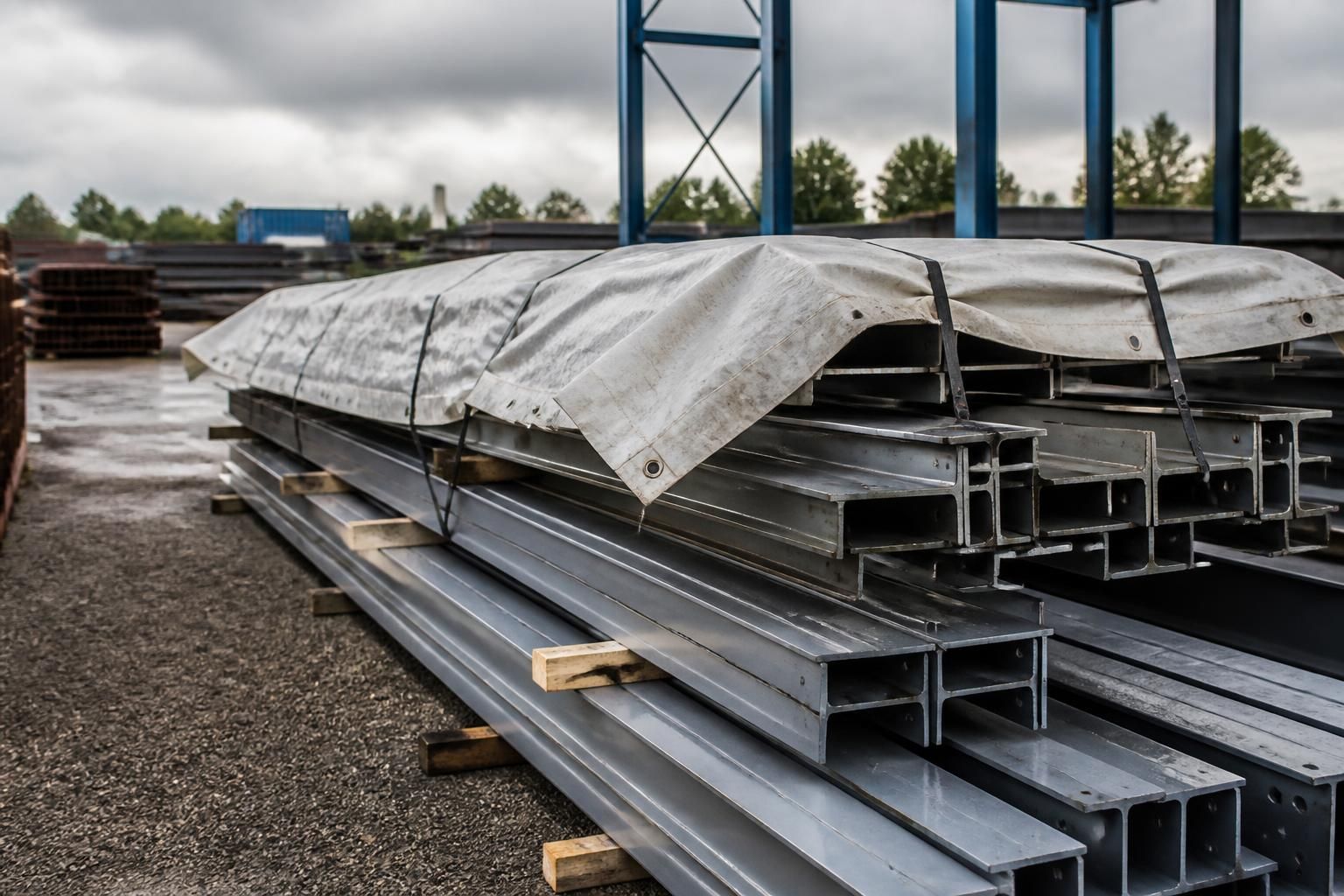
Protect steel construction materials by keeping them raised off the ground, dry and well ventilated, with suitable covers that allow moisture to escape. Handle, stack and secure each item carefully to prevent distortion, impact damage, contamination and surface corrosion before installation.
Steel construction materials are best protected through a planned process covering identification, surface condition, lifting, storage, inspection and preparation for installation. The aim is to preserve the specified steel grade, dimensions, protective finish and connection details, while preventing damage that could affect fabrication, structural performance or the construction programme.
Protection should begin when materials arrive on site. Check the delivery against the packing list, fabrication drawings and purchase specifications before unloading. Record section sizes, plate thicknesses, quantities and any visible damage, and keep material identification marks legible. If steel is separated from its documentation, it may be difficult to confirm its grade or intended position later. Do not remove tags, paint marks or bundle references until the relevant items have been installed or otherwise verified.
- Inspect for dents, bends, twisted sections, damaged edges, coating failure, rust staining and contamination.
- Photograph significant defects and record them against the bundle or piece mark.
- Separate questionable items so they are not incorporated into the frame by mistake.
- Refer distorted structural members or damaged connection areas for technical assessment rather than attempting unapproved repairs.
Unloading is a common point of avoidable damage. Use lifting equipment suitable for the item’s weight, length and shape, and position lifting points to prevent excessive bending. Slings, spreader beams or other approved lifting accessories should be selected according to the load and protected against sharp edges. Do not drag sections across one another or use lifting methods that can score flanges, deform webs or damage painted and galvanised surfaces. Personnel should remain clear of suspended loads, with a controlled route from the delivery vehicle to the storage area.
Store different materials in a logical sequence so that commonly required items can be retrieved without repeatedly moving other bundles. Separate primary steelwork, secondary members, plates, loose fittings and connection components. Keep smaller parts in labelled containers, and protect bolts, washers and other precision items from dirt, moisture and loss. Components with similar appearances but different grades, coatings or dimensions should not be mixed.
Storage supports should be positioned to avoid localised stress and should not obstruct access for inspection or lifting. Long members may require several supports to prevent permanent sagging, while thinner sections and plates need arrangements that minimise edge damage and distortion. Do not place heavy bundles on top of lighter or easily deformed components. Maintain clear access around stored materials so that inspections, safe lifting and emergency movement remain possible.
Steel protection also depends on the material’s intended finish. Bare carbon steel, pre-painted steel, galvanised components and items with a temporary shop primer have different maintenance requirements. Confirm the coating specification before cleaning, touching up or applying further products. Abrasive cleaning, incompatible paint systems or contamination with oil and cement can prevent later coatings from bonding properly. Coating repairs should follow the project specification, including requirements for surface preparation, compatible products and curing conditions.
Keep harmful contaminants away from prepared steel. Cement residue, lime, salts, chemicals, cutting fluids and wet timber can mark or attack surfaces, while metal filings from nearby fabrication can create rust spots. Remove contamination using a method suitable for the coating and steel finish. Do not use aggressive tools that gouge the surface or remove corrosion protection unnecessarily.
Handling should be coordinated with the erection sequence. Review piece marks and orientation before moving a member, and use the approved lifting points or temporary attachments identified by the responsible engineer. Avoid levering against finished edges, connection plates or bracing components. If a member has been bent, has damaged bolt holes or shows cracking around a weld, quarantine it for inspection; heating, straightening, drilling or welding on site can change the steel’s properties or invalidate the design unless formally authorised.
Regular inspections are necessary during extended storage and after severe weather or other site events. Look for new corrosion, coating damage, standing contamination, displaced supports, impact marks and missing identification. Check that stored components remain stable and that access routes have not been blocked. Any deterioration should be assessed promptly so that cleaning, repair or replacement can be planned before the item reaches the installation stage.
Before installation, confirm that each component is clean, identifiable and in the condition required by the drawings and specification. Remove temporary protection only when it is no longer needed, and protect finished surfaces during subsequent lifting and erection. A documented system for delivery checks, storage locations, inspections, defects and remedial work gives the project team traceability and reduces the risk of unsuitable steel being incorporated into the structure.
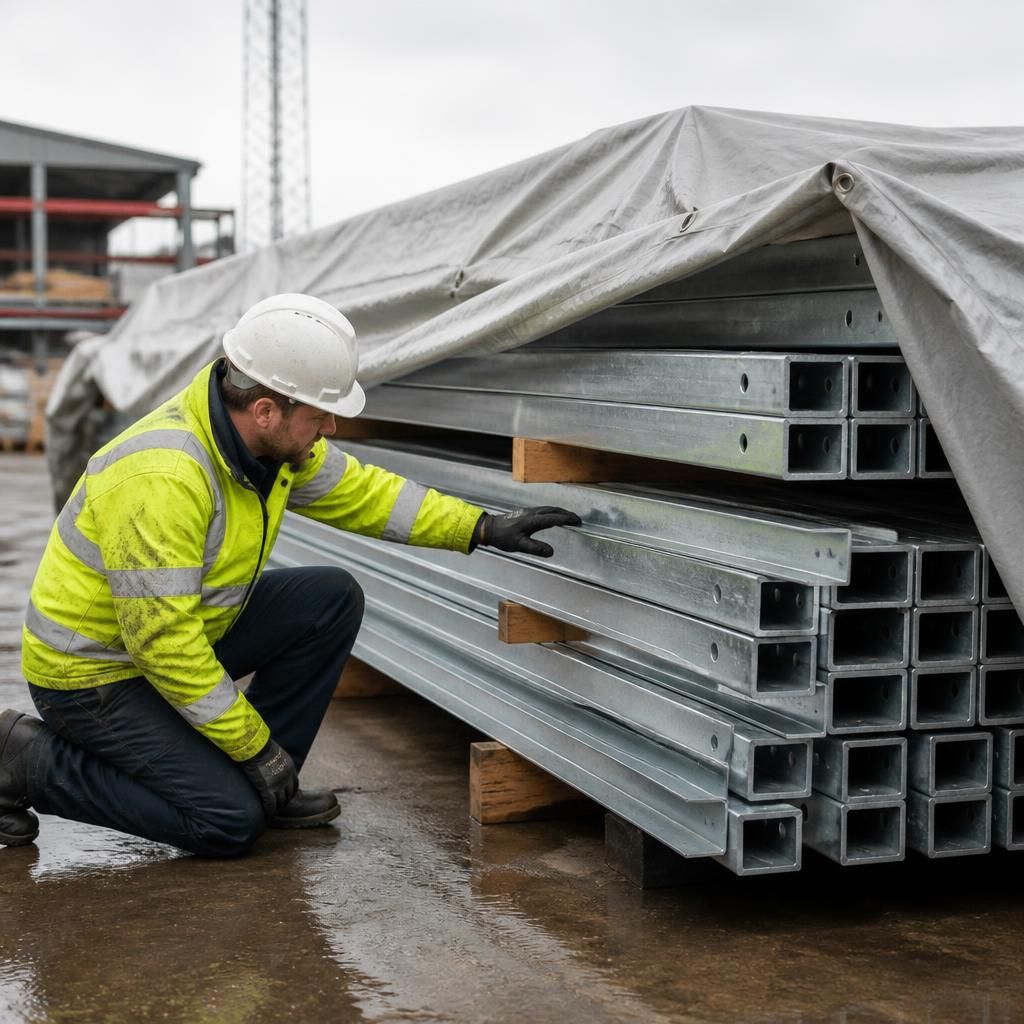
Hollow steel sections require specific protection because water can collect inside tubes, box sections and closed profiles where it is difficult to see or remove. Store these components with a slight fall so rainwater can drain, keep open ends clear where the design permits, and avoid sealing in moisture with temporary caps or wrapping. Before installation, inspect internal spaces and drain or dry any trapped water, particularly after wet weather.
Do not drill drainage holes, weld temporary closures or alter a section to deal with stored water unless the responsible designer has approved the measure. Water retained inside a closed profile can promote internal corrosion and may also add unexpected weight during lifting. Where sections are supplied with specified end protection, retain it only when it does not prevent drainage and follow the project requirements for its removal.