
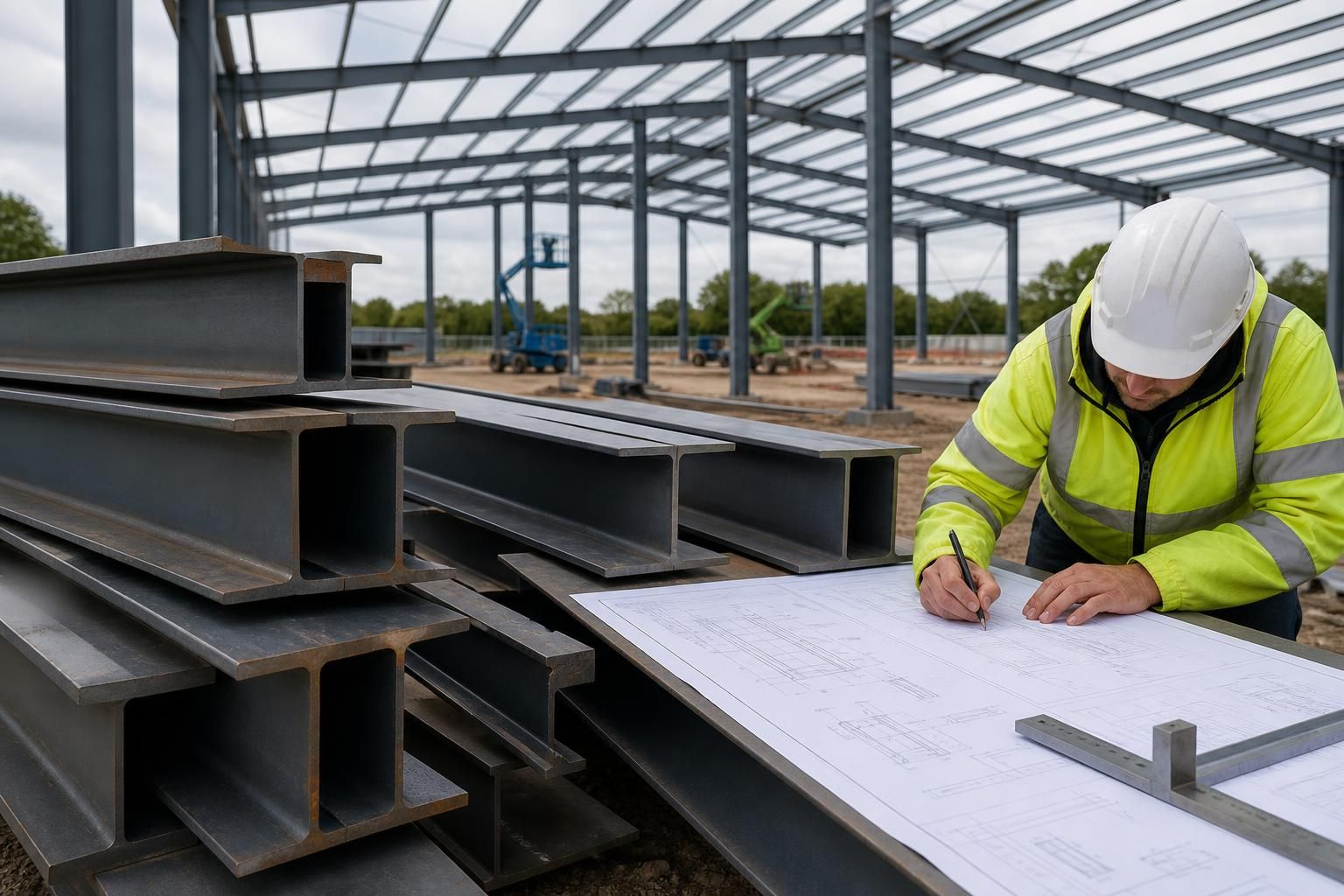
Which steel grades are suitable for building construction?
S275 and S355 are widely suitable structural steel grades for building construction, with S355 offering higher yield strength than S275 and potentially allowing more efficient member sizing. The appropriate grade depends on the structural design, applied loads, span, exposure conditions, connection details and project cost, and should be specified by a qualified structural engineer.
Suitable steel grades for building construction are selected according to the required strength, toughness, weldability, section size and service environment. In conventional structural work, S235, S275 and S355 are the principal grades considered, while higher-strength grades such as S460 may be appropriate for specific engineered applications. The grade should be stated on the structural drawings and specification rather than selected solely on the basis of availability or nominal strength.
Understanding the grade designation
The letter S denotes structural steel. The number that follows indicates the grade’s nominal minimum yield strength for the relevant product thickness range, expressed in megapascals. As thickness increases, the available yield strength can reduce, so the value associated with a grade should always be checked against the manufacturer’s material standard and the actual thickness being specified.
The additional designations JR, J0 and J2 describe impact toughness requirements at different test temperatures. These subgrades help establish how the steel behaves under sudden loading and colder service conditions. A tougher subgrade can be important for exposed structures, structures subject to dynamic effects, and projects where low-temperature performance is a design consideration.
Common structural grades
- S235 is a lower-strength structural grade that can be suitable for lightly loaded components, secondary steelwork and applications where member sizes are not governed by strength. Its use still requires checks for buckling, deflection, connection capacity and durability.
- S275 is widely used for general structural steelwork. It can suit columns, beams, frames, plates and fabricated components where the design loads and member dimensions do not justify a higher-strength grade.
- S355 is frequently specified where additional resistance is needed, including heavily loaded frames, longer spans, substantial connections or situations where reducing the size or weight of a member may be beneficial. The resulting design must still satisfy stiffness, stability, fabrication and connection requirements.
- S460 and other higher-strength steels can reduce the amount of steel required in some designs, but they are not automatically the most economical option. Fabrication procedures, welding controls, availability, detailing and connection design may be more demanding.
Higher yield strength does not remove the need to check serviceability. A stronger beam may resist a design load but still be too flexible, prone to vibration or vulnerable to lateral-torsional buckling. For this reason, a lower grade with a larger or differently arranged section can sometimes be more suitable than a higher grade.
Weldability and fabrication
Grade selection must account for the proposed fabrication process. Carbon equivalent values, plate thickness, joint restraint, preheating and heat input can affect the risk of hydrogen cracking and the welding procedure required. Higher-strength steels may need tighter control of consumables and welding parameters. The steel grade, product thickness and welding requirements should therefore be considered together, particularly for heavily welded connections and thick plates.
Structural products also need to comply with the relevant product standard. Hot-rolled sections and plates are commonly specified to the appropriate parts of the EN 10025 series, while structural hollow sections may be covered by separate standards such as EN 10210 or EN 10219. The specification should identify the product form, grade, subgrade, thickness range and any supplementary requirements, rather than giving only a general description such as “structural steel”.
Exposure and durability
Steel grade and corrosion protection are related but separate decisions. S275 or S355 does not, by itself, make a structure corrosion resistant. The design may require a suitable paint system, galvanizing, weathering steel or another protection strategy based on moisture, pollutants, internal conditions and maintenance access. Weathering grades, where appropriate, depend on the exposure and detailing being suitable for the formation of a stable protective surface; they are not a universal substitute for a coating system.
For buildings in cold or demanding environments, impact toughness may be more significant than a simple comparison of yield strengths. The engineer may specify a particular subgrade, testing requirement or through-thickness quality to reduce the risk of brittle fracture or lamellar tearing. These requirements are especially relevant around restrained welded joints, thick plates and complex connection details.
Other steel types
Reinforcing steel for concrete, stainless steel and cold-formed thin-gauge sections are covered by different material specifications and design considerations. They should not be treated as interchangeable with hot-rolled carbon structural steel. Stainless steel may be selected for aggressive or appearance-critical environments, but its higher material cost and different mechanical and fabrication characteristics require a separate design approach.
How to specify the appropriate grade
- Identify the structural members, product forms and thicknesses required.
- Check the design resistance, deflection, buckling and connection requirements.
- Establish the required toughness subgrade and any special quality requirements.
- Confirm welding, cutting, forming and fabrication constraints.
- Choose the corrosion protection system separately, based on the exposure category and intended maintenance arrangements.
- Require material documentation that confirms the supplied product matches the specified grade and standard.
For most building projects, S235, S275 and S355 provide a practical range of structural options. The final choice should be recorded by the structural engineer in the design and fabrication documentation, with the grade, subgrade, product standard and thickness requirements clearly identified for procurement and inspection.
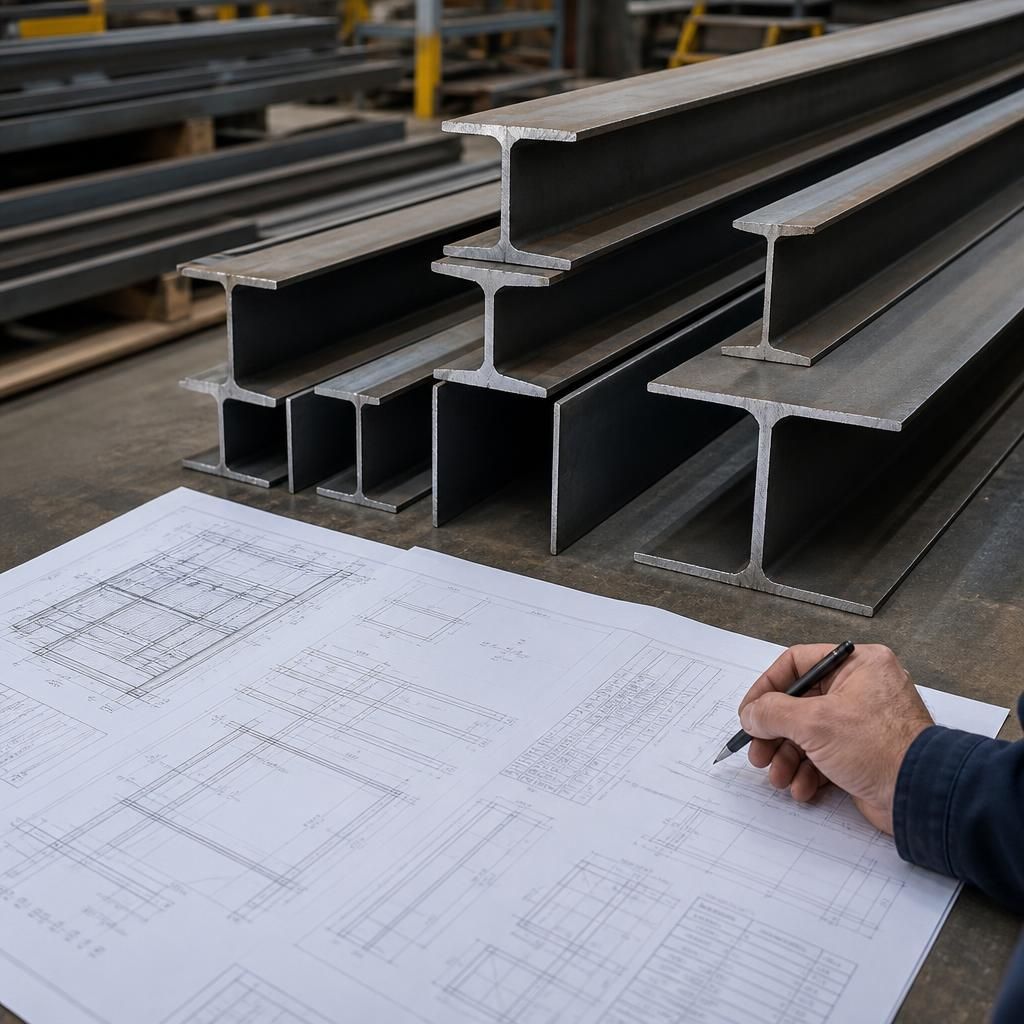
Different steel grades can be used within the same building where the structural design supports that approach. For example, primary frames may require a higher-strength grade while lightly loaded secondary members use a lower grade. Each member and connection must be identified clearly in the drawings, with fabrication records and site installation checks preventing grades from being mixed or substituted.
Using more than one grade can be practical, but it adds coordination requirements. The engineer must account for the strength of connected components, bolt or weld design, and the sequence in which the steelwork is fabricated and assembled. A single grade throughout may therefore be preferable where it simplifies detailing, procurement and quality control.