
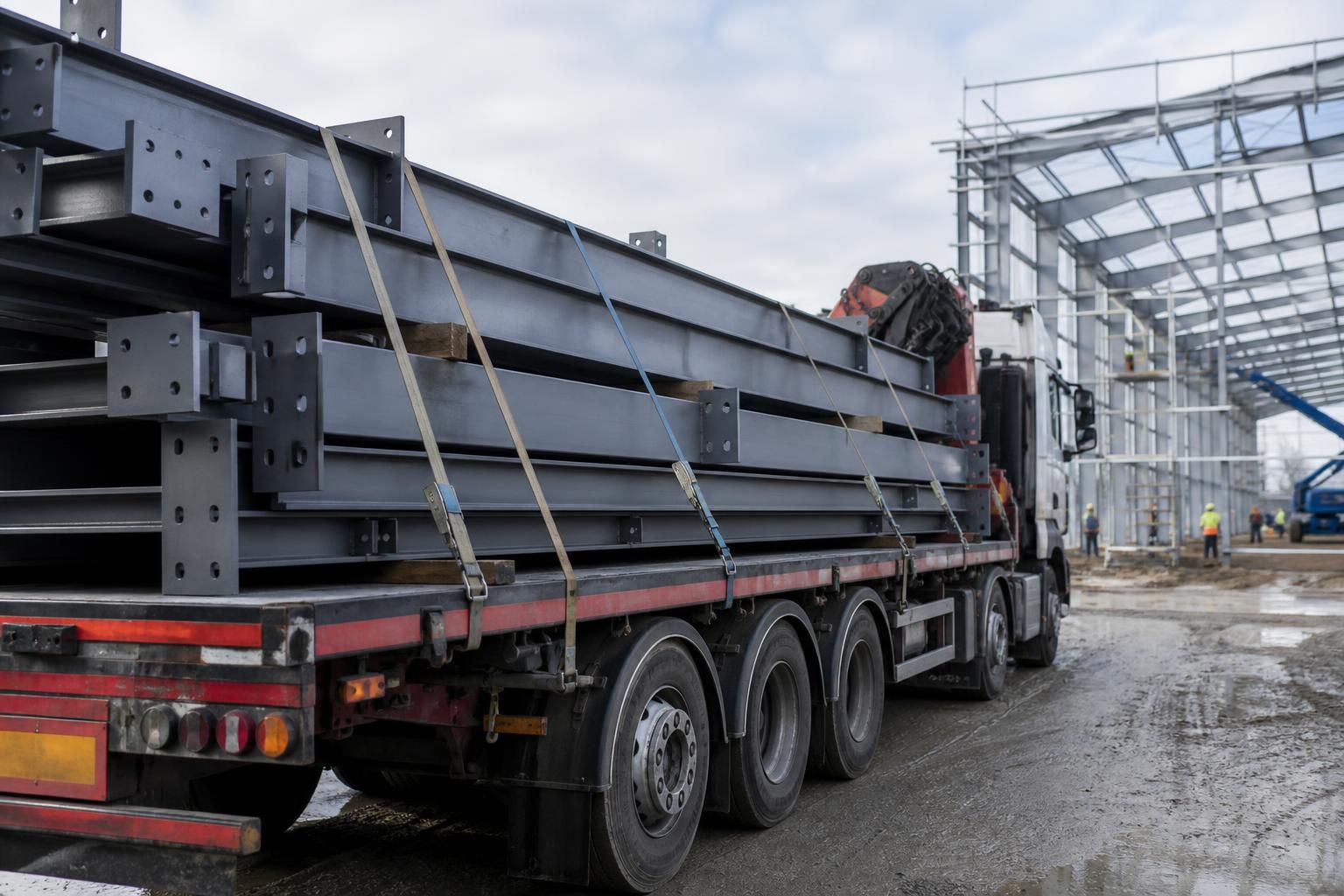
How are structural steel beams and columns delivered to site?
Structural steel beams and columns are delivered to site on secure transport, with load planning based on the steelwork, delivery route and available site access. Unloading and on-site handling are coordinated with the project requirements so that each member can be checked, positioned and stored safely before installation.
Delivery of structural steel beams and columns is a planned handover between the fabricator, haulier and site team. Each member is prepared for transport, identified against the fabrication information and delivered in a sequence that supports the intended erection process. The delivery plan must account for vehicle loading, site restrictions, unloading equipment and temporary storage before the steel is installed.
Before dispatch, the steelwork is generally grouped into manageable loads. Members may be arranged by building area, frame line or erection sequence, with identification marks corresponding to the fabrication drawings. This helps the site team establish which beams and columns have arrived and reduces unnecessary movement around the site. Smaller connection components, cleats or associated steelwork should be packaged and recorded so they can be matched to the relevant members.
The transport arrangement depends on the dimensions and weight of the steelwork. Long beams and columns need adequate support along their length, while bundled sections must be restrained so that they cannot shift during transit. Suitable packing between members can help protect prepared surfaces and prevent steel from being damaged by contact. Loads should be secured in accordance with the haulier’s safety procedures, with consideration given to overhanging lengths, overall vehicle dimensions and any route restrictions identified during planning.
Site access needs to be confirmed before the vehicle is sent. The person coordinating the delivery should check the entrance width, turning space, ground conditions, gradients, overhead obstructions and the location where the vehicle can safely stop. Temporary works, stored materials, parked vehicles and other site activities may restrict access even where the permanent entrance appears suitable. Where access is limited, the delivery may need a different vehicle arrangement, revised unloading position or a separately agreed traffic-management procedure.
Unloading is not simply a matter of removing the first available member from the load. The lifting method should suit the size, shape and weight of each item, and the unloading area should be clear, stable and capable of supporting the equipment being used. The site team should agree in advance who is providing the crane, telehandler or other lifting equipment, who is directing the lift and who is responsible for maintaining the exclusion zone. Steel should not be dragged across the ground or lifted from unsuitable points, as this can cause distortion or damage to coatings and connection details.
On arrival, the receiving team should check the load against the delivery documentation and fabrication information. Useful checks include:
- identification marks and member quantities;
- visible damage, distortion or coating defects;
- the condition of connection plates, holes and welded details;
- the presence of loose components and delivery paperwork; and
- whether any items are missing or appear to belong to another load.
Any discrepancy should be recorded and raised with the relevant project contact before the steel is incorporated into the frame. Photographs and clear references to member marks can help establish what has been received and what action is required.
If the steel cannot be installed immediately, it should be stored on suitable bearers rather than directly on the ground. Members should be supported to prevent bending, kept clear of standing water and arranged so that identification marks remain visible. Storage should also preserve safe access for inspection and lifting, while avoiding unstable stacks or conditions that could allow sections to roll, slide or become contaminated.
For projects where Buildings UK Ltd is also undertaking erection, delivery and installation can be coordinated as parts of the same planned sequence. Where the customer or another contractor is responsible for erection, the delivery information should be passed to the appointed site team so that unloading equipment, labour, storage and lifting controls are ready before the vehicle arrives. This distinction is important: transport to site does not by itself include unloading or installation unless those responsibilities have been specifically included in the project arrangements.
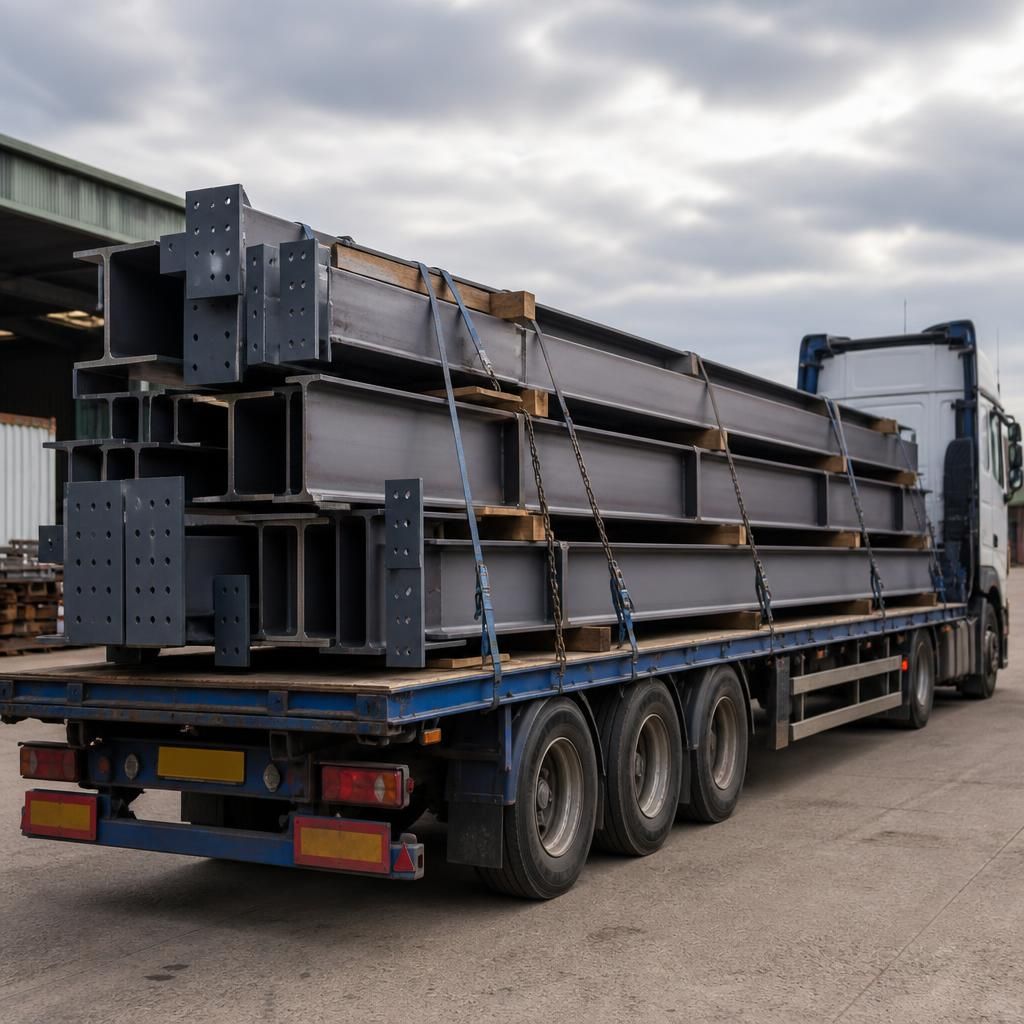
Structural steel beams and columns may be delivered in staged loads rather than as one complete consignment, particularly where the project has limited storage or the erection sequence requires different parts of the frame at different times. Each load should be treated as a controlled part of the overall delivery schedule.
A staged delivery plan should identify which members are included in each load, when they are required and how the outstanding steel will be tracked. This prevents a deliberately deferred item from being mistaken for a missing member and helps the site team keep the delivered steel organised. Any changes to the planned sequence should be recorded and communicated to the relevant project contacts before dispatch.
- Confirm the member marks included in each delivery.
- Keep delivery records matched to the fabrication information.
- Separate delivered, inspected and outstanding items in the site records.
- Review later loads if the erection sequence or site conditions change.