What protective finish does structural steelwork require?
Structural steelwork generally requires a corrosion-protective finish selected for its exposure environment, design life and maintenance requirements. Common options are galvanising, which provides a zinc barrier, and professionally specified paint systems, while sheltered internal steel may need only an appropriate primer and finish coat.
The required protective finish depends on the steel’s exposure, expected design life, detailing and maintenance access. A suitable specification normally defines the corrosion environment, preparation standard, coating system, application method, inspection requirements and treatment of damaged areas rather than simply specifying “painted steel”.
Paint systems are widely used where the appearance, colour or site-applied repairability of the steel is important. A typical system may include:
- Abrasive blast cleaning or another specified preparation method to remove mill scale, rust, oil and contaminants.
- A zinc-rich, epoxy or other compatible primer to provide initial corrosion resistance and adhesion.
- One or more intermediate coats to build the required dry-film thickness.
- A finishing coat, often selected for colour retention, weather resistance and appearance.
The precise products and coating thicknesses should be selected as a tested system, not mixed informally between manufacturers. The specification should also identify whether the steel will be exposed internally, externally, in a damp agricultural building, in an industrial atmosphere or in a location subject to marine contamination. These conditions affect the corrosivity category and the level of protection required.
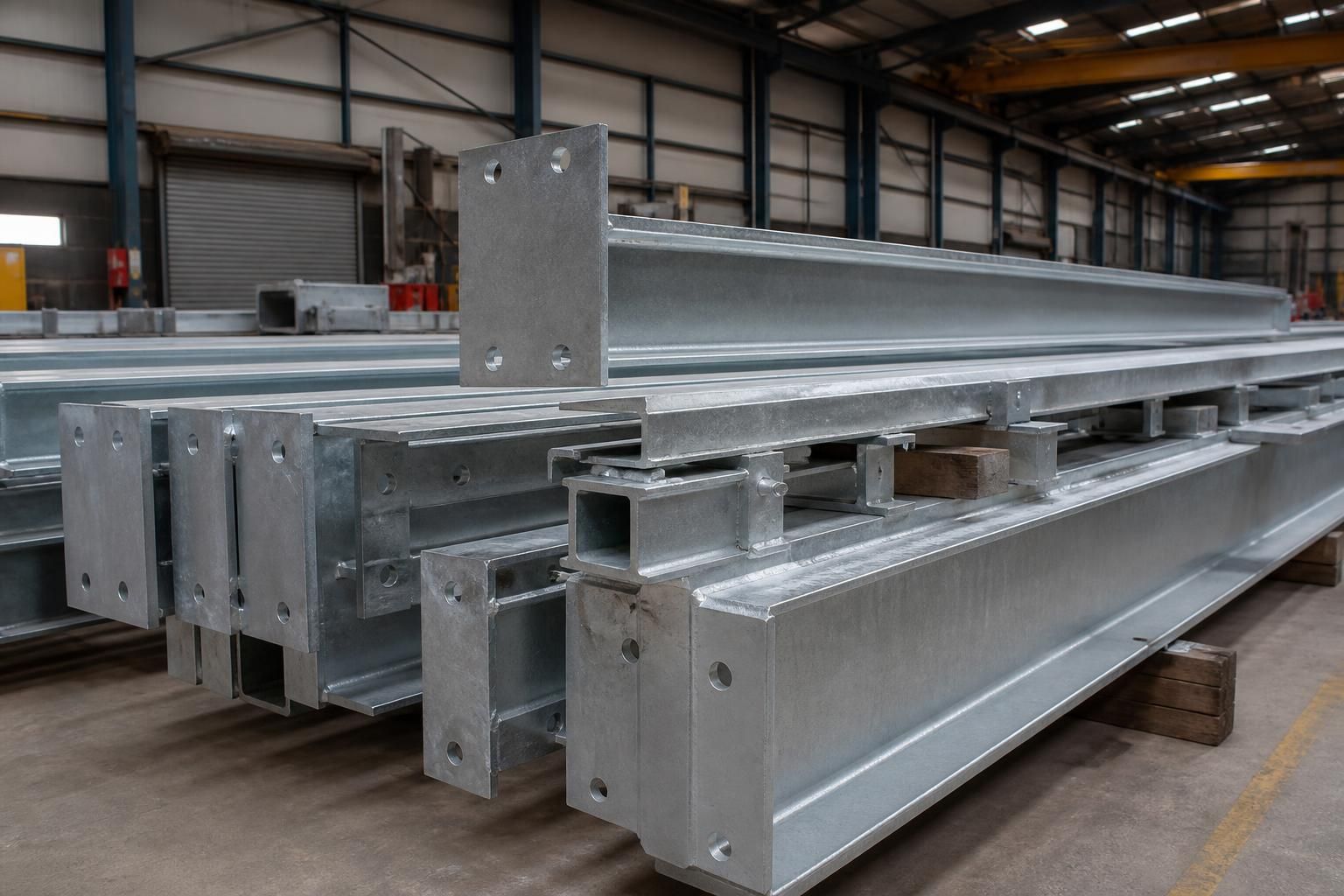
Hot-dip galvanising protects steel by immersing the fabricated component in molten zinc. The resulting zinc coating provides both a physical barrier and sacrificial protection: if a small area is exposed, the zinc can preferentially corrode to protect nearby steel. Galvanising is particularly useful for components that are difficult to access for repainting, although the design must allow molten zinc to drain from hollow sections and prevent pressure build-up during treatment.
Galvanised steel requires suitable detailing. Closed sections need correctly positioned vent and drain holes, while overlapping plates, narrow gaps and pockets that retain water can create problems. Welding, cutting or drilling after galvanising removes protection locally and requires an approved repair procedure, normally involving thorough preparation followed by a compatible zinc-rich repair coating or another specified treatment.
Duplex protection combines galvanising with a compatible paint or powder coating. The zinc layer provides sacrificial protection beneath the organic coating, while the outer finish provides colour and an additional barrier. This arrangement can be appropriate where both extended corrosion protection and a particular appearance are required. The galvanised surface must be prepared correctly before painting, because a smooth or passivated surface may otherwise give poor adhesion.
Some structural steel is protected by a primer and finish coat only, particularly in dry, controlled internal environments. This does not mean that every internal member can be left untreated. Condensation, leaks, wash-down areas, unheated spaces and contact with damp masonry or ground can create local corrosion risks. Agricultural buildings may also contain moisture, fertiliser residues or other contaminants that justify a more robust system than a dry office environment.
Protection should be considered during design and fabrication. Useful measures include:
- Providing drainage and avoiding ledges, crevices and water traps.
- Sealing or detailing joints so that moisture cannot remain trapped.
- Rounding sharp edges and preparing welds so that the coating reaches the full steel surface.
- Allowing sufficient access for blast cleaning, painting, inspection and future maintenance.
- Separating incompatible metals where galvanic corrosion could occur.
- Coordinating treatment of bolts, welds, connection plates and site modifications with the main coating specification.
Surface preparation is as important as the coating itself. Steel may need degreasing, removal of mill scale and rust, abrasive blasting to a specified cleanliness grade, and a defined surface profile. Coatings should be applied under suitable temperature and humidity conditions, with attention to the steel’s dew point. Applying paint to a damp or contaminated surface can cause blistering, poor adhesion and premature corrosion.
Quality control normally includes checking the steel before preparation, recording the preparation standard, verifying wet or dry film thickness, inspecting for pinholes and missed areas, and confirming that each coat has cured before the next is applied. Galvanised coatings may be checked for continuity, coverage and thickness, with particular attention to edges, welds and repaired areas. The inspection records should identify the product system and any departures from the specification.
Transport, storage and erection can damage even a correctly applied finish. Members should be kept clear of standing water, protected from contamination and handled to avoid abrasion. Scratches, impact damage and site welds should be cleaned back to sound material and repaired using the coating manufacturer’s specified method. A repair coating must be compatible with the existing system and applied to the required preparation standard.
Corrosion protection is separate from fire protection. A conventional paint system or galvanising specification does not automatically provide the fire resistance required for a building. Where fire resistance is needed, an appropriate intumescent coating, board system or other engineered protection must be specified in addition to the corrosion-control requirements.
For a building project, the finish should therefore be agreed alongside the structural design and fabrication details. The specification should state the exposure category, required durability, preparation grade, coating sequence, inspection regime, repair method and maintenance arrangements. This prevents gaps between workshop-applied protection and site work, and ensures that the chosen finish is suitable for the building’s actual environment rather than just its intended appearance.
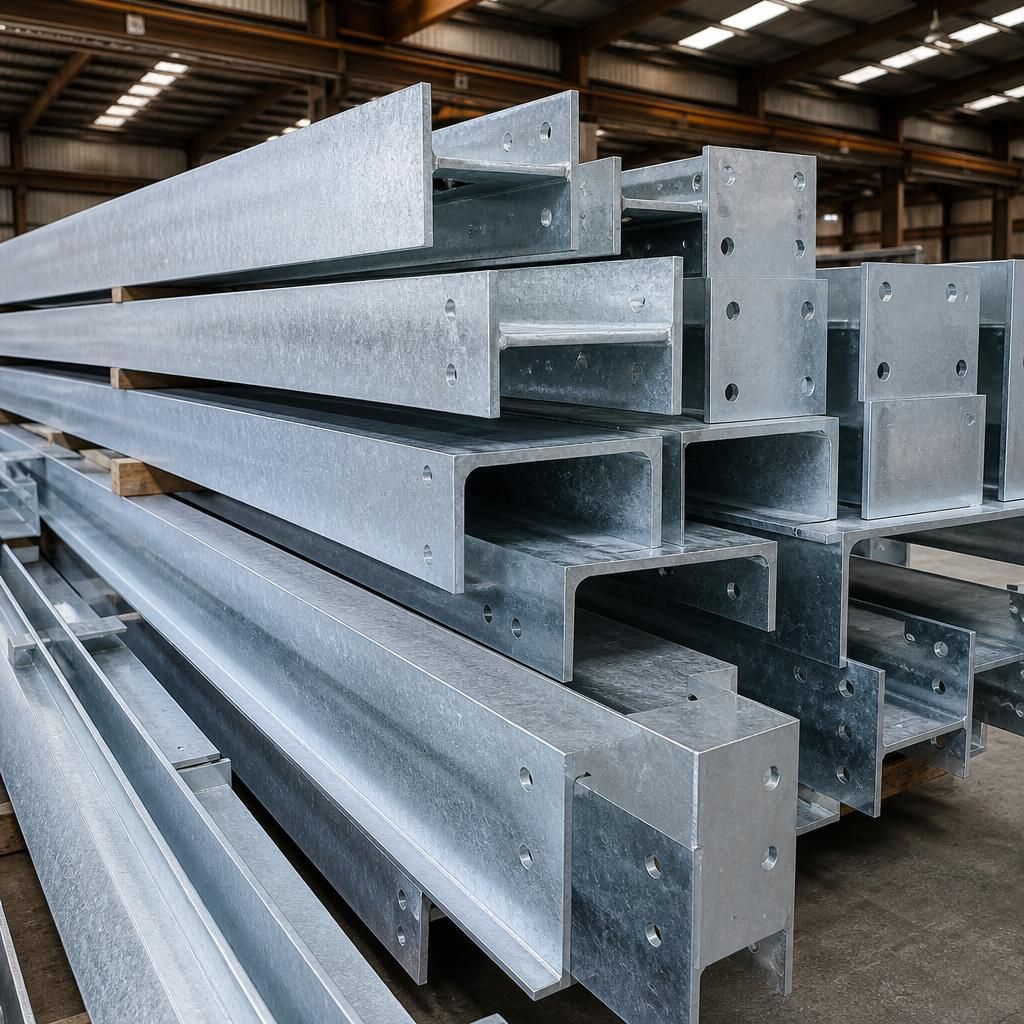
The protective finish must be compatible with the way the steelwork will be assembled. Galvanising adds a coating to mating surfaces and threaded components, so connection tolerances, bolt selection and access for installation should be agreed before fabrication. This is particularly important where a connection relies on close fit, direct contact or friction between steel surfaces.
For painted steelwork, the specification should likewise identify which surfaces require treatment before assembly and which areas will be accessible for inspection afterwards. Treating the finish as part of the fabrication and connection design helps prevent site fitting problems and avoids relying on unplanned alterations that could compromise corrosion protection.
Discuss the protective finish for your structural steelwork
Discuss the required protective finish for your structural steelwork with Buildings UK Ltd, based on the building’s environment, design and maintenance requirements. The team can help you establish a suitable coating or galvanising specification alongside the fabrication details.