
How are used portal frame buildings transported to site?
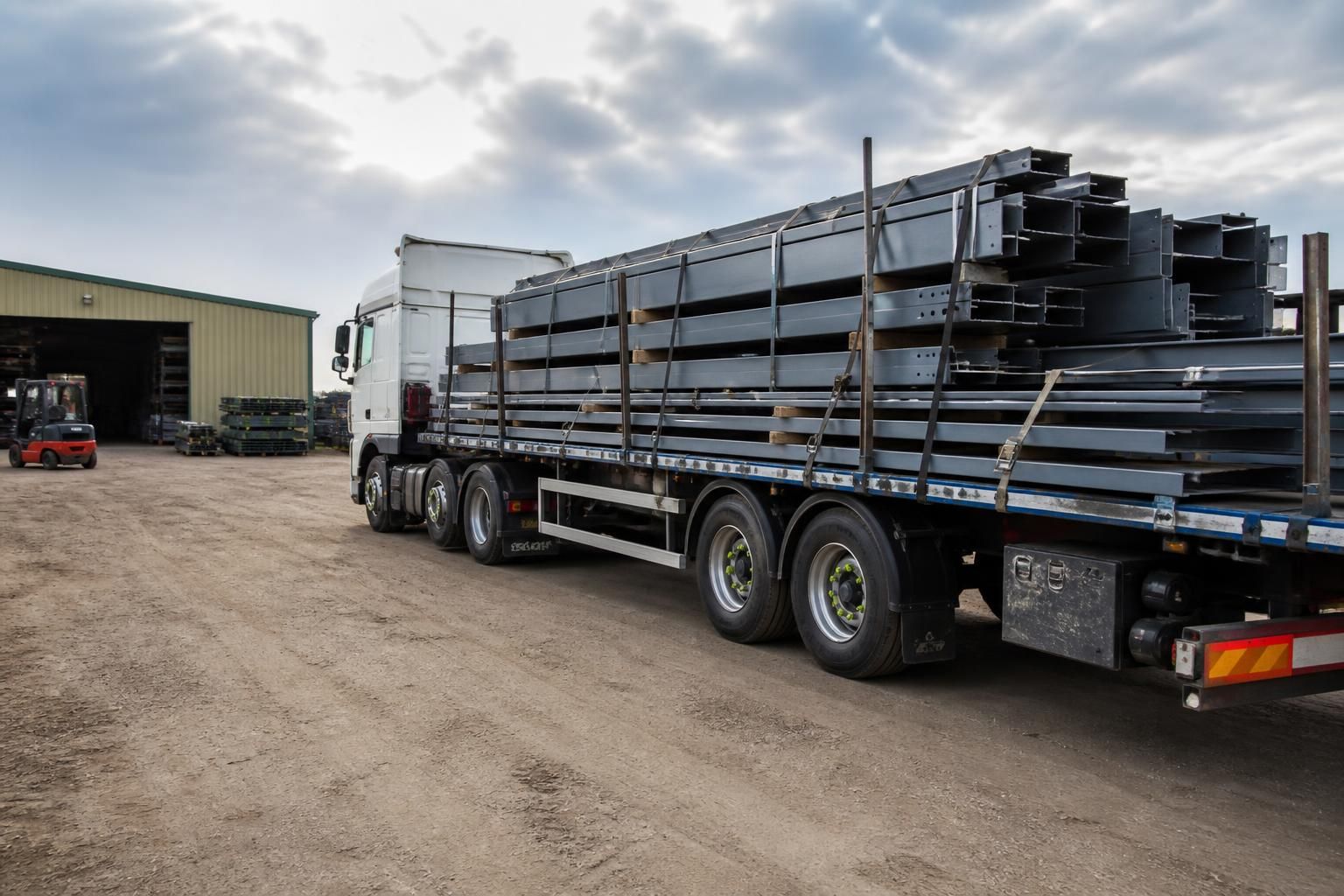
Used portal frame buildings are normally dismantled into transportable sections, with components identified and loaded for delivery to the prepared site. Transport is planned around the building’s dimensions, the available access route and the unloading arrangements, with Buildings UK coordinating nationwide delivery as part of the project.
Used portal frame buildings are transported as dismantled steel components, grouped into manageable loads and secured for road haulage. The transport plan is based on the length and weight of the sections, the number of loads required, the route to site and the equipment available for unloading.
Preparing the building for transport
Before dismantling, the frame is assessed so that rafters, columns, bracing members, purlins and other steelwork can be separated without compromising their identity or condition. Components are marked or recorded against the building layout. This makes it possible to match each item to the fabrication or assembly information when the building reaches its new site.
Steel members are usually transported in bundles or grouped loads, while smaller fixings and connection components are packaged separately. Keeping bolts, cleats, brackets and other loose items together prevents them from being misplaced during dismantling and delivery. Any components that could be damaged by movement, such as sheets, trims or vulnerable fittings, need suitable protection and packaging.
Planning the road journey
Transport planning considers the complete route rather than simply the distance between the original and new sites. The haulage provider may need to check:
- the available width and height of access roads;
- tight bends, junctions, bridges and weight restrictions;
- overhead cables, low structures and roadside obstructions;
- the position where the vehicle can safely enter and leave the site; and
- whether the delivery vehicle can reach the unloading area without crossing unsuitable ground.
Long or unusually shaped members may require a different vehicle arrangement from shorter bundled components. Load dimensions and weights must be confirmed before collection so that the appropriate vehicle, restraints and any required transport arrangements can be selected. The final plan should also allow for the order in which loads will be unloaded and used.
Loading and securing the steelwork
Steel sections are loaded to distribute weight correctly and to keep the vehicle within its permitted limits. Timbers, supports or other suitable packing can be used to prevent members from resting directly against the vehicle bed or rubbing against one another. Loads are restrained with appropriate chains, straps or other securing equipment, taking account of braking, cornering and vibration during the journey.
Careful loading is particularly important for reused steel. Uncontrolled movement can damage protective coatings, distort lighter components or make identification marks difficult to read. A load check before departure confirms that the items are stable, secured and accompanied by the relevant component information.
What must be ready at the receiving site?
The new site should have a suitable, clearly accessible unloading area before the first vehicle arrives. Foundations or bases need to be prepared in accordance with the building design, and there must be enough room for lifting equipment to position steel safely. Soft ground, restricted access, stored materials and overhead obstructions can all affect unloading, so these conditions should be reviewed in advance.
The site team should know which loads are arriving and where they are to be placed. Components should not be left where they can obstruct construction access or be exposed unnecessarily to vehicle movements. Small parts and connection hardware should be stored securely and kept with the relevant steelwork.
Unloading and delivery sequence
Unloading is normally carried out using suitable lifting equipment selected for the heaviest or most awkward component. The vehicle should be positioned on stable ground, with an exclusion area maintained around the lifting operation. Steel should be placed on level supports rather than directly on muddy or wet ground, helping to reduce contamination and making later handling easier.
Delivery sequencing can follow the planned erection order. For example, primary columns and rafters may need to be accessible before secondary steelwork, bracing or cladding components. Delivering items in a sensible sequence reduces double handling and helps the erection team identify what is available for each stage of the build.
Checking the delivery
Once unloaded, the recipient should check the number and condition of the delivered items against the component schedule. Any visible damage, missing packages or discrepancies should be recorded promptly, with photographs where appropriate. Packaging and identification marks should be retained until the relevant components have been checked.
Transport is therefore only one part of relocating a used portal frame building. Accurate component records, a suitable haulage plan, safe access and coordinated unloading are all needed to move the steelwork without creating avoidable delays or damage. Buildings UK can provide the design and project information needed to support the delivery and subsequent erection of a used building package.
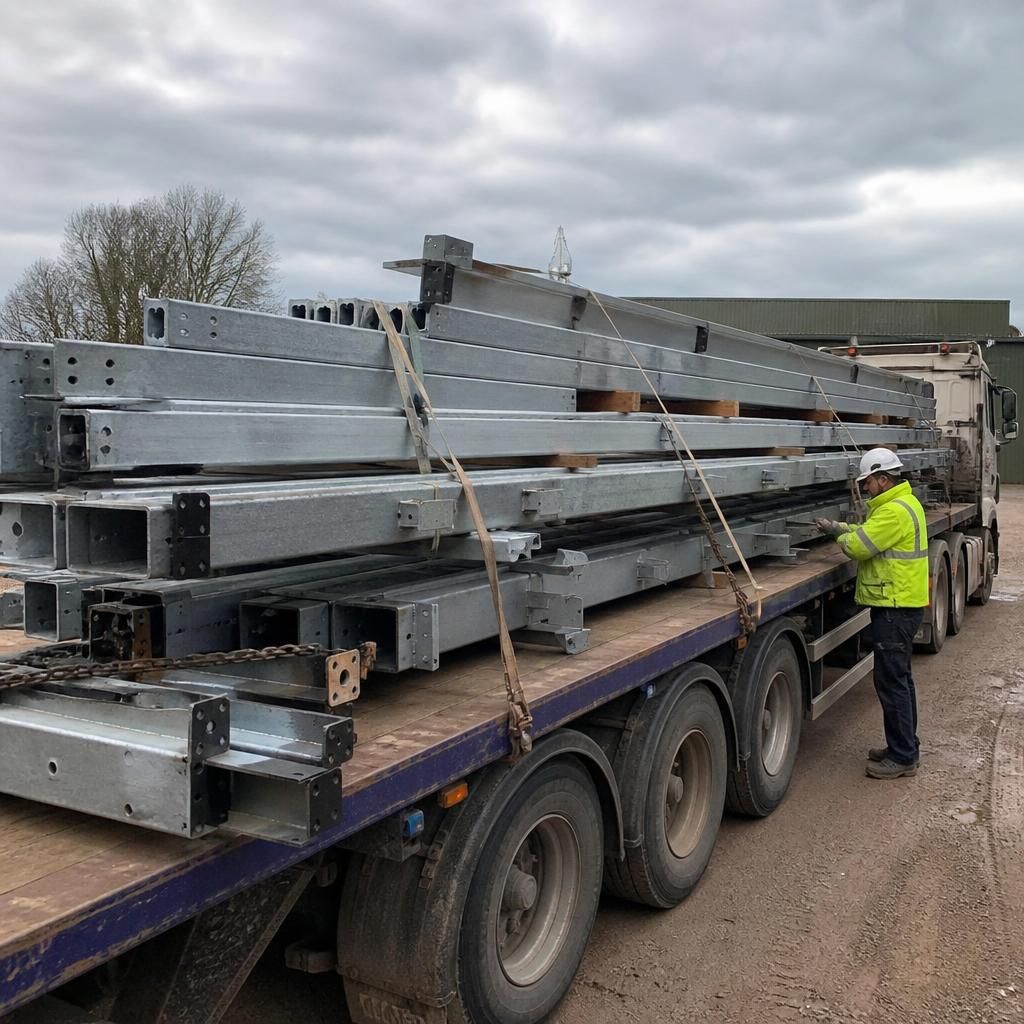
Previous alterations to a used portal frame can affect how it is dismantled and transported. Extensions, replacement members or changes to the cladding may mean the building no longer matches its original drawings, so the physical frame should be checked against the available records before collection.
Any non-original or unidentified components can then be recorded separately, with the transport list updated to reflect the actual steelwork being moved. This prevents incorrect assumptions about load size, avoids sending unrelated materials with the main frame and gives the receiving team a more accurate basis for checking the delivery.