Can used steel beams be cut to the required length?
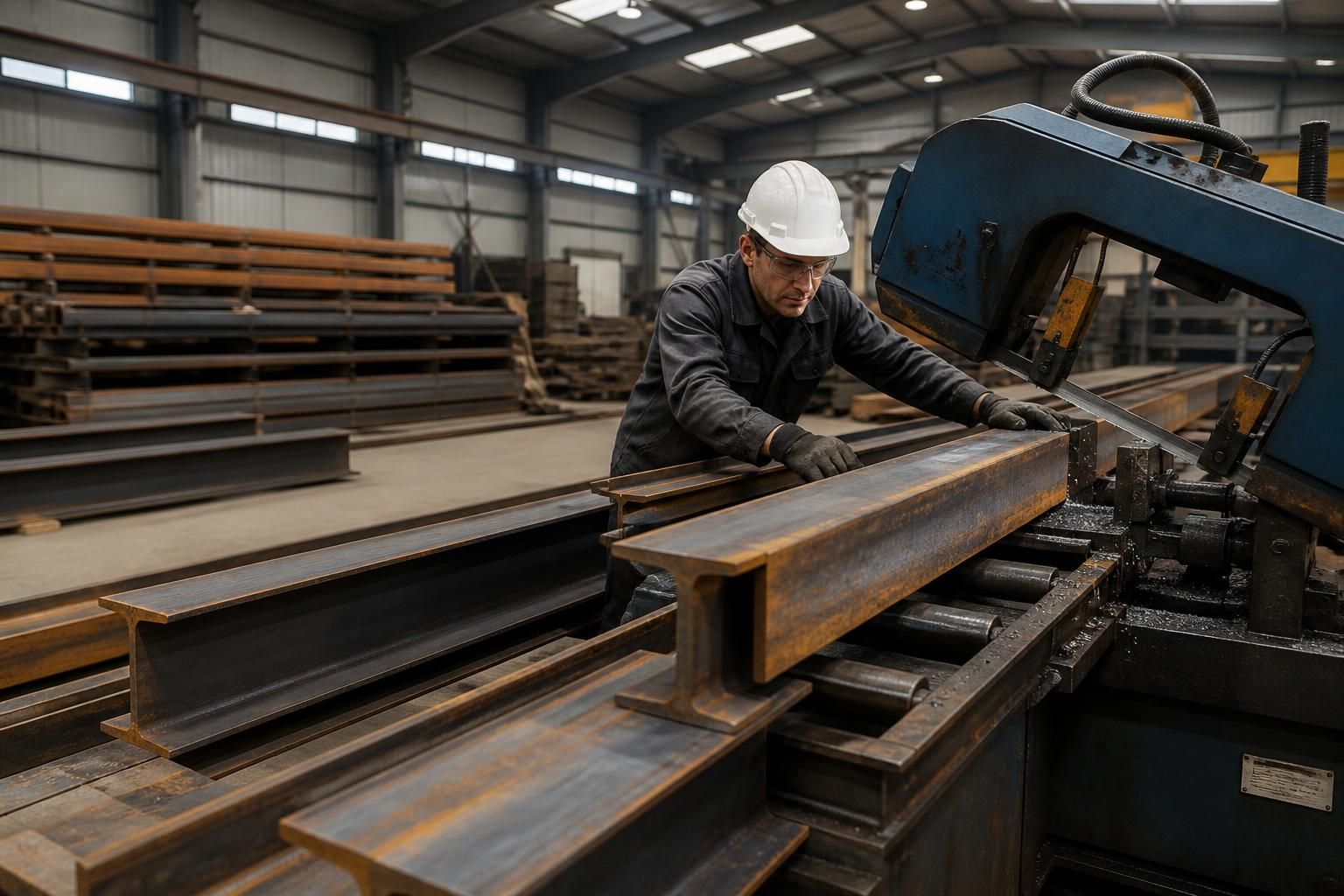
Yes, used steel beams can usually be cut to the required length, provided their condition, section size, steel grade and proposed structural use have been assessed. Cutting should be planned from the building design and followed by suitable preparation of the cut ends, with any revised connections checked by a competent structural professional.
Cutting a used steel beam to length is normally possible, but the method and final dimension must be determined from the beam’s condition and its role in the proposed structure. The cut should be set out from the new design rather than taken from the beam’s existing ends, particularly where the member will form part of a bolted, welded or bearing connection.
Before cutting, the beam should be checked for section loss, distortion, cracking, deep corrosion, existing welds, bolt holes and other damage. These features can affect where a cut may safely be made and how much sound material remains available for the connection. The steel section and grade should also be established as far as practicable, since the proposed use may impose requirements that cannot be confirmed from appearance alone.
- Abrasive cutting: suitable for many structural sections, but it can produce heat, sparks and a rough edge that requires cleaning and dressing.
- Oxy-fuel or plasma cutting: useful for substantial sections, although heat-affected areas, distortion and slag must be controlled and removed.
- Band-saw or cold-saw cutting: can provide a clean, accurate cut with less heat input, where the section and available equipment make this practical.
The choice of method depends on the beam’s size, steel grade, access, required accuracy and the connection detail. A cut through both flanges and the web must be properly supported so that the member does not move or twist as the final material is removed. Cutting close to a hole, weld, damaged area or heavily corroded section can leave insufficient sound steel for the end connection.
Length is only one part of the adjustment. The cut end may need to be square for bearing, prepared for a weld, or drilled and detailed for a bolted connection. Any existing holes should not simply be assumed to suit the new arrangement: their spacing, edge distances and condition need to be checked against the design. Where a beam is shortened, the new support positions and load path may also alter the forces in the member and its connections.
After cutting, the end should be inspected and finished appropriately. Slag, sharp edges, burrs and loose corrosion products should be removed, and any distortion or cracking identified before the beam is incorporated into the frame. If the steel will be painted, galvanised or otherwise protected, the cut surface must be prepared in accordance with the selected protective system. A torch-cut edge may require particular attention where a coating manufacturer or welding procedure specifies additional preparation.
For a non-structural member, the consequences of shortening may be limited to fit and connection details. For a primary beam, column, portal frame member or any component carrying significant load, the revised length and end condition should be checked by a competent structural engineer. This review should consider span, support and bearing conditions, deflection, buckling, connection capacity and the quality of the remaining steel, rather than treating the work as a simple fabrication alteration.
A practical approach is to finalise the new building design first, mark the required cut positions on an inspected beam, allow for the intended end preparation, and verify the finished length before installation. Buildings UK Ltd provides bespoke design information for steel-framed projects, including planning elevations and fabrication drawings, which can help coordinate member lengths and connection requirements before manufacture or site assembly.
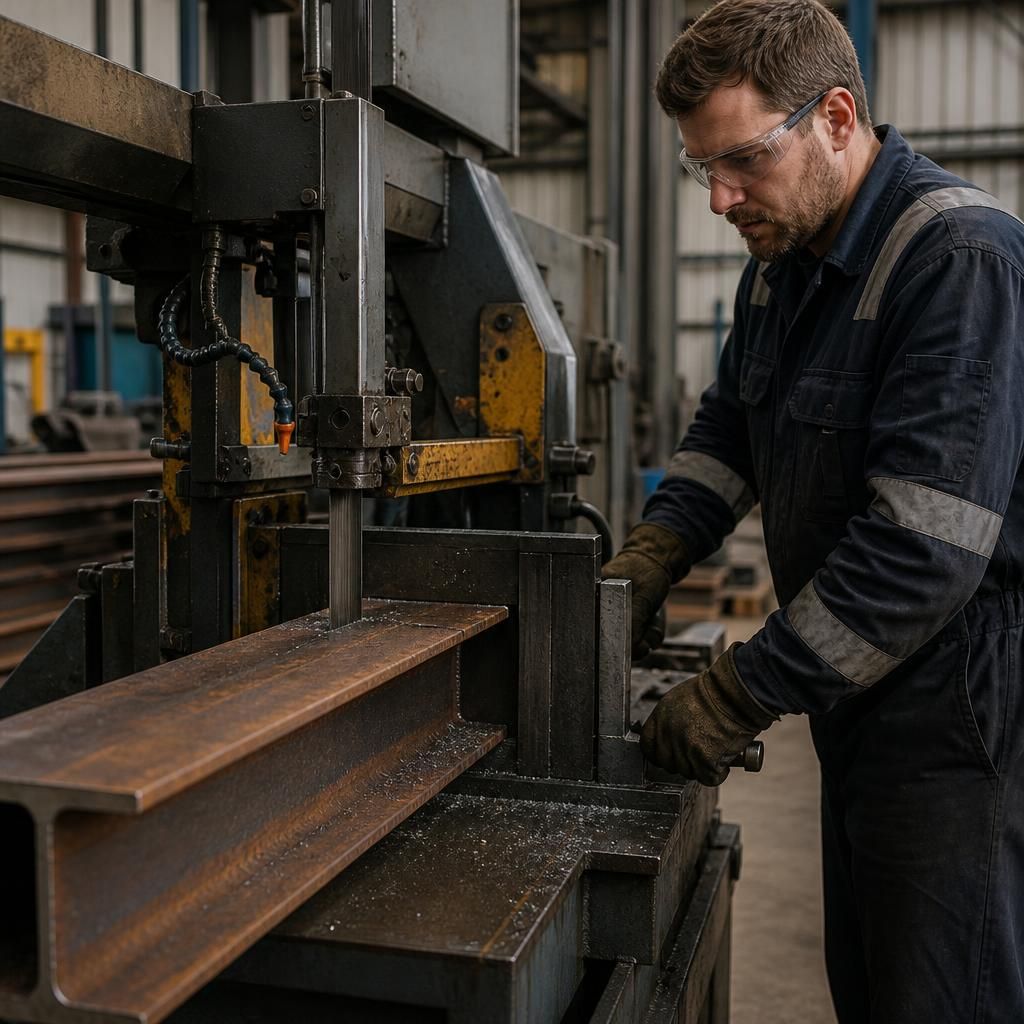
A used steel beam can sometimes be divided into two or more shorter members, but the resulting pieces should not be treated as interchangeable. Each section needs to be assessed for its own length, condition, orientation and intended position in the new frame. The original beam may contain local corrosion, old holes or welds that make one part more suitable than another.
Any offcut should therefore be retained only if its remaining section and end condition meet the requirements of a defined structural use. It may be suitable for a secondary member, but that cannot be assumed from its appearance or length alone. A competent structural professional should confirm the purpose of each cut piece before it is incorporated into the building.