
Do used steel beams need protective treatment?
Used steel beams do not always need protective treatment, but any coating should be based on their condition, intended use and exposure to moisture. Loose rust and failing coatings should be removed, with a suitable corrosion-protection system applied where the design or environment requires it.
Used steel beams need protective treatment when their condition, location or intended service requires protection against corrosion, fire or other deterioration. A dry, enclosed building may require less corrosion protection than an exposed agricultural or industrial structure, but the decision should follow a documented inspection and the requirements of the building design.
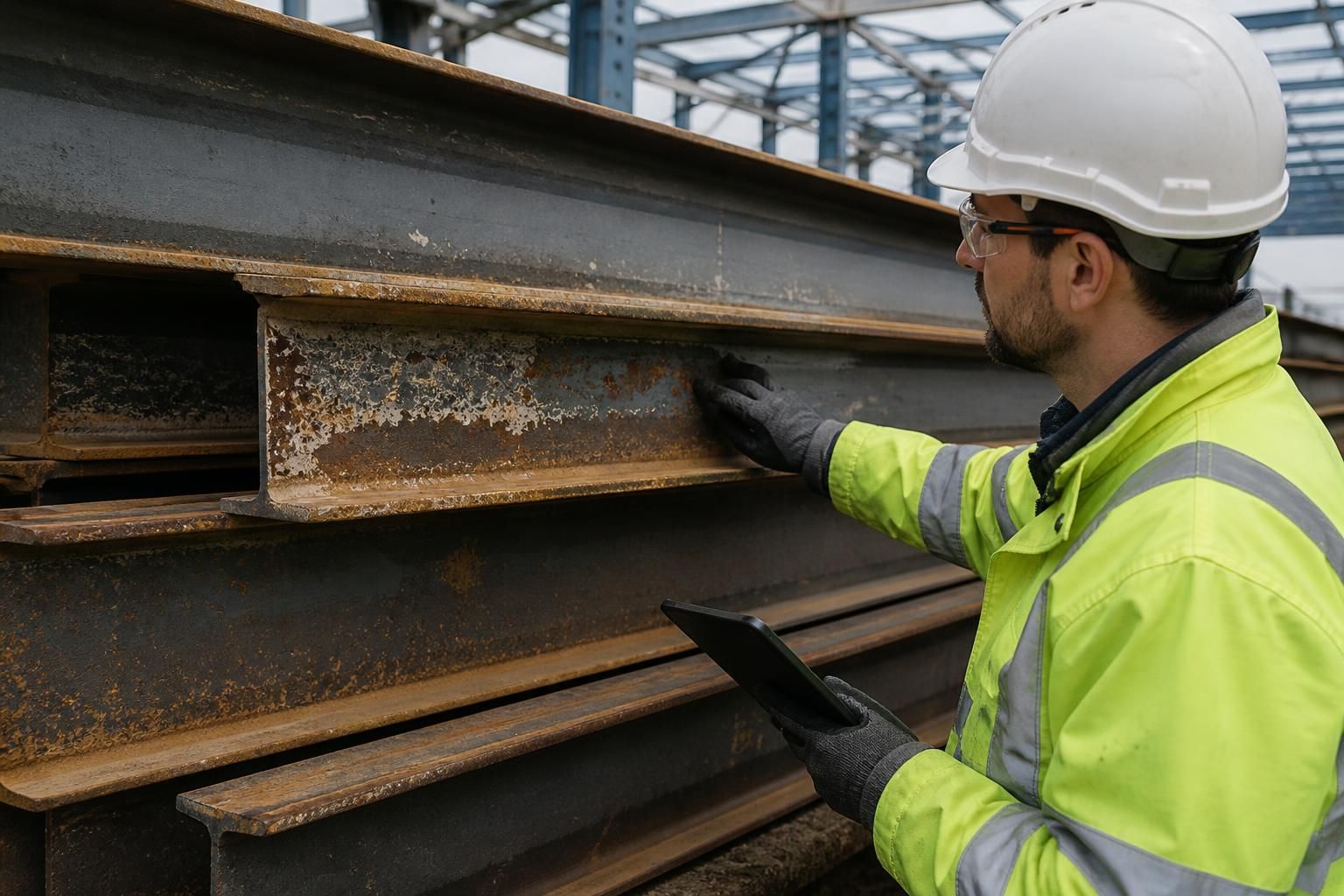
Before selecting a coating, the beam should be assessed for:
- the extent and depth of corrosion, including any loss of section around flanges, webs, connections and bolt holes;
- existing paint, galvanising, contamination, oil or mill scale;
- the building’s internal humidity, condensation risk and exposure to rain, chemicals, livestock, fertiliser or salt;
- contact with masonry, concrete, soil or other materials that could retain moisture; and
- the required design life, appearance, maintenance access and fire performance.
Surface preparation is usually the most important part of a coating system. Loose rust, flaky paint, dirt and grease must be removed, and the steel should be prepared to the level specified for the chosen product. Light mechanical preparation may be suitable for sound steel with limited surface rust, whereas more advanced corrosion or poorly bonded coatings may require abrasive blast cleaning. The preparation method must also account for dust, containment, access and the possible presence of hazardous substances in old coatings.
Older painted steel should not be assumed to be free from lead or other hazardous residues. Where the coating’s composition is uncertain, it should be assessed before mechanical or abrasive removal. Removal, containment and disposal should be carried out using suitable controls by competent contractors. Coating preparation is not simply a cosmetic operation: disturbing an unsafe coating can create risks to workers, occupants and the surrounding site.
A corrosion-protection system normally consists of a compatible primer followed by one or more protective coats. The specification should identify the surface-preparation grade, primer type, dry-film thickness, recoat interval and final finish. Systems are selected according to the corrosivity of the environment rather than applied on the assumption that one product suits every building. Areas that collect water, concealed interfaces and damaged edges deserve particular attention because they can corrode even when the main faces of the beam appear well coated.
For beams used in agricultural or industrial buildings, the internal atmosphere can be more aggressive than a typical dry office environment. Condensation, animal waste, fertiliser dust, cleaning chemicals and high humidity may shorten the life of an unsuitable coating. Exposed steelwork may need a more durable system than steel protected inside a sealed, heated space. Good detailing also matters: standing water should be avoided, drainage should be provided where appropriate, and narrow gaps that cannot be prepared or painted effectively should be considered during design.
Protective treatment may need to be renewed or locally repaired after alteration. Cutting, drilling, welding and handling can remove the coating and expose bare steel. These areas should be cleaned, checked for weld defects or sharp edges, and reinstated with a compatible system. Repairs should not merely be painted over rust, dampness or contaminated surfaces, because the defect will remain beneath the new coating.
Corrosion protection and fire protection are separate requirements. A corrosion-resistant paint system does not automatically provide the fire resistance required for a structural frame. Where the design calls for fire protection, the beam may need a tested fire-protection system, board encasement, concrete encasement or another engineered solution. The chosen method must be compatible with the beam’s existing coating and with connections, fixings and inspection requirements.
Galvanising can provide durable corrosion protection, but it is not automatically suitable for every used beam. The member must be suitable for the galvanising process, previous coatings and contaminants must be removed, and the resulting finish must work with the connection and installation details. For large or assembled members, site access and handling can make an applied coating system more practical.
The final treatment should be recorded with the beam’s inspection information. Useful records include photographs before preparation, identified areas of section loss, the preparation method, products used, application conditions, coating thickness checks and details of any repaired areas. A structural engineer or suitably qualified steelwork specialist should confirm that the member remains suitable for reuse; protective coating cannot restore steel that has lost significant structural capacity.
In practice, sound used beams in a dry, protected interior may need only suitable preparation and a specified finish, while beams exposed to weather or aggressive agricultural and industrial conditions generally require a complete, carefully selected protection system. The right treatment is therefore determined by the beam’s verified condition and the building environment, not by its previous use alone.
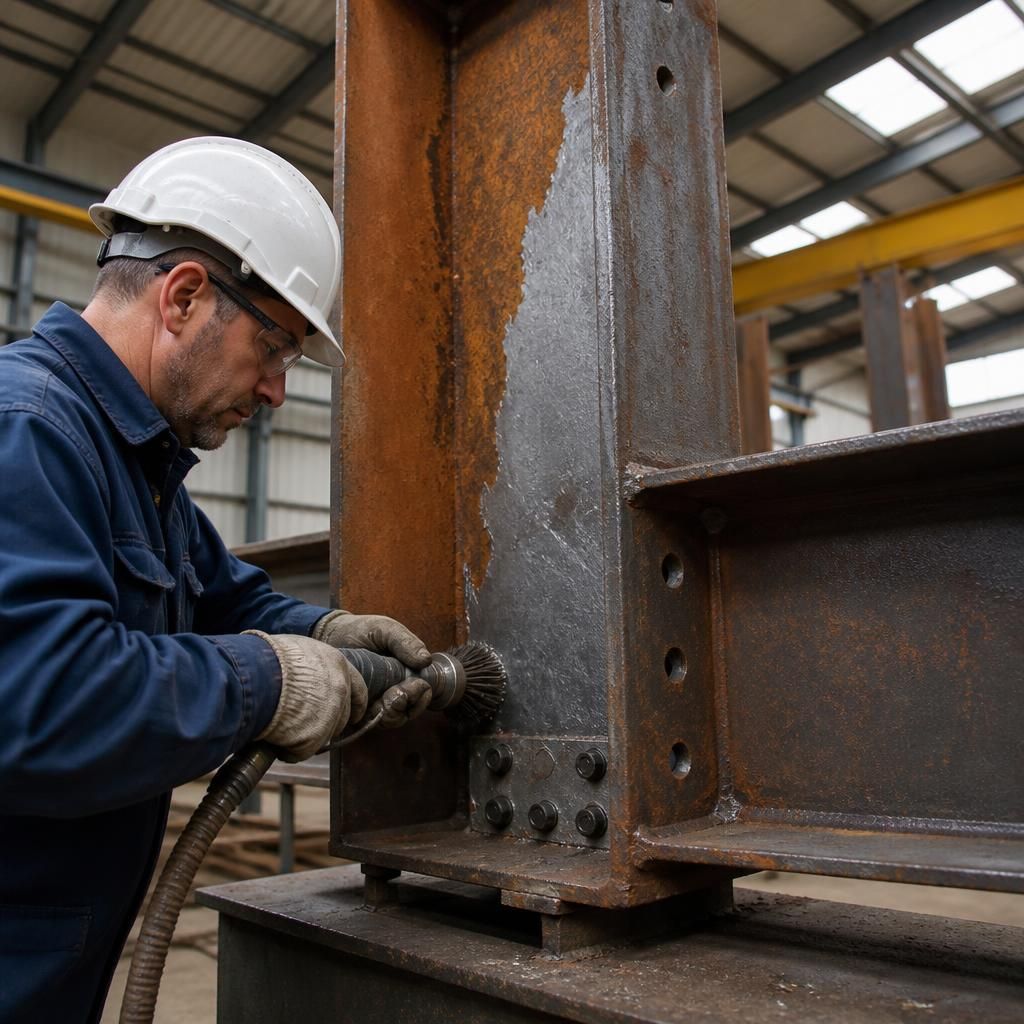
Protective treatment around beam connections needs its own specification rather than being applied uniformly to every surface. Coating build-up on bolt contact faces, slotted holes or other connection interfaces can affect fit and, for slip-resistant bolted joints, the friction assumed in the design. These areas may need to remain uncoated, receive a compatible treatment or be prepared to a specified standard.
Threads, weld zones and exposed edges also require attention during installation. The connection designer or steelwork specialist should identify which surfaces require protection, which must remain clear and how any site-applied repairs are to be completed. This prevents a sound corrosion system from creating installation or structural issues at the very points where the reused beam is joined to the new frame.